Building Blocks
This section contains fundamental products for the synthesis of organic and biological compounds. Building blocks are the essential starting materials used to construct complex molecules through various chemical reactions. They play a critical role in drug discovery, material science, and chemical research. At CymitQuimica, we offer a diverse range of high-quality building blocks to support your innovative research and industrial projects, ensuring you have the essential components for successful synthesis.
Subcategories of "Building Blocks"
- Boronic Acids & Boronic Acid Derivatives(5,778 products)
- Chiral Building Blocks(1,242 products)
- Hydrocarbon Building Blocks(6,098 products)
- Organic Building Blocks(61,034 products)
Found 199601 products of "Building Blocks"
Sort by
Purity (%)
0
100
|
0
|
50
|
90
|
95
|
100
Methyl 2-nitrobenzoate
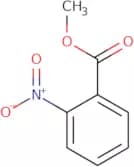
CAS:<p>Methyl 2-nitrobenzoate is a nitro compound that has been used to synthesize benzyl esters. It has been shown to react with protonation and acidic conditions. Methyl 2-nitrobenzoate is also used as an intermediate in the synthesis of methyl anthranilate, which is a component of artificial grape flavoring. The mechanism of the reaction is not fully understood, but it has been proposed that methyl 2-nitrobenzoate undergoes an intramolecular hydrogen bond with the benzoate group to form an intermediate compound called N-methyl-2-(phenylmethyl)benzamide. This intermediate then reacts with methylamine to form methyl anthranilate.<br> <br>The molecule can be detected by gas chromatography or liquid chromatography in organic solvents such as methanol or acetone.</p>Formula:C8H7NO4Purity:Min. 95%Color and Shape:Yellow Clear LiquidMolecular weight:181.15 g/molMethyl 3-bromo-2-fluorobenzoate
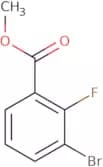
CAS:<p>Methyl 3-bromo-2-fluorobenzoate (MBFB) is a versatile building block in chemical synthesis. MBFB can be used as a reagent or speciality chemical. It has been used as an intermediate for the synthesis of other compounds, such as methyl 5-bromo-2-fluorobenzoate and ethyl 5-bromo-2-fluorobenzoate. MBFB is also a useful scaffold for the synthesis of complex compounds with interesting functions, such as research chemicals.</p>Formula:C8H6BrF2Purity:Min. 95%Color and Shape:White PowderMolecular weight:233 g/mol4-(Chloromethyl)-2-methyl-2H-1,2,3-triazole
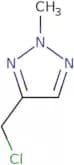
CAS:4-(Chloromethyl)-2-methyl-2H-1,2,3-triazole is a useful intermediate and building block in organic synthesis. It is also used as a reagent for the synthesis of other compounds. 4-(Chloromethyl)-2-methyl-2H-1,2,3-triazole has been reported to be an effective inhibitor of protein tyrosine phosphatase 1B (PTP1B), which is involved in insulin signal transduction. This compound has been shown to inhibit the activity of PTP1B with an IC50 value of 5 μM. 4-(Chloromethyl)-2-methyl-2H-1,2,3-triazole can also be used as an additive in pharmaceutical preparations for its ability to prevent aggregation of proteins.Formula:C4H6ClN3Purity:Min. 95%Color and Shape:Clear LiquidMolecular weight:131.56 g/mol5-Methoxy-2-nitrobenzoic acid
CAS:<p>5-Methoxy-2-nitrobenzoic acid is a compound that has been shown to have antiinflammatory properties. It has been found to inhibit the production of inflammatory mediators such as leukotrienes and prostaglandins. 5-Methoxy-2-nitrobenzoic acid also inhibits certain enzymes, such as cyclooxygenase and lipoxygenase, which are involved in the biosynthesis of these mediators. 5-Methoxy-2-nitrobenzoic acid may be useful in the treatment of inflammatory diseases such as arthritis or asthma. This drug can also be used for chemoprevention against cancer. The drug has been shown to inhibit the growth of tumor cells in vivo by oral administration. This is due to its ability to inhibit DNA synthesis and protein synthesis in cells by binding with DNA and inhibiting RNA synthesis through inhibition of ribonucleotide reductase.</p>Formula:C8H7NO5Purity:90%Color and Shape:PowderMolecular weight:197.14 g/mol3-Methylbenzophenone
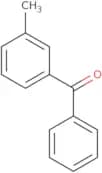
CAS:<p>3-Methylbenzophenone is a fatty acid that has been used as an analytical reagent in organic synthesis. It can be synthesized by acylation of benzoic acid with methylchloroformate. 3-Methylbenzophenone is also a chlorinated derivative of benzophenone, and its structure can be rationalized by the protonation and deprotonation of the chloride ion. The acidic properties of 3-methylbenzophenone are due to the presence of carbonyl group.</p>Formula:C14H12OPurity:Min. 98 Area-%Color and Shape:PowderMolecular weight:196.24 g/molMethyl indole-4-carboxylate
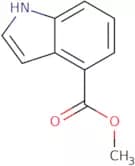
CAS:<p>Methyl indole-4-carboxylate is a synthetic compound that is a potent agonist for cytochrome P450 enzymes. It can be used to study the human cytochrome system, which is responsible for metabolizing drugs and other chemicals. Methyl indole-4-carboxylate has been shown to react with aldehydes, such as formaldehyde, leading to fluorescence. This compound also has the ability to bind to x-ray structures of human cytochrome p450. The addition of methyl indole-4-carboxylate to tissue culture cells leads to an increase in activity of tuberculosis by inhibiting the growth of Mycobacterium tuberculosis and Mycobacterium avium complex.</p>Formula:C10H9NO2Color and Shape:PowderMolecular weight:175.18 g/mol7-Methylindole-2-carboxylic acid
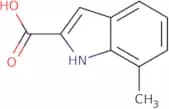
CAS:<p>7-Methylindole-2-carboxylic acid (7MICA) is an indole that can be synthesized by the condensation of phenylhydrazine and pyruvic acid. It has been used as a precursor in the synthesis of styphnates, picrates, and ethyl pyruvate. 7MICA is also known to have antimicrobial activity against gram positive bacteria.</p>Formula:C10H9NO2Purity:Min. 95%Color and Shape:PowderMolecular weight:175.18 g/mol4-Aminomethylbenzoic acid
CAS:<p>4-Aminomethylbenzoic acid (4AMBA) is a metabolite that is formed from the amino acid methionine. It has been shown to inhibit the growth of prostate cancer cells in vitro and in vivo. 4-Aminomethylbenzoic acid inhibits the activity of polymerase chain reaction (PCR), which is an enzyme that catalyzes DNA replication. The hydroxyl group on 4-aminomethylbenzoic acid reacts with one of the phosphate groups on DNA, forming a covalent bond and inhibiting DNA synthesis. This inhibition occurs at the step called initiation, where DNA synthesis begins by binding of RNA polymerase to a specific sequence of DNA. In addition, 4-aminomethylbenzoic acid also inhibits the activity of x-ray diffraction data, which is an enzyme that catalyzes RNA transcription. Histological analysis shows that 4-aminomethylbenzoic acid causes congestive heart</p>Formula:C8H9NO2Purity:Min. 98 Area-%Color and Shape:White PowderMolecular weight:151.16 g/molN-Acetylglycine
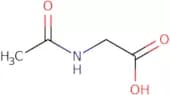
CAS:<p>N-Acetylglycine is an amide, which is a molecule with both a carboxylate and hydroxyl group. It belongs to the class of antimicrobial agents and has been shown to inhibit the growth of bacteria by inhibiting synthesis of folic acid and other metabolites. N-Acetylglycine also inhibits the formation of terminal residues from amino acids. The analytical method for this compound is based on the reaction between n-acetylglycine and hydrogen chloride in methanol. This produces picolinic acid, which can be detected using ultraviolet spectroscopy at a wavelength of 325 nm.</p>Formula:C4H7NO3Purity:Min. 95%Color and Shape:White PowderMolecular weight:117.1 g/mol2-Amino-6-methoxybenzonitrile
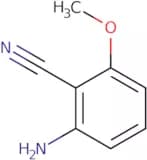
CAS:<p>2-Amino-6-methoxybenzonitrile is an organic compound that belongs to a group of monosubstituted hydroxylamines. It has been used in the synthesis of various analogues, such as caprolactam and methoxyanthranilic acid. Hydrochloric acid reacts with 2-amino-6-methoxybenzonitrile to form 2-amino-6-hydroxybenzonitrile, which can be oxidized to 2-amino-6-(hydroxymethyl)benzonitrile. This reaction is catalyzed by copper or zinc metal.</p>Formula:C8H8N2OPurity:Min. 95%Color and Shape:PowderMolecular weight:148.16 g/mol2-Amino-4-fluorobenzamide
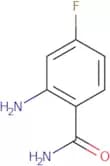
CAS:<p>2-Amino-4-fluorobenzamide is a catalyst that reacts with alcohols and cyclizes them to form quinazolinones. It has been shown to oxidize various alcohols including those with an electron-donating group, such as esters and nitro groups. 2-Amino-4-fluorobenzamide also reacts with electron-deficient alcohols, such as oximes and hydrazines. The mechanism of the oxidative cyclizations is not well understood but it is likely that they are initiated by a nucleophilic attack on the carbonyl carbon atom followed by a concerted or stepwise oxidation of the C=O double bond. The oxidative cyclization reactions are mechanistically similar to those of other catalytic oxidations, such as those used in the industrial production of acetic acid from methanol.</p>Formula:C7H7FN2OPurity:Min. 95%Color and Shape:PowderMolecular weight:154.14 g/molN-Acetyl-L-tyrosine
CAS:<p>N-Acetyl-L-tyrosine is a tyrosine derivative with a chemical structure similar to that of an amino acid. It is used as a model system in biochemistry and molecular biology to study the transfer reactions of tyrosine, which are important for energy metabolism, protein synthesis, and metal chelation. N-Acetyl-L-tyrosine is also an effective substrate molecule for many analytical methods, such as thin layer chromatography or liquid chromatography.</p>Formula:C11H13NO4Purity:Min. 95%Color and Shape:White PowderMolecular weight:223.23 g/mol4-Aminoindole
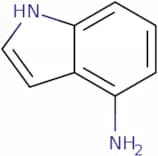
CAS:<p>4-Aminoindole is a heterocycle with a carboxy group and four nitrogen atoms. It can be synthesized by reacting hydrochloric acid with nitrobenzene. 4-Aminoindole has shown potential as a drug target, which may be due to its ability to inhibit the enzyme carboxamidase. The compound is also acidic in water, making it an ideal candidate for use as an acid catalyst. Electropolymerization of 4-aminoindole has been achieved using Pt electrodes in the presence of an acidic environment. This reaction results in the formation of functional groups on the metal surface that are not found in most other electropolymerization reactions.</p>Formula:C8H8N2Color and Shape:PowderMolecular weight:132.16 g/mol5-Fluoro-4-methylpyridin-3-amine
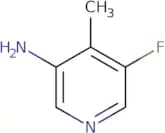
CAS:<p>Versatile small molecule scaffold</p>Formula:C6H7FN2Purity:Min. 95%Color and Shape:PowderMolecular weight:126.13 g/molBicyclo[2.1.1]hexane-1-carboxylic acid
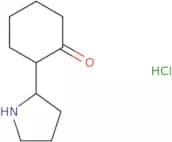
CAS:<p>Versatile small molecule scaffold</p>Formula:C7H10O2Purity:Min. 95%Molecular weight:126.15 g/mol2-(Pyrrolidin-2-yl)cyclohexan-1-one hydrochloride
CAS:<p>Versatile small molecule scaffold</p>Formula:C10H18ClNOPurity:Min. 95%Color and Shape:PowderMolecular weight:203.71 g/molCGS 9895
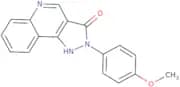
CAS:<p>CGS 9895 is a benzodiazepine ligand that binds to the α1 subunit of the GABA receptor. It has been shown to be an effective dose for treating nervous system diseases such as anxiety, panic disorders, and insomnia. CGS 9895 is a competitive antagonist of benzodiazepines, which bind to the same site on the GABA receptor. It also blocks chloride channels in neurons by acting as an uptake inhibitor and allosteric modulator of GABA receptors. This agent may have potential uses in the treatment of epilepsy, Parkinson's disease, and other central nervous system disorders.</p>Formula:C17H13N3O2Purity:Min. 95%Color and Shape:PowderMolecular weight:291.3 g/mol2-[2-(Morpholin-4-yl)ethoxy]ethan-1-amine
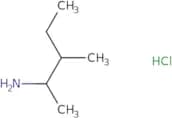
CAS:2-[2-(Morpholin-4-yl)ethoxy]ethan-1-amine is a research chemical that is used as a reagent, reaction component, or building block in the synthesis of more complex compounds. It can be used to synthesize fine chemicals such as pharmaceuticals and agrochemicals.Formula:C8H18N2O2Purity:Min. 95%Color and Shape:Clear LiquidMolecular weight:174.24 g/mol3-Methylpentan-2-amine hydrochloride
CAS:<p>Versatile small molecule scaffold</p>Formula:C6H15N•HClPurity:Min. 95%Color and Shape:PowderMolecular weight:137.65 g/mol2-(4-Bromophenyl)-1,3-thiazole
CAS:<p>Versatile small molecule scaffold</p>Formula:C9H6BrNSPurity:Min. 95%Color and Shape:PowderMolecular weight:240.12 g/mol




![Bicyclo[2.1.1]hexane-1-carboxylic acid](/_next/image/?url=https%3A%2Fstatic.cymitquimica.com%2Fproducts%2F3D%2Fthumb-webp%2FPCA72577.webp&w=3840&q=75)
![2-[2-(Morpholin-4-yl)ethoxy]ethan-1-amine](/_next/image/?url=https%3A%2Fstatic.cymitquimica.com%2Fproducts%2F3D%2Fthumb-webp%2FVAA20713.webp&w=3840&q=75)