Building Blocks
This section contains fundamental products for the synthesis of organic and biological compounds. Building blocks are the essential starting materials used to construct complex molecules through various chemical reactions. They play a critical role in drug discovery, material science, and chemical research. At CymitQuimica, we offer a diverse range of high-quality building blocks to support your innovative research and industrial projects, ensuring you have the essential components for successful synthesis.
Subcategories of "Building Blocks"
- Boronic Acids & Boronic Acid Derivatives(5,778 products)
- Chiral Building Blocks(1,242 products)
- Hydrocarbon Building Blocks(6,098 products)
- Organic Building Blocks(61,034 products)
Found 199601 products of "Building Blocks"
Sort by
Purity (%)
0
100
|
0
|
50
|
90
|
95
|
100
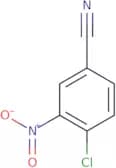
4-Chloro-3-nitrobenzonitrile
CAS:<p>4-Chloro-3-nitrobenzonitrile is a molecule with potent antibacterial activity. It is synthesized by the reaction of sodium carbonate, hydrogen chloride, and 4-chlorobenzonitrile. 4-Chloro-3-nitrobenzonitrile has shown antimicrobial properties against a wide range of bacteria, including methicillin resistant Staphylococcus aureus (MRSA) and Enterococcus faecium. This compound has been used in the treatment of infections caused by these bacteria. 4-Chloro-3-nitrobenzonitrile also has the ability to inhibit the synthesis of fatty acids and lipids in bacterial cells, which may be responsible for its antimicrobial effects.</p>Formula:C7H3ClN2O2Purity:Min. 95%Color and Shape:PowderMolecular weight:182.56 g/mol5-Chloro-2-methylindole
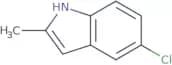
CAS:<p>5-Chloro-2-methylindole is an antimicrobial agent that is used to treat bacterial infections. It binds to the enzyme acetylacetone hydrazide, which prevents it from forming acetoacetate and 5-chloroindole. This leads to a decrease in the formation of serotonin, which may contribute to the alleviation of symptoms in patients with cerebral escherichia coli infection. 5-Chloro-2-methylindole has been shown to have antimicrobial effects against a number of bacteria, including E. coli and Staphylococcus aureus. The drug is injected intraperitoneally as a magnetic resonance imaging contrast agent for myelography, angiography, and other medical imaging procedures.</p>Formula:C9H8ClNPurity:Min. 95%Molecular weight:165.62 g/mol6-Carboxyindole
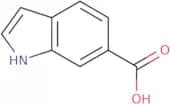
CAS:<p>6-Carboxyindole is an indole that binds to the IL-17A receptor, which leads to the production of pro-inflammatory cytokines. It has been shown to be involved in autoimmune diseases and other inflammatory conditions. 6-Carboxyindole can be used as a probe for studying the biology of IL-17A, by binding to it and inhibiting its effects. The chemical structure of 6-carboxyindole is also useful for diagnostic purposes, as it can bind to antibodies and antigens for detecting infectious diseases or other biological processes. 6-Carboxyindole can be used in the treatment of heart tissue by binding with monoclonal antibodies that are specific for cardiac proteins such as myosin light chain kinase.</p>Formula:C9H7NO2Purity:Min. 95%Molecular weight:161.16 g/mol4-Cyanophenol
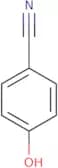
CAS:<p>4-Cyclohexyphenol is a natural compound that belongs to the class of compounds known as phenols. It has a hydroxyl group and an intramolecular hydrogen bond. The thermal expansion of 4-cyanophenol is approximately 6.6 × 10⁻⁶/°C, which is greater than the thermal expansion of p-hydroxybenzoic acid (approximately 1.8 × 10⁻⁶/°C). The reaction mechanism for 4-cyanophenol involves intramolecular hydrogen bonding, which leads to its rapid degradation. 4-Cyanophenol reacts with trifluoroacetic acid in the presence of sodium carbonate to form p-hydroxybenzoic acid, which can be determined by measuring its absorbance at 290 nm. Hydrogen bonding interactions with the surface are responsible for the high sensitivity and selectivity of this analytical method.<br>4-Cyanophenol may also be detected using plasma mass spect</p>Formula:C7H5NOPurity:Min. 95%Color and Shape:PowderMolecular weight:119.12 g/mol2-Chloro-5-nitropyridine
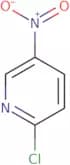
CAS:<p>2-Chloro-5-nitropyridine is a chemical compound with the molecular formula CHClNO. It is a white solid that is soluble in water and has a melting point of 132.2 °C. The molecule consists of two chlorine atoms bonded to an oxygen atom, with two nitro groups bonded to carbon atoms. 2-Chloro-5-nitropyridine was synthesized by reacting sodium carbonate with hydrochloric acid and then adding trifluoroacetic acid to the solution. This reaction produces 2-chloro-5-nitropyridine, hydrogen chloride gas, and sodium chloride crystals as byproducts. The product can be purified using column chromatography or recrystallization methods.</p>Formula:C5H3ClN2O2Purity:Min. 95%Color and Shape:White PowderMolecular weight:158.54 g/mol4-(Aminomethyl)-N-methylbenzamide hydrochloride
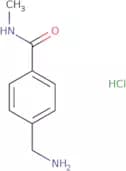
CAS:<p>4-(Aminomethyl)-N-methylbenzamide hydrochloride is a reaction component, reagent, and fine chemical that is useful in the synthesis of high-quality research chemicals, speciality chemicals, and versatile building blocks. This compound has been shown to be useful as a building block or intermediate in the synthesis of complex compounds. 4-(Aminomethyl)-N-methylbenzamide hydrochloride is also used as a reaction component in the production of pharmaceuticals and other organic chemicals. It is soluble in water and has a boiling point of 210°C.</p>Formula:C9H13ClN2OPurity:Min. 95%Color and Shape:PowderMolecular weight:200.66 g/mol7-Bromo-5-methoxyindole-3-carboxylic acid
CAS:<p>Please enquire for more information about 7-Bromo-5-methoxyindole-3-carboxylic acid including the price, delivery time and more detailed product information at the technical inquiry form on this page</p>Formula:C10H8BrNO3Purity:Min. 95%Color and Shape:PowderMolecular weight:270.09 g/mol(E)-5-(-But-1-en-1-yl)benzene-1,3-diol
CAS:<p>(E)-5-(-But-1-en-1-yl)benzene-1,3-diol is a chemical building block that reacts readily with a variety of reagents. It is also a versatile intermediate and has been used as a building block in the synthesis of complex compounds. (E)-5-(-But-1-en-1-yl)benzene-1,3-diol has been shown to be an important component in the synthesis of peptides, amines, and other organic compounds. This compound is also useful for research purposes and as a speciality chemical or fine chemical.</p>Formula:C10H12O2Purity:Min. 95%Color and Shape:PowderMolecular weight:164.2 g/molBocNH-PEG4-CH2COOH
CAS:<p>BocNH-PEG4-CH2COOH is a PEG compound with two different functional groups (also known as heterobifunctional). Unlike homobifunctional PEG compounds (same functional group on both ends), this type of compounds are more versatile as have two different anchor points. BocNH-PEG4-CH2COOH is used as a linker and spacer to add a PEG moiety, via pegylation (a bioconjugation technique) to proteins, peptides, oligonucleotides, small molecules and nanoparticles.</p>Formula:C15H29NO8Purity:Min. 95%Color and Shape:Clear LiquidMolecular weight:351.39 g/mol3-Cyano-1,2-oxazole-5-carboxylic acid
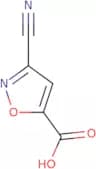
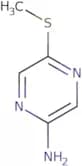
CAS:<p>Versatile small molecule scaffold</p>Formula:C5H2N2O3Purity:Min. 95%Color and Shape:PowderMolecular weight:138.08 g/mol5-(Methylsulfanyl)pyrazin-2-amine
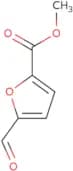
CAS:<p>5-(Methylsulfanyl)pyrazin-2-amine is an organic chemical compound that is a useful building block, reagent, and research chemical. It has many uses in the synthesis of other compounds. 5-(Methylsulfanyl)pyrazin-2-amine is a versatile building block for complex compounds. This compound can be used as a reaction component or scaffold to produce desired products. 5-(Methylsulfanyl)pyrazin-2-amine can also be used as a speciality chemical or high quality fine chemical.</p>Formula:C5H7N3SPurity:Min. 95%Color and Shape:PowderMolecular weight:141.2 g/molMethyl 5-formylfuran-2-carboxylate
CAS:<p>Methyl 5-formylfuran-2-carboxylate (MFC) is a furan derivative that has been used for the synthesis of pharmaceuticals, agrochemicals, and other organic compounds. MFC is synthesized from methanol and formaldehyde in a low concentration to produce a mixture containing methyl 5-formylfuran-2-carboxylate. It can also be synthesized from methanol and formaldehyde in a high concentration to produce crystalline solid MFC. The use of MFC as a template for crystallization has been investigated with success. This compound can be used as a catalyst in the oxidative dehydrogenation of 5-hydroxymethylfurfural to produce 5-formylfuran. MFC is efficient and selective for this reaction, making it an attractive candidate for industrial production of furan derivatives.</p>Formula:C7H6O4Purity:Min. 95%Color and Shape:PowderMolecular weight:154.1 g/mol4,5-Dichloro-3-thiophenecarboxylic acid
CAS:<p>4,5-Dichloro-3-thiophenecarboxylic acid (4,5-DTTC) is an organic compound that is a useful building block and can be used as a reactive intermediate in the synthesis of other chemicals. 4,5-DTTC has been shown to react with alkenes at room temperature to produce a variety of thioethers. This reaction was facilitated by the use of copper(II) chloride as a catalyst. 4,5-DTTC has also been shown to be a good starting material for synthesizing pharmaceuticals such as antihistamines and antibiotics.</p>Formula:C5H2Cl2O2SPurity:Min. 95%Color and Shape:PowderMolecular weight:197.04 g/mol7-Hydroxy-4-methyl-3-coumarinylacetic acid
CAS:<p>7-Hydroxy-4-methyl-3-coumarinylacetic acid (7HMCA) is an analog of 7-amino-4-methylcoumarin. It is a fluorescent material that can be used as a dye in analytical chemistry. The fluorescence of 7HMCA depends on the pH and temperature, as well as the presence of reactive oxygen species such as gadolinium or carbostyril. 7HMCA binds to the molecule's amino group, which has been shown to contribute to its stability and reactivity.</p>Formula:C12H10O5Purity:Min. 95%Color and Shape:PowderMolecular weight:234.20 g/mol6,7-Dimethoxy-1-methyl-1,2,3,4-tetrahydro-isoquinoline
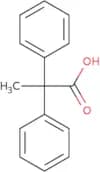
CAS:<p>6,7-Dimethoxy-1-methyl-1,2,3,4-tetrahydroisoquinoline is a trifluoroacetic acid derivative that inhibits the synthesis of dopamine by inhibiting the enzyme tyrosine hydroxylase. It has been shown to be an inhibitor of tissue culture cells and natural compounds. The compound was synthesized from allyl carbonate and pueraria lobata in an asymmetric synthesis with a magnesium salt as a catalyst.</p>Formula:C12H17NO2Purity:Min. 90%Color and Shape:PowderMolecular weight:207.27 g/mol2,2-Diphenylpropionic acid
CAS:<p>2,2-Diphenylpropionic acid is an ester of 2,2-diphenylpropanoyl chloride and a carboxylic acid. It is used as a local anesthetic. The electron distribution in the molecule includes one unpaired electron on the carbon atom adjacent to the carboxylic acid group. The thermodynamic stability of this molecule is due to intramolecular hydrogen bonding between the carboxylic acid and ester moieties. This compound has anticholinergic, antimuscarinic, and spermatozoa effects that are due to its ability to inhibit acetylcholine release from neurons. 2,2-Diphenylpropionic acid has been shown to have acidic properties with an approximate pKa of 3.5.</p>Formula:C15H14O2Purity:Min. 95%Color and Shape:PowderMolecular weight:226.27 g/mol5-Chloro-indan-2-ylamine hydrochloride
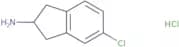
CAS:Controlled Product5-Chloro-indan-2-ylamine hydrochloride is a chemical that can be used as a building block in the synthesis of other chemicals. It is a reagent and useful scaffold in organic synthesis reactions, such as Friedel-Crafts reactions, and can be used to produce indenes. 5-Chloro-indan-2-ylamine hydrochloride is also an intermediate for the production of complex compounds, fine chemicals, and pharmaceuticals. The CAS number for this chemical is 73536-86-4.Formula:C9H10NCl·HClPurity:Min. 95%Color and Shape:PowderMolecular weight:204.09 g/mol3-(2-Methylpyrimidin-4-yl)propanoic acid
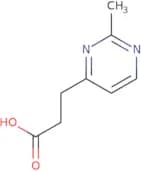
CAS:<p>Versatile small molecule scaffold</p>Formula:C8H10N2O2Purity:Min. 95%Color and Shape:PowderMolecular weight:166.18 g/molN6,N6-Dimethyl-9H-purine-2,6-diamine
CAS:<p>Versatile small molecule scaffold</p>Formula:C7H10N6Purity:Min. 95%Color and Shape:PowderMolecular weight:178.2 g/mol1-Amino-2-(furan-2-yl)propan-2-ol
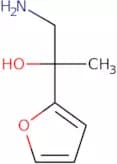
CAS:<p>1-Amino-2-(furan-2-yl)propan-2-ol is a useful building block for the synthesis of heterocycles. It is also used as a reagent for the protection of amines, hydrazones, and carbonyl groups. This compound is soluble in water and is stable under acidic conditions. 1-Amino-2-(furan-2-yl)propan-2-ol has been found to be an important intermediate in the synthesis of pharmaceuticals, pesticides, dyes, perfumes, and solar cells.</p>Formula:C7H11NO2Purity:Min. 95%Color and Shape:Clear LiquidMolecular weight:141.17 g/mol