Building Blocks
This section contains fundamental products for the synthesis of organic and biological compounds. Building blocks are the essential starting materials used to construct complex molecules through various chemical reactions. They play a critical role in drug discovery, material science, and chemical research. At CymitQuimica, we offer a diverse range of high-quality building blocks to support your innovative research and industrial projects, ensuring you have the essential components for successful synthesis.
Subcategories of "Building Blocks"
- Boronic Acids & Boronic Acid Derivatives(5,756 products)
- Chiral Building Blocks(1,242 products)
- Hydrocarbon Building Blocks(6,095 products)
- Organic Building Blocks(61,051 products)
Found 199813 products of "Building Blocks"
Sort by
Purity (%)
0
100
|
0
|
50
|
90
|
95
|
100
2-(4-Benzyloxyphenyl)ethanol
CAS:2-(4-Benzyloxyphenyl)ethanol is an organic compound that has a particle size of less than 10 μm and is soluble in water. It is used as a reaction system for the production of tannins, which are polyphenolic compounds that have antioxidant properties. 2-(4-Benzyloxyphenyl)ethanol also inhibits maltase activity and metal ion-induced allylic oxidation. This compound can be used to inhibit fatty acid synthesis, which is important for the prevention of atherosclerosis and other cardiovascular diseases.Formula:C15H16O2Purity:Min. 95%Color and Shape:PowderMolecular weight:228.29 g/molBis(4-hydroxy)benzophenone
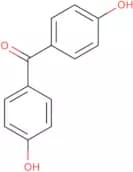
CAS:<p>Bis(4-hydroxyphenyl)benzene is a cross-linking agent that is used as a photoinitiator in the production of polymers and coatings. It is also used in wastewater treatment to remove organic matter, phenols, and other pollutants. This chemical has been shown to have physiological effects on hamster V79 cells and may cause cancer. The toxicity of Bis(4-hydroxyphenyl)benzene can be reduced by the addition of hydroxylamine or hydrogen fluoride. Hydroxyl groups can be quantified using diphenyl ether or p-hydroxybenzoic acid. Bis(4-hydroxyphenyl)benzene also reacts with serine protease and has been shown to inhibit the growth of V79 cells in urine samples.</p>Formula:C13H10O3Purity:Min. 95%Color and Shape:White Off-White PowderMolecular weight:214.22 g/mol2-Bromo-4-iodopyridine
CAS:<p>2-Bromo-4-iodopyridine is a coordination compound that inhibits bacterial enzyme catechol-O-methyltransferase (COMT). It is also an inhibitor of methicillin-resistant Staphylococcus aureus (MRSA) and other bacteria. 2-Bromo-4-iodopyridine binds to the active site of COMT, which is located in the bacterial cell wall, and prevents methylamine from binding to the enzyme. This prevents methylation of the catechol ring, which is required for bacterial growth. 2-Bromo-4-iodopyridine has been shown to have antimicrobial activity against Escherichia coli, Enterococcus faecalis, Bacillus subtilis, and Candida albicans.</p>Formula:C5H3BrINPurity:Min. 95%Color and Shape:PowderMolecular weight:283.88 g/mol1,4-Bis-(diphenylphosphino)butane
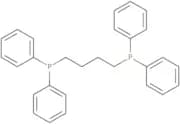
CAS:<p>1,4-Bis-(diphenylphosphino)butane is a coordination compound that contains a bicyclic heterocycle. The compounds are made up of phosphorus and nitrogen atoms which are arranged in a tetrahedral geometry. It has photochemical properties and can be used to inhibit the growth of myeloid leukemia cells. The complexes bind to amines and form stable complexes with hydroxyl groups, so they are also able to cross mitochondrial membranes. This compound has been shown to bind to copper ions in x-ray crystal structures. 1,4-Bis-(diphenylphosphino)butane binds more strongly to ethylene diamine than it does to aryl halides such as chloroethane or phenylethane. Activation energies for the binding of 1,4-bis-(diphenylphosphino)butane with ethylene diamine have been found by measuring the free energy change for its formation from</p>Formula:C28H28P2Purity:Min. 95%Color and Shape:White PowderMolecular weight:426.47 g/mol1-Bromoadamantane - 90%min
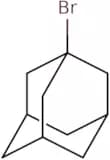
CAS:1-Bromoadamantane is a quinoline derivative that binds to the inflammatory bowel disease molecule. It is used as a pharmaceutical preparation for the treatment of inflammatory bowel disease. 1-Bromoadamantane is synthesized by the palladium-catalyzed coupling reaction of 2,6-dimethoxybenzene and trifluoromethanesulfonic acid. The synthesis method involves the use of hydrochloric acid and hydroxyl group. 1-Bromoadamantane has been shown to have binding constants with ileal and colonic tissue in rats with experimental colitis.Formula:C10H15BrPurity:Min. 90%Color and Shape:PowderMolecular weight:215.13 g/molN4-Benzoylcytosine
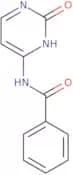
CAS:<p>Building block in the synthesis of nucleoside antiviral agents</p>Formula:C11H9N3O2Purity:Min. 95%Color and Shape:White PowderMolecular weight:215.21 g/molLys(Boc)-OtBu,HCl
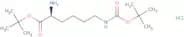
CAS:<p>Lys(Boc)-OtBu,HCl is a versatile building block and research chemical that can be used for the synthesis of complex compounds. This compound is a useful intermediate and reaction component in organic chemistry. It is also a reagent that can be used to synthesize high-quality chemical products.</p>Formula:C15H30N2O4·HClPurity:Min. 95%Color and Shape:White PowderMolecular weight:338.87 g/molBoc-N-methyl-L-alanine
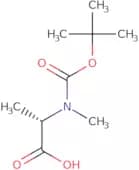
CAS:<p>Boc-N-methyl-L-alanine is a synthetic, active natural product that is used to diagnose cancer. It has been shown to be an inhibitor of serine protease and can be used to study the interactions between steric interactions and enzyme activity. Boc-N-methyl-L-alanine has also been shown to have anti-cancer activity by inhibiting acid conjugates in cancer cells. This compound can also be used for profiling purposes, as it has been shown to inhibit all trans retinoic acid (ATRA) production in prostate cancer cells.</p>Formula:C9H17NO4Purity:Min. 95%Color and Shape:White PowderMolecular weight:203.24 g/mol12-Bromo-1-aminododecane, hydrobromide
CAS:<p>12-Bromo-1-aminododecane, hydrobromide is a reagent that can be used as a building block in organic synthesis. It is also useful for the preparation of 12-bromo-1-aminododecane, hydrochloride, which has been shown to be an effective reaction component and reagent in both organic and organometallic synthesis. This compound has a CAS number of 14502-45-5 and can be purchased as a fine chemical or speciality chemical.</p>Formula:C12H27Br2NPurity:Min. 95%Color and Shape:PowderMolecular weight:345.16 g/mol6-Bromo-2-oxindole
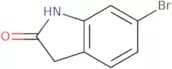
CAS:<p>6-Bromo-2-oxindole is a crystalline compound with a molecular formula of C10H6BrO. It has been shown to have a high efficiency in the production of butyric acid and other organic acids. 6-Bromo-2-oxindole is also used in electron microscopy studies as an electron acceptor, and can be used for producing polymers with crystalline structures and dihedral angles. The compound has been shown to inhibit the growth of breast cancer cells by preventing the synthesis of mda-mb-231 breast cancer cells. It also has been shown to inhibit the production of isoindigo and morphology.</p>Formula:C8H6BrNOPurity:Min. 98 Area-%Color and Shape:PowderMolecular weight:212.04 g/mol4-Bromobenzylamine
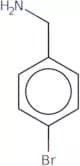
CAS:<p>4-Bromobenzylamine is a chemical compound that has been used to study the process optimization of sephadex g-100. It is also used as a chemotherapeutic treatment for cancer. 4-Bromobenzylamine binds to intracellular targets, such as nitrogen atoms and cell lysis, with physiological levels found in fetal bovine serum. The nitrogen atom is an essential structural component of 4-bromobenzylamine that is necessary for its biological activity and may be involved in binding to DNA polymerase. This drug has been shown to inhibit the growth of metastatic colorectal cancer cells by inhibiting cellular proliferation. Structural analysis has revealed that 4-bromobenzylamine interacts with the polymerase chain reaction (PCR) enzyme and inhibits the ability of DNA polymerases to add nucleotides to the growing strand of DNA.</p>Formula:C7H8BrNPurity:Min. 95%Color and Shape:PowderMolecular weight:186.05 g/mol1-Butene-3,4-diol
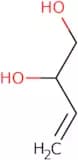
CAS:<p>1-Butene-3,4-diol is a reactive compound that is used in analytical methods. It can be synthesized by an asymmetric synthesis from 1,2-butanediol. This product has been shown to inhibit aminotransferase activity in rat liver microsomes and to be metabolized through the cytochrome P450 system. 1-Butene-3,4-diol also inhibits polymerase chain reactions and is reactive with hydrochloric acid. It may cause fatty acid metabolism and hydroxyl group formation.</p>Formula:C4H8O2Purity:Min. 95%Color and Shape:Colorless Clear LiquidMolecular weight:88.11 g/moltert-Butoxycarbonyl-L-leucine
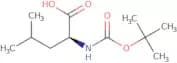
CAS:<p>Tert-Butoxycarbonyl-L-leucine (tBOC-LL) is a tetrapeptide that is used as a drug substance in the synthesis of buserelin, a synthetic peptide hormone. It has been shown to have high reactivity in organic solvents and can be used in cationic polymerization reactions. tBOC-LL has been used to synthesize helical structures with high purity and yield. As it is not an amino acid, tBOC-LL does not occur naturally and must be synthesized.<br>Tert-Butoxycarbonyl-L-leucine (tBOC-LL) is available from Sigma Aldrich Chemie GmbH & Co KG as:</p>Formula:C11H21NO4Purity:Min. 98 Area-%Color and Shape:White PowderMolecular weight:231.29 g/mol1-Butanoic acid-2-(O-methyl-L-tyrosine)-1-carbaoxytocin
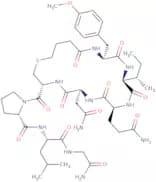
CAS:<p>1-Butanoic acid-2-(O-methyl-L-tyrosine)-1-carbaoxytocin (BMT) is a synthetic analog of oxytocin. Oxytocin is a hormone that is produced in the hypothalamus and released by the pituitary gland to stimulate uterine contractions and milk letdown in mammals. 1-Butanoic acid-2-(O-methyl-L-tyrosine)-1-carbaoxytocin has been shown to bind to the oxytocin receptor and stimulate the release of insulin, which may be useful for treating type 2 diabetes. BMT also stimulates epidermal growth factor (EGF) production and induces skin cell growth. It has been used as an animal health drug for stimulating appetite, increasing weight gain, reducing inflammation, and lowering blood pressure.</p>Formula:C45H69N11O12SPurity:Min. 95%Color and Shape:White PowderMolecular weight:988.16 g/molLinalool glucoside
CAS:<p>Please enquire for more information about Linalool glucoside including the price, delivery time and more detailed product information at the technical inquiry form on this page</p>Formula:C16H28O6Purity:Min. 95%Color and Shape:Clear LiquidMolecular weight:316.39 g/mol2-(Bromomethyl)benzoic acid
CAS:<p>2-(Bromomethyl)benzoic acid is a functional group that can be found in many organic compounds. It is a derivative of phthalic acid and has some similar properties, including the ability to form micelles and radical species. 2-(Bromomethyl)benzoic acid has been shown to react with carbon tetrachloride or terephthalic acid to produce peroxides. This reaction is initiated by oxidation of the carbon-carbon double bond, which produces a radical pair that reacts with oxygen in the air to form radicals that are stabilized by resonance. 2-(Bromomethyl)benzoic acid also reacts with an inorganic base such as sodium hydroxide or potassium hydroxide to produce bromine gas and water.</p>Formula:C8H7BrO2Purity:Min. 97 Area-%Color and Shape:White Off-White PowderMolecular weight:215.04 g/molLauroyl coenzyme A lithium
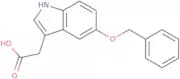
CAS:<p>Please enquire for more information about Lauroyl coenzyme A lithium including the price, delivery time and more detailed product information at the technical inquiry form on this page</p>Formula:C33H58N7O17P3S•LixPurity:90%Color and Shape:Powder5-Benzyloxyindole-3-acetic acid
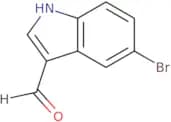
CAS:<p>5-Benzyloxyindole-3-acetic acid is a synthetic chemical that is used as a plant growth regulator. It inhibits the uptake of other plant nutrients, such as nitrates and phosphate ions by roots, which leads to decreased plant growth. This compound also has an inhibitory effect on membranes and morphology. The inhibition of membrane transport can lead to cell death, which can be seen in the case of plants treated with this chemical. 5-Benzyloxyindole-3-acetic acid has been shown to affect the response pathway of plants at temperatures between c1-c3 degrees Celsius.</p>Formula:C17H15NO3Purity:Min. 95%Color and Shape:PowderMolecular weight:281.31 g/mol5-Bromoindole-3-carboxaldehyde
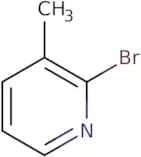
CAS:<p>5-Bromoindole-3-carboxaldehyde is a water molecule that has been crystallized in the form of an amide. It is a chemical substance with asymmetric synthesis and significant antifungal activity. 5-Bromoindole-3-carboxaldehyde is active against some strains of the fungus Candida albicans and has been shown to inhibit the growth of kidney cells. This molecule also binds to the neurokinin 1 receptor and is used as a probe for fluorescence studies. The efficient method for synthesizing 5-Bromoindole-3-carboxaldehyde includes using silico analysis to confirm the structure on a computer, then performing an asymmetric synthesis with an acid catalyst to produce this compound.</p>Formula:C9H6BrNOPurity:Min. 98 Area-%Color and Shape:PowderMolecular weight:224.05 g/mol2-Bromo-3-methylpyridine
CAS:2-Bromo-3-methylpyridine is a diazido compound with a hydrogen bond. It reacts rapidly with copper chloride to form the coordination complex Cu(diazido)(Cl)2 and an organic product. 2-Bromo-3-methylpyridine can be synthesized from 2,4-dibromopyridine by a cross coupling reaction with copper chloride and calcium carbonate in the presence of sodium potassium bicarbonate. The coordination geometry of the molecule is tetrahedral, with two bromine atoms on opposite sides of the central nitrogen atom and one bromine atom on each side of the pyridine ring. Reaction products are formed as a result of substitution reactions involving halides, such as methyl chloride or ethyl chloride, which act as electrophiles to react with the diazido group. Potential mechanisms include metathesis reactions or cryogenic processes.Formula:C6H6BrNPurity:Min. 95%Color and Shape:Colorless Clear LiquidMolecular weight:172.02 g/mol