Building Blocks
This section contains fundamental products for the synthesis of organic and biological compounds. Building blocks are the essential starting materials used to construct complex molecules through various chemical reactions. They play a critical role in drug discovery, material science, and chemical research. At CymitQuimica, we offer a diverse range of high-quality building blocks to support your innovative research and industrial projects, ensuring you have the essential components for successful synthesis.
Subcategories of "Building Blocks"
- Boronic Acids & Boronic Acid Derivatives(5,778 products)
- Chiral Building Blocks(1,242 products)
- Hydrocarbon Building Blocks(6,098 products)
- Organic Building Blocks(61,034 products)
Found 199601 products of "Building Blocks"
Sort by
Purity (%)
0
100
|
0
|
50
|
90
|
95
|
100
N-Methyl-N-[1H-indol-3-yl)methyl]amine
CAS:<p>N-Methyl-N-[1H-indol-3-yl)methyl]amine is a plant alkaloid that is found in many plants. It has been shown to have a high constant and to be able to be extracted from the gramine. N-Methyl-N-[1H-indol-3-yl)methyl]amine has been shown to inhibit nitrification and may have potential use as an herbicide. The reaction products of this compound are unknown, but it has been shown to inhibit biosynthesis in vitro assays. This compound also has properties that make it useful for the study of gender and dry weight expression in plants, as well as its ability to be produced by polyclonal antibodies.</p>Formula:C10H12N2Purity:Min. 95%Color and Shape:PowderMolecular weight:160.22 g/molN-Methyl-1-quinolin-2-ylmethanamine dihydrochloride
CAS:Please enquire for more information about N-Methyl-1-quinolin-2-ylmethanamine dihydrochloride including the price, delivery time and more detailed product information at the technical inquiry form on this pageFormula:C11H12N2•(HCl)2Purity:Min. 95%Color and Shape:PowderMolecular weight:245.15 g/mol2-Methoxy-1-((2-(trimethylsilyl)ethoxy)methyl)-1H-imidazole-5-carbaldehyde
<p>Please enquire for more information about 2-Methoxy-1-((2-(trimethylsilyl)ethoxy)methyl)-1H-imidazole-5-carbaldehyde including the price, delivery time and more detailed product information at the technical inquiry form on this page</p>Formula:C11H20N2O3SiPurity:Min. 95%Color and Shape:PowderMolecular weight:256.37 g/molBenzofuran-4-carbaldehyde
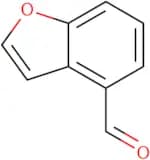
CAS:<p>Benzofuran-4-carbaldehyde is a reactive, low molecular weight compound. It is an oxidative and thermally labile compound that can be used for the preparation of other compounds. Benzofuran-4-carbaldehyde is a colorless liquid with a boiling point of 124°C and a melting point of -27°C. It has a molecular weight of 92.07 g/mol and has a density of 0.91 g/mL at 20°C, which means it will have an octanol:water partition coefficient of 1.2. The molecule has two chiral centers, meaning there are four possible stereoisomers that can be made from it. This compound is primarily broken down into furan, formic acid, and methanol by oxidation mechanisms or by thermal decomposition pathways such as pyrolysis or condensation reactions to produce additional compounds.br>br>Benzofuran-4-carbaldehyde can be oxidized to produce reactive oxygen species</p>Formula:C9H6O2Purity:Min. 95%Molecular weight:146.14 g/molMono(2-ethylhexyl) terephthalate
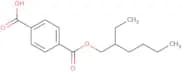
CAS:Please enquire for more information about Mono(2-ethylhexyl) terephthalate including the price, delivery time and more detailed product information at the technical inquiry form on this pageFormula:C16H22O4Purity:Min. 95%Color and Shape:PowderMolecular weight:278.34 g/mol2-Aminobenzophenone
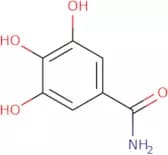
CAS:<p>2-Aminobenzophenone is a molecule that is the product of the reaction between 2-benzoylbenzoic acid and diazonium salt. The molecule has a coordination geometry, which means it exhibits two N-N bonds. The molecule also has two amines, which are reactive groups that can form covalent bonds with other molecules. This molecule has been used for asymmetric synthesis in a number of reactions, such as the reaction between methyl ethyl ketones and phosphorus pentoxide to form picolinic acid. The mechanism of this reaction is as follows: +PCl5 → PCl3 + Cl 2CHC6H5 + PCl5 → (CHC6H5)2PCl2 + HCl The nitrogen atoms in the amine group undergo an addition reaction with phosphorus pentoxide to form an intermediate, which then reacts with the chloride ion to form picolinic acid.</p>Formula:C13H11NOPurity:Min. 95%Color and Shape:PowderMolecular weight:197.23 g/mol3,4,5-Trihydroxybenzamide
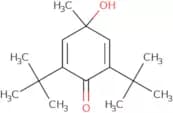
CAS:<p>3,4,5-Trihydroxybenzamide (THB) is an active agent that inhibits the synthesis of prostaglandin J2. It has been shown to inhibit the uptake of fatty acids in rat liver cells by blocking fatty acid binding proteins. THB has also been shown to inhibit the chemical structures of nitro and epidermal growth factor. 3,4,5-Trihydroxybenzamide can be used as a cancer treatment by inhibiting the growth and spread of cancer cells. This drug is also believed to have a protective effect on the skin by reducing inflammation and increasing cell proliferation.<br>THB is currently being researched for its ability to suppress histone proteins and growth factors such as HGF or EGF in human HL60 cells.</p>Formula:C7H7NO4Purity:Min. 98 Area-%Color and Shape:Off-White PowderMolecular weight:169.13 g/mol2,6-Di(tert-butyl)-4-hydroxy-4-methyl-2,5-cyclohexadien-1-one
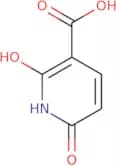
CAS:<p>2,6-Di(tert-butyl)-4-hydroxy-4-methyl-2,5-cyclohexadien-1-one (BHT) is a reactive methide that can be produced by the nucleophilic attack of an electrophile on a molecule containing a methylene group. BHT is used in analytical chemistry as an antioxidant and free radical scavenger. BHT has been shown to protect rat liver microsomes from damage induced by oxidative stress and to inhibit the development of lung cancer in rats chronically treated with cigarette smoke. This product also has been used in modelling studies to study the effect of alveolar type II cells on airway hyperresponsiveness.</p>Formula:C15H24O2Purity:Min. 95%Color and Shape:PowderMolecular weight:236.35 g/mol6-Hydroxy-2-oxo-1,2-dihydropyridine-3-carboxylic acid
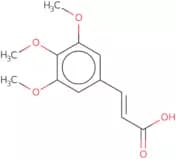
CAS:<p>6-Hydroxy-2-oxo-1,2-dihydropyridine-3-carboxylic acid is a hydroxylate that is found in animals and plants. It is also a flavinoid, meaning it has an aromatic ring with two carbon atoms and a nitrogen atom. 6-Hydroxy-2-oxo-1,2-dihydropyridine 3 carboxylic acid is found in the subunits of flavoproteins, which are enzymes that produce molecular oxygen from hydrogen peroxide. 6HODCA has been shown to be an acceptor for electrons in lipid oxidation reactions and can be used as a precursor for the synthesis of lipids. Hydroxylases also produce 6HODCA by adding water to pyridines.</p>Formula:C6H5NO4Purity:Min. 95%Molecular weight:155.11 g/mol3,4,5-Trimethoxycinnamic acid
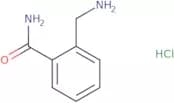
CAS:<p>3,4,5-Trimethoxycinnamic acid (TMC) is a hydroxycinnamic acid that is an intermediate in the synthesis of protocatechuic acid. TMC has been found to have an inhibitory effect on the matrix metalloproteinase activity in the cerebellar granule cells and may be useful for treating allergic reactions. It also has anti-inflammatory properties and can be used as a replacement for sodium carbonate in certain industrial processes. TMC also has been shown to have GABA-ergic effects, increasing locomotor activity and reducing anxiety. TMC can also be used as a Chinese herb for the treatment of ganoderma lucidum.</p>Formula:C12H14O5Purity:Min. 98 Area-%Color and Shape:PowderMolecular weight:238.24 g/mol2-(Aminomethyl)benzamide hydrochloride
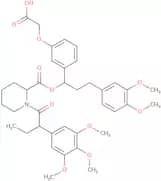
CAS:<p>2-(Aminomethyl)benzamide hydrochloride is a research chemical with high quality and versatile building block properties. It is a useful intermediate in the synthesis of complex compounds, and can be used as a reagent for the production of speciality chemicals. 2-(Aminomethyl)benzamide hydrochloride is also an important reaction component in the synthesis of some fine chemicals, such as pharmaceuticals, dyes, pesticides, and perfumes. 2-(Aminomethyl)benzamide hydrochloride has CAS No. 1187927-15-6 and can be purchased from chemical suppliers worldwide.</p>Formula:C8H10N2O·HClPurity:Min. 95%Color and Shape:White PowderMolecular weight:186.64 g/molAP1867
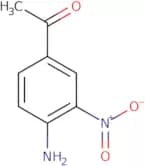
CAS:<p>AP1867 is a small molecule that targets the protein–protein interactions of lipid kinases. It is being developed for the treatment of cancers, including breast, prostate and lung cancer. AP1867 has been shown to inhibit the growth of human cancer cells in tissue culture and animal models, with some effects on cell viability. AP1867 has also demonstrated an ability to induce genetic ablation in cultured cells and to modulate signal detection pathways. Target gene expression profiling has identified a number of potential molecular targets for this drug.</p>Formula:C38H47NO11Purity:Min. 80%Color and Shape:PowderMolecular weight:693.8 g/mol4-Amino-3-nitroacetophenone
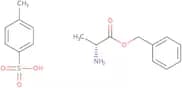
CAS:<p>4-Amino-3-nitroacetophenone is a ketone that is synthesized by the reaction of acetophenone and nitric acid. It has been used as a precursor in the production of dyes, pharmaceuticals, and explosives. The conversion of 4-amino-3-nitroacetophenone to 2,4,6-trinitrophenol is catalyzed by aluminium powder or activated charcoal. This reagent converts the amide group to an amine group by reacting with water in the presence of oxygen. Diethyl ether can be used as a solvent for this reaction.</p>Formula:C8H8N2O3Purity:Min. 95%Color and Shape:Orange PowderMolecular weight:180.16 g/molD-Alanine benzyl ester p-toluenesulfonate salt
CAS:<p>D-Alanine benzyl ester p-toluenesulfonate salt is a fine chemical that is used in research and development. It is a versatile building block that can be used as an intermediate or a reaction component. D-Alanine benzyl ester p-toluenesulfonate salt has been shown to have high quality, which makes it useful for the production of complex compounds. This compound can be used as a speciality chemical or as a reagent in research.</p>Formula:C10H13NO2·C7H8O3SPurity:Min. 95%Color and Shape:PowderMolecular weight:351.42 g/mol4-Aminomethylbenzoic acid
CAS:<p>4-Aminomethylbenzoic acid (4AMBA) is a metabolite that is formed from the amino acid methionine. It has been shown to inhibit the growth of prostate cancer cells in vitro and in vivo. 4-Aminomethylbenzoic acid inhibits the activity of polymerase chain reaction (PCR), which is an enzyme that catalyzes DNA replication. The hydroxyl group on 4-aminomethylbenzoic acid reacts with one of the phosphate groups on DNA, forming a covalent bond and inhibiting DNA synthesis. This inhibition occurs at the step called initiation, where DNA synthesis begins by binding of RNA polymerase to a specific sequence of DNA. In addition, 4-aminomethylbenzoic acid also inhibits the activity of x-ray diffraction data, which is an enzyme that catalyzes RNA transcription. Histological analysis shows that 4-aminomethylbenzoic acid causes congestive heart</p>Formula:C8H9NO2Purity:Min. 98 Area-%Color and Shape:White PowderMolecular weight:151.16 g/molN-Acetylglycine
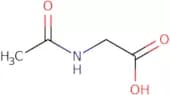
CAS:<p>N-Acetylglycine is an amide, which is a molecule with both a carboxylate and hydroxyl group. It belongs to the class of antimicrobial agents and has been shown to inhibit the growth of bacteria by inhibiting synthesis of folic acid and other metabolites. N-Acetylglycine also inhibits the formation of terminal residues from amino acids. The analytical method for this compound is based on the reaction between n-acetylglycine and hydrogen chloride in methanol. This produces picolinic acid, which can be detected using ultraviolet spectroscopy at a wavelength of 325 nm.</p>Formula:C4H7NO3Purity:Min. 95%Color and Shape:White PowderMolecular weight:117.1 g/mol1-Amino-1-cyclopropanecarboxylic acid
CAS:<p>1-Amino-1-cyclopropanecarboxylic acid (ACC) is a precursor of ethylene, which is a plant hormone that regulates many aspects of plant growth and development. ACC can be converted to ethylene by the enzyme ACC synthase. The conversion of ACC to ethylene is facilitated by the enzymes ACC oxidase and ACC deaminase. Ethylene has been shown to regulate the expression of genes involved in photosynthesis, protein synthesis, and other metabolic pathways. Ethylene also modulates physiological processes such as fruit ripening, leaf senescence, and stomatal closure. This molecule participates in a variety of biological reactions including receptor activity and protein degradation via ubiquitin ligases. It also regulates calcium levels in cells through its role in signal transduction pathways.</p>Formula:C4H7NO2Purity:Min. 95%Color and Shape:PowderMolecular weight:101.1 g/mol2-Amino-4,6-dichloropyrimidine
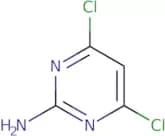
CAS:<p>2-Amino-4,6-dichloropyrimidine is a chemical compound that can be used as an intermediate in the synthesis of other compounds. It is usually prepared by chlorinating 2-amino-pyrimidine with sodium hypochlorite. 2-Amino-4,6-dichloropyrimidine has been shown to inhibit the growth of herpes simplex virus and influenza virus when it is added to cell cultures. This compound also inhibits the replication of protonated nucleic acids by reacting with the amide group of nucleophilic amino acids in DNA or RNA. The reaction between 2-amino-4,6-dichloropyrimidine and amines gives pyridinium salts, which are useful intermediates in organic chemistry reactions.</p>Formula:C4H3Cl2N3Purity:90%Color and Shape:Off-White PowderMolecular weight:163.99 g/mol2-(1,3-Dioxaindan-4-yl)ethan-1-amine
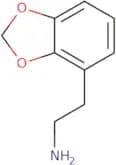
CAS:Controlled Product<p>Versatile small molecule scaffold</p>Formula:C9H11NO2Purity:Min. 95%Color and Shape:Clear LiquidMolecular weight:165.19 g/mol2-Amino-6-methoxybenzonitrile
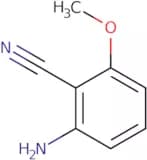
CAS:<p>2-Amino-6-methoxybenzonitrile is an organic compound that belongs to a group of monosubstituted hydroxylamines. It has been used in the synthesis of various analogues, such as caprolactam and methoxyanthranilic acid. Hydrochloric acid reacts with 2-amino-6-methoxybenzonitrile to form 2-amino-6-hydroxybenzonitrile, which can be oxidized to 2-amino-6-(hydroxymethyl)benzonitrile. This reaction is catalyzed by copper or zinc metal.</p>Formula:C8H8N2OPurity:Min. 95%Color and Shape:PowderMolecular weight:148.16 g/mol
![N-Methyl-N-[1H-indol-3-yl)methyl]amine](/_next/image/?url=https%3A%2Fstatic.cymitquimica.com%2Fproducts%2F3D%2Fthumb-webp%2FLBA28495.webp&w=3840&q=75)