Building Blocks
This section contains fundamental products for the synthesis of organic and biological compounds. Building blocks are the essential starting materials used to construct complex molecules through various chemical reactions. They play a critical role in drug discovery, material science, and chemical research. At CymitQuimica, we offer a diverse range of high-quality building blocks to support your innovative research and industrial projects, ensuring you have the essential components for successful synthesis.
Subcategories of "Building Blocks"
- Boronic Acids & Boronic Acid Derivatives(5,778 products)
- Chiral Building Blocks(1,242 products)
- Hydrocarbon Building Blocks(6,098 products)
- Organic Building Blocks(61,034 products)
Found 199601 products of "Building Blocks"
Sort by
Purity (%)
0
100
|
0
|
50
|
90
|
95
|
100
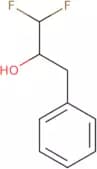
1,1-Difluoro-3-phenylpropan-2-ol
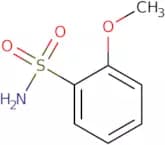
CAS:<p>1,1-Difluoro-3-phenylpropan-2-ol is a versatile building block that can be used to produce a range of complex compounds. It is also useful as a reagent and speciality chemical in research. This chemical has been shown to be an excellent building block for the synthesis of novel compounds with high quality and utility as scaffolds for organic chemistry.</p>Formula:C9H10F2OPurity:Min. 90%Color and Shape:PowderMolecular weight:172.17 g/mol2-Methoxybenzene sulphonamide
CAS:<p>2-Methoxybenzene sulphonamide is an anti-cancer drug that belongs to the class of hydroxylated aromatic compounds. It has been shown to inhibit the growth of cancer cells in culture and in animals, and to prevent the formation of metastases. 2-Methoxybenzene sulphonamide is also a vasodilator drug used for the treatment of congestive heart failure. This drug binds to dopamine receptors in humans and may inhibit phosphatase activity. It has been shown to act as an antihypertensive by inhibiting angiotensin II mediated hypertrophy of cardiac tissue.</p>Formula:C7H9NO3SPurity:Min. 95%Color and Shape:White PowderMolecular weight:187.22 g/mol3-Phenylbutan-2-one
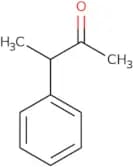
CAS:<p>3-Phenylbutan-2-one is a volatile oil that possesses bactericidal activity. 3-Phenylbutan-2-one has been shown to inhibit the growth of Enterobacter aerogenes and Bacillus subtilis at high concentrations by hydrogen bonding with the enzyme enolate anion, which is involved in the synthesis of fatty acids. 3-Phenylbutan-2-one also inhibits nitro group formation and ether extract production through steric interactions, thereby preventing bacterial cell wall synthesis. The antibacterial mechanism of 3-phenylbutan-2-one is due to its ability to react with steroid glycosides in intramolecular hydrogen transfer reactions.</p>Formula:C10H12OPurity:Min. 95%Color and Shape:Clear LiquidMolecular weight:148.2 g/mol4-Methoxycyclohexane-1-sulfonyl chloride
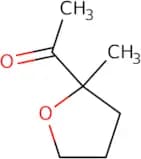
CAS:<p>Versatile small molecule scaffold</p>Formula:C7H13ClO3SPurity:Min. 95%Color and Shape:Clear LiquidMolecular weight:212.7 g/mol1-(2-Methyloxolan-2-yl)ethan-1-one
CAS:<p>Versatile small molecule scaffold</p>Formula:C7H12O2Purity:Min. 95%Molecular weight:128.17 g/molTrimethylpyruvic acid
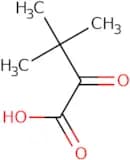
CAS:<p>Trimethylpyruvic acid is an organic compound that is a colorless liquid with a strong odor. It is produced by the oxidation of l-tert-leucine with hydrogen peroxide in the presence of sodium hydroxide. The molecule is chiral, which means it can exist as two different forms that have different physical and chemical properties. Trimethylpyruvic acid can be used for the synthesis of other molecules, including amides, carboxylic acids, and nucleotides. It also has photochemical properties and can be used in reactions that require heating or light.</p>Formula:C6H10O3Purity:Min. 95%Color and Shape:Clear LiquidMolecular weight:130.14 g/mol5-Methoxy-D-tryptophan
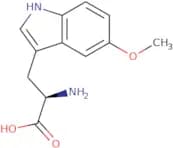
CAS:<p>5-Methoxy-D-tryptophan is a biaryl amino acid derivative that belongs to the class of alkaloids. It is a chiral monomeric building block derived from D-tryptophan. 5-Methoxy-D-tryptophan is commonly used in research chemicals and has been found in natural products such as lochnerine and indole. This compound exhibits unique properties and can be utilized for various applications in the field of chemistry and biochemistry. Its versatility makes it an essential component for researchers and scientists looking to explore new avenues in their studies.</p>Formula:C12H14N2O3Purity:Min. 95%Color and Shape:PowderMolecular weight:234.25 g/molBoc-D-Leu-OH
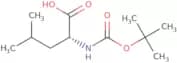
CAS:<p>Boc-D-Leu-OH is a cyclic peptide that has been shown to have antibacterial activity. It is a monomer with a hydroxy group and a cavity. Boc-D-Leu-OH was found to be able to transport hydrophobic compounds across membranes, which may be due to its hydrophobic nature. Boc-D-Leu-OH also induces apoptosis in cells, which can lead to cancer. This compound has been optimized by structural modifications and residue substitutions, which have led to improved properties such as enhanced stability and increased antimicrobial activity.</p>Formula:C11H21NO4Purity:Min. 95%Color and Shape:PowderMolecular weight:231.29 g/mol5-Phenyl-3H-furan-2-one
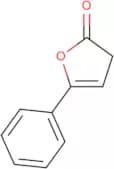
CAS:<p>5-Phenyl-3H-furan-2-one is an antiviral agent that belongs to the group of aldehydes. It is used as an active ingredient in influenza vaccines. The virus is inactivated by 5-phenyl-3H-furan-2-one and produces a recemic product that can be detected with a branched chain profile after chemical hydrolysis.</p>Formula:C10H8O2Purity:Min. 95%Color and Shape:PowderMolecular weight:160.17 g/molKisspeptin-234 trifluoroacetate
CAS:<p>Please enquire for more information about Kisspeptin-234 trifluoroacetate including the price, delivery time and more detailed product information at the technical inquiry form on this page</p>Formula:C63H78N18O13•(C2HF3O2)xPurity:Min. 95 Area-%Molecular weight:1,295.41 g/molImidazolyl-4-ethanol
CAS:<p>Imidazolyl-4-ethanol is a glycoside derivative that inhibits the synthesis of proteins, fats, and nucleic acids by inhibiting the enzyme phosphofructokinase. The compound has been shown to have anti-inflammatory properties that are similar to those of nonsteroidal antiinflammatory drugs. This drug also has a kinetic energy of -1.2 kcal/mol and it has a ph optimum of 7.5. Imidazolyl-4-ethanol has been shown to be useful in vitro for the synthesis of antibodies against monoclonal antibodies and for radiation protection. It can also be used as a radioactive tracer in vivo.</p>Formula:C5H8N2OPurity:Min. 90 Area-%Color and Shape:PowderMolecular weight:112.13 g/mol6-Amino-5-nitro-1,2-dihydropyrimidin-2-one
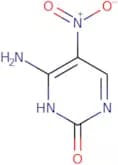
CAS:6-Amino-5-nitro-1,2-dihydropyrimidin-2-one (6ANPD) is a neutral molecule that can form self-assembled monolayers at the air/water interface. 6ANPD adsorbs to the interface by hydrogen bonding and van der Waals interactions. This molecule has been shown to stabilize the monolayer against electrolytes, which are molecules that disrupt the bonding between molecules in a solution. The self-assembled monolayers formed by 6ANPD are two dimensional in nature and have been shown to be stable for more than three months at room temperature.Formula:C4H4N4O3Purity:Min. 95%Color and Shape:PowderMolecular weight:156.1 g/molN-Tosyl-L-alanine 3-indoxyl ester
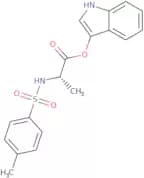
CAS:<p>N-Tosyl-L-alanine 3-indoxyl ester is applied specifically to urine samples. In the presence of leukocyte esterase, N-Tosyl-L-alanine-3-indoxyl ester will be hydrolysed to afford indoxyl. The sample is later exposed to diazonium salts that form azo dyes with the indoxyl. If sufficent indoxyl is formed, it indicates elevated numbers of white blood cells in the urine sample and this indicates that the host has contracted a urinary tract infection.</p>Formula:C18H18N2O4SPurity:Min. 98.0 Area-%Molecular weight:358.42 g/mol(3-Methoxypyridin-2-yl)methanamine
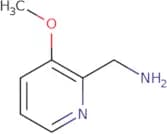
CAS:<p>Versatile small molecule scaffold</p>Formula:C7H10N2OPurity:Min. 95%Color and Shape:Clear LiquidMolecular weight:138.17 g/mol2-Methyl-1-benzofuran-3-carboxylic acid
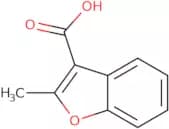
CAS:<p>2-Methyl-1-benzofuran-3-carboxylic acid is a type of carboxylic acid that is cytotoxic to cancer cells. It is a major metabolite of the anticancer drug 2,4,5-trimethoxybenzaldehyde and has been shown to be effective against human breast cancer cells. The ester hydrochloride salt form of this compound has been shown to be an effective inhibitor of esterase activity in vitro. This inhibition leads to increased accumulation of 2-methyl-1-benzofuran-3-carboxylic acid in tumor tissue, which may be due to its ability to inhibit the synthesis of proteins required for the transport and metabolism of other drugs. The x-ray structure analysis revealed that this compound binds to the active site of beta lactamases in an orientation that overlaps with substrate binding sites. This binding prevents the formation of a covalent bond between penicillin G</p>Formula:C10H8O3Purity:Min. 95%Color and Shape:PowderMolecular weight:176.17 g/mol3,3',5,5'-Tetramethylbenzidine, free base
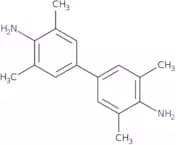
CAS:<p>TMB is an excellent colorimetric substrate for detection of horseradish peroxidase labelled probes and is used with peroxidase and peroxidase coupled systems, particularly in ELISA techniques. It produces a soluble end product, which is blue in color and can be read spectrophotometrically. TMB has also been used in the quantitative determination of hemoglobin and in cytochemical staining for peroxidase. TMB is a hepatitis B antigen.</p>Formula:C16H20N2Purity:Min. 99.0 Area-%Molecular weight:240.35 g/mol3-[5-(Pyridin-2-yl)-1,3,4-oxadiazol-2-yl]propanoic acid
CAS:<p>Versatile small molecule scaffold</p>Formula:C10H9N3O3Purity:Min. 95%Color and Shape:PowderMolecular weight:219.2 g/molEthyl 2-{methyl[(pyridin-2-yl)methyl]amino}acetate
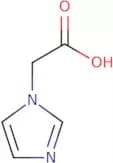
CAS:<p>Versatile small molecule scaffold</p>Formula:C11H16N2O2Purity:Min. 95%Color and Shape:PowderMolecular weight:208.26 g/molH-Imidazoleacetic acid
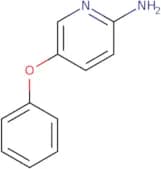
CAS:<p>H-Imidazoleacetic acid is a synthetic compound that can be used to produce other compounds. It is soluble in water and has a hydrophilic interaction with calcium carbonate. H-Imidazoleacetic acid may be recycled, as it is easily synthesized from ethyl bromoacetate by reaction with hydrochloric acid. This substance has shown anticancer activity and may be used to treat blood pressure. The chromatographic method for H-Imidazoleacetic acid involves the use of extracellular medium to remove the organic solvent, followed by reversed phase chromatography on an ion exchange column. H-Imidazoleacetic acid is soluble in water and has a hydrophilic interaction with calcium carbonate. It may be recycled, as it is easily synthesized from ethyl bromoacetate by reaction with hydrochloric acid. This substance has shown anticancer activity and may be used to treat blood pressure. The</p>Formula:C5H6N2O2Purity:Min. 95%Color and Shape:PowderMolecular weight:126.11 g/mol5-Phenoxypyridin-2-amine
CAS:<p>5-Phenoxypyridin-2-amine is a useful scaffold that can be used as a reaction component, reagent, or intermediate. It is an aromatic compound with a benzene ring and pyridine group and has the CAS number 64064-68-2. 5-Phenoxypyridin-2-amine can be used as a building block for organic synthesis and as an intermediate for other compounds. This product can also be used to create complex compounds that are difficult to synthesize in other ways.</p>Formula:C11H10N2OPurity:Min. 95%Color and Shape:PowderMolecular weight:186.21 g/mol



![3-[5-(Pyridin-2-yl)-1,3,4-oxadiazol-2-yl]propanoic acid](/_next/image/?url=https%3A%2Fstatic.cymitquimica.com%2Fproducts%2F3D%2Fthumb-webp%2FIMB68525.webp&w=3840&q=75)
![Ethyl 2-{methyl[(pyridin-2-yl)methyl]amino}acetate](/_next/image/?url=https%3A%2Fstatic.cymitquimica.com%2Fproducts%2F3D%2Fthumb-webp%2FUBB08344.webp&w=3840&q=75)