Building Blocks
This section contains fundamental products for the synthesis of organic and biological compounds. Building blocks are the essential starting materials used to construct complex molecules through various chemical reactions. They play a critical role in drug discovery, material science, and chemical research. At CymitQuimica, we offer a diverse range of high-quality building blocks to support your innovative research and industrial projects, ensuring you have the essential components for successful synthesis.
Subcategories of "Building Blocks"
- Boronic Acids & Boronic Acid Derivatives(5,778 products)
- Chiral Building Blocks(1,242 products)
- Hydrocarbon Building Blocks(6,098 products)
- Organic Building Blocks(61,069 products)
Found 197521 products of "Building Blocks"
Sort by
Purity (%)
0
100
|
0
|
50
|
90
|
95
|
100
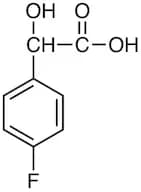
4-Fluoro-DL-mandelic Acid
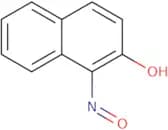
CAS:Formula:C8H7FO3Purity:>96.0%(GC)(T)Color and Shape:White to Almost white powder to crystalMolecular weight:170.141-Nitroso-2-naphthol
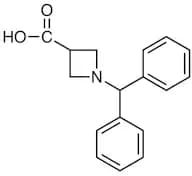
CAS:1-Nitroso-2-naphthol is a copper complex that is used as an analytical reagent for the determination of nitrogen content in organic compounds. It has been shown to have linear calibration curves with a detection limit of 0.01% nitrogen at a concentration of 20 ppm. The thermodynamic data for the formation of this complex is available and includes free energy, enthalpy, entropy, and Gibbs free energy values. A reaction mechanism has also been proposed for this compound. 1-Nitroso-2-naphthol has been shown to chelate ligands such as picolinic acid and matrix effects on its electrochemical impedance spectra can be seen. Pharmaceutical preparations containing 1-nitroso-2-naphthol are on the market as treatment for gastric ulcers and duodenal ulcers.Formula:C10H7NO2Purity:Min. 95%Color and Shape:Brown PowderMolecular weight:173.17 g/mol1-Benzhydrylazetidine-3-carboxylic Acid
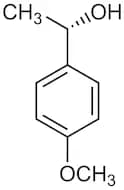
CAS:Formula:C17H17NO2Purity:>98.0%(T)(HPLC)Color and Shape:White to Light yellow to Light orange powder to crystalMolecular weight:267.33(S)-1-(4-Methoxyphenyl)ethanol
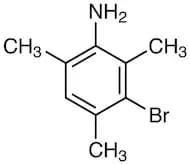
CAS:Formula:C9H12O2Purity:>95.0%(GC)Color and Shape:Colorless to Light yellow clear liquidMolecular weight:152.193-Bromo-2,4,6-trimethylaniline
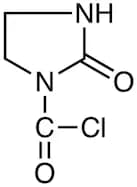
CAS:Formula:C9H12BrNPurity:>98.0%(GC)(T)Color and Shape:White to Light yellow to Light orange powder to crystalMolecular weight:214.112-Oxo-1-imidazolidinecarbonyl Chloride
CAS:Formula:C4H5ClN2O2Purity:>97.0%(T)Color and Shape:White to Almost white powder to crystalMolecular weight:148.554-(Dimethylamino)benzenethiol
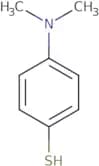
CAS:<p>4-(Dimethylamino)benzenethiol (DMAT) is a thiol that has coordination chemistry with metal ions. DMAT exhibits transport properties, such as solubility in water and chloride, which may be due to its electrochemical properties. DMAT can be photooxidized by ultraviolet light to form the reactive species, 4-dimethylaminobenzoquinone. This reactive species can then react with hydrogen peroxide to produce the intermediate radical cation, which can react with other molecules to produce singlet oxygen and superoxide radicals. These reactions are responsible for the photooxidation of organic materials.<br>The enhanced Raman spectra of DMAT have been studied using surface-enhanced Raman spectroscopy (SERS). The SERS technique enhances the intensity of scattered laser light by orders of magnitude by tapping into a phenomenon known as surface plasmon resonance. The nmr spectra of DMAT have been studied and show that it is</p>Formula:C8H11NSPurity:Min. 95%Color and Shape:PowderMolecular weight:153.25 g/molbeta-Cyano-L-alanine
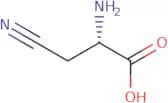
CAS:<p>Beta-cyano-l-alanine is a naturally occurring amino acid that is found in plants. It is synthesized by the enzyme beta-cyanoalanine synthase and is involved in plant metabolism. Beta-cyano-l-alanine is a precursor of the neurotransmitter gamma aminobutyric acid, or GABA, which has been shown to regulate the opening and closing of calcium channels in brain cells. In addition, it has been shown to inhibit enzymes such as phosphofructokinase and pyruvate kinase that are involved in the breakdown of glucose and other nutrients. Beta-cyano-l-alanine has also been shown to inhibit ryanodine receptors and other enzymes involved in muscle contraction. This amino acid can be used as an indicator for tissue culture experiments because it can be detected by sephadex G-100 chromatography.</p>Formula:C4H6N2O2Purity:Min. 95%Color and Shape:White PowderMolecular weight:114.1 g/mol2-Amino-5-ureido-4,6-pyrimidinedione
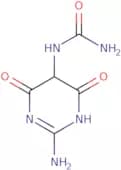
CAS:2-Amino-5-ureido-4,6-pyrimidinedione is a chemical building block that can be used in research, as a reagent for the synthesis of other compounds, or as an intermediate. It is also a versatile building block and reaction component. 2-Amino-5-ureido-4,6-pyrimidinedione is a high purity compound with a CAS number of 21823-25-6.Formula:C5H7N5O3Purity:Min. 95%Color and Shape:PowderMolecular weight:185.14 g/molIsoamyl n-Octanoate (contains 2-Methylbutyl n-Octanoate)
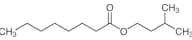
CAS:Formula:C13H26O2Purity:min. 97.0 %(total of isomer)(GC)Color and Shape:Colorless to Light yellow clear liquidMolecular weight:214.354-Fluorobenzil
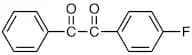
CAS:Formula:C14H9FO2Purity:>98.0%(GC)Color and Shape:Light yellow to Brown powder to crystalMolecular weight:228.222-Bromo-2',4'-difluoroacetophenone
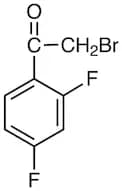
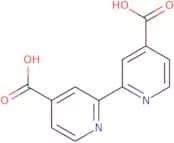
CAS:Formula:C8H5BrF2OPurity:>98.0%(GC)Color and Shape:White or Colorless to Light yellow to Light orange powder to lump to clear liquidMolecular weight:235.032,2'-Bipyridine-4,4'-dicarboxylic acid
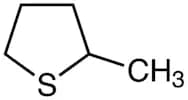
CAS:<p>2,2'-Bipyridine-4,4'-dicarboxylic acid (BBDA) is a synthetic molecule that has been used as an oxidant in organic synthesis. It is a redox-active compound with a reversible oxidation potential of +0.2 V. The electron transfer to the adjacent nitrogen atom is accompanied by light emission at 490 nm and chloride ion release. BBDA reacts with potassium dichromate in water to form 2,2'-bipyridine-6,6'-dicarboxylic acid and potassium chloride. This reaction can be monitored by magnetic resonance analysis and X-ray absorption spectroscopy. The formation of BBDA from dimethylformamide and esters has been reported in the literature.</p>Formula:C12H8N2O4Purity:Min. 95%Color and Shape:PowderMolecular weight:244.21 g/mol2-Methyltetrahydrothiophene
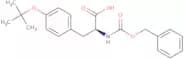
CAS:Formula:C5H10SPurity:>98.0%(GC)Color and Shape:Colorless to Light yellow to Light orange clear liquidMolecular weight:102.20Z-O-tert-Butyl-L-tyrosine
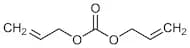
CAS:<p>Z-O-tert-Butyl-L-tyrosine is a fine chemical that is soluble in water and has a wide range of uses. It is a versatile scaffold for the synthesis of complex compounds, and can be used as a building block or reaction component in research chemicals. Z-O-tert-Butyl-L-tyrosine is an important reagent for organic synthesis, especially when combined with other chemicals. This chemical can also be used as a speciality chemical to produce high quality products.</p>Formula:C21H25NO5Purity:Min. 95%Color and Shape:White PowderMolecular weight:371.43 g/molDiallyl Carbonate
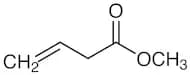
CAS:Formula:C7H10O3Purity:>98.0%(GC)Color and Shape:Colorless to Light yellow clear liquidMolecular weight:142.15Methyl But-3-enoate
CAS:Formula:C5H8O2Purity:>95.0%(GC)Color and Shape:Colorless to Light yellow clear liquidMolecular weight:100.122-Amino-5-methylthiazole
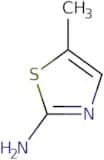
CAS:<p>2-Amino-5-methylthiazole is a nonsteroidal anti-inflammatory drug (NSAID) that inhibits the enzyme cyclooxygenase. It has been shown to inhibit the activity of two different types of cyclooxygenase, COX-1 and COX-2, in vitro. 2-Amino-5-methylthiazole also has shown antimicrobial activity against Escherichia coli and Staphylococcus aureus. This compound is stable in high salt concentrations and at high pH values. 2-Amino-5-methylthiazole does not contain any nitrogen atoms but does have an electron rich aromatic ring and a methyl group on the side chain. The redox potential for this molecule is -0.16 V vs SHE at pH 7.4, making it more likely to be oxidized than reduced, which may explain its low reactivity with hydrogen peroxide and its ability to be stable in</p>Formula:C4H6N2SPurity:Min. 95%Color and Shape:Off-White PowderMolecular weight:114.17 g/molGlcNAcβ(1-3)GalNAc-α-Thr
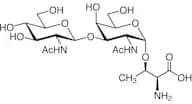
CAS:Formula:C20H35N3O13Purity:>97.0%(HPLC)Color and Shape:White to Almost white powder to crystalMolecular weight:525.512-Chloro-3-methoxyaniline
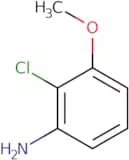
CAS:<p>2-Chloro-3-methoxyaniline is a high quality chemical. It is an intermediate in the synthesis of other complex compounds and has been used as a reagent for organic synthesis. It is also useful as a building block for the preparation of speciality chemicals, research chemicals, and versatile building blocks. 2-Chloro-3-methoxyaniline reacts with other chemicals to form new compounds that are useful for pharmaceuticals and agrochemicals.</p>Formula:C7H8ClNOPurity:Min. 95%Color and Shape:Brown PowderMolecular weight:157.6 g/mol