Building Blocks
This section contains fundamental products for the synthesis of organic and biological compounds. Building blocks are the essential starting materials used to construct complex molecules through various chemical reactions. They play a critical role in drug discovery, material science, and chemical research. At CymitQuimica, we offer a diverse range of high-quality building blocks to support your innovative research and industrial projects, ensuring you have the essential components for successful synthesis.
Subcategories of "Building Blocks"
- Boronic Acids & Boronic Acid Derivatives(5,778 products)
- Chiral Building Blocks(1,242 products)
- Hydrocarbon Building Blocks(6,098 products)
- Organic Building Blocks(61,059 products)
Found 199580 products of "Building Blocks"
Sort by
Purity (%)
0
100
|
0
|
50
|
90
|
95
|
100
3,4,5-Trimethoxycinnamic acid
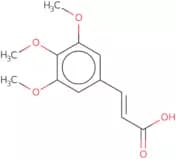
CAS:<p>3,4,5-Trimethoxycinnamic acid (TMC) is a hydroxycinnamic acid that is an intermediate in the synthesis of protocatechuic acid. TMC has been found to have an inhibitory effect on the matrix metalloproteinase activity in the cerebellar granule cells and may be useful for treating allergic reactions. It also has anti-inflammatory properties and can be used as a replacement for sodium carbonate in certain industrial processes. TMC also has been shown to have GABA-ergic effects, increasing locomotor activity and reducing anxiety. TMC can also be used as a Chinese herb for the treatment of ganoderma lucidum.</p>Formula:C12H14O5Purity:Min. 98 Area-%Color and Shape:PowderMolecular weight:238.24 g/mol4-Amino-2-chlorobenzonitrile
CAS:<p>4-Amino-2-chlorobenzonitrile (4ACB) is a copper salt that can be used in antimalarial therapy. It has been shown to have strong antiplasmodial activity against the parasite Plasmodium falciparum and other species of the genus Plasmodium. 4ACB is synthesized by nitro group reduction and ammonolysis, followed by an addition reaction with chloroformate. 4ACB binds to the enzyme ferredoxin reductase and inhibits electron transfer, which leads to inhibition of ATP production and cell death. The molecular modelling study showed that 4ACB is a reactive molecule with high affinity constants for copper ion.</p>Formula:C7H5ClN2Purity:Min. 95%Color and Shape:PowderMolecular weight:152.58 g/molL-Arginine methyl ester dihydrochloride
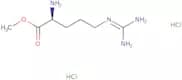
CAS:L-Arginine methyl ester dihydrochloride is a bioactive form of L-arginine, which is an amino acid. L-Arginine methyl ester dihydrochloride has been shown to increase the production of cyclic guanosine monophosphate (cGMP) in mammalian cells. It also causes protein synthesis and cell division in C. neoformans and is a substrate for nitric oxide synthase (NOS). It has been shown to have opioid receptor activity and can act as an alpha-2 adrenergic agonist. L-Arginine methyl ester dihydrochloride can inhibit serine proteases by binding to their active site and preventing them from breaking down proteins such as collagen and elastin.Formula:C7H16N4O2·2HClPurity:Min. 95%Color and Shape:White PowderMolecular weight:261.15 g/molL-Valinol
CAS:<p>L-Valinol is a model system that is used to study the reaction of aziridines with oxygen nucleophiles. It has been shown that this reaction proceeds through the formation of an intermediate, hydrogen tartrate, followed by a second step with nitrogen atoms as the nucleophile and alcohol residue as the substrate. The use of L-valinol in asymmetric synthesis was also demonstrated. In this process, amides were obtained with high enantioselectivity by reacting L-valinol with amines in acidic conditions. This synthetic pathway was found to be synergic with other reactions, such as nitroolefination and benzoylation.</p>Formula:C5H13NOPurity:Min. 95%Color and Shape:Solidified MassMolecular weight:103.16 g/mol2-Amino-6-chlorobenzoic acid
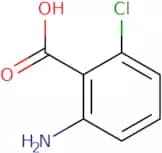
CAS:<p>2-Amino-6-chlorobenzoic acid is a reactive compound that can be used as an antimicrobial agent. It binds to the active site of enzymes and inhibits their function, thereby preventing bacterial growth. 2-Amino-6-chlorobenzoic acid also has acidic properties, which may be due to its ability to hydrolyze esters by acting as a dehydrating agent. This chemical is thermodynamically stable and can be synthesized from malonic acid or other compounds. The chemical reactions of 2-amino-6-chlorobenzoic acid can be followed by NMR spectroscopy, which provides the structural information about the molecule. The reaction mechanism for 2-amino-6-chlorobenzoic acid is similar to that of amides.</p>Formula:C7H6ClNO2Purity:Min. 95%Color and Shape:PowderMolecular weight:171.58 g/molL-Alaninamide hydrochloride
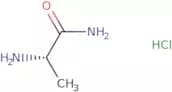
CAS:<p>L-Alaninamide hydrochloride is a hydrogen bond donor that has been shown to have anti-inflammatory properties. L-Alaninamide hydrochloride is able to crosslink hyaluronic acid, which can act as an immunosuppressant and inhibit the production of proinflammatory cytokines. In addition, L-alaninamide hydrochloride has been found to be effective in the treatment of amyloid protein aggregation diseases such as Alzheimer's disease. The drug binds to amyloid proteins by binding to their receptor site and inhibits the formation of amyloid fibrils by preventing cross-linking reactions between polypeptides. L-alaninamide hydrochloride also inhibits the formation of benzimidazole compounds, which are used in the treatment of rheumatoid arthritis.br>br><br>The structure of L-alaninamide hydrochloride is an intramolecular hydrogen bond donor with a carbonyl group. It</p>Formula:C3H8N2O•HClPurity:(Titration) Min 98%Color and Shape:PowderMolecular weight:124.57 g/mol2-Amino-5-nitrobenzoic acid
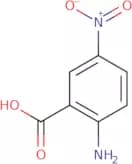
CAS:<p>2-Amino-5-nitrobenzoic acid is a plant metabolite that contains a nitro group. It has been found to be an effective inhibitor of glutamate dehydrogenase, one of the enzymes involved in the metabolism of amino acids. 2-Amino-5-nitrobenzoic acid has also been shown to have no effect on other enzyme activities such as amines and nitrosamines. This natural product has been shown to be useful as a model system for understanding how hydrochloric acid interacts with plants, by inhibiting their growth.</p>Formula:C7H6N2O4Purity:Min. 97.5%Color and Shape:Yellow PowderMolecular weight:182.13 g/mol8α-Phenyl-octahydropyrrolo[1,2-a]pyrimidin-6-one
CAS:Versatile small molecule scaffoldFormula:C13H16N2OPurity:Min. 95%Color and Shape:PowderMolecular weight:216.3 g/mol1,6-Anhydrochitobiose hydrochloride
<p>Please enquire for more information about 1,6-Anhydrochitobiose hydrochloride including the price, delivery time and more detailed product information at the technical inquiry form on this page</p>Formula:C12H22N2O8•(HCl)xPurity:Min. 95%Color and Shape:PowderMolecular weight:322.31 g/mol[(2-Bromophenyl)sulfamoyl]dimethylamine
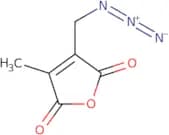
CAS:Versatile small molecule scaffoldFormula:C8H11BrN2O2SPurity:Min. 95%Color and Shape:PowderMolecular weight:279.16 g/mol3-(Azidomethyl)-4-methyl-2,5-dihydrofuran-2,5-dione, 1M in acetonitrile
CAS:Please enquire for more information about 3-(Azidomethyl)-4-methyl-2,5-dihydrofuran-2,5-dione, 1M in acetonitrile including the price, delivery time and more detailed product information at the technical inquiry form on this pageFormula:C6H5N3O3Purity:Min. 95%Color and Shape:PowderMolecular weight:167.12 g/mol1-[3-(Trifluoromethyl)phenyl]cyclobutan-1-amine
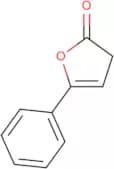
CAS:Versatile small molecule scaffoldFormula:C11H12F3NPurity:Min. 95%Color and Shape:Clear LiquidMolecular weight:215.21 g/mol5-Phenyl-3H-furan-2-one
CAS:<p>5-Phenyl-3H-furan-2-one is an antiviral agent that belongs to the group of aldehydes. It is used as an active ingredient in influenza vaccines. The virus is inactivated by 5-phenyl-3H-furan-2-one and produces a recemic product that can be detected with a branched chain profile after chemical hydrolysis.</p>Formula:C10H8O2Purity:Min. 95%Color and Shape:PowderMolecular weight:160.17 g/mol1,5-Anhydro-D-glucitol 6-dihydrogenphosphate disodium
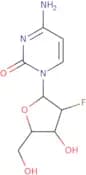
CAS:Please enquire for more information about 1,5-Anhydro-D-glucitol 6-dihydrogenphosphate disodium including the price, delivery time and more detailed product information at the technical inquiry form on this pageFormula:C6H13O8P•Na2Purity:Min. 95%Molecular weight:290.12 g/mol4-Amino-1-(2-deoxy-2-fluoro-β-D-arabinofuranosyl)-2(1H)-pyrimidinone
CAS:<p>Please enquire for more information about 4-Amino-1-(2-deoxy-2-fluoro-β-D-arabinofuranosyl)-2(1H)-pyrimidinone including the price, delivery time and more detailed product information at the technical inquiry form on this page</p>Formula:C9H12FN3O4Purity:Min. 95%Molecular weight:245.21 g/molD-Valine
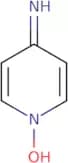
CAS:<p>D-Valine is a non-essential amino acid that is synthesized from 2-oxoglutarate and glutamine. D-Valine has been shown to be an intermediate in microbial metabolism, where it is converted to L-valine by the enzyme d-amino acid oxidase. It has also been shown to have antihypertensive properties in rat models of hypertension. The synthesis of D-valine from glucose can occur through two different pathways: one involves the conversion of L-glutamic acid to L-alanine then to pyruvic acid, which is then converted to L-lactate and then d-malic acid; the other pathway involves the conversion of L-glutamate to citric acid, which can then be converted into succinic acid and eventually d-malic acid. Structural analysis has revealed that D-valine contains a hydrogen bond between its carboxyl group and nitrogen atom in a neighboring molecule. This hydrogen</p>Formula:C5H11NO2Purity:Min. 95%Color and Shape:White PowderMolecular weight:117.15 g/mol4-Aminopyridine N-oxide
CAS:<p>4-Aminopyridine N-oxide is a white, crystalline solid that is soluble in water and alcohol. It has a molecular weight of 128.2 and formula weight of 135.2. 4-Aminopyridine N-oxide reacts with acid solutions to produce nitrous acid and ammonia gas. The rate of the reaction depends on the concentration of aminopyridine and aniline, as well as the pH of the solution. The acetylation, diazotisation, and kinetics have also been studied extensively for this compound. Nitrous acid can react with amides to form azulene, which can then react with amines to form a molecule containing nitrogen, oxygen, carbon, hydrogen and one other element or compound from each group (e.g., NHCOCH). This reaction is reversible when solvents are present.br> 4-Aminopyridine N-oxide may be used as a precursor for other organic</p>Formula:C5H6N2OPurity:Min. 95%Color and Shape:Slightly Yellow PowderMolecular weight:110.11 g/mol4-Aminoindole hydrochloride
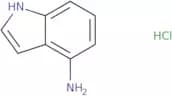
CAS:<p>4-Aminoindole hydrochloride is a white crystalline solid that can be used as a versatile building block in organic synthesis. It is also used as an intermediate in the production of various pharmaceuticals and other chemical compounds. 4-Aminoindole hydrochloride is soluble in most polar solvents, but insoluble in ethers and oils. This compound is also a useful reagent for the conversion of nitrobenzenes to aminobenzoic acids. CAS Number 174854-93-4</p>Formula:C8H9ClN2Purity:Min. 95%Color and Shape:PowderMolecular weight:168.62 g/mol3,4,5-Trimethoxyacetophenone
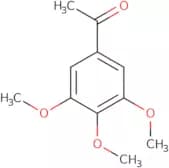
CAS:<p>3,4,5-Trimethoxyacetophenone is a natural product that has been shown to be an antimycotic. It has significant cytotoxicity against A549 cells and also inhibits the growth of cancer cells in culture. 3,4,5-Trimethoxyacetophenone has a low bioavailability due to its chemical properties and inhibitory effects on CYP3A4. This compound is metabolized by the liver into metabolites with inhibitory properties. 3,4,5-Trimethoxyacetophenone also binds to methoxy groups on proteins.</p>Formula:C11H14O4Purity:Min. 99 Area-%Color and Shape:White PowderMolecular weight:210.23 g/mol6-Aminoquinolyl-N-hydroxysuccinimidyl carbamate, particle size < 0.25 mm
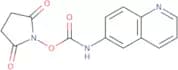
CAS:<p>6-Aminoquinolyl-N-hydroxysuccinimidylcarbamate reacts rapidly with amino acids to form stable urea derivatives. The use of fluorescence detection techniques allows quantification of amines at pmol levels. 6-Aminoquinolyl-N-hydroxysuccinimidylcarbamate was used in a study to derivatize glycated amino acids with the purpose of developing chromatographic assays for their quantification. Glycation of proteins initially gives rise to early glycation adducts, then progresses to advanced glycation end-products, which are markers for conditions such as diabetes, cataracts, uraemia and Alzheimer's disease. We also offer the product FA36291.</p>Formula:C14H11N3O4Color and Shape:PowderMolecular weight:285.25 g/mol



![8α-Phenyl-octahydropyrrolo[1,2-a]pyrimidin-6-one](/_next/image/?url=https%3A%2Fstatic.cymitquimica.com%2Fproducts%2F3D%2Fthumb-webp%2FGAA02925.webp&w=3840&q=75)

![[(2-Bromophenyl)sulfamoyl]dimethylamine](/_next/image/?url=https%3A%2Fstatic.cymitquimica.com%2Fproducts%2F3D%2Fthumb-webp%2FZNA54050.webp&w=3840&q=75)
![1-[3-(Trifluoromethyl)phenyl]cyclobutan-1-amine](/_next/image/?url=https%3A%2Fstatic.cymitquimica.com%2Fproducts%2F3D%2Fthumb-webp%2FUTB21835.webp&w=3840&q=75)