Building Blocks
This section contains fundamental products for the synthesis of organic and biological compounds. Building blocks are the essential starting materials used to construct complex molecules through various chemical reactions. They play a critical role in drug discovery, material science, and chemical research. At CymitQuimica, we offer a diverse range of high-quality building blocks to support your innovative research and industrial projects, ensuring you have the essential components for successful synthesis.
Subcategories of "Building Blocks"
- Boronic Acids & Boronic Acid Derivatives(5,778 products)
- Chiral Building Blocks(1,242 products)
- Hydrocarbon Building Blocks(6,098 products)
- Organic Building Blocks(61,084 products)
Found 198714 products of "Building Blocks"
Sort by
Purity (%)
0
100
|
0
|
50
|
90
|
95
|
100
1-(2-Dimethylaminoethyl)-4-methylpiperazine
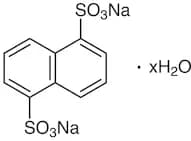
CAS:Polyurethane is a polymer that is synthesized by the reaction of diisocyanates with polyols, such as glycols or sugar alcohols. Polyurethanes are used in a wide variety of products, including coatings, foams and elastomers. 1-(2-Dimethylaminoethyl)-4-methylpiperazine (DMP) is an ionic surfactant that is commonly used as an extender and/or viscosity stabilizer in polyurethane systems. DMP provides good wetting properties to the coating and improves film formation, surface smoothness and abrasion resistance. It also helps to reduce the hardness of the surface film, which can be beneficial when using soft materials such as foam or rubber.Formula:C9H21N3Purity:Min. 95%Color and Shape:Clear LiquidMolecular weight:171.28 g/molDisodium 1,5-Naphthalenedisulfonate
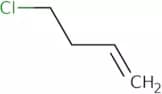
CAS:Formula:C10H6Na2O6S2Purity:>98.0%(T)(HPLC)Color and Shape:White to Almost white powder to crystalMolecular weight:332.254-Chloro-1-butene
CAS:4-Chloro-1-butene is an organic compound with the chemical formula CHCl. It is a colorless gas that has a sweet odor. It is a monomethylated ethane and can be produced by reacting ethylene with chlorine in the presence of a catalyst. The reaction requires high temperatures and pressures, but yields a constant amount of 4-chloro-1-butene per mole of ethylene. This compound exists as two stereoisomers, cis and trans, which are both present in significant amounts in the gas phase. Elimination reactions occur when trans 4-chloro-1-butene reacts with chloride to form 1,2-dichloroethane or chloroform. Functional groups on the molecule include chlorides and carbons. Covid®19 Pandemic is a polyatomic molecule consisting of four carbon atoms and one chlorine atom that has been shown to have low energy and thus may be able to penetrate protective surfaces such asFormula:C4H7ClPurity:Min. 95%Color and Shape:Colorless Clear LiquidMolecular weight:90.55 g/mol4-Bromo-3-nitroacetophenone
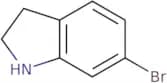
CAS:<p>4-Bromo-3-nitroacetophenone is a potent anticancer agent that has been shown to inhibit cancer cell growth by inhibiting the activity of dehydrogenase enzymes. It has been shown to be active against g1 phase cells, which are cells in the phase of cell cycle before mitosis. 4-Bromo-3-nitroacetophenone also has anti-inflammatory effects and can cross the blood brain barrier due to its hydrogen bond formation. This drug is selectively toxic to cancer cells while sparing healthy tissues and has been shown to be effective in treating inflammatory diseases, such as arthritis, by decreasing the production of proinflammatory cytokines.</p>Formula:C8H6BrNO3Purity:Min. 95%Color and Shape:Yellow To Light (Or Pale) Yellow SolidMolecular weight:244.04 g/mol6-Bromo-2,3-dihydro-1H-indole
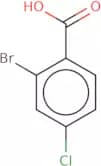
CAS:<p>6-Bromo-2,3-dihydro-1H-indole is a natural product that has been shown to inhibit cancer cell growth in vitro. In the presence of 6-bromoindole, cells are unable to proliferate and undergo apoptosis. This compound also shows anti-cancer activity against human leukemia cells. The mechanism of action for this molecule is not yet known but may be related to its ability to activate the caspase enzyme family or its ability to bind to DNA. 6-Bromoindole has been shown to have anti-inflammatory properties through inhibition of prostaglandin synthesis in animal models.</p>Formula:C8H8BrNPurity:Min. 95%Color and Shape:Off-White PowderMolecular weight:198.06 g/mol2-Bromo-4-chlorobenzoic acid
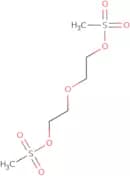
CAS:<p>2-Bromo-4-chlorobenzoic acid (2BCBA) is a potent inhibitor of the hepatitis C virus NS5B polymerase. It has been shown to inhibit the growth of cancer cells in vitro. 2BCBA binds to the active site of the NS5B polymerase, which is essential for viral replication. In addition, it has been found to have synergistic effects with other anti-hepatitis drugs such as interferon. The binding affinity of 2BCBA and its derivatives to NS5B polymerase are determined by their interaction energies and also by their ability to form supramolecular complexes with this enzyme. The inhibition constants for 2BCBA were calculated using high performance liquid chromatography (HPLC). This drug is an isomeric compound that can exist in two different forms: cis and trans.</p>Formula:C7H4BrClO2Purity:Min. 95%Color and Shape:PowderMolecular weight:235.46 g/molDiethylene glycol dimethanesulfonate
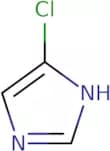
CAS:<p>Diethylene glycol dimethanesulfonate is a functional group that is used in the synthesis of organic compounds. It is a white crystalline solid with a melting point of about 130°C. Diethylene glycol dimethanesulfonate reacts slowly with water and hydrochloric acid to produce diethyl ether and hydrogen chloride gas. The reaction time for this process can be affected by the concentration of reactants, temperature, and pH. Diethylene glycol dimethanesulfonate undergoes acidic hydrolysis in the presence of hydrochloric acid or sodium hydroxide. This reaction produces sodium chloride and ethylene glycol. Busulfan, an anti-cancer drug, is produced by the dehydration of diethylene glycol dimethanesulfonate with copper chloride or chlorine gas. Intramolecular hydrogen bonds are formed during this process to give grandis as an intermediate product. Grandis can be converted into busulfan by</p>Formula:C6H14O7S2Purity:Min. 95%Color and Shape:PowderMolecular weight:262.3 g/mol4-Chloro-1H-imidazole
CAS:<p>4-Chloro-1H-imidazole is an organic chemical compound that contains a heterocyclic ring with one nitrogen and three carbons. It is classified as a weak acid. 4-Chloro-1H-imidazole can be found in hydrochloric acid, methyl ketones, and the acid conjugates of pyrazole rings. It has minimal toxicity. 4-Chloro-1H-imidazole binds to receptors in the body, which may account for its effects on blood pressure and heart rate. This drug also reacts with diazonium salts to form an intermediate that is then oxidized by chloride ions to form a reactive intermediate that can react with histidine or flavin (a type of vitamin B2) to form a fluorescent product that can be detected by light absorption or fluorescence emission spectroscopy.</p>Formula:C3H3ClN2Purity:Min. 95%Color and Shape:White PowderMolecular weight:102.52 g/molN-Benzyloxycarbonyl-L-proline
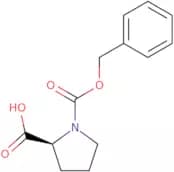
CAS:<p>N-Benzyloxycarbonyl-L-proline is a cationic polymerization inhibitor that has been shown to inhibit the growth of Pseudomonas aeruginosa. It inhibits bacterial growth by inhibiting the production of collagen, an important component in the cell wall. N-Benzyloxycarbonyl-L-proline is also used as a histological staining agent and has been shown to be effective against breast cancer cells resistant to tamoxifen therapy.</p>Formula:C13H15NO4Purity:Min. 95%Color and Shape:PowderMolecular weight:249.26 g/mol2,2-Difluoroethanol
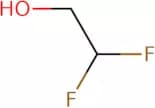
CAS:<p>2,2-Difluoroethanol is a chemical compound with the molecular formula C2H4F2O. It is a colorless liquid that has a distinctive odor and is highly flammable. 2,2-Difluoroethanol reacts in an electrophilic substitution reaction to replace chlorine atoms with hydrogen atoms from the ethyl formate molecule. This reaction can be described by the following equation:</p>Formula:C2H4OF2Purity:Min. 95%Color and Shape:PowderMolecular weight:82.05 g/mol4-Nitrophenylsulfur Pentafluoride
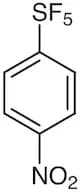
CAS:Formula:C6H4F5NO2SPurity:>96.0%(GC)Color and Shape:White or Colorless to Yellow powder to lump to clear liquidMolecular weight:249.165-Chloroindole-3-acetonitrile
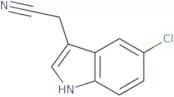
CAS:<p>5-Chloroindole-3-acetonitrile is a chemical compound that can be used as a reaction component, reagent, or useful scaffold in the synthesis of complex compounds. 5-Chloroindole-3-acetonitrile is also a fine chemical with many uses as a high quality research chemical and versatile building block. It is commercially available from various suppliers and its CAS number is 81630-83-3.</p>Formula:C10H7ClN2Purity:Min. 95%Color and Shape:Yellow PowderMolecular weight:190.63 g/mol1-Methyl-3-[6-(methylsulfinyl)hexyl]imidazolium p-Toluenesulfonate
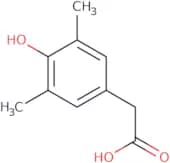
CAS:Formula:C18H28N2O4S2Purity:>97.0%(HPLC)(N)Color and Shape:Colorless to Light orange to Yellow clear liquidMolecular weight:400.553,5-Dimethyl-4-hydroxyphenylacetic acid
CAS:3,5-Dimethyl-4-hydroxyphenylacetic acid (DHPA) is a fine chemical that can be used as a building block in the production of other chemicals. It is a useful intermediate in organic synthesis and has been used to produce pharmaceuticals, fragrances, and dyes. DHPA is also an important reagent for research purposes and can be used to synthesize other compounds.Formula:C10H12O3Purity:Min. 95%Color and Shape:Off-White PowderMolecular weight:180.2 g/mol2,6-Dibromopyridine
CAS:2,6-Dibromopyridine (2,6-DBP) is a chemical compound that has been used in the synthesis of other organic compounds. It is an aromatic heterocycle with nitrogen atoms at the 2 and 6 positions. 2,6-DBP is a monosubstituted pyridine derivative that undergoes a palladium-catalyzed coupling reaction with an aryl halide to form pyrazoles. This process can be done unsymmetrically by protonating the 2 position of the dibromopyridine molecule. The presence of serine protease has been shown to promote this reaction by increasing the surface area of the substrate.Formula:C5H3Br2NPurity:Min. 98 Area-%Color and Shape:Off-White Yellow PowderMolecular weight:236.89 g/mol5,6-Diaminobenzimidazole dihydrochloride
CAS:Please enquire for more information about 5,6-Diaminobenzimidazole dihydrochloride including the price, delivery time and more detailed product information at the technical inquiry form on this pageFormula:C7H10Cl2N4Purity:Min. 95%Color and Shape:Off-white to pale brown solid.Molecular weight:221.09 g/mol1,2-Ethanediol ditosylate
CAS:<p>1,2-Ethanediol ditosylate is a coumarin derivative that is used as a contrast agent in the diagnosis of prostate cancer. It has been shown to be effective against prostate cancer cells in vitro and in vivo. 1,2-Ethanediol ditosylate is injected into the excretory organ (e.g., urinary bladder) and then excreted from the body by the kidneys. The compound accumulates in the prostate gland, where it binds to fatty acids on the cell membrane and induces a positron emission that can be detected with positron emission tomography (PET). This compound also inhibits tumor growth by blocking epidermal growth factor receptor signaling through its ability to bind to carbonic anhydrase II (CAII) receptors on tumor cells.</p>Formula:C16H18O6S2Purity:Min. 95%Color and Shape:White PowderMolecular weight:370.44 g/mol2,6-Diacetylpyridine
CAS:<p>2,6-Diacetylpyridine is a chelate ligand that has significant cytotoxicity. It binds to nitrogen atoms and can form stable complexes with metals. The compound also has genotoxic activity that is shown through the formation of high values in plasma mass spectrometry. 2,6-Diacetylpyridine has been used as an antimicrobial agent, where it inhibits bacterial growth by binding to DNA and RNA. This compound also binds to the enzyme thymidylate synthase and inhibits its activity, which may be due to its coordination geometry. 2,6-Diacetylpyridine has been shown to have biological properties such as being able to inhibit cell proliferation and induce apoptosis in cell cultures.</p>Formula:C9H9NO2Purity:Min. 98 Area-%Color and Shape:White PowderMolecular weight:163.17 g/mol2-(Chloromethyl)-1,3-thiazole
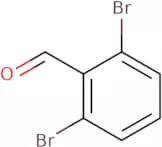
CAS:<p>2-(Chloromethyl)-1,3-thiazole is an aromatic hydrocarbon that is used as a pesticide. It is also a metabolic intermediate in the metabolism of chlorinating agents and has been shown to be carcinogenic. This compound degrades by reacting with hydrochloric acid, nitric acid, sodium hydroxide solution, or hydrogen chloride to form 2-chloro-1,3-thiazole or 2-chloromethyltetrahydrothiophene. The pharmacokinetic properties of this compound are unknown.</p>Formula:C4H4ClNSPurity:Min. 95%Color and Shape:PowderMolecular weight:133.6 g/mol2,6-Dibromobenzaldehyde
CAS:<p>2,6-Dibromobenzaldehyde is an imidazole derivative that has been shown to be a potent inhibitor of tyrosine kinase. It has been shown to inhibit the replication of virus type-1 and is effective in the treatment of pain models. 2,6-Dibromobenzaldehyde also inhibits the activity of enzymes, such as phosphodiesterases and protein kinases. This compound has shown promising results in animal studies for the treatment of human immunodeficiency virus type 1 (HIV-1) infection. The pharmacokinetic properties of 2,6-dibromobenzaldehyde have been studied in rats and dogs with oral administration and found to be linear and rapid with high bioavailability.</p>Formula:C7H4Br2OPurity:Min. 95%Color and Shape:PowderMolecular weight:263.91 g/mol




![1-Methyl-3-[6-(methylsulfinyl)hexyl]imidazolium p-Toluenesulfonate](/_next/image/?url=https%3A%2Fstatic.cymitquimica.com%2Fproducts%2F3B%2Fthumb-webp%2FM2274.webp&w=3840&q=75)