Building Blocks
This section contains fundamental products for the synthesis of organic and biological compounds. Building blocks are the essential starting materials used to construct complex molecules through various chemical reactions. They play a critical role in drug discovery, material science, and chemical research. At CymitQuimica, we offer a diverse range of high-quality building blocks to support your innovative research and industrial projects, ensuring you have the essential components for successful synthesis.
Subcategories of "Building Blocks"
- Boronic Acids & Boronic Acid Derivatives(5,778 products)
- Chiral Building Blocks(1,242 products)
- Hydrocarbon Building Blocks(6,098 products)
- Organic Building Blocks(61,084 products)
Found 198714 products of "Building Blocks"
Sort by
Purity (%)
0
100
|
0
|
50
|
90
|
95
|
100
3-Methyl-N-methylbenzylamine
CAS:Formula:C9H13NPurity:>97.0%(GC)Color and Shape:Colorless to Light yellow to Light orange clear liquidMolecular weight:135.215-Methyl-1,3-benzenediacetonitrile
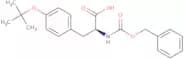
CAS:Formula:C11H10N2Purity:>98.0%(GC)Color and Shape:White to Almost white powder to crystalMolecular weight:170.22Z-O-tert-Butyl-L-tyrosine
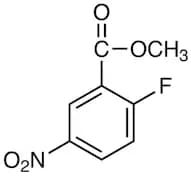
CAS:<p>Z-O-tert-Butyl-L-tyrosine is a fine chemical that is soluble in water and has a wide range of uses. It is a versatile scaffold for the synthesis of complex compounds, and can be used as a building block or reaction component in research chemicals. Z-O-tert-Butyl-L-tyrosine is an important reagent for organic synthesis, especially when combined with other chemicals. This chemical can also be used as a speciality chemical to produce high quality products.</p>Formula:C21H25NO5Purity:Min. 95%Color and Shape:White PowderMolecular weight:371.43 g/molMethyl 2-Fluoro-5-nitrobenzoate
CAS:Formula:C8H6FNO4Purity:>98.0%(GC)Color and Shape:White to Yellow to Green powder to crystalMolecular weight:199.14N-[(4-Methylphenyl)sulfonyl]acetamide
CAS:Formula:C9H11NO3SPurity:>98.0%(T)(HPLC)Color and Shape:White to Almost white powder to crystalMolecular weight:213.25Methacrylic Anhydride [stabilized with 1,1,3-Tris(3-tert-butyl-4-hydroxy-6-methylphenyl)butane]
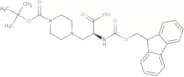
CAS:Formula:C8H10O3Purity:>97.0%(GC)(T)Color and Shape:Colorless to Light yellow to Light orange clear liquidMolecular weight:154.17(S)-3-(4-Boc-piperazin-1-yl)-2-(Fmoc-amino)propionic acid
CAS:<p>(S)-3-(4-Boc-piperazin-1-yl)-2-(Fmoc-amino)propionic acid is a high quality reagent which has been synthesized in our lab. It is used as a reaction component and can be used as a speciality chemical, versatile building block, or useful intermediate. This compound has been shown to have complex properties and can be used as a fine chemical.</p>Formula:C27H33N3O6Purity:Min. 95%Color and Shape:White PowderMolecular weight:495.57 g/molMethyl But-3-enoate
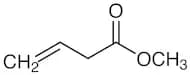
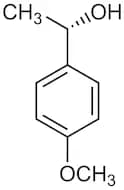
CAS:Formula:C5H8O2Purity:>95.0%(GC)Color and Shape:Colorless to Light yellow clear liquidMolecular weight:100.12(S)-1-(4-Methoxyphenyl)ethanol
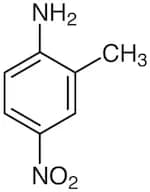
CAS:Formula:C9H12O2Purity:>95.0%(GC)Color and Shape:Colorless to Light yellow clear liquidMolecular weight:152.192-Methyl-4-nitroaniline
CAS:Formula:C7H8N2O2Purity:>98.0%(GC)Color and Shape:White to Yellow to Green powder to crystalMolecular weight:152.152-Nitrobiphenyl
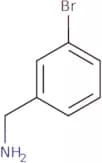
CAS:Formula:C12H9NO2Purity:>98.0%(GC)Color and Shape:White or Colorless to Yellow powder to lump to clear liquidMolecular weight:199.213-Bromobenzylamine
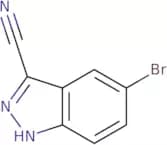
CAS:<p>3-Bromobenzylamine is a chemical compound that belongs to the class of amines. It is used as an intermediate in organic synthesis, and its derivative 3-bromobenzylamine hydrochloride is used in pharmaceuticals as a heart stimulant. 3-Bromobenzylamine can be synthesized by reacting an amine with phosgene and then brominating it. This chemical has been shown to have inhibitory activity against cancer cells and can be used for the treatment of cancer. 3-Bromobenzylamine has also been shown to inhibit the growth of bacteria, fungi, and viruses in vitro. 3-Bromobenzylamine may also be useful for treating psoriasis due to its ability to inhibit prostaglandin synthesis.</p>Formula:C7H8BrNPurity:Min. 95%Color and Shape:Colorless PowderMolecular weight:186.04 g/mol5-Bromo-1H-indazole-3-carbonitrile
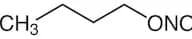
CAS:<p>5-Bromo-1H-indazole-3-carbonitrile is a high quality, versatile building block that can be used in the synthesis of complex compounds. It has been described as a "useful intermediate" and a "useful scaffold".</p>Formula:C8H4BrN3Purity:Min. 95%Color and Shape:PowderMolecular weight:222.04 g/molButyl Nitrite
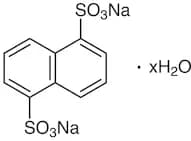
CAS:Formula:C4H9NO2Purity:>95.0%(GC)Color and Shape:Light yellow to Yellow clear liquidMolecular weight:103.12Disodium 1,5-Naphthalenedisulfonate
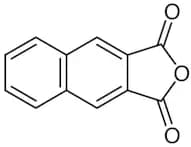
CAS:Formula:C10H6Na2O6S2Purity:>98.0%(T)(HPLC)Color and Shape:White to Almost white powder to crystalMolecular weight:332.252,3-Naphthalenedicarboxylic Anhydride
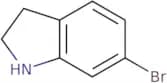
CAS:Formula:C12H6O3Purity:>95.0%(GC)(T)Color and Shape:White to Gray to Brown powder to crystalMolecular weight:198.186-Bromo-2,3-dihydro-1H-indole
CAS:<p>6-Bromo-2,3-dihydro-1H-indole is a natural product that has been shown to inhibit cancer cell growth in vitro. In the presence of 6-bromoindole, cells are unable to proliferate and undergo apoptosis. This compound also shows anti-cancer activity against human leukemia cells. The mechanism of action for this molecule is not yet known but may be related to its ability to activate the caspase enzyme family or its ability to bind to DNA. 6-Bromoindole has been shown to have anti-inflammatory properties through inhibition of prostaglandin synthesis in animal models.</p>Formula:C8H8BrNPurity:Min. 95%Color and Shape:Off-White PowderMolecular weight:198.06 g/mol4-Bromo-3-nitroacetophenone
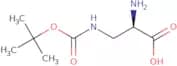
CAS:<p>4-Bromo-3-nitroacetophenone is a potent anticancer agent that has been shown to inhibit cancer cell growth by inhibiting the activity of dehydrogenase enzymes. It has been shown to be active against g1 phase cells, which are cells in the phase of cell cycle before mitosis. 4-Bromo-3-nitroacetophenone also has anti-inflammatory effects and can cross the blood brain barrier due to its hydrogen bond formation. This drug is selectively toxic to cancer cells while sparing healthy tissues and has been shown to be effective in treating inflammatory diseases, such as arthritis, by decreasing the production of proinflammatory cytokines.</p>Formula:C8H6BrNO3Purity:Min. 95%Color and Shape:Yellow To Light (Or Pale) Yellow SolidMolecular weight:244.04 g/molN-b-Boc-D-2,3-diaminopropionic acid
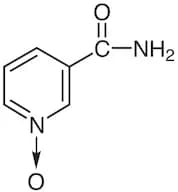
CAS:N-b-Boc-D-2,3-diaminopropionic acid is a chemical compound that belongs to the group of polypeptides. It has been shown to act as a receptor activator in cell-based assays and is capable of binding to taste receptors. N-b-Boc-D-2,3-diaminopropionic acid has also been found to be an effective inhibitor of alpha amylase, which is an enzyme that breaks down starch into maltose and dextrin. This chemical compound could serve as a potential therapeutic agent for type 2 diabetes, obesity, and other metabolic disorders. NBDAPA has also been found in fossilized invertebrates such as squid and urchins.Formula:C8H16N2O4Purity:Min. 95%Color and Shape:White to off-white solid.Molecular weight:204.22 g/molNicotinamide N-Oxide
CAS:Formula:C6H6N2O2Purity:>98.0%(T)Color and Shape:White to Light yellow powder to crystalMolecular weight:138.13




![N-[(4-Methylphenyl)sulfonyl]acetamide](/_next/image/?url=https%3A%2Fstatic.cymitquimica.com%2Fproducts%2F3B%2Fthumb-webp%2FM3123.webp&w=3840&q=75)
![Methacrylic Anhydride [stabilized with 1,1,3-Tris(3-tert-butyl-4-hydroxy-6-methylphenyl)butane]](/_next/image/?url=https%3A%2Fstatic.cymitquimica.com%2Fproducts%2F3B%2Fthumb-webp%2FM3139.webp&w=3840&q=75)