Building Blocks
This section contains fundamental products for the synthesis of organic and biological compounds. Building blocks are the essential starting materials used to construct complex molecules through various chemical reactions. They play a critical role in drug discovery, material science, and chemical research. At CymitQuimica, we offer a diverse range of high-quality building blocks to support your innovative research and industrial projects, ensuring you have the essential components for successful synthesis.
Subcategories of "Building Blocks"
- Boronic Acids & Boronic Acid Derivatives(5,756 products)
- Chiral Building Blocks(1,242 products)
- Hydrocarbon Building Blocks(6,095 products)
- Organic Building Blocks(61,051 products)
Found 199813 products of "Building Blocks"
Sort by
Purity (%)
0
100
|
0
|
50
|
90
|
95
|
100
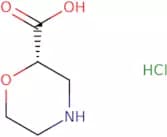
(S)-Morpholine-2-carboxylic acid hydrochloride
CAS:<p>Versatile small molecule scaffold</p>Formula:C5H10ClNO3Purity:Min. 95%Color and Shape:PowderMolecular weight:167.59 g/mol2-(1-Methyl-4-oxo-1,4-dihydro-5H-pyrazolo[3,4-d]pyrimidin-5-yl)acetohydrazide
CAS:Controlled Product<p>2-(1-Methyl-4-oxo-1,4-dihydro-5H-pyrazolo[3,4-d]pyrimidin-5-yl)acetohydrazide is a fine chemical that is a versatile building block in the synthesis of complex compounds. It is also a useful intermediate for the synthesis of pharmaceuticals and agrochemicals. CAS No. 938018-24-7</p>Formula:C8H10N6O2Purity:Min. 95%Molecular weight:222.2 g/mol1-{[(9H-Fluoren-9-yl)methoxy]carbonyl}-3-hydroxypiperidine-2-carboxylic acid
CAS:<p>1-{[(9H-Fluoren-9-yl)methoxy]carbonyl}-3-hydroxypiperidine-2-carboxylic acid is a reaction component that can be used in the synthesis of a variety of chemical compounds. This product has been shown to be useful as a scaffold for the synthesis of complex compounds, and as an intermediate for the synthesis of speciality chemicals. It has also been found to have versatile building block properties and is used in the production of fine chemicals.</p>Formula:C21H21NO5Purity:Min. 95%Color and Shape:PowderMolecular weight:367.4 g/molN,N-Diethylpyrrolidine-2-carboxamide
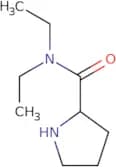
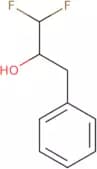
CAS:<p>Versatile small molecule scaffold</p>Formula:C9H18N2OPurity:Min. 90%Color and Shape:PowderMolecular weight:170.25 g/mol1,1-Difluoro-3-phenylpropan-2-ol
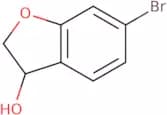
CAS:<p>1,1-Difluoro-3-phenylpropan-2-ol is a versatile building block that can be used to produce a range of complex compounds. It is also useful as a reagent and speciality chemical in research. This chemical has been shown to be an excellent building block for the synthesis of novel compounds with high quality and utility as scaffolds for organic chemistry.</p>Formula:C9H10F2OPurity:Min. 90%Color and Shape:PowderMolecular weight:172.17 g/mol6-bromo-2,3-dihydro-1-benzofuran-3-ol
CAS:<p>Versatile small molecule scaffold</p>Formula:C8H7BrO2Purity:Min. 95%Color and Shape:PowderMolecular weight:215.05 g/mol1-(3-Azetidinyl)-pyrrolidine dihydrochloride
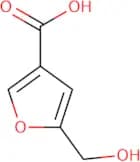
CAS:<p>1-(3-Azetidinyl)-pyrrolidine dihydrochloride is a high quality, versatile building block that can be used as a reagent in the synthesis of complex compounds and as an intermediate in the synthesis of fine chemicals. 1-(3-Azetidinyl)-pyrrolidine dihydrochloride is an excellent starting material for the synthesis of a wide range of compounds. It can also act as a speciality chemical or research chemical. 1-(3-Azetidinyl)-pyrrolidine dihydrochloride has CAS No. 1024589-68-1 and can be found on our website at www.chemistryworldstore.com</p>Formula:C7H14N2•(HCl)2Purity:Min. 95%Color and Shape:PowderMolecular weight:199.12 g/mol5-(Hydroxymethyl)furan-3-carboxylic acid
CAS:<p>5-(Hydroxymethyl)furan-3-carboxylic acid (5HFCA) is a diphenyl ether that can be found in nature. 5HFCA has been shown to have significant antifungal activity against flavus, a genus of fungi. The uptake of 5HFCA by the fungus is rapid and it accumulates in the cell. The polyphenol content of plants is also considered to be an important factor for its growth inhibition effect on fungi. There are many active substances in 5HFCA that are responsible for this effect, such as carvacrol and p-cresol. 5HFCA has been shown to have strong oxidative activity and can induce oxidative stress in fungi, leading to cell death.</p>Formula:C6H6O4Purity:Min. 95%Molecular weight:142.11 g/mol6-Chloro-1H-pyrazolo[3,4-b]pyridine
CAS:<p>6-Chloro-1H-pyrazolo[3,4-b]pyridine (6CPD) is a synthetic compound that acts as a cation channel blocker. 6CPD has been shown to inhibit fatty acid oxidation and cardiac uptake of fatty acids in the heart by blocking the uptake of fatty acids into the mitochondria. 6CPD also inhibits the proton uptake in the mitochondria and reduces oxygen consumption. The compound can be transplacental, which means it crosses the placenta from mother to fetus, which may cause fetal death. 6CPD is an endogenous compound that is involved in death by reducing cell proliferation and inhibiting DNA synthesis.</p>Formula:C6H4ClN3Purity:Min. 95%Molecular weight:153.57 g/molBis[rhodium(±,±,±',±'-tetramethyl-1,3-benzenedipropionic Acid)]
CAS:<p>Bis[rhodium(±,±,±',±'-tetramethyl-1,3-benzenedipropionic Acid)] is a reagent that can be used in catalytic organic synthesis. Bis[rhodium(±,±,±',±'-tetramethyl-1,3-benzenedipropionic Acid)] is a stable compound that does not react with most organic solvents. It also has high solubility in many organic solvents. This reagent is toxicological and should be handled with care.</p>Formula:C32H40O8Rh2Purity:Min. 95%Color and Shape:PowderMolecular weight:758.48 g/mol4,5-Dichloro-3-thiophenecarboxylic acid
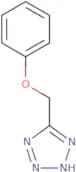
CAS:<p>4,5-Dichloro-3-thiophenecarboxylic acid (4,5-DTTC) is an organic compound that is a useful building block and can be used as a reactive intermediate in the synthesis of other chemicals. 4,5-DTTC has been shown to react with alkenes at room temperature to produce a variety of thioethers. This reaction was facilitated by the use of copper(II) chloride as a catalyst. 4,5-DTTC has also been shown to be a good starting material for synthesizing pharmaceuticals such as antihistamines and antibiotics.</p>Formula:C5H2Cl2O2SPurity:Min. 95%Color and Shape:PowderMolecular weight:197.04 g/mol5-(Phenoxymethyl)-2H-1,2,3,4-tetrazole
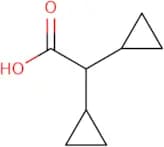
CAS:<p>5-(Phenoxymethyl)-2H-1,2,3,4-tetrazole is a versatile compound with various applications. It acts as a hydroxyl radical scavenger and is commonly used as an inhibitor in chemical reactions. Additionally, it has antiviral properties and has been studied for its potential in treating viral infections. This compound is also used in the production of cellulose-based materials, where it enhances the properties of the final product. It has been found to improve the mechanical strength and thermal stability of cellulose materials. In the field of medicine, 5-(Phenoxymethyl)-2H-1,2,3,4-tetrazole is known as a CYP3A4 substrate. This means that it can interact with enzymes involved in drug metabolism, affecting how certain medications are processed by the body. Researchers have studied its interactions with drugs like carbamazepine and ezetimibe. Furthermore, this compound has shown</p>Formula:C8H8N4OPurity:Min. 95%Color and Shape:PowderMolecular weight:176.18 g/mol2,2-Dicyclopropylacetic acid
CAS:<p>Versatile small molecule scaffold</p>Formula:C8H12O2Purity:Min. 95%Color and Shape:PowderMolecular weight:140.18 g/mol5-[(Pyrrolidin-3-yl)methyl]-1H-1,2,3,4-tetrazole hydrochloride
CAS:<p>Versatile small molecule scaffold</p>Formula:C6H12ClN5Purity:Min. 95%Color and Shape:PowderMolecular weight:189.65 g/mol(R)-1-(Thiazol-2-yl)ethanamine dihydrochloride
CAS:<p>Versatile small molecule scaffold</p>Formula:C5H8N2S•(HCl)2Purity:Min. 95%Color and Shape:PowderMolecular weight:200.66 g/molSodium pyruvate
CAS:<p>Pyruvate is an intermediary organic acid metabolite in glycolysis and the first of the Embden Meyerhoff pathways that can pass readily in or out of the cell. Thus, the addition of sodium pyruvate to tissue culture medium provides both an energy source and a carbon skeleton for anabolic processes. Furthermore, it assists with maintaining certain specialized cells, is useful when cloning, and may be necessary when the serum concentration is reduced in the medium.</p>Formula:C3H3NaO3Purity:Min. 98.0 Area-%Molecular weight:110.05 g/mol1,2-Phenylenedimethanamine dihydrochloride
CAS:<p>1,2-Phenylenedimethanamine dihydrochloride is a colorless to white crystalline solid that is soluble in diethyl ether, ethyl acetate and methanol. It is insoluble in water and most organic solvents. 1,2-Phenylenedimethanamine dihydrochloride is used as a reagent for the preparation of primary amines from alkyl halides. This chemical has been shown to be stable in air and remains unchanged when heated at 100°C. Synonyms include: 2-Amino-1,2-phenylene dichloride; 2-Amino-1,2-diphenylethane dichloride; 2-[(1,2)-Phenylenebis(amino)]dichloroethene; 2-[(1,2)-Phenylenebis(amino)]dichloroethene; and Phen</p>Formula:C8H14Cl2N2Purity:Min. 95%Color and Shape:PowderMolecular weight:209.12 g/mol2-[(1-Carboxyethyl)amino]propanoic acid
CAS:<p>2-[(1-Carboxyethyl)amino]propanoic acid (CEPA) is a cell lysing agent that can be used to kill bacteria, fungi, and viruses. CEPA has antimicrobial activity against Gram-positive and Gram-negative bacteria, including MRSA, VRE, and Candida. CEPA has been shown to have chronic pulmonary effects in mice by inhibiting the growth of lung tissue cells. It also inhibits the growth of metastable tumor cells in mice. CEPA binds to the peptidoglycan layer of bacterial cell walls and causes cell lysis by disrupting hydrogen bonding interactions between water molecules and CEPA's carboxyl group. CEPA is a member of group P2 in the CID database with a chemical stability in water vapor greater than 90%. CEPA is soluble in metoprolol succinate at pH 5-6 but insoluble at pH 8 or higher due to the formation of hydrogen tartrate crystals.</p>Formula:C6H11NO4Purity:Min. 95%Molecular weight:161.16 g/mol2-Ethyl-5-methyl-pyrazole-3-sulfonyl chloride
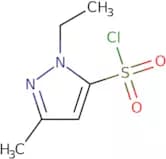
CAS:<p>2-Ethyl-5-methyl-pyrazole-3-sulfonyl chloride (EMPS) is a fine chemical that has a useful scaffold and versatile building block. It is a useful intermediate for the synthesis of pharmaceuticals and other organic compounds. EMPS is used as a reaction component in the production of speciality chemicals and research chemicals, such as phenothiazines. This compound has been shown to be an effective reagent for the synthesis of complex compounds with high quality.</p>Formula:C6H9ClN2O2SPurity:Min. 95%Molecular weight:208.67 g/mol3-Amino-N-propylpropanamide
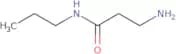
CAS:<p>3-Amino-N-propylpropanamide is a reagent and useful intermediate. It is a fine chemical that has CAS No. 271591-60-7. 3-Amino-N-propylpropanamide can be used as a versatile building block in the synthesis of fine chemicals, such as speciality chemicals and research chemicals, and in the preparation of pharmaceuticals and agrochemicals. 3APPA may also be used as a reaction component in organic synthesis to form amides, ureas, sulfonamides, or phosphonates, which are important intermediates for pharmaceuticals and agrochemicals.</p>Formula:C6H14N2OPurity:Min. 95%Color and Shape:Clear LiquidMolecular weight:130.19 g/mol

![2-(1-Methyl-4-oxo-1,4-dihydro-5H-pyrazolo[3,4-d]pyrimidin-5-yl)acetohydrazide](/_next/image/?url=https%3A%2Fstatic.cymitquimica.com%2Fproducts%2F3D%2Fthumb-webp%2FNMB01824.webp&w=3840&q=75)
![1-{[(9H-Fluoren-9-yl)methoxy]carbonyl}-3-hydroxypiperidine-2-carboxylic acid](/_next/image/?url=https%3A%2Fstatic.cymitquimica.com%2Fproducts%2F3D%2Fthumb-webp%2FSMA38434.webp&w=3840&q=75)
![6-Chloro-1H-pyrazolo[3,4-b]pyridine](/_next/image/?url=https%3A%2Fstatic.cymitquimica.com%2Fproducts%2F3D%2Fthumb-webp%2FNCA72551.webp&w=3840&q=75)
![Bis[rhodium(±,±,±',±'-tetramethyl-1,3-benzenedipropionic Acid)]](/_next/image/?url=https%3A%2Fstatic.cymitquimica.com%2Fproducts%2F3D%2Fthumb-webp%2FUHB05089.webp&w=3840&q=75)
![5-[(Pyrrolidin-3-yl)methyl]-1H-1,2,3,4-tetrazole hydrochloride](/_next/image/?url=https%3A%2Fstatic.cymitquimica.com%2Fproducts%2F3D%2Fthumb-webp%2FNKD27200.webp&w=3840&q=75)

![2-[(1-Carboxyethyl)amino]propanoic acid](/_next/image/?url=https%3A%2Fstatic.cymitquimica.com%2Fproducts%2F3D%2Fthumb-webp%2FUIA75519.webp&w=3840&q=75)