Building Blocks
This section contains fundamental products for the synthesis of organic and biological compounds. Building blocks are the essential starting materials used to construct complex molecules through various chemical reactions. They play a critical role in drug discovery, material science, and chemical research. At CymitQuimica, we offer a diverse range of high-quality building blocks to support your innovative research and industrial projects, ensuring you have the essential components for successful synthesis.
Subcategories of "Building Blocks"
- Boronic Acids & Boronic Acid Derivatives(5,756 products)
- Chiral Building Blocks(1,242 products)
- Hydrocarbon Building Blocks(6,095 products)
- Organic Building Blocks(61,055 products)
Found 199650 products of "Building Blocks"
Sort by
Purity (%)
0
100
|
0
|
50
|
90
|
95
|
100
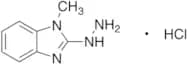
2-Hydrazino-1-methyl-1H-benzimidazole Hydrochloride
CAS:Controlled Product<p>Applications 2-hydrazino-1-methyl-1H-benzimidazole hydrochloride (cas# 114804-55-6) is a useful research chemical.<br></p>Formula:C8H10N4·(HCl)Color and Shape:NeatMolecular weight:162.19 + (36.46)N-Boc-ethanolamine
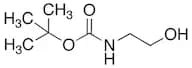
CAS:Controlled Product<p>Applications N-Boc-ethanolamine (cas# 26690-80-2) is a compound useful in organic synthesis.<br>References Snead, A., et al.: Bioorg. Med. Chem. Lett., 18, 5920 (2008),<br></p>Formula:C7H15NO3Color and Shape:NeatMolecular weight:161.204-Oxoheptanedioic Acid
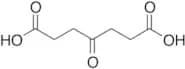
CAS:Controlled ProductFormula:C7H10O5Color and Shape:NeatMolecular weight:174.155-Oxo-5-phenylvaleric Acid
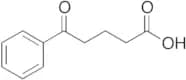
CAS:Controlled Product<p>Applications 5-Oxo-5-phenylvaleric Acid is used in various synthetic preparations. It is used in the synthesis of fulleroid and methanofullerene derivatives. Also used in tertiary amino urea-catalyzed enantioselective iodolactonization.<br>References Hummelen, J., et al.: J. Org. Chem., 60, 532 (1995); Veitch, G., Jacobsen, E.: Angew. Chem. Int. Ed., 49, 7332 (2010);<br></p>Formula:C11H12O3Color and Shape:NeatMolecular weight:192.212-Mercapto-L-histidine
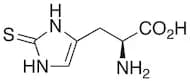
CAS:Controlled Product<p>Applications An intermediate in the formation of L-egothioneine, a natural amino acid ubiquitously present in cells and tissues of most plants and mammalian species. In humans, L-ergothioneine is found in red blood cells, liver, kidney, brain, seminal fluid, and cataract-free lenses at concentrations ranging from 100 uM to 2 mM. L-ergothioneine is exclusively biosynthesized in fungi and mycobacteria. Hence, humans assimilate it through dietary intake.L-ergothioneine has been proven to act as an antioxidant in vivo and to afford protection from g and UV radiation as well as from singlet oxygen in vivo. Recently, it has been shown that L-ergothioneine protects isolated perfused heart against the deleterious effect of post-ischemic reperfusion.The intermediate, 2-mercaptohistine has been used for the<br>References Makinen, K.K., et al.: Eur. J. Biochem., 123, 171 (1982), Howard, R.J., et al.: Biochem. Pharmacol., 35, 1589 (1986),<br></p>Formula:C6H9N3O2SColor and Shape:NeatMolecular weight:187.22Naphthalene-2-sulfonyl Chloride
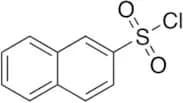
CAS:Controlled Product<p>Applications (cas# 1993-11-08) is a useful research chemical.<br></p>Formula:C10H7ClO2SColor and Shape:NeatMolecular weight:226.68Bis(2-oxo-3-oxazolidinyl)phosphinic Chloride
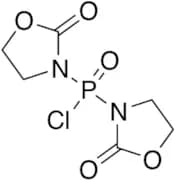
CAS:Controlled Product<p>Applications Bis(2-Oxo-3-Oxazolidinyl)Phosphinic Chloride (cas# 68641-49-6) is a useful research chemical.<br></p>Formula:C6H8ClN2O5PColor and Shape:NeatMolecular weight:254.561-Bromohexadecane
CAS:Controlled Product<p>Applications 1-Bromohexadecane is used in the preparation of soluble carbon nano-onions by covalent functionalization with hexadecyl chains. It is also used to synthesize [2-(methacryloyloxy)ethyl]dimethylhexadecylammonium bromide monomer, required for the synthesis of novel methacrylate based adsorbents.<br>References Molina-Ontoria, A., et al.: Chem. Comm., 49, 2406 (2013); Shu, M., et al.: Analyst, 137, 2143 (2012)<br></p>Formula:C16H33BrColor and Shape:NeatMolecular weight:305.342-Methyl-6-nitrobenzoic Acid Methyl Ester
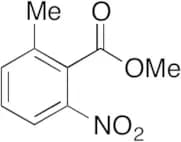
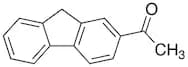
CAS:Controlled ProductFormula:C9H9NO4Color and Shape:NeatMolecular weight:195.172-Acetylfluorene
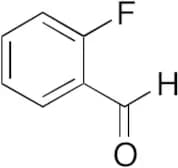
CAS:Controlled Product<p>Applications 2-Acetylfluorene (cas# 781-73-7) is a useful research chemical.<br></p>Formula:C15H12OColor and Shape:NeatMolecular weight:208.252-Fluorobenzaldehyde
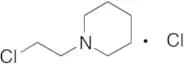
CAS:Controlled Product<p>Applications 2-Fluorobenzaldehyde is a compound that has inhibitory effects on the activity of mushroom tyrosinase, a copper-containing enzyme that is widely used in a number of applications such as direct protein-protein cross linking, and activating tyrosine residues in polypeptides for protein cross-linking to chitosan films.<br> Not a dangerous good if item is equal to or less than 1g/ml and there is less than 100g/ml in the package<br>References Halaouli, S., et al.: J. Appl. Microbiol., 100, 219 (2006); Huang, X., et al.: J. Enzyme Inhib. Med. Chem., 21, 413 (2006); Sung-Yum, S., et al.: J. Agric. Food Chem., 51, 2837 (2003);<br></p>Formula:C7H5FOColor and Shape:NeatMolecular weight:124.11N-(b-Chloroethyl)piperidine Hydrochloride
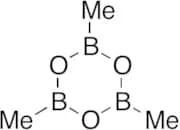
CAS:Controlled Product<p>Applications Hydrochloride salt of N-(β-Chloroethyl)piperidine is used in the inhibition of sickle-cell hemoglobin.<br>References Stubbins, J. et al.: Eur. J. Med. Chem., 14, 219 (1979);<br></p>Formula:C7H14Cl2NColor and Shape:NeatMolecular weight:183.1Trimethylboroxin
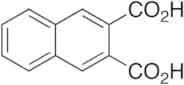
CAS:Controlled Product<p>Applications Trimethylboroxin is used in a diverse array of areas, including as a polymerization additive. Trimethylboroxin is also used in the preparation of CBS catalysts for asymmetric reductions.<br> Not a dangerous good if item is equal to or less than 1g/ml and there is less than 100g/ml in the package<br>References Gilmore, N., et al.: Tetrahedron Asy., 14, 2115 (2003); Najera, C., et al.: Adv. Synth. Catal., 346, 1798 (2004);<br></p>Formula:C3H9B3O3Color and Shape:NeatMolecular weight:125.532,3-Naphthalenedicarboxylic Acid
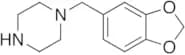
CAS:Controlled Product<p>Applications 2,3-Naphthalenedicarboxylic Acid (cas# 2169-87-1) is a compound useful in organic synthesis.<br></p>Formula:C12H8O4Color and Shape:NeatMolecular weight:216.191-Piperonylpiperazine
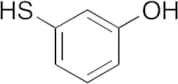
CAS:Controlled Product<p>Applications 1-Piperonylpiperazine (cas# 32231-06-4) is a compound useful in organic synthesis.<br>References Min, J. Z. et at., Biom. Chrom. 24, 1287 (2010); Mitrea, N. et al., Bioanalysis 2, 1211 (2010)<br></p>Formula:C12H16N2O2Color and Shape:NeatMolecular weight:220.273-Mercaptophenol
CAS:Controlled Product<p>Applications 3-Mercaptophenol is a versatile reactant used in the study of mechanism and catalysis of the native chemical ligation reaction. It was also used as a reactant in the synthesis and biological evaluation of HSP90 inhibitors based on molecular dynamic calculated conformational analysis of radicicol and its analogs.<br>References Moulin, E., et al.: J. Am. Chem. Soc., 127, 6999 (2005); Johnson, E., Kent, S.: J. Am. Chem. Soc., 128, 6640 (2006);<br></p>Formula:C6H6OSColor and Shape:NeatMolecular weight:126.18Diaminomaleonitrile
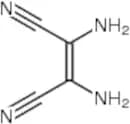
CAS:Controlled Product<p>Applications Diaminomaleonitrile is a reagent used for the synthesis of 1,4-diazepine-2,3-dicarbonitrile dervatives. Also, it is used for the synthesis of Diaminomaleonitrile-based Schiff bases with a donor-acceptor structure and an aggregation-enhanced emission feature.<br> Not a dangerous good if item is equal to or less than 1g/ml and there is less than 100g/ml in the package<br>References Wieczorek, E., et al.: Tetrahedron Lett., 58, 758-761 (2017); Han, T., et al.: J. Mater. Chem. C Mater. Opt. Electron Devices, 4, 10430-10434 (2016);<br></p>Formula:C4H4N4Color and Shape:NeatMolecular weight:108.12,3-Diaminophenol
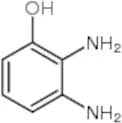
CAS:Controlled Product<p>Applications 2,3-Diaminophenol<br></p>Formula:C6H8N2OColor and Shape:NeatMolecular weight:124.14Aminomalononitrile p-Toluenesulfonate
CAS:Controlled Product<p>Stability Hygroscopic<br>Applications Aminomalononitrile p-toluenesulfonate is a reagent for diazonamide synthesis via heck endocyclization. It may also have implications for developing IκB Kinase-β inhibitors.<br>References Jeong, S., et al.: J. Org. Chem 63, 8640 (1998); Morwick, T. et al.: J. Med. Chem. 49, 2898<br></p>Formula:C10H11N3O3SColor and Shape:NeatMolecular weight:253.28