Building Blocks
This section contains fundamental products for the synthesis of organic and biological compounds. Building blocks are the essential starting materials used to construct complex molecules through various chemical reactions. They play a critical role in drug discovery, material science, and chemical research. At CymitQuimica, we offer a diverse range of high-quality building blocks to support your innovative research and industrial projects, ensuring you have the essential components for successful synthesis.
Subcategories of "Building Blocks"
- Boronic Acids & Boronic Acid Derivatives(5,778 products)
- Chiral Building Blocks(1,242 products)
- Hydrocarbon Building Blocks(6,098 products)
- Organic Building Blocks(61,059 products)
Found 199580 products of "Building Blocks"
Sort by
Purity (%)
0
100
|
0
|
50
|
90
|
95
|
100
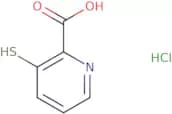
3-Mercapto-2-pyridinecarboxylic acid hydrochloride
CAS:<p>3-Mercapto-2-pyridinecarboxylic acid hydrochloride (3MP) is a small molecule that is a phosphoenolpyruvate carboxykinase inhibitor. The inhibition of this enzyme leads to an accumulation of 3-phosphoglyceric acid and inhibits the conversion of pyruvate to acetyl CoA, which results in the accumulation of reactive oxygen species. 3MP has been shown to inhibit the activity of mitochondrial phosphoenolpyruvate carboxykinase (PEPCK) in porcine hepatocytes, leading to decreased triglycerides and increased glucose uptake. It also inhibits PEPCK activity in vitro in cultured human cells, leading to increased HSP70 levels and exacerbated oxidative stress.</p>Formula:C6H5NO2S·HClPurity:Min. 95%Color and Shape:PowderMolecular weight:191.64 g/mol4-Chloro-7-(p-toluenesulfonyl)-7H-pyrrolo[2,3-d]pyrimidine
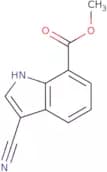
CAS:Formula:C13H10ClN3O2SPurity:>96.0%(HPLC)(N)Color and Shape:White to Orange to Green powder to crystalMolecular weight:307.75Methyl 3-cyano-1H-indole-7-carboxylate
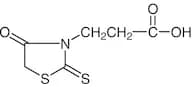
CAS:Methyl 3-cyano-1H-indole-7-carboxylate is a fine chemical that belongs to the class of useful scaffolds, versatile building blocks, and useful intermediates. It is used as a research chemical and a reaction component. Methyl 3-cyano-1H-indole-7-carboxylate is also a speciality chemical with high quality and can be used as a reagent in the production of other compounds.Formula:C11H8N2O2Purity:Min. 95%Color and Shape:White PowderMolecular weight:200.19 g/molRhodanine-3-propionic Acid
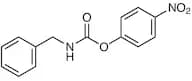
CAS:Formula:C6H7NO3S2Purity:>98.0%(GC)(T)Color and Shape:Light yellow to Brown powder to crystalMolecular weight:205.254-Nitrophenyl N-Benzylcarbamate
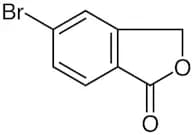
CAS:Formula:C14H12N2O4Purity:>98.0%(N)Color and Shape:White to Light yellow to Green powder to crystalMolecular weight:272.265-Bromophthalide
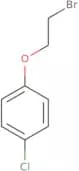
CAS:Formula:C8H5BrO2Purity:>98.0%(GC)Color and Shape:White to Light yellow to Light orange powder to crystalMolecular weight:213.031-(2-Bromoethoxy)-4-chloro-benzene
CAS:<p>1-(2-Bromoethoxy)-4-chloro-benzene is a monomer that is soluble in organic solvents and has been shown to be an electron donor. The reaction mechanism of the bromination of 1-(2-bromoethoxy)-4-chlorobenzene involves the formation and subsequent decomposition of a radical anion, which is stabilized by the solvent acetonitrile. This monomer can also be used as a sensitizer for polymerization reactions. The yield of this product has been found to increase with increasing amounts of ethanol in the solution. 1-(2-Bromoethoxy)-4-chlorobenzene can also undergo an intramolecular cyclization to form a five membered ring with two stereogenic centers.<br>1-(2-Bromoethoxy)-4-chlorobenzene yields optical rotation values that are dependent on the concentration of water in the solution and it has been</p>Formula:C8H8BrClOPurity:Min. 95%Color and Shape:Off-White PowderMolecular weight:235.51 g/mol2-Cyano-1,5-dimethylpyrrole
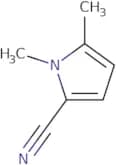
CAS:<p>2-Cyano-1,5-dimethylpyrrole is a quinone antibiotic. It has been shown to have antibacterial activity against organisms such as Staphylococcus, Streptococcus, and Pyogenes. This chemical has been shown to be active in the gaseous phase and against test organisms in alcohol extracts. 2-Cyano-1,5-dimethylpyrrole also exhibits flavonoid and saponin properties that may contribute to its antimicrobial activity.</p>Formula:C7H8N2Purity:Min. 95%Color and Shape:PowderMolecular weight:120.15 g/molMethyl 3-Methyl-15-phenylpentadecanoate
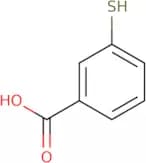
CAS:Formula:C23H38O2Purity:>95.0%(GC)Color and Shape:White to Yellow to Green clear liquidMolecular weight:346.563-Mercaptobenzoic acid
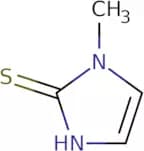
CAS:<p>3-Mercaptobenzoic acid is an antimicrobial agent that inhibits bacterial enzyme. It binds to the active site of the enzyme, and prevents it from carrying out its function. 3-Mercaptobenzoic acid has been shown to be an efficient method for the prevention of corrosion in metal surfaces. The binding of 3-mercaptobenzoic acid to metal ions forms a protective film on the surface, preventing corrosion.</p>Formula:C7H6O2SPurity:Min. 95%Color and Shape:PowderMolecular weight:154.19 g/mol2-Mercapto-1-methylimidazole
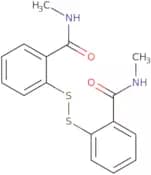
CAS:<p>Inhibitor of thyroid peroxidase; treatment for hyperthyroidism</p>Formula:C4H6N2SPurity:Min. 95%Color and Shape:PowderMolecular weight:114.17 g/molDithio-2,2'-bis(N-methylbenzamide)
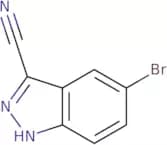
CAS:<p>Dithio-2,2'-bis(N-methylbenzamide) is a chlorphenesin and benzyl alcohol combination that also contains pyrithione, benzyl chloride and benzalkonium chloride. It is a microbicide that inhibits the growth of bacteria by reacting with their cell membranes. Dithio-2,2'-bis(N-methylbenzamide) is used in cosmetics as a preservative, and has been shown to have antimicrobial properties against the section Micrococcus luteus. This product also contains imidazolidinyl urea as an anti-fungal agent.</p>Formula:C16H16N2O2S2Purity:Min. 95%Color and Shape:White PowderMolecular weight:332.44 g/mol5-Bromo-1H-indazole-3-carbonitrile
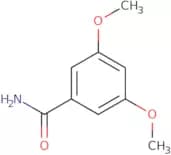
CAS:<p>5-Bromo-1H-indazole-3-carbonitrile is a high quality, versatile building block that can be used in the synthesis of complex compounds. It has been described as a "useful intermediate" and a "useful scaffold".</p>Formula:C8H4BrN3Purity:Min. 95%Color and Shape:PowderMolecular weight:222.04 g/mol3,5-Dimethoxybenzamide
CAS:<p>3,5-Dimethoxybenzamide belongs to the class of quinolone drugs. It is a potentiator of nabilone, which is a synthetic cannabinoid similar to THC. 3,5-Dimethoxybenzamide has been shown to be an electron-deficient compound that reacts with 5-hydroxytryptamine (serotonin) in vitro. This reaction leads to the formation of hydrogen bonds and modifications in the structure of serotonin molecules. 3,5-Dimethoxybenzamide also has grignard reagent activity and can be used as a carboxyamide or amide precursor in organic synthesis.</p>Formula:C9H11NO3Purity:Min. 95%Color and Shape:PowderMolecular weight:181.19 g/mol3,7-Dibromodibenzo[b,d]thiophene
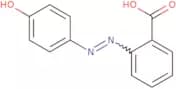
CAS:<p>3,7-Dibromodibenzo[b,d]thiophene is a polymerizable monomer that can be used for the synthesis of polymers with interesting optical properties. This material has been shown to undergo copolymerization with vinyl ethers and vinyl esters in the presence of sodium carbonate. The resulting copolymer has semiconducting properties and gel permeation chromatography showed a ring structure. Cross-coupling reactions have been used to synthesize 3,7-dibromodibenzo[b,d]thiophene from 2-bromo-1,3-dithiolane and 2-iodobenzene.</p>Formula:C12H6Br2SPurity:Min. 95%Color and Shape:White PowderMolecular weight:342.05 g/mol2-(4-Hydroxyphenylazo)benzoic acid
CAS:<p>2-(4-Hydroxyphenylazo)benzoic acid is a molecule that is used in the production of human immunoglobulin. It is activated with fatty acids and oligosaccharides to form a complex, which can be detected using confocal microscopy. The matrix-assisted laser ablation technique was used to determine the chemical structures and hydrogen bonding interactions of this molecule. 2-(4-Hydroxyphenylazo)benzoic acid has been shown to inhibit microbial infections by binding to the sodium salt form of Streptavidin, which inhibits bacterial growth. This molecule also has been used as an indicator for trifluoroacetic acid, which can be used as a sample preparation reagent.</p>Formula:C13H10N2O3Purity:Min. 95%Color and Shape:Yellow PowderMolecular weight:242.23 g/molCopper(I) 2-Thiophenecarboxylate
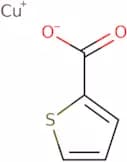
CAS:<p>Copper(I) 2-Thiophenecarboxylate is a copper complex that has been shown to inhibit the polymerase chain reaction. It binds to the active site of DNA polymerases, blocking the ability of these enzymes to synthesize DNA. This inhibition is irreversible and can be reversed by adding excess thiophenecarboxylate ligands. Copper(I) 2-Thiophenecarboxylate also inhibits lipid kinases, which are involved in signal transduction pathways that regulate immune responses and inflammation. The compound may have potential for the treatment of autoimmune diseases such as rheumatoid arthritis. The synthesis of this compound is an example of asymmetric synthesis.</p>Formula:C5H3CuO2SPurity:Min. 95%Color and Shape:PowderMolecular weight:190.69 g/mol2-Bromo-4-chlorobenzoic acid
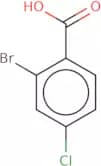
CAS:<p>2-Bromo-4-chlorobenzoic acid (2BCBA) is a potent inhibitor of the hepatitis C virus NS5B polymerase. It has been shown to inhibit the growth of cancer cells in vitro. 2BCBA binds to the active site of the NS5B polymerase, which is essential for viral replication. In addition, it has been found to have synergistic effects with other anti-hepatitis drugs such as interferon. The binding affinity of 2BCBA and its derivatives to NS5B polymerase are determined by their interaction energies and also by their ability to form supramolecular complexes with this enzyme. The inhibition constants for 2BCBA were calculated using high performance liquid chromatography (HPLC). This drug is an isomeric compound that can exist in two different forms: cis and trans.</p>Formula:C7H4BrClO2Purity:Min. 95%Color and Shape:PowderMolecular weight:235.46 g/mol3,5-Dimethyl-4-hydroxyphenylacetic acid
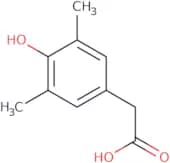
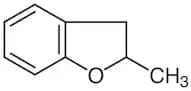
CAS:3,5-Dimethyl-4-hydroxyphenylacetic acid (DHPA) is a fine chemical that can be used as a building block in the production of other chemicals. It is a useful intermediate in organic synthesis and has been used to produce pharmaceuticals, fragrances, and dyes. DHPA is also an important reagent for research purposes and can be used to synthesize other compounds.Formula:C10H12O3Purity:Min. 95%Color and Shape:Off-White PowderMolecular weight:180.2 g/mol2,3-Dihydro-2-methylbenzofuran
CAS:Formula:C9H10OPurity:>98.0%(GC)Color and Shape:Colorless to Almost colorless clear liquidMolecular weight:134.18

![4-Chloro-7-(p-toluenesulfonyl)-7H-pyrrolo[2,3-d]pyrimidine](/_next/image/?url=https%3A%2Fstatic.cymitquimica.com%2Fproducts%2F3B%2Fthumb-webp%2FC3036.webp&w=3840&q=75)


![3,7-Dibromodibenzo[b,d]thiophene](/_next/image/?url=https%3A%2Fstatic.cymitquimica.com%2Fproducts%2F3D%2Fthumb-webp%2FFD62242.webp&w=3840&q=75)