Building Blocks
This section contains fundamental products for the synthesis of organic and biological compounds. Building blocks are the essential starting materials used to construct complex molecules through various chemical reactions. They play a critical role in drug discovery, material science, and chemical research. At CymitQuimica, we offer a diverse range of high-quality building blocks to support your innovative research and industrial projects, ensuring you have the essential components for successful synthesis.
Subcategories of "Building Blocks"
- Boronic Acids & Boronic Acid Derivatives(5,778 products)
- Chiral Building Blocks(1,243 products)
- Hydrocarbon Building Blocks(6,098 products)
- Organic Building Blocks(61,057 products)
Found 200710 products of "Building Blocks"
Sort by
Purity (%)
0
100
|
0
|
50
|
90
|
95
|
100
α-Sulfophenylacetic acid
CAS:<p>Alpha-Sulfophenylacetic acid is a high quality reagent that is useful as an intermediate in the synthesis of complex compounds. It is also a fine chemical that can be used as a building block for the synthesis of speciality chemicals and research chemicals. Alpha-sulfophenylacetic acid is a versatile building block for reactions involving organic synthesis, and can be used as a reaction component to produce dyes, pharmaceuticals, pesticides, and herbicides.</p>Formula:C8H8O5SPurity:Min. 95.0 Area-%Molecular weight:216.21 g/molRef: 3D-S-9630
1kgTo inquire5kgTo inquire10kgTo inquire25kgTo inquire2500gTo inquire-Unit-kgkgTo inquireo-Sulfobenzoic acid anhydride
CAS:<p>Please enquire for more information about o-Sulfobenzoic acid anhydride including the price, delivery time and more detailed product information at the technical inquiry form on this page</p>Formula:C7H4O4SMolecular weight:184.17 g/molRef: 3D-S-9350
1kgTo inquire5kgTo inquire10kgTo inquire500gTo inquire2500gTo inquire-Unit-kgkgTo inquireSodium pyruvate
CAS:<p>Pyruvate is an intermediary organic acid metabolite in glycolysis and the first of the Embden Meyerhoff pathways that can pass readily in or out of the cell. Thus, the addition of sodium pyruvate to tissue culture medium provides both an energy source and a carbon skeleton for anabolic processes. Furthermore, it assists with maintaining certain specialized cells, is useful when cloning, and may be necessary when the serum concentration is reduced in the medium.</p>Formula:C3H3NaO3Purity:Min. 98.0 Area-%Molecular weight:110.05 g/mol5-Amino-pentanamide Hydrochloride
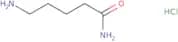
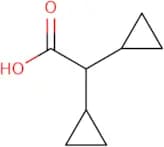
CAS:<p>5-Amino-pentanamide hydrochloride is a chemical substance with CAS number 97965-80-5. It is a reaction component, reagent, and useful scaffold for the synthesis of various complex compounds. This chemical has been used in the synthesis of many speciality chemicals and fine chemicals for research purposes. 5-Amino-pentanamide hydrochloride is also a versatile building block that can be used as an intermediate or building block for the synthesis of other compounds.</p>Formula:C5H13ClN2OPurity:Min. 95%Color and Shape:PowderMolecular weight:152.62 g/mol2,2-Dicyclopropylacetic acid
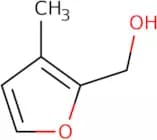
CAS:<p>Versatile small molecule scaffold</p>Formula:C8H12O2Purity:Min. 95%Color and Shape:PowderMolecular weight:140.18 g/mol2-(Hydroxymethyl)-3-methylfuran
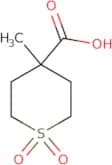
CAS:2-(Hydroxymethyl)-3-methylfuran is a ketone with a ring system that contains one hydroxymethyl group and two methyl groups. It is also an adduct, which means that it is the product of a reaction between two substances. This compound can be used as a binder in pyrotechnics and polymers. 2-(Hydroxymethyl)-3-methylfuran has been proven to be stable under normal conditions, making it an excellent model compound for studying other compounds with similar structures.Formula:C6H8O2Purity:Min. 95 Area-%Color and Shape:Clear LiquidMolecular weight:112.13 g/molTetrahydro-4-methyl-2H-thiopyran-4-carboxylic acid 1,1-dioxide
CAS:<p>Tetrahydro-4-methyl-2H-thiopyran-4-carboxylic acid 1,1-dioxide (THTPD) is a useful scaffold that can be used as a building block in organic synthesis. It is also a versatile intermediate and research chemical that can be used as a reaction component in the synthesis of complex compounds. THTPD has been shown to have high purity and quality. Tetrahydro-4-methyl-2H-thiopyran-4-carboxylic acid 1,1 - dioxide can be used as a reagent for the preparation of other compounds. CAS No.: 1713163-23-5.</p>Formula:C7H12O4SPurity:Min. 95%Color and Shape:PowderMolecular weight:192.24 g/mol1-(Bicyclo[2.2.2]octan-2-yl)ethanone
CAS:<p>Versatile small molecule scaffold</p>Formula:C10H16OPurity:Min. 95%Color and Shape:PowderMolecular weight:152.23 g/mol4-Methoxycyclohexane-1-sulfonyl chloride
CAS:Versatile small molecule scaffoldFormula:C7H13ClO3SPurity:Min. 95%Color and Shape:Clear LiquidMolecular weight:212.7 g/molN1-(4,5-Dihydro-1H-imidazol-2-yl)benzene-1,4-diamine dihydrochloride
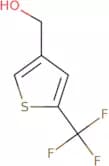
CAS:Versatile small molecule scaffoldFormula:C9H14Cl2N4Purity:Min. 95%Color and Shape:PowderMolecular weight:249.14 g/mol(5-Trifluoromethyl-thiophen-3-yl)-methanol
CAS:(5-Trifluoromethyl-thiophen-3-yl)-methanol is a fine chemical that is used as a building block for research chemicals, reagents, and specialty chemicals. It can be used in the synthesis of various complex compounds and is a versatile building block for organic reactions. (5-Trifluoromethyl-thiophen-3-yl)-methanol is an intermediate that can serve as a scaffold for the synthesis of more complex molecules. This compound has CAS No. 1447913-56-5 and has a high quality.Formula:C6H5F3OSPurity:Min. 95%Color and Shape:Clear LiquidMolecular weight:182.16 g/mol(4-Chlorophenyl)[3-(trifluoromethyl)phenyl]methanone
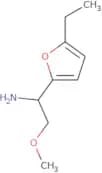
CAS:<p>4-Chlorophenyl[3-(trifluoromethyl)phenyl]methanone is a chemical compound that can be used as a reaction component or a reagent. It is often used as a building block in organic synthesis, due to its high quality and versatility. 4-Chlorophenyl[3-(trifluoromethyl)phenyl]methanone is soluble in organic solvents and has been shown to have no significant toxicity. This chemical is also useful for the production of complex compounds with various applications, such as pharmaceuticals, agrochemicals, and dyes.</p>Formula:C14H8ClF3OPurity:Min. 95%Molecular weight:284.66 g/mol1-(5-Ethylfuran-2-yl)-2-methoxyethan-1-amine
CAS:Versatile small molecule scaffoldFormula:C9H15NO2Purity:(%) Min. 85%Color and Shape:Clear LiquidMolecular weight:169.22 g/mol3-(4-Fluorophenyl)cyclopentan-1-amine
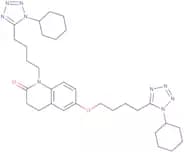
CAS:Versatile small molecule scaffoldFormula:C11H14FNPurity:(%) Min. 80%Molecular weight:179.23 g/molCilostazol Related Compound C
CAS:<p>Cilostazol is a drug that is used to treat the symptoms of intermittent claudication. It is a quinone-type inorganic base, obtained by the hydration of cilostazol. Cilostazol is an inhibitor of phosphodiesterase type 3 (PDE3) and has been shown to inhibit platelet aggregation, which may be due to its ability to inhibit PDE3 and prevent the breakdown of cyclic guanosine monophosphate (cGMP).</p>Formula:C31H45N9O2Purity:Min. 95%Color and Shape:PowderMolecular weight:575.75 g/mol6-Formylpicolinic acid
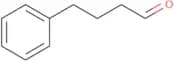
CAS:Versatile small molecule scaffoldFormula:C7H5NO3Purity:Min. 95%Color and Shape:PowderMolecular weight:151.12 g/molBenzenebutanal
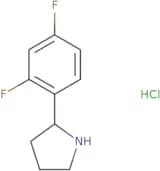
CAS:<p>Benzenebutanal is a volatile compound that is used as an industrial solvent and a raw material for the production of synthetic substances. The odorant receptor OR2A5, which binds to benzenebutanal, has been found in human olfactory epithelium. Benzenebutanal is also used in the synthesis of formyl-containing compounds such as formaldehyde and acetaldehyde, which are potent aldehydes. Benzenebutanal can be produced by irradiating benzene with ultraviolet light or by reacting it with phosphite. It can also be synthesized by reacting formyl chloride with chloroethanes such as ethylene dichloride and propylene dichloride. Benzenebutanal is most commonly used as a solvent for non-polar solvents such as hexane, heptane, pentane, and petroleum ether because of its low surface tension. It is also used in the production of polymers and other</p>Formula:C10H12OPurity:Min. 95%Color and Shape:Clear LiquidMolecular weight:148.21 g/mol2-(2,4-Difluorophenyl)pyrrolidine hydrochloride
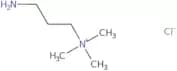
CAS:Versatile small molecule scaffoldFormula:C10H11NF2•HClPurity:Min. 95%Color and Shape:PowderMolecular weight:219.65 g/mol(3-Aminopropyl)trimethylazanium chloride
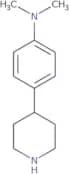
CAS:(3-Aminopropyl)trimethylazanium chloride is a fine chemical that is used as a building block and reagent in the synthesis of various organic compounds. It has been shown to be useful for reactions involving nucleophilic aromatic substitution, radical addition, and cycloaddition reactions. (3-Aminopropyl)trimethylazanium chloride has also been shown to be an effective intermediate in the synthesis of various pharmaceuticals. The CAS number is 19223-69-9.Formula:C6H17ClN2Purity:Min. 95%Color and Shape:PowderMolecular weight:152.66 g/molN,N-Dimethyl-4-(piperidin-4-yl)aniline
CAS:<p>Versatile small molecule scaffold</p>Formula:C13H20N2Purity:90%MinColor and Shape:PowderMolecular weight:204.31 g/mol


![1-(Bicyclo[2.2.2]octan-2-yl)ethanone](/_next/image/?url=https%3A%2Fstatic.cymitquimica.com%2Fproducts%2F3D%2Fthumb-webp%2FYAA73546.webp&w=3840&q=75)


![(4-Chlorophenyl)[3-(trifluoromethyl)phenyl]methanone](/_next/image/?url=https%3A%2Fstatic.cymitquimica.com%2Fproducts%2F3D%2Fthumb-webp%2FRDA50365.webp&w=3840&q=75)