Building Blocks
This section contains fundamental products for the synthesis of organic and biological compounds. Building blocks are the essential starting materials used to construct complex molecules through various chemical reactions. They play a critical role in drug discovery, material science, and chemical research. At CymitQuimica, we offer a diverse range of high-quality building blocks to support your innovative research and industrial projects, ensuring you have the essential components for successful synthesis.
Subcategories of "Building Blocks"
- Boronic Acids & Boronic Acid Derivatives(5,778 products)
- Chiral Building Blocks(1,243 products)
- Hydrocarbon Building Blocks(6,098 products)
- Organic Building Blocks(61,046 products)
Found 203857 products of "Building Blocks"
Sort by
Purity (%)
0
100
|
0
|
50
|
90
|
95
|
100
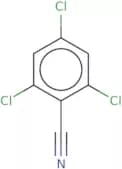
2,4,6-Trichlorobenzonitrile
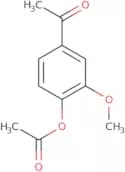
CAS:2,4,6-Trichlorobenzonitrile is a chlorine-containing chemical that has been used as a pesticide. It is a highly toxic substance and can be fatal if ingested. 2,4,6-Trichlorobenzonitrile is converted to chloride in soil and water by microbial action. This chemical can be activated by light or temperature changes and is used in the production of pesticides that are phytotoxic. It also has been shown to have thermodynamic properties that allow it to act as an environmental pollutant. 2,4,6-Trichlorobenzonitrile can react with sulfoxides to form chloromethylation products such as 2,3,5-trichloroethanol. These reactions are catalyzed by metal ions such as Fe(II) and Mn(II).Formula:C7H2Cl3NPurity:Min. 95%Color and Shape:PowderMolecular weight:206.46 g/mol4-Acetoxy-3-methoxyacetophenone
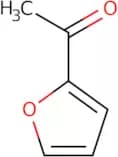
CAS:4-Acetoxy-3-methoxyacetophenone is a phenol that belongs to the group of phenolates. It is an oxidation product of eugenol, which is formed during the reaction of eugenol with halides, such as chlorine or bromine. 4-Acetoxy-3-methoxyacetophenone has been shown to be a potent inhibitor of the growth of bacteria, including Staphylococcus aureus and Escherichia coli. This compound has been studied by x-ray crystallography and it has been found to have a conformation that reproduces well in different conditions. The molecule contains a carbonyl group and an oxygenated group that are essential for its properties.Formula:C11H12O4Purity:Min. 95%Color and Shape:White PowderMolecular weight:208.21 g/mol2-Acetylfuran
CAS:2-Acetylfuran is a chemical compound that has been shown to have in vitro antifungal activity. It is an aromatic, hydroxylated compound with a 2-acetyl group and two double bonds, one of which is conjugated. 2-Acetylfuran has been used as a model system for the study of biological properties and kinetic data. It also inhibits the reaction by binding to the pyrimidine compound, preventing it from undergoing nucleophilic substitution. This inhibition can be reversed by adding ethyl decanoate to the reaction solution, which may be due to its ability to chelate the metal ion that activates the enzyme.2-Acetylfuran has been tested for its ability to inhibit fungal growth in tissue culture by inhibiting RNA synthesis. The matrix effect can cause variations in results obtained when using different solvents and this should be taken into account when conducting experiments with 2-acetylfuran.Formula:C6H6O2Purity:Min. 95%Color and Shape:Yellow Clear LiquidMolecular weight:110.11 g/mol4-Aminocinnamic acid
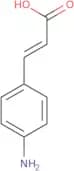
CAS:<p>4-Aminocinnamic acid is a monomer that can be polymerized to form polymers. It is soluble in organic solvents and is resistant to UV light. 4-Aminocinnamic acid has been shown to have photochemical properties and can be used to produce hydrogen bonds with other molecules. This compound has been used as a carbon source for microbial growth and has been shown to be an effective genetic control agent for the bacteria Escherichia coli. 4-Aminocinnamic acid has also been shown to inhibit the growth of butyric acid producing bacteria, such as Clostridium butyricum, while promoting the growth of lactic acid producing bacteria, such as Lactobacillus plantarum.</p>Formula:C9H9NO2Purity:90%Color and Shape:PowderMolecular weight:163.17 g/molL-Theanine
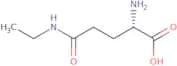
CAS:<p>L-Theanine is an amino acid found in various types of tea and has been shown to have physiological effects. It is also found in the leaves of Camellia sinensis plants. L-Theanine is a nonprotein amino acid that does not have any chiral centers, unlike other amino acids. It is chemically similar to glutamate and glutamine. L-Theanine has been shown to bind to alpha 1-acid glycoprotein and polymerase chain, which may affect its solubility in water. This amino acid also has a number of enzyme activities, including those that produce enzymes for acetylcholine synthesis and metabolism. L-Theanine has been shown to have antioxidant properties and can decrease neuronal death in humans when given intravenously.</p>Formula:C7H14N2O3Purity:Min. 98 Area-%Color and Shape:White PowderMolecular weight:174.2 g/mol3,4,5-Tribromobenzoic acid
CAS:<p>3,4,5-Tribromobenzoic acid is a metabolite of 3-indoleacetic acid. It is excreted in the urine and has a phaseolus-like physiological activity. This compound has been found to reduce the number of internodes in plants and increase the number of subjacent nodes. In addition, it has been shown to inhibit abscission (the separation of plant parts) by inhibiting the release of auxin from the upper node. The structural properties of 3,4,5-tribromobenzoic acid are similar to those of benzoic acid and it can be found naturally in some plants. Diversity in this chemical has been found among different species: for example, 2,3,5-triiodobenzoic acid is only present in citrus fruits such as oranges and lemons.</p>Formula:C7H3Br3O2Purity:Min. 95%Color and Shape:PowderMolecular weight:358.81 g/mol6-Amino-2-chloropurine
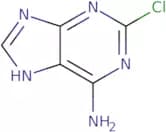
CAS:6-Amino-2-chloropurine (6AC) is a nucleoside analogue that inhibits the synthesis of DNA, RNA, and protein by inhibiting the activity of polymerase chain reaction. It has been used to study the molecular mechanisms of pandemic influenza A virus and HIV infection. 6AC has also been shown to be effective in treating solid tumours and metastatic colorectal cancer in mice. This drug is also used as a competitive inhibitor for measuring endonuclease activity in polymerase chain reactions. 6AC binds to the enzyme's active site and prevents it from cleaving the DNA strands during replication, resulting in incomplete replication of the viral genome.Formula:C5H4ClN5Purity:Min. 95%Color and Shape:PowderMolecular weight:169.57 g/mol3-Acetoxybenzoic acid
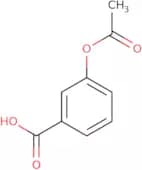
CAS:3-Acetoxybenzoic acid is a metabolite of 3-hydroxybenzoic acid, which is an intermediate in the biosynthesis of salicylic acid. It has been shown to have antibacterial properties and may be used as a topical treatment for skin infections caused by staphylococcus. 3-Acetoxybenzoic acid also has antiviral properties, which may be related to its ability to bind histone H3. 3-Acetoxybenzoic acid inhibits leishmania infantum growth and development by binding to chloride ions and preventing the formation of hydrogen bonds in the cell membrane. This prevents chloride ions from entering the cell and causes water channels to close, leading to dehydration and death.Formula:C9H8O4Purity:Min. 95%Color and Shape:PowderMolecular weight:180.16 g/mol4-Acetoxyindole
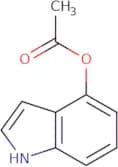
CAS:<p>4-Acetoxyindole is a chromophore that belongs to the pyrrole family of compounds. It has been shown to react with an ionic liquid under acidic conditions to form a protonated intermediate, which can be deprotonated by a nucleophile. This reaction yields an acetate anion and a fluorescing product. 4-Acetoxyindole also reacts with deuterium gas, yielding an acetate, a deuterium atom, and fluorescing product. The reaction is reversible and the yield of the product depends on the concentration of the reactants. 4-Acetoxyindole has strong carbonyl groups that make it reactive towards other functional groups. These reactions are useful for synthesizing heterocycles such as indoles and isoquinolines.</p>Formula:C10H9NO2Purity:Min. 97 Area-%Color and Shape:White PowderMolecular weight:175.18 g/mol4-Amino-2-bromobenzonitrile
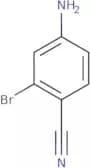
CAS:4-Amino-2-bromobenzonitrile is a crystallized ligand with a molecular formula of C6H7BrN. It belongs to the cationic class of ligands and has been shown to form intermolecular hydrogen bonds with aromatic rings. The crystal has a hexagonal unit cell and space group P-1. 4-Amino-2-bromobenzonitrile has been used as an elemental analysis reagent in the determination of copper, lead, zinc, and cadmium.Formula:C7H5BrN2Purity:Min. 95%Color and Shape:PowderMolecular weight:197.03 g/mol3,4,5-Trimethoxyacetophenone
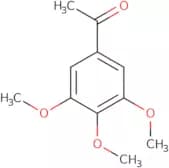
CAS:<p>3,4,5-Trimethoxyacetophenone is a natural product that has been shown to be an antimycotic. It has significant cytotoxicity against A549 cells and also inhibits the growth of cancer cells in culture. 3,4,5-Trimethoxyacetophenone has a low bioavailability due to its chemical properties and inhibitory effects on CYP3A4. This compound is metabolized by the liver into metabolites with inhibitory properties. 3,4,5-Trimethoxyacetophenone also binds to methoxy groups on proteins.</p>Formula:C11H14O4Purity:Min. 99 Area-%Color and Shape:White PowderMolecular weight:210.23 g/mol1-Anilinonaphthalene-8-sulphonic acid magnesium
CAS:Trifluoroacetic acid is a hydrophobic molecule that has been used in the synthesis of 1-anilinonaphthalene-8-sulphonic acid magnesium. The magnesium salt of this compound is soluble in water and can be obtained as a white solid. Trifluoroacetic acid has been shown to have anti-inflammatory effects by binding to chloride ions, which are present in high concentrations on the surface of inflamed cells. Trifluoroacetic acid also has a surfactant property, which may be due to its ability to form micelles with fatty acids. This property is important for drug absorption because it helps solubilize lipophilic drugs and improve their bioavailability.Formula:(C16H13NO3S)2•MgPurity:Min. 95%Color and Shape:PowderMolecular weight:623 g/mol2-Aminopurine
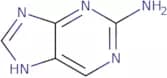
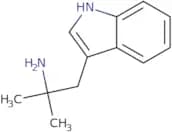
CAS:<p>Purine analog; fluorescent probe; kinase inhibitor; mutagenic</p>Formula:C5H5N5Purity:Min. 95%Color and Shape:White PowderMolecular weight:135.13 g/mol1-(1H-Indol-3-yl)-2-methylpropan-2-amine
CAS:Controlled Product1-(1H-Indol-3-yl)-2-methylpropan-2-amine is a receptor antagonist that belongs to the class of indolealkylamines. It has been shown to produce a dose-dependent inhibition of 5-hydroxytryptamine (5HT) induced contractions in guinea pig trachea preparations. This drug has also been shown to be an effective receptor antagonist at the level of the human trachea, where it was highly selective for 5HT receptors and had no effect on muscarinic receptors. 1-(1H-Indol-3-yl)-2-methylpropan-2-amine is well absorbed after oral administration and is metabolized by liver enzymes into inactive metabolites.Formula:C12H16N2Purity:Min. 95%Color and Shape:PowderMolecular weight:188.27 g/mol3-{[(Benzylsulfanyl)methanethioyl]sulfanyl}propanoic acid
CAS:<p>3-{[(Benzylsulfanyl)methanethioyl]sulfanyl}propanoic acid are essential mediators for reversible addition-fragmentation chain transfer (RAFT) polymerization, common type of controlled radical polymerization.</p>Formula:C11H12O2S3Purity:Min. 95%Color and Shape:PowderMolecular weight:272.4 g/mol4-(1-Adamantyl)aniline
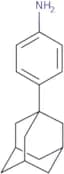
CAS:<p>4-(1-Adamantyl)aniline is a monomer with electron-deficient properties. It can be synthesized from 1-adamantanol and trifluoroacetic acid, followed by hydrolysis to remove the trifluoromethyl group. 4-(1-Adamantyl)aniline has been shown to have high cytotoxicity against tumor cells in vitro. This compound also inhibits the production of necrosis factor, an inflammatory cytokine that plays an important role in many pathological processes, such as septic shock and acute respiratory distress syndrome.</p>Formula:C16H21NPurity:Min. 95%Color and Shape:White PowderMolecular weight:227.34 g/mol2-Amino-4-fluorobenzylamine dihydrochloride
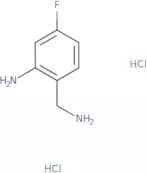
CAS:2-Amino-4-fluorobenzylamine dihydrochloride is a research chemical that is used as a reactant in organic synthesis. 2-Amino-4-fluorobenzylamine dihydrochloride is an intermediate for the preparation of other chemicals and can also be used as a building block for more complex compounds. This chemical has been shown to have good quality and can be used in many different types of research. 2-Amino-4-fluorobenzylamine dihydrochloride has CAS number 606139-20-2.Formula:C7H9FN2·2HClPurity:Min. 95 Area-%Color and Shape:PowderMolecular weight:213.08 g/mol1-(Furan-2-yl)-2-methoxyethan-1-one
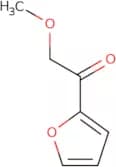
CAS:Versatile small molecule scaffoldFormula:C7H8O3Purity:Min. 95%Color and Shape:Clear LiquidMolecular weight:140.14 g/mol4-Aminocinnamic acid hydrochloride
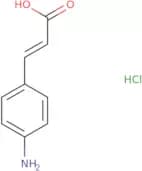
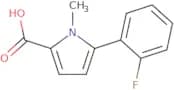
CAS:4-Aminocinnamic acid hydrochloride (4ACA) is a synthetic compound that inhibits the bacterial membrane by binding to the polypeptide chain of the protein. It is a water-soluble polymer that is capable of enhancing the water solubility of other compounds and has been shown to inhibit the growth of typhimurium. 4ACA binds to chalcone, anilines, and styrene, which are all substrates for bacterial enzymes. The interaction between 4ACA and these substrates alters their chemical properties and provides resistance to bacteria.Formula:C9H9NO2·HClPurity:Min. 95%Color and Shape:Off-White PowderMolecular weight:199.63 g/mol5-(2-Fluorophenyl)-1-methyl-1H-pyrrole-2-carboxylic acid
CAS:<p>Versatile small molecule scaffold</p>Formula:C12H10FNO2Purity:Min. 95%Color and Shape:PowderMolecular weight:219.21 g/mol



![3-{[(Benzylsulfanyl)methanethioyl]sulfanyl}propanoic acid](/_next/image/?url=https%3A%2Fstatic.cymitquimica.com%2Fproducts%2F3D%2Fthumb-webp%2FXUA93176.webp&w=3840&q=75)