Building Blocks
Subcategories of "Building Blocks"
- Boronic Acids & Boronic Acid Derivatives(5,781 products)
- Chiral Building Blocks(1,242 products)
- Hydrocarbon Building Blocks(6,101 products)
- Organic Building Blocks(61,033 products)
Found 205320 products of "Building Blocks"
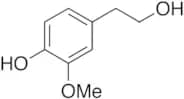
Vanillylmethanol
CAS:Controlled ProductApplications An odorant found in strawberries, grapes and olive oil. Vanillylmethanol has high scavenging activities and inhibits homocysteine-induced endothelial cell adhesion.
References Ubeda, C. et al.: J. Agr. Food. Chem., 60, 6095 (2012); Barata, A. et al.: J. Agr. Food Chem., 59, 2543 (2011); Manna, C. et al.: J. Agr. Food Chem., 57, 3478 (2009)Formula:C9H12O3Color and Shape:NeatMolecular weight:168.19Palmitoyl Chloride
CAS:Controlled ProductStability Moisture Sensitive
Applications Palmitoyl Chloride was used as a polymeric carriers for plasmid DNA (pDNA) delivery to 293T cells.
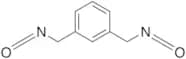
References Remant, B.K.C., et al.: J. Biomaterials. Sci. Poly. Ed., 22, 873 (2011); Allard, E., et al.: Int. J. Pharma., 379, 217 (2009);Formula:C16H31ClOColor and Shape:Light YellowMolecular weight:274.87m-Xylylene Diisocyanate
CAS:Controlled ProductStability Moisture Sensitive
Applications m-Xylylene Diisocyanate (cas# 3634-83-1) is a useful research chemical.
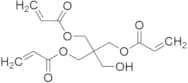
Not a dangerous good if item is equal to or less than 1g/ml and there is less than 100g/ml in the packageFormula:C10H8N2O2Color and Shape:NeatMolecular weight:188.183Pentaerythritol Triacrylate (Technical Grade)
CAS:Controlled ProductFormula:C14H18O7Color and Shape:ColourlessMolecular weight:298.29Zinc Carbonate Hydroxide
CAS:Controlled ProductApplications Zinc Carbonate Hydroxide is a catalyst precursor used to study fabrication and gas-sensing properties of porous ZnO nanoplates.
References Jing, Z., et al.: Adv. Mater., 20, 4547 (2008); Liu, S., et al.: CrystEngComm. 13, 2533 (2011);Formula:CO3ZnOHColor and Shape:NeatMolecular weight:549.107Paeonol
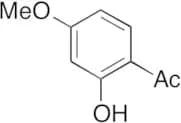
CAS:Controlled ProductApplications Paeonol acting as a β-Secretase inhibitor an anti-apoptotic agent is used in the treatment of memory loss after ischemic stroke. Anti-inflammatory and analgesic.
References Hsieh, C., et al.: J. Ethnopharmacol., 106, 208 (2006); Chou, T., et al.: Brit. J. Pharmacol., 139, 1146 (2003);Formula:C9H10O3Color and Shape:NeatMolecular weight:166.17D-Penicillamine
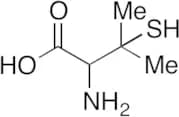
CAS:Applications A Penicillin metabolite used in the treatment of Wilson’s disease, Cystinuria, Scleroderma and arsenic poisoning.
References Marti-Prats, L., et al.: Neurosci. Lett., 483, 143 (2010); Singh, A., et al.: J. Pharm. Sci., 99, 3931 (2010); Everette, J., et al.: J. Agric. Food Chem., 58, 8139 (2010);Formula:C5H11NO2SColor and Shape:NeatMolecular weight:149.21Pentafluorobenzoyl Chloride
CAS:Controlled ProductStability Moisture Sensitive
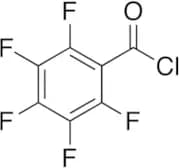
Applications Pentafluorobenzoyl Chloride is a useful analytical reagent in the derivatization amphetamines as well as other primary amines.
Not a dangerous good if item is equal to or less than 1g/ml and there is less than 100g/ml in the package
References Koster, E. et al.: Analyst, 127, 598 (2002);Formula:C7ClF5OColor and Shape:NeatMolecular weight:230.52Vinylene Carbonate (Contains Up to 2% BHT)
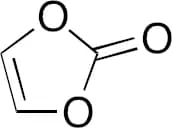
CAS:Controlled ProductApplications Vinylene Carbonate is the smallest unsaturated cyclic carbonic acid ester. It is used as an additive for electrolyte solutions for Lithium-ion and Sodium-ion batteries.
Not a dangerous good if item is equal to or less than 1g/ml and there is less than 100g/ml in the package
References Aurbach, D., et al.: Electrochim. Acta, 47, 1423 (2002); Hu, Y., et al.: Angew. Chem. Int. Ed., 47, 1645 (2008); Komaba, S., et al.: Adv. Funct. Mater., 21, 3859 (2011);Formula:C3H2O3Color and Shape:NeatMolecular weight:86.05rac 1-Palmitoyl-3-chloropropanediol-d5
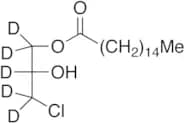
CAS:Controlled ProductApplications Fatty acid ester with glycerol chlorohydrins shows mutagenic activity.
References Janis, R., et al.: J. Food Lipids, 13, 199 (2006), Seefelder, W. et. al.: Food Additiv. Contamin., 1, 10 (2007)Formula:C19H32D5ClO3Color and Shape:GreyMolecular weight:353.98DL-Penicillamine
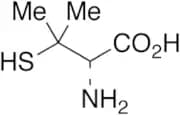
CAS:Controlled ProductApplications DL-Penicillamine is a penicillin metabolite used in the treatment of Wilson’s disease, Cystinuria, Scleroderma and arsenic poisoning.
References Marti-Prats, L., et al.: Neurosci. Lett., 483, 143 (2010); Singh, A., et al.: J. Pharm. Sci., 99, 3931 (2010); Everette, J., et al.: J. Agric. Food Chem., 58, 8139 (2010)Formula:C5H11NO2SColor and Shape:NeatMolecular weight:149.211,10-Phenanthroline
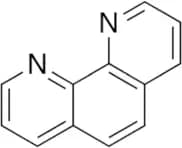
CAS:Controlled ProductApplications A chelating agent, forming complexes with most metal ions.
Not a dangerous good if item is equal to or less than 1g/ml and there is less than 100g/ml in the package
References El-Didamony, A., et al.: Drug Test. Anal., 2, 122 (2010), Chan, A., et al.: J. Med. Chem., 53, 3086 (2010), Ehrman, T., et al.: Bioorg. Med. Chem., 18, 2204 (2010),Formula:C12H8N2Color and Shape:NeatMolecular weight:180.21Vanillyl Methyl Ketone
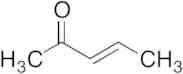
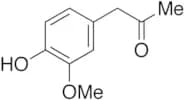
CAS:Controlled ProductApplications Volatile aromatic compound released from hard woods. It is often found in wine that has been aged in wood barrels contributing to the wine’s flavor profile. It is also released during combustion, giving flavor to smoked meats.
References Zhang, B., et al.: App. Biochem. Biotechnol., 147, 119 (2008), Fernandez de Simon, B., et al.: J. Agric. Food Chem., 57, 3217 (2009), Conde, E., et al.: Food Chem., 114, 806 (2009),Formula:C10H12O3Color and Shape:NeatMolecular weight:180.22-Phenoxyethanol-d2
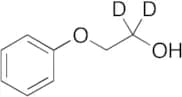
CAS:Controlled ProductApplications 2-Phenoxyethanol-d2 is labeled 2-Phenoxyethanol (P297900) which is a preservative used in cosmetics and is also used as an anesthetic in aquaculture and fisheries.
References Pillai, R., et. al.: Cosmet. Technol., 16, 25 (2013); Ghanawi, J., et. al.: Aquac. Res., 44, 359 (2013)Formula:C8D2H8O2Color and Shape:ColourlessMolecular weight:140.1810-Undecenoic Acid
CAS:Controlled ProductApplications 10-Undecenoic Acid, is used for the manufacture of pharmaceuticals, cosmetics and perfumery, including antidandruff shampoos, antimicrobial powders and as a musk in perfumes and aromas.
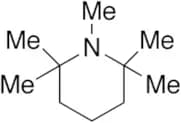
References Lemuel, P., et al.: Can. Med. Assoc. J., 61 (4), 361 (1949);Formula:C11H20O2Color and Shape:NeatMolecular weight:184.281,2,2,6,6-Pentamethylpiperidine
CAS:Controlled ProductApplications 1,2,2,6,6-Pentamethylpiperidine is used in the synthesis of BN-fused polycyclic aromatic molecules for potential application to electronic materials and apparatus. In addition, it is a catalyst for the chemoselective silylation of benzylic alcohols.
Not a dangerous good if item is equal to or less than 1g/ml and there is less than 100g/ml in the package
References Hatakeyama, T. J. Am. Chem. Soc., 133, 18614 (2011); Naiki, M. et al.: Tetrahedron Lett., 42, 5467 (2001);Formula:C10H21NColor and Shape:NeatMolecular weight:155.28