Building Blocks
This section contains fundamental products for the synthesis of organic and biological compounds. Building blocks are the essential starting materials used to construct complex molecules through various chemical reactions. They play a critical role in drug discovery, material science, and chemical research. At CymitQuimica, we offer a diverse range of high-quality building blocks to support your innovative research and industrial projects, ensuring you have the essential components for successful synthesis.
Subcategories of "Building Blocks"
- Boronic Acids & Boronic Acid Derivatives(5,778 products)
- Chiral Building Blocks(1,242 products)
- Hydrocarbon Building Blocks(6,098 products)
- Organic Building Blocks(61,084 products)
Found 198714 products of "Building Blocks"
Sort by
Purity (%)
0
100
|
0
|
50
|
90
|
95
|
100
3,4-Dimethyl-1-phenyl-1H-pyrazolo[3,4-b]pyridin-6-ol
CAS:<p>Versatile small molecule scaffold</p>Formula:C14H13N3OPurity:Min. 95%Molecular weight:239.27 g/mol2-[(3,4-Dichlorobenzoyl)amino]acetic acid
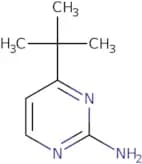
CAS:<p>Versatile small molecule scaffold</p>Formula:C9H7Cl2NO3Purity:Min. 95%Molecular weight:248.07 g/mol4-tert-Butylpyrimidin-2-amine
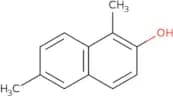
CAS:<p>Versatile small molecule scaffold</p>Formula:C8H13N3Purity:Min. 95%Molecular weight:151.21 g/mol1,6-Dimethylnaphthalen-2-ol
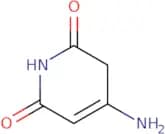
CAS:<p>Versatile small molecule scaffold</p>Formula:C12H12OPurity:Min. 95%Molecular weight:172.22 g/mol4-Amino-1,2,3,6-tetrahydropyridine-2,6-dione
CAS:<p>Thiourea is a compound that can be found in the amino acid threonine. It is also produced by certain bacteria, such as Lactobacillus acidophilus. Thiourea has been shown to have a variety of potential health benefits, including relief from celiac disease symptoms and the formation of body tissues. Thiourea may also serve as a nutritional supplement for animals and humans, although it is not well-studied in this area. The low molecular weight and divalent nature of thiourea makes it soluble in water and thus highly absorbable by the intestines.</p>Formula:C5H6N2O2Purity:Min. 95%Molecular weight:126.11 g/mol2-Chloro-7-methyl-4H-pyrido[1,2-a]pyrimidin-4-one
CAS:<p>Versatile small molecule scaffold</p>Formula:C9H7ClN2OPurity:Min. 95%Molecular weight:194.62 g/mol2-chloro-9-methyl-4H-pyrido[1,2-a]pyrimidin-4-one
CAS:Versatile small molecule scaffoldFormula:C9H7N2OClPurity:Min. 95%Molecular weight:194.61 g/mol2-Chloro-9-methyl-4-oxo-4H-pyrido[1,2-a]pyrimidine-3-carbaldehyde
CAS:<p>Versatile small molecule scaffold</p>Formula:C10H7ClN2O2Purity:Min. 95%Molecular weight:222.63 g/molMethyl cyclohept-4-ene-1-carboxylate
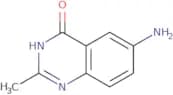
CAS:<p>Versatile small molecule scaffold</p>Formula:C9H14O2Purity:Min. 95%Molecular weight:154.21 g/mol6-Amino-2-methylquinazolin-4-ol
CAS:<p>Versatile small molecule scaffold</p>Formula:C9H9N3OPurity:Min. 95%Molecular weight:175.19 g/mol3-Methyl-4-phenyl-6H,7H-[1,2]oxazolo[3,4-d]pyridazin-7-one
CAS:<p>Patent US20100287939</p>Formula:C12H9N3O2Purity:Min. 95%Molecular weight:227.22 g/mol(2-Chloroethyl)trimethylsilane
CAS:<p>(2-Chloroethyl)trimethylsilane is an organosilicon compound with a molecular weight of 98.06 g/mol. It is synthesized from ethylene and chlorine, and has been shown to inhibit the activity of tyrosine kinase in chronic pain and depression models. (2-Chloroethyl)trimethylsilane also inhibits adenosine receptors, which are involved in the development of chronic pain. This drug has been shown to be effective against depression by inhibiting the binding of adenosine to its receptor site. The kinetic properties of this drug have been studied using molecular modelling, and it has been found that conformational changes are induced in the purinergic receptor when this drug binds.</p>Formula:C5H13ClSiPurity:Min. 95%Molecular weight:136.69 g/molBicyclo[3.2.1]oct-2-en-8-one
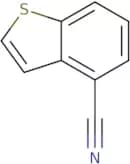
CAS:<p>Versatile small molecule scaffold</p>Formula:C8H10OPurity:Min. 95%Molecular weight:122.2 g/mol1-Benzothiophene-4-carbonitrile
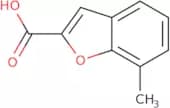
CAS:<p>Versatile small molecule scaffold</p>Formula:C9H5NSPurity:Min. 95%Color and Shape:PowderMolecular weight:159.21 g/mol7-methylbenzofuran-2-carboxylic acid
CAS:<p>Versatile small molecule scaffold</p>Formula:C10H8O3Purity:Min. 95%Molecular weight:176.17 g/mol(2S)-2-(Dimethylamino)-3-(4-hydroxyphenyl)propanoic acid
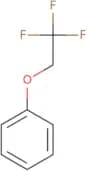
CAS:<p>(2S)-2-(Dimethylamino)-3-(4-hydroxyphenyl)propanoic acid is a potent antagonist of the ryanodine receptor (RYR), which is a calcium release channel in the sarcoplasmatic reticulum. It has been shown to inhibit neuronal death induced by oxidative injury and also to protect against mitochondrial dysfunction. This compound has also been found to be an antinociceptive agent and is detectable at low concentrations in vivo. The pharmacokinetic properties of this drug are not well understood, but it appears to be rapidly absorbed from the gastrointestinal tract and eliminated via the urinary system.</p>Formula:C11H15NO3Purity:Min. 95%Color and Shape:PowderMolecular weight:209.24 g/mol2,2,2-Trifluoroethoxybenzene
CAS:<p>2,2,2-Trifluoroethoxybenzene is an acid catalyst that is used in the production of chlorobenzene. This organic compound has been shown to produce a number of products when heated with dihydroxybenzene. These products include acid chlorides and benzoyl chloride that can be used as intermediates in other chemical reactions. 2,2,2-Trifluoroethoxybenzene has also been shown to react with alkali metals to produce inorganic acids. In addition to acting as an acid catalyst, this compound may be used in the synthesis of flecainide, which is an antiarrhythmic drug. This product also reacts with carbonyl groups and acidic molecules such as halogens to form alkali metal carboxylates and alkanes.</p>Formula:C8H7F3OPurity:Min. 95%Molecular weight:176.14 g/mol3-Amino-N,N-diethyl-4-methyl-benzenesulfonamide
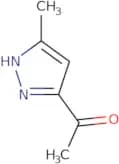
CAS:<p>Versatile small molecule scaffold</p>Formula:C11H18N2O2SPurity:Min. 95%Molecular weight:242.34 g/mol1-(5-Methyl-1H-pyrazol-3-yl)ethanone
CAS:<p>1-(5-Methyl-1H-pyrazol-3-yl)ethanone is an experimental compound that belongs to the class of pyridazines. The molecule was first synthesized in 1933 and it has been studied for its photochemical properties. The structure of 1-(5-methyl-1H-pyrazol-3-yl)ethanone consists of a pyrazole ring fused to an ethanone bearing a methyl substituent. It has been shown that irradiation with UV light causes the molecule to react with dichloromethane, leading to the formation of a series of intermediates, such as chloromethanes, dichloroethylenes, and benzene.</p>Formula:C6H8N2OPurity:Min. 95%Molecular weight:124.14 g/mol7-Methyl-2,3-dihydro-1-benzofuran-2-carboxylic acid
CAS:<p>Versatile small molecule scaffold</p>Formula:C10H10O3Purity:Min. 95%Molecular weight:178.18 g/mol
![3,4-Dimethyl-1-phenyl-1H-pyrazolo[3,4-b]pyridin-6-ol](/_next/image/?url=https%3A%2Fstatic.cymitquimica.com%2Fproducts%2F3D%2Fthumb-webp%2FSAA32144.webp&w=3840&q=75)

![2-[(3,4-Dichlorobenzoyl)amino]acetic acid](/_next/image/?url=https%3A%2Fstatic.cymitquimica.com%2Fproducts%2F3D%2Fthumb-webp%2FSAA32180.webp&w=3840&q=75)
![2-Chloro-7-methyl-4H-pyrido[1,2-a]pyrimidin-4-one](/_next/image/?url=https%3A%2Fstatic.cymitquimica.com%2Fproducts%2F3D%2Fthumb-webp%2FSAA32618.webp&w=3840&q=75)
![2-chloro-9-methyl-4H-pyrido[1,2-a]pyrimidin-4-one](/_next/image/?url=https%3A%2Fstatic.cymitquimica.com%2Fproducts%2F3D%2Fthumb-webp%2FSAA32622.webp&w=3840&q=75)
![2-Chloro-9-methyl-4-oxo-4H-pyrido[1,2-a]pyrimidine-3-carbaldehyde](/_next/image/?url=https%3A%2Fstatic.cymitquimica.com%2Fproducts%2F3D%2Fthumb-webp%2FSAA32627.webp&w=3840&q=75)

![3-Methyl-4-phenyl-6H,7H-[1,2]oxazolo[3,4-d]pyridazin-7-one](/_next/image/?url=https%3A%2Fstatic.cymitquimica.com%2Fproducts%2F3D%2Fthumb-webp%2FSAA33468.webp&w=3840&q=75)

![Bicyclo[3.2.1]oct-2-en-8-one](/_next/image/?url=https%3A%2Fstatic.cymitquimica.com%2Fproducts%2F3D%2Fthumb-webp%2FSAA34466.webp&w=3840&q=75)