Building Blocks
This section contains fundamental products for the synthesis of organic and biological compounds. Building blocks are the essential starting materials used to construct complex molecules through various chemical reactions. They play a critical role in drug discovery, material science, and chemical research. At CymitQuimica, we offer a diverse range of high-quality building blocks to support your innovative research and industrial projects, ensuring you have the essential components for successful synthesis.
Subcategories of "Building Blocks"
- Boronic Acids & Boronic Acid Derivatives(5,778 products)
- Chiral Building Blocks(1,242 products)
- Hydrocarbon Building Blocks(6,098 products)
- Organic Building Blocks(61,069 products)
Found 197521 products of "Building Blocks"
Sort by
Purity (%)
0
100
|
0
|
50
|
90
|
95
|
100
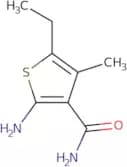
2-Amino-5-ethyl-4-methylthiophene-3-carboxamide
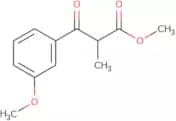
CAS:<p>Versatile small molecule scaffold</p>Formula:C8H12N2OSPurity:Min. 95%Molecular weight:184.26 g/molMethyl 3-(3-methoxyphenyl)-2-methyl-3-oxopropanoate
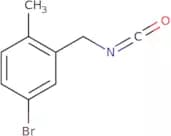
CAS:<p>Versatile small molecule scaffold</p>Formula:C12H14O4Purity:Min. 95%Molecular weight:222.24 g/mol4-Bromo-2-(isocyanatomethyl)-1-methylbenzene
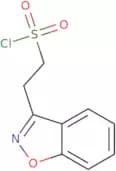
CAS:<p>Versatile small molecule scaffold</p>Formula:C9H8BrNOPurity:Min. 95%Molecular weight:226.07 g/mol2-(1,2-Benzoxazol-3-yl)ethane-1-sulfonyl chloride
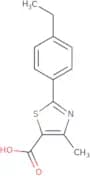
CAS:Versatile small molecule scaffoldFormula:C9H8ClNO3SPurity:Min. 95%Molecular weight:245.68 g/mol2-(4-Ethylphenyl)-4-methyl-1,3-thiazole-5-carboxylic acid
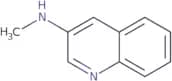
CAS:<p>Versatile small molecule scaffold</p>Formula:C13H13NO2SPurity:Min. 95%Molecular weight:247.31 g/molN-Methylquinolin-3-amine
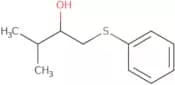
CAS:<p>The synthesis of N-methylquinolin-3-amine is achieved through the following steps:</p>Formula:C10H10N2Purity:Min. 95%Molecular weight:158.2 g/mol3-Methyl-1-(phenylsulfanyl)butan-2-ol
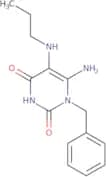
CAS:Versatile small molecule scaffoldFormula:C11H16OSPurity:Min. 95%Molecular weight:196.31 g/mol6-Amino-1-benzyl-5-(propylamino)-1,2,3,4-tetrahydropyrimidine-2,4-dione
CAS:Versatile small molecule scaffoldFormula:C14H18N4O2Purity:Min. 95%Molecular weight:274.32 g/mol2,4-Dioxo-1H,2H,3H,4H-pyrido[2,3-d]pyrimidine-6-carboxylic acid
CAS:<p>Versatile small molecule scaffold</p>Formula:C8H5N3O4Purity:Min. 95%Molecular weight:207.14 g/molNSC697923
CAS:<p>NSC697923 is a small molecule that inhibits the activity of ubiquitin ligases. It has shown to have anti-inflammatory properties in diabetic patients and radiation-induced skin damage. NSC697923 also has potential applications in autoimmune diseases and as a cancer therapy, with the ability to inhibit autophagy.</p>Formula:C11H9NO5SPurity:Min. 95%Molecular weight:267.26 g/mol[5-(2-Chlorophenyl)-1,2-oxazol-3-yl]methanol
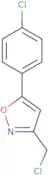
CAS:Versatile small molecule scaffoldFormula:C10H8ClNO2Purity:Min. 95%Molecular weight:209.63 g/mol3-(Chloromethyl)-5-(4-chlorophenyl)isoxazole
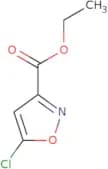
CAS:<p>Versatile small molecule scaffold</p>Formula:C10H7Cl2NOPurity:Min. 95%Molecular weight:228.07 g/molEthyl 5-chloro-1,2-oxazole-3-carboxylate
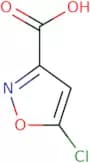
CAS:Ethyl 5-chloro-1,2-oxazole-3-carboxylate is a cytotoxic drug that has been shown to be selective against the virus Coxsackievirus B3. It is a synthetic compound that has been shown to have antiviral activity against Coxsackievirus B3 and pleconaril. The selectivity index of this drug is 0.8. This means that for every 100 compounds with the same biological activity, only 8 are able to inhibit the growth of Coxsackievirus B3. Other modifications include an amide bond between the sulfur atom in ethyl 5-chloro-1,2-oxazole-3-carboxylate and the piperazine group at position 3 on the 1,2 oxazole ring. The linker is a carbon chain with six methyl groups attached to it that can be modified by substituting one or more of these methyl groups with other functional groups suchFormula:C6H6ClNO3Purity:Min. 95%Molecular weight:175.57 g/mol5-chloro-1,2-oxazole-3-carboxylic acid
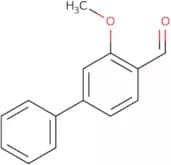
CAS:Versatile small molecule scaffoldFormula:C4H2NO3ClPurity:Min. 95%Molecular weight:147.52 g/mol2-Methoxy-4-phenylbenzaldehyde
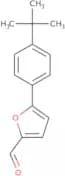
CAS:<p>Versatile small molecule scaffold</p>Formula:C14H12O2Purity:Min. 95%Molecular weight:212.25 g/mol5-(4-tert-Butylphenyl)furan-2-carbaldehyde
CAS:Versatile small molecule scaffoldFormula:C15H16O2Purity:Min. 95%Molecular weight:228.29 g/mol2-[(2S)-Oxiran-2-yl]-1-benzofuran
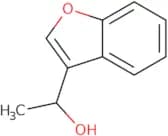
CAS:<p>Versatile small molecule scaffold</p>Formula:C10H8O2Purity:Min. 95%Molecular weight:160.17 g/mol(1S)-1-(1-Benzofuran-3-yl)ethan-1-ol
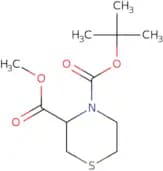
CAS:<p>Versatile small molecule scaffold</p>Formula:C10H10O2Purity:Min. 95%Molecular weight:162.18 g/mol4-tert-Butyl 3-methyl thiomorpholine-3,4-dicarboxylate
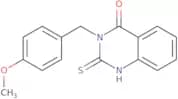
CAS:Versatile small molecule scaffoldFormula:C11H19NO4SPurity:Min. 95%Molecular weight:261.34 g/mol2-Mercapto-3-(4-methoxybenzyl)quinazolin-4(3H)-one
CAS:<p>2-Mercapto-3-(4-methoxybenzyl)quinazolin-4(3H)-one is a modification of the natural product, quinazolinedione. It is an oligosaccharide with a complex carbohydrate structure that is synthesized from monosaccharides and methylated. The compound can be used as a synthetic building block in glycosylation reactions to produce saccharides such as sugars. 2-Mercapto-3-(4-methoxybenzyl)quinazolin-4(3H)-one has been shown to react with fluorinating agents such as hydrogen fluoride or sodium hypochlorite to produce a fluorinated derivative.</p>Formula:C16H14N2O2SPurity:Min. 95%Molecular weight:298.4 g/mol

![2,4-Dioxo-1H,2H,3H,4H-pyrido[2,3-d]pyrimidine-6-carboxylic acid](/_next/image/?url=https%3A%2Fstatic.cymitquimica.com%2Fproducts%2F3D%2Fthumb-webp%2FTNA34707.webp&w=3840&q=75)
![[5-(2-Chlorophenyl)-1,2-oxazol-3-yl]methanol](/_next/image/?url=https%3A%2Fstatic.cymitquimica.com%2Fproducts%2F3D%2Fthumb-webp%2FTNA37444.webp&w=3840&q=75)
![2-[(2S)-Oxiran-2-yl]-1-benzofuran](/_next/image/?url=https%3A%2Fstatic.cymitquimica.com%2Fproducts%2F3D%2Fthumb-webp%2FTNA61408.webp&w=3840&q=75)