


Building Blocks
This section contains fundamental products for the synthesis of organic and biological compounds. Building blocks are the essential starting materials used to construct complex molecules through various chemical reactions. They play a critical role in drug discovery, material science, and chemical research. At CymitQuimica, we offer a diverse range of high-quality building blocks to support your innovative research and industrial projects, ensuring you have the essential components for successful synthesis.
Subcategories of "Building Blocks"
- Boronic Acids & Boronic Acid Derivatives(5,778 products)
- Chiral Building Blocks(1,242 products)
- Hydrocarbon Building Blocks(6,098 products)
- Organic Building Blocks(61,084 products)
Found 198714 products of "Building Blocks"
Sort by
Purity (%)
0
100
|
0
|
50
|
90
|
95
|
100
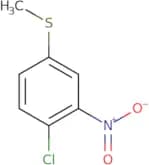
(4-chloro-3-nitrophenyl)(methyl)sulfane
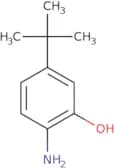
CAS:<p>Versatile small molecule scaffold</p>Formula:C7H6ClNO2SPurity:Min. 95%Molecular weight:203.64 g/mol2-Amino-5-tert-butylphenol
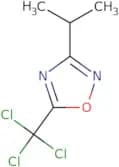
CAS:<p>Versatile small molecule scaffold</p>Formula:C10H15NOPurity:Min. 95%Molecular weight:165.23 g/mol3-isopropyl-5-(trichloromethyl)-1,2,4-oxadiazole
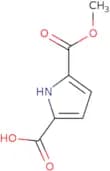
CAS:Versatile small molecule scaffoldFormula:C6H7Cl3N2OPurity:Min. 95%Molecular weight:229.49 g/mol5-(Methoxycarbonyl)-1H-pyrrole-2-carboxylic acid
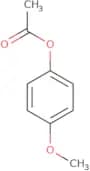
CAS:Versatile small molecule scaffoldFormula:C7H7NO4Purity:Min. 95%Molecular weight:169.13 g/mol4-Methoxyphenyl acetate
CAS:<p>4-Methoxyphenyl acetate is the product of a chloroformate reaction with an alcohol. It has been synthesized in high yield and purified by recrystallization from hexahydrate to produce a white crystalline solid. This compound is soluble in water and chloroform, and is stable at room temperature. 4-Methoxyphenyl acetate has been shown to be active against influenza virus strains Covid-19, H1N1, H3N2, PR8, H5N1, and H7N7. The mechanism of action is not fully understood but this molecule may act as a substrate for the enzyme active site of the viral polymerase complex or interfere with viral nucleic acid replication.</p>Formula:C9H10O3Purity:Min. 95%Molecular weight:166.17 g/mol2-(2-Dimethylamino-ethoxy)-phenylamine
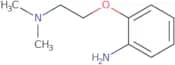
CAS:Controlled Product<p>2-(2-Dimethylamino-ethoxy)-phenylamine is a colorless liquid with a boiling point of 212 °C. The detection limit for this compound is 2 ppm. It has an acidity of 0.1 and can be synthesized from the reaction of two equivalents of phenol and two equivalents of ethylenediamine in the presence of conc. sulfuric acid, followed by reduction of the nitro group to an amine. This compound is used as an intermediate in the synthesis of several drugs such as amphetamine, methamphetamine, and ephedrine, as well as pharmaceuticals such as levamisole, clonidine, and mepyramine hydrochloride.<br>2-(2-Dimethylamino-ethoxy)-phenylamine can be detected using UV spectroscopy at wavelengths between 260 nm and 270 nm with maximum absorption at 266 nm.</p>Formula:C10H16N2OPurity:Min. 95%Molecular weight:180.25 g/mol4-Chloro-2,6-bis(dimethylamino)pyrimidine
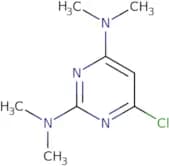
CAS:Versatile small molecule scaffoldFormula:C8H13ClN4Purity:Min. 95%Molecular weight:200.67 g/mol2-[(Cycloheptylideneamino)oxy]acetic acid
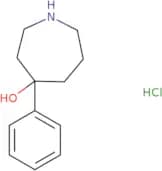
CAS:Versatile small molecule scaffoldFormula:C9H15NO3Purity:Min. 95%Molecular weight:185.22 g/mol4-Phenylazepan-4-ol hydrochloride
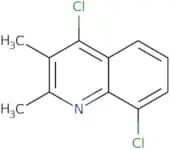
CAS:<p>Versatile small molecule scaffold</p>Formula:C12H18ClNOPurity:Min. 95%Molecular weight:227.73 g/mol4,8-Dichloro-2,3-dimethylquinoline
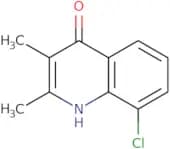
CAS:<p>Versatile small molecule scaffold</p>Formula:C11H9Cl2NPurity:Min. 95%Molecular weight:226.1 g/mol8-Chloro-2,3-dimethyl-1,4-dihydroquinolin-4-one
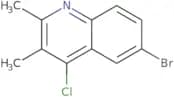
CAS:<p>Versatile small molecule scaffold</p>Formula:C11H10ClNOPurity:Min. 95%Molecular weight:207.65 g/mol6-Bromo-4-chloro-2,3-dimethylquinoline
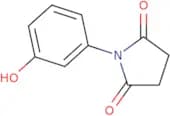
CAS:Versatile small molecule scaffoldFormula:C11H9BrClNPurity:Min. 95%Molecular weight:270.55 g/mol1-(3-Hydroxyphenyl)pyrrolidine-2,5-dione
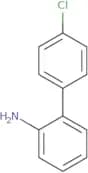
CAS:Versatile small molecule scaffoldFormula:C10H9NO3Purity:Min. 95%Molecular weight:191.18 g/mol4'-Chloro-biphenyl-2-ylamine
CAS:<p>4'-Chloro-biphenyl-2-ylamine is an organic solvent that is used in alkalization and as a reagent in chemical reactions. It has been shown to be bactericidal, with a broad spectrum of activity against Gram-positive and Gram-negative bacteria. 4'-Chloro-biphenyl-2-ylamine can be synthesized by the reaction of biphenyl with hydrogen chloride, producing an azide and chloride. The azide reacts with chloroacetic acid to produce the desired compound.</p>Formula:C12H10ClNPurity:Min. 95%Molecular weight:203.67 g/mol2-(3-Methyl-1-benzofuran-2-yl)acetic acid
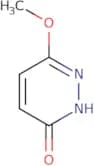
CAS:<p>Versatile small molecule scaffold</p>Formula:C11H10O3Purity:Min. 95%Molecular weight:190.19 g/mol6-Methoxy-2,3-dihydropyridazin-3-one
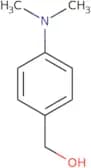
CAS:<p>Versatile small molecule scaffold</p>Formula:C5H6N2O2Purity:Min. 95%Molecular weight:126.11 g/mol4-(Dimethylamino)benzyl Alcohol
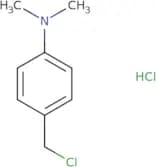
CAS:<p>4-(Dimethylamino)benzyl Alcohol is a chemical compound with the formula CH3(CH2)3NH2. It is used as an antibiotic drug and has been shown to have an average particle diameter of 80 nanometers, bulk polymerization, hydroxy group, and polymerization initiator. 4-(Dimethylamino)benzyl Alcohol has been shown to be effective against bacteria that are resistant to penicillin, ampicillin, erythromycin, or tetracycline. This chemical compound has FTIR spectra in the range of 400-4000 cm-1 and can be used for the synthesis of polymeric matrices in many applications.</p>Formula:C9H13NOPurity:Min. 95%Molecular weight:151.21 g/mol4-(Chloromethyl)-N,N-dimethylaniline hydrochloride
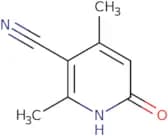
CAS:Versatile small molecule scaffoldFormula:C9H13Cl2NPurity:Min. 95%Molecular weight:206.11 g/mol2,4-Dimethyl-6-oxo-1,6-dihydropyridine-3-carbonitrile
CAS:2,4-Dimethyl-6-oxo-1,6-dihydropyridine-3-carbonitrile is a nitrile that is synthesized by reacting 2,4-dimethylpyridine with formaldehyde. It has a molecular weight of 202.2 g/mol and density of 1.42 g/cm³ at 20 °C. The functional theory predicts the transformation of 2,4-dimethylpyridine to 2,4-dimethyl-6-oxo-1,6-dihydropyridine through the intermediate formation of formaldehyde and nitrile. This reaction can be confirmed by diffraction experiments and the experimental study on the pathway for this transformation. The experiment also revealed that 2,4-dimethylpyridine reacts with formaldehyde to produce formic acid as well as 6 molecules of water. The density functional theory supports the experimental data and predicts that there are two possible pathways for thisFormula:C8H8N2OPurity:Min. 95%Molecular weight:148.16 g/mol2-[2-(Dimethylamino)ethoxy]ethanol
CAS:Controlled Product<p>2-[2-(Dimethylamino)ethoxy]ethanol (DMAEE) is a chemical that belongs to the group of amines. It is used as a surfactant in the form of ethylene diamine or metal hydroxides and has been shown to have transport properties. DMAEE's protonated form has been shown to adsorb on metal oxides, such as iron oxide, aluminum oxide, and titanium dioxide. This adsorption mechanism may be due to its cationic nature. DMAEE also reacts with nitrous acid in water to form an intermediate which can be oxidized by atmospheric oxygen. The reaction mechanism for this oxidation is not yet well understood.</p>Formula:C6H15NO2Purity:Min. 95%Color and Shape:Clear LiquidMolecular weight:133.19 g/mol

![2-[(Cycloheptylideneamino)oxy]acetic acid](/_next/image/?url=https%3A%2Fstatic.cymitquimica.com%2Fproducts%2F3D%2Fthumb-webp%2FBAA20245.webp&w=3840&q=75)

![2-[2-(Dimethylamino)ethoxy]ethanol](/_next/image/?url=https%3A%2Fstatic.cymitquimica.com%2Fproducts%2F3D%2Fthumb-webp%2FBAA70462.webp&w=3840&q=75)