Building Blocks
This section contains fundamental products for the synthesis of organic and biological compounds. Building blocks are the essential starting materials used to construct complex molecules through various chemical reactions. They play a critical role in drug discovery, material science, and chemical research. At CymitQuimica, we offer a diverse range of high-quality building blocks to support your innovative research and industrial projects, ensuring you have the essential components for successful synthesis.
Subcategories of "Building Blocks"
- Boronic Acids & Boronic Acid Derivatives(5,756 products)
- Chiral Building Blocks(1,242 products)
- Hydrocarbon Building Blocks(6,095 products)
- Organic Building Blocks(61,055 products)
Found 199650 products of "Building Blocks"
Sort by
Purity (%)
0
100
|
0
|
50
|
90
|
95
|
100
2-(5-chlorobenzo[b]thiophen-3-yl)acetic acid
CAS:<p>Versatile small molecule scaffold</p>Formula:C10H7ClO2SPurity:Min. 95%Molecular weight:226.68 g/mol2-(5-Bromo-1-benzothiophen-3-yl)acetic acid
CAS:<p>Versatile small molecule scaffold</p>Formula:C10H7BrO2SPurity:Min. 95%Molecular weight:271.13 g/mol4-Butyl-2-methylphenol
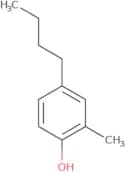
CAS:<p>4-Butyl-2-methylphenol is a phenolic compound that is found in the essential oils of plants such as rosemary. It has been shown to inhibit the growth of animal cells, and this effect may be due to its ability to induce apoptosis. 4-Butyl-2-methylphenol also inhibits the production of basic fibroblast growth factor and epidermal growth factor by inhibiting protein synthesis and DNA synthesis. This chemical is an analog of platelet derived growth factor and has been shown to stimulate angiogenesis in vitro. 4-Butyl-2-methylphenol has been found to increase vessel density in animals when applied topically.</p>Formula:C11H16OPurity:Min. 95%Molecular weight:164.24 g/mol1-(4-Aminoindoline)ethanone
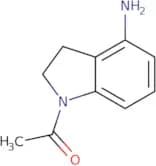
CAS:<p>Versatile small molecule scaffold</p>Formula:C10H12N2OPurity:Min. 95%Molecular weight:176.22 g/mol2-(2,4-Diphenylquinolin-3-yl)acetic acid
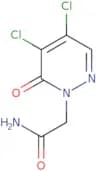
CAS:<p>Versatile small molecule scaffold</p>Formula:C23H17NO2Purity:Min. 95%Molecular weight:339.4 g/mol2-(4,5-Dichloro-6-oxo-1,6-dihydropyridazin-1-yl)acetamide
CAS:<p>Versatile small molecule scaffold</p>Formula:C6H5Cl2N3O2Purity:Min. 95%Molecular weight:222.03 g/mol[(6-Chloropyridazin-3-yl)amino]acetic acid
CAS:<p>Versatile small molecule scaffold</p>Formula:C6H6ClN3O2Purity:Min. 95%Molecular weight:187.58 g/mol1-(2-Hydroxyethyl)-1,2,3,6-tetrahydropyridazine-3,6-dione
CAS:<p>Versatile small molecule scaffold</p>Formula:C6H8N2O3Purity:Min. 95%Molecular weight:156.14 g/molTrichloropyridazin-4-amine
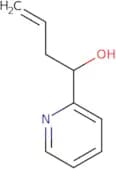
CAS:<p>Versatile small molecule scaffold</p>Formula:C4H2Cl3N3Purity:Min. 95%Molecular weight:198.43 g/mol1-(Pyridin-2-yl)but-3-en-1-ol
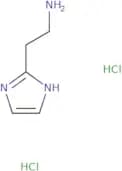
CAS:<p>Versatile small molecule scaffold</p>Formula:C9H11NOPurity:Min. 95%Molecular weight:149.19 g/mol2-(1H-Imidazol-2-yl)ethanamine dihydrochloride
CAS:<p>Versatile small molecule scaffold</p>Formula:C5H11Cl2N3Purity:Min. 95%Molecular weight:184.07 g/mol5-Methoxy-1H-pyrrolo[3,2-b]pyridine-2-carboxylic acid
CAS:<p>Versatile small molecule scaffold</p>Formula:C9H8N2O3Purity:Min. 95%Molecular weight:192.17 g/mol(1H-Pyrrolo[3,2-b]pyridin-2-yl)methanol
CAS:<p>Versatile small molecule scaffold</p>Formula:C8H8N2OPurity:Min. 95%Molecular weight:148.16 g/mol1H-Pyrrolo[3,2-b]pyridine-2-carbaldehyde
CAS:<p>Versatile small molecule scaffold</p>Formula:C8H6N2OPurity:Min. 95%Molecular weight:146.15 g/mol3-Amino-2-(methylamino)propanoic acid dihydrochloride
CAS:<p>Versatile small molecule scaffold</p>Formula:C4H12Cl2N2O2Purity:Min. 95%Molecular weight:191.05 g/mol4-(chloromethyl)-1-methyl-1H-imidazole hydrochloride
CAS:Controlled Product<p>Versatile small molecule scaffold</p>Formula:C5H8Cl2N2Purity:Min. 95%Molecular weight:167.03 g/mol1,3,5-Trichloro-2-(chloromethyl)benzene
CAS:<p>1,3,5-Trichloro-2-(chloromethyl)benzene (TCMB) is a chemical compound that inhibits the synthesis of proteins and is used in cancer therapy. TCMB has been shown to inhibit protein synthesis by binding to the polymerase chain reaction enzyme transcriptase polymerase chain reaction. It also inhibits the activity of enzymes involved in lipid metabolism, such as lipases and cholesterol esterases. The serum bilirubin levels were found to be lower in mice treated with TCMB than in those not treated with TCMB. This may be due to the ability of this drug to inhibit the enzyme fatty acid synthase, which is responsible for synthesizing fatty acids. TCMB has been shown to induce apoptosis in bladder cells, which may be due to its inhibition of DNA synthesis and repair.</p>Formula:C7H4Cl4Purity:Min. 95%Molecular weight:229.9 g/mol2-Phenylcyclobutan-1-amine
CAS:<p>2-Phenylcyclobutan-1-amine is a synthetic compound. It is a white crystalline solid that can be soluble in water, ethanol, and acetone. The compounds are chiral and exist as two stereoisomers: (S)-2-phenylcyclobutan-1-amine and (R)-2-phenylcyclobutan-1-amine. The two isomers have different effects on the central nervous system. The (S)-isomer is an analog of amphetamine and interacts with the serotonin receptor 5HT2A, while the (R)-isomer is an analog of methamphetamine which interacts with the dopamine receptors D1 and D2. 2-Phenylcyclobutan-1-amine has been shown to be more effective than cocaine in animal studies for Parkinson's disease treatment, but it has not been tested in humans. It also has properties that make it worthwhile for use as an insecticide or herbicide.</p>Formula:C10H13NPurity:Min. 95%Molecular weight:147.22 g/mol2-Phenylcyclohexanamine
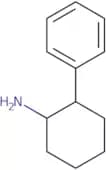
CAS:<p>2-Phenylcyclohexanamine is a synthetic, experimental compound. It has been shown to have high energy content and the ability to cross over from the gas phase to the liquid phase. 2-Phenylcyclohexanamine can be used as a thermodynamic probe in analytical research and has an efficient method for synthesis. The synthesis of 2-phenylcyclohexanamine is done by heating 1,1-diphenyl cyclopropane with cyclohexylamine, producing a mixture that can be purified with column chromatography. The analytical methodology for this compound includes GC/MS analysis of the raw material, reaction product, and final product.</p>Formula:C12H17NPurity:Min. 95%Molecular weight:175.27 g/mol2'-Methoxybiphenyl-2-carboxylic acid
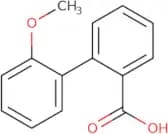
CAS:<p>2'-Methoxybiphenyl-2-carboxylic acid is a benzene carboxylic acid that is used as a precursor for biphenyl-2-carboxylic acids. 2'-Methoxybiphenyl-2-carboxylic acid can be synthesized by refluxing 2'-hydroxybiphenyl with peroxides in the presence of benzene, followed by cyclisation and decarboxylation. Alternatively, 2'-methoxybiphenyl-2-carboxylic acid can be obtained by thermally decomposing 3,4,5,6-tetramethylbenzoic acid. This compound has been shown to react intramolecularly and intermediacy with triphenylene to form triphenyltetracarboxylic acids.</p>Formula:C14H12O3Purity:Min. 95%Molecular weight:228.25 g/mol
![2-(5-chlorobenzo[b]thiophen-3-yl)acetic acid](/_next/image/?url=https%3A%2Fstatic.cymitquimica.com%2Fproducts%2F3D%2Fthumb-webp%2FSAA26630.webp&w=3840&q=75)



![[(6-Chloropyridazin-3-yl)amino]acetic acid](/_next/image/?url=https%3A%2Fstatic.cymitquimica.com%2Fproducts%2F3D%2Fthumb-webp%2FSAA28499.webp&w=3840&q=75)


![5-Methoxy-1H-pyrrolo[3,2-b]pyridine-2-carboxylic acid](/_next/image/?url=https%3A%2Fstatic.cymitquimica.com%2Fproducts%2F3D%2Fthumb-webp%2FSAA28833.webp&w=3840&q=75)
![(1H-Pyrrolo[3,2-b]pyridin-2-yl)methanol](/_next/image/?url=https%3A%2Fstatic.cymitquimica.com%2Fproducts%2F3D%2Fthumb-webp%2FSAA28847.webp&w=3840&q=75)
![1H-Pyrrolo[3,2-b]pyridine-2-carbaldehyde](/_next/image/?url=https%3A%2Fstatic.cymitquimica.com%2Fproducts%2F3D%2Fthumb-webp%2FSAA28852.webp&w=3840&q=75)