


Building Blocks
This section contains fundamental products for the synthesis of organic and biological compounds. Building blocks are the essential starting materials used to construct complex molecules through various chemical reactions. They play a critical role in drug discovery, material science, and chemical research. At CymitQuimica, we offer a diverse range of high-quality building blocks to support your innovative research and industrial projects, ensuring you have the essential components for successful synthesis.
Subcategories of "Building Blocks"
- Boronic Acids & Boronic Acid Derivatives(5,756 products)
- Chiral Building Blocks(1,242 products)
- Hydrocarbon Building Blocks(6,095 products)
- Organic Building Blocks(61,055 products)
Found 199650 products of "Building Blocks"
Sort by
Purity (%)
0
100
|
0
|
50
|
90
|
95
|
100
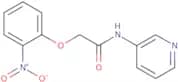
2-(2-Nitrophenoxy)-N-(pyridin-3-yl)acetamide
CAS:Versatile small molecule scaffoldFormula:C13H11N3O4Purity:Min. 95%Molecular weight:273.24 g/molCuspin 1
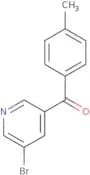
CAS:<p>Cuspin 1 is a molecule that is involved in the translation of proteins from mRNA to protein. It is an analog of Cuspin 2, with which it interacts and has pleiotropic effects on neuronal function. Cuspin 1 has been shown to have neuroprotective effects in vitro against neurodegenerative diseases and may be involved in the localization of neurons. However, the exact role of this protein remains unclear and its mechanism of action is still being investigated.</p>Formula:C13H10BrNOPurity:Min. 95%Molecular weight:276.13 g/mol2-(4-Bromophenyl)-2-({[(9H-fluoren-9-yl)methoxy]carbonyl}amino)acetic acid
CAS:<p>Versatile small molecule scaffold</p>Formula:C23H18BrNO4Purity:Min. 95%Molecular weight:452.3 g/mol1-[4-(Pyridin-2-yl)piperazin-1-yl]propan-2-amine
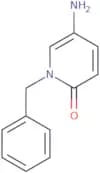
CAS:<p>Versatile small molecule scaffold</p>Formula:C12H20N4Purity:Min. 95%Molecular weight:220.31 g/mol5-Amino-1-benzyl-1,2-dihydropyridin-2-one
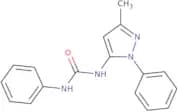
CAS:<p>Versatile small molecule scaffold</p>Formula:C12H12N2OPurity:Min. 95%Molecular weight:200.24 g/mol3-(3-Methyl-1-phenyl-1H-pyrazol-5-yl)-1-phenylurea
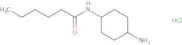
CAS:<p>Versatile small molecule scaffold</p>Formula:C17H16N4OPurity:Min. 95%Molecular weight:292.33 g/molN-(4-Aminocyclohexyl)hexanamide hydrochloride
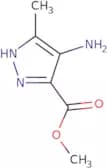
CAS:<p>Versatile small molecule scaffold</p>Formula:C12H25ClN2OPurity:Min. 95%Molecular weight:248.79 g/molMethyl 4-amino-3-methyl-1H-pyrazole-5-carboxylate
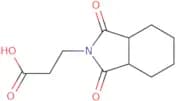
CAS:Versatile small molecule scaffoldFormula:C6H9N3O2Purity:Min. 95%Molecular weight:155.15 g/mol3-(1,3-Dioxo-octahydro-isoindol-2-yl)-propionic acid
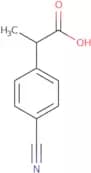
CAS:<p>Versatile small molecule scaffold</p>Formula:C11H15NO4Purity:Min. 95%Molecular weight:225.24 g/mol2-(4-Cyanophenyl)propanoic acid
CAS:<p>Versatile small molecule scaffold</p>Formula:C10H9NO2Purity:Min. 95%Molecular weight:175.19 g/mol4-[(2-Methylquinolin-4-yl)methoxy]benzoic acid
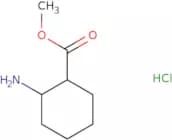
CAS:<p>Versatile small molecule scaffold</p>Formula:C18H15NO3Purity:Min. 95%Molecular weight:293.3 g/molMethyl (1S,2R)-2-aminocyclohexane-1-carboxylate hydrochloride
CAS:<p>Versatile small molecule scaffold</p>Formula:C8H16ClNO2Purity:Min. 95%Molecular weight:193.67 g/mol4-Amino-N-[(2-fluorophenyl)methyl]benzamide
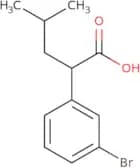
CAS:<p>4-Amino-N-[(2-fluorophenyl)methyl]benzamide is a peptide that is a potent activator of the GABA A receptor. It has been shown to inhibit the growth of cancer cells in culture and to induce apoptosis in some cell lines. 4-Amino-N-[(2-fluorophenyl)methyl]benzamide is also an inhibitor of protein interactions. This compound can be used as a research tool for studying protein interactions, as it binds to proteins and inhibits them from binding with other proteins. 4-Amino-N-[(2-fluorophenyl)methyl]benzamide can be used to create antibodies that bind to proteins and can be used in immunohistochemistry studies or Western blotting experiments.</p>Formula:C14H13FN2OPurity:Min. 95%Molecular weight:244.26 g/mol2-(3-bromophenyl)-4-methylpentanoic acid
CAS:<p>Versatile small molecule scaffold</p>Formula:C12H15BrO2Purity:Min. 95%Molecular weight:271.2 g/mol2-Chloro-N-[2-(trifluoromethyl)-1H-1,3-benzodiazol-5-yl]acetamide
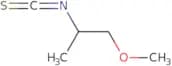
CAS:<p>2-Chloro-N-[2-(trifluoromethyl)-1H-1,3-benzodiazol-5-yl]acetamide is a triazolone compound. It has been shown to form hydrogen bonds with the benzene ring in its crystal structure and can be used as an intermediate for the synthesis of other compounds. 2-Chloro-N-[2-(trifluoromethyl)-1H-1,3-benzodiazol-5-yl]acetamide has also been shown to form dimers and dihedral angles.</p>Formula:C10H7ClF3N3OPurity:Min. 95%Molecular weight:277.63 g/mol1-Methoxy-prop-2-yl isothiocyanate
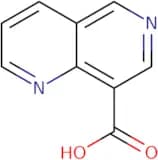
CAS:<p>Versatile small molecule scaffold</p>Formula:C5H9NOSPurity:Min. 95%Molecular weight:131.2 g/mol1,6-Naphthyridine-8-carboxylic acid
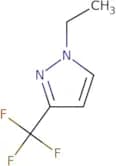
CAS:<p>Versatile small molecule scaffold</p>Formula:C9H6N2O2Purity:Min. 95%Molecular weight:174.16 g/mol1-Ethyl-3-(trifluoromethyl)-1H-pyrazole
CAS:<p>Versatile small molecule scaffold</p>Formula:C6H7F3N2Purity:Min. 95%Molecular weight:164.13 g/mol5-Bromotricyclo[8.2.1.0,3,8]trideca-3,5,7-trien-13-one
CAS:<p>Versatile small molecule scaffold</p>Formula:C13H13BrOPurity:Min. 95%Molecular weight:265.14 g/mol

![2-(4-Bromophenyl)-2-({[(9H-fluoren-9-yl)methoxy]carbonyl}amino)acetic acid](/_next/image/?url=https%3A%2Fstatic.cymitquimica.com%2Fproducts%2F3D%2Fthumb-webp%2FMNA95381.webp&w=3840&q=75)
![1-[4-(Pyridin-2-yl)piperazin-1-yl]propan-2-amine](/_next/image/?url=https%3A%2Fstatic.cymitquimica.com%2Fproducts%2F3D%2Fthumb-webp%2FMNA95640.webp&w=3840&q=75)
![4-[(2-Methylquinolin-4-yl)methoxy]benzoic acid](/_next/image/?url=https%3A%2Fstatic.cymitquimica.com%2Fproducts%2F3D%2Fthumb-webp%2FMPA48851.webp&w=3840&q=75)
![4-Amino-N-[(2-fluorophenyl)methyl]benzamide](/_next/image/?url=https%3A%2Fstatic.cymitquimica.com%2Fproducts%2F3D%2Fthumb-webp%2FMPA52032.webp&w=3840&q=75)
![2-Chloro-N-[2-(trifluoromethyl)-1H-1,3-benzodiazol-5-yl]acetamide](/_next/image/?url=https%3A%2Fstatic.cymitquimica.com%2Fproducts%2F3D%2Fthumb-webp%2FMPA59428.webp&w=3840&q=75)
![5-Bromotricyclo[8.2.1.0,3,8]trideca-3,5,7-trien-13-one](/_next/image/?url=https%3A%2Fstatic.cymitquimica.com%2Fproducts%2F3D%2Fthumb-webp%2FMPA65766.webp&w=3840&q=75)