Building Blocks
This section contains fundamental products for the synthesis of organic and biological compounds. Building blocks are the essential starting materials used to construct complex molecules through various chemical reactions. They play a critical role in drug discovery, material science, and chemical research. At CymitQuimica, we offer a diverse range of high-quality building blocks to support your innovative research and industrial projects, ensuring you have the essential components for successful synthesis.
Subcategories of "Building Blocks"
- Boronic Acids & Boronic Acid Derivatives(5,778 products)
- Chiral Building Blocks(1,242 products)
- Hydrocarbon Building Blocks(6,098 products)
- Organic Building Blocks(61,034 products)
Found 199601 products of "Building Blocks"
Sort by
Purity (%)
0
100
|
0
|
50
|
90
|
95
|
100
N,N,2-Trimethyl-3,4-dihydro-2H-1-benzopyran-3-amine
CAS:<p>N,N,2-Trimethyl-3,4-dihydro-2H-1-benzopyran-3-amine is a drug that is used as an anaesthetic agent. It is also known as trimethobenzamide. N,N,2-Trimethyl-3,4-dihydro-2H-1-benzopyran-3-amine causes sleepiness and relaxation by blocking the neurotransmitter serotonin. When administered intravenously, it produces sleepiness within 5 to 10 minutes and lasts for about 1 to 2 hours. N,N,2 -trimethyl -3,4 -dihydro -2H -1 benzopyran -3 amine has been used in the treatment of Parkinson's disease and other movement disorders such as Huntington's disease.</p>Formula:C12H17NOPurity:Min. 95%Molecular weight:191.27 g/mol2-Methyl-3,4-dihydro-2H-1-benzopyran-3-amine hydrochloride
CAS:<p>Versatile small molecule scaffold</p>Formula:C10H14ClNOPurity:Min. 95%Molecular weight:199.7 g/mol1-Chloro-6-fluorophthalazine
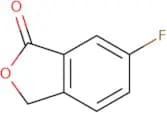
CAS:<p>Versatile small molecule scaffold</p>Formula:C8H4ClFN2Purity:Min. 95%Molecular weight:182.59 g/mol6-Fluorophthalide
CAS:<p>Versatile small molecule scaffold</p>Formula:C8H5FO2Purity:Min. 95%Molecular weight:152.12 g/mol1,2,3,4-Tetrahydrophthalazin-1-one hydrochloride
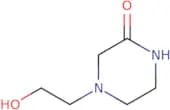
CAS:<p>Versatile small molecule scaffold</p>Formula:C8H9ClN2OPurity:Min. 95%Molecular weight:184.62 g/mol4-(2-Hydroxyethyl)piperazin-2-one
CAS:<p>4-(2-Hydroxyethyl)piperazin-2-one is a versatile compound that has various applications in the field of research and chemical synthesis. It is commonly used as an intermediate in the synthesis of fatty acids, carotenoids, and amides. This compound exhibits a nematic phase, which makes it useful in liquid crystal displays and other electronic devices.</p>Formula:C6H12N2O2Purity:Min. 95%Molecular weight:144.17 g/mol2-Methyl-1-phenylpentan-3-one
CAS:<p>Versatile small molecule scaffold</p>Formula:C12H16OPurity:Min. 95%Molecular weight:176.25 g/mol4-Hydroxy-2-sulfanylpyrimidine-5-carbonitrile
CAS:Versatile small molecule scaffoldFormula:C5H3N3OSPurity:Min. 95%Molecular weight:153.16 g/mol3-[(2-Methylphenyl)amino]propanoic acid
CAS:Versatile small molecule scaffoldFormula:C10H13NO2Purity:Min. 95%Molecular weight:179.22 g/mol1,3-Thiazole-4-carboximidamide hydrochloride
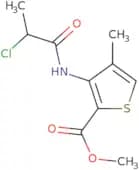
CAS:<p>Versatile small molecule scaffold</p>Formula:C4H6ClN3SPurity:Min. 95%Molecular weight:163.63 g/molMethyl 3-(2-chloropropanamido)-4-methylthiophene-2-carboxylate
CAS:<p>Versatile small molecule scaffold</p>Formula:C10H12ClNO3SPurity:Min. 95%Molecular weight:261.73 g/mol2-Methyl-benzofuran-5-ylamine hydrochloride
CAS:<p>Versatile small molecule scaffold</p>Formula:C9H10ClNOPurity:Min. 95%Molecular weight:183.64 g/mol(1-Methyl-1,2,3,6-tetrahydropyridin-4-yl)methanamine
CAS:<p>Versatile small molecule scaffold</p>Formula:C7H14N2Purity:Min. 95%Molecular weight:126.2 g/mol1-(1-Methyl-1,2,3,6-tetrahydropyridin-4-yl)ethan-1-amine
CAS:<p>Versatile small molecule scaffold</p>Formula:C8H16N2Purity:Min. 95%Molecular weight:140.23 g/mol1H,2H,3H-Pyrido[2,3-b][1,4]thiazine
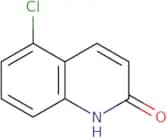
CAS:<p>Versatile small molecule scaffold</p>Formula:C7H8N2SPurity:Min. 95%Molecular weight:152.22 g/mol5-Chloroquinolin-2(1H)-one
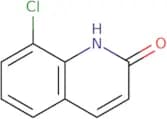
CAS:<p>Versatile small molecule scaffold</p>Formula:C9H6ClNOPurity:Min. 95%Molecular weight:179.6 g/mol8-Chloroquinolin-2-ol
CAS:<p>8-Chloroquinolin-2-ol is an activated compound that exhibits cytotoxic properties. It has been used in the development of nanocomposites with potassium channels, which have shown promising results in various research studies. 8-Chloroquinolin-2-ol can be synthesized by reacting quinolin-8-ol with pentafluoropropionic anhydride and potassium carbonate. This compound is commonly used as a research chemical and is often employed for the production of antibodies or as a potassium ion inhibitor. Its reactive nature makes it suitable for various applications, including the development of steroid-based nanotubes or the synthesis of inhibitors for specific reactions. When working with 8-Chloroquinolin-2-ol, it is important to handle it in anhydrous sodium carbonate to ensure its stability and effectiveness.</p>Formula:C9H6ClNOPurity:Min. 95%Molecular weight:179.61 g/mol7-Methoxy-1,2-dihydroquinolin-2-one
CAS:<p>Versatile small molecule scaffold</p>Formula:C10H9NO2Purity:Min. 95%Molecular weight:175.18 g/mol2-(5-Amino-1,3,4-oxadiazol-2-yl)propan-2-ol
CAS:<p>Versatile small molecule scaffold</p>Formula:C5H9N3O2Purity:Min. 95%Molecular weight:143.14 g/mol2-Methyl-4-(trifluoromethyl)aniline hydrochloride
CAS:<p>Versatile small molecule scaffold</p>Formula:C8H9ClF3NPurity:Min. 95%Molecular weight:211.61 g/mol



![3-[(2-Methylphenyl)amino]propanoic acid](/_next/image/?url=https%3A%2Fstatic.cymitquimica.com%2Fproducts%2F3D%2Fthumb-webp%2FYAA94732.webp&w=3840&q=75)
![1H,2H,3H-Pyrido[2,3-b][1,4]thiazine](/_next/image/?url=https%3A%2Fstatic.cymitquimica.com%2Fproducts%2F3D%2Fthumb-webp%2FYAA97747.webp&w=3840&q=75)