


Building Blocks
This section contains fundamental products for the synthesis of organic and biological compounds. Building blocks are the essential starting materials used to construct complex molecules through various chemical reactions. They play a critical role in drug discovery, material science, and chemical research. At CymitQuimica, we offer a diverse range of high-quality building blocks to support your innovative research and industrial projects, ensuring you have the essential components for successful synthesis.
Subcategories of "Building Blocks"
- Boronic Acids & Boronic Acid Derivatives(5,756 products)
- Chiral Building Blocks(1,242 products)
- Hydrocarbon Building Blocks(6,095 products)
- Organic Building Blocks(61,055 products)
Found 199650 products of "Building Blocks"
Sort by
Purity (%)
0
100
|
0
|
50
|
90
|
95
|
100
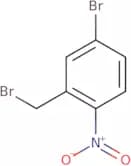
5-Bromo-2-nitrobenzyl bromide
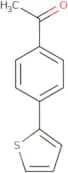
CAS:<p>Versatile small molecule scaffold</p>Formula:C7H5Br2NO2Purity:Min. 95%Molecular weight:294.93 g/mol1-(4-Thiophen-2-yl-phenyl)-ethanone
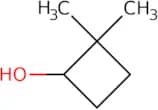
CAS:<p>Versatile small molecule scaffold</p>Formula:C12H10OSPurity:Min. 95%Molecular weight:202.27 g/mol2,2-Dimethylcyclobutan-1-ol
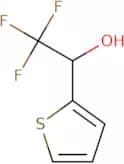
CAS:<p>2,2-Dimethylcyclobutan-1-ol is an organic compound that belongs to the class of cyclopropanes. It is a stereospecific reaction product of 2,2-dimethylcyclopropanecarboxylic acid and sodium ethoxide in ethanol. This compound can be used as a chiral synthon for the synthesis of cyclopropane derivatives. The optical activity of this compound has been shown to be dependent on the configuration at the chiral center.</p>Formula:C6H12OPurity:Min. 95%Molecular weight:100.16 g/mol2,2,2-Trifluoro-1-(thiophen-2-yl)ethanol
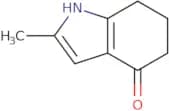
CAS:<p>Versatile small molecule scaffold</p>Formula:C6H5F3OSPurity:Min. 95%Molecular weight:182.16 g/mol1,5,6,7-Tetrahydro-2-methyl-4h-indol-4-one
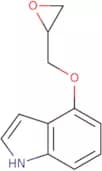
CAS:<p>Versatile small molecule scaffold</p>Formula:C9H11NOPurity:Min. 95%Molecular weight:149.19 g/mol4-(Oxiran-2-ylmethoxy)-1H-indole
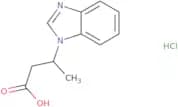
CAS:<p>Versatile small molecule scaffold</p>Formula:C11H11NO2Purity:Min. 95%Molecular weight:189.21 g/mol3-(1H-1,3-Benzodiazol-1-yl)butanoic acid hydrochloride
CAS:<p>Versatile small molecule scaffold</p>Formula:C11H13ClN2O2Purity:Min. 95%Molecular weight:240.68 g/molN-[1-Chloro-3-(hydroxyimino)propan-2-ylidene]hydroxylamine
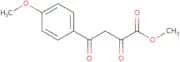
CAS:<p>Versatile small molecule scaffold</p>Formula:C3H5ClN2O2Purity:Min. 95%Molecular weight:136.54 g/molEthyl 4-(4-methoxyphenyl)-2,4-dioxobutanoate
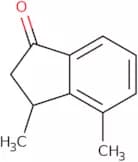
CAS:<p>Versatile small molecule scaffold</p>Formula:C13H14O5Purity:Min. 95%Molecular weight:250.25 g/mol3,4-Dimethyl-2,3-dihydro-1H-inden-1-one
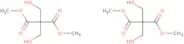
CAS:<p>Versatile small molecule scaffold</p>Formula:C11H12OPurity:Min. 95%Molecular weight:160.21 g/molDimethyl Bis(hydroxymethyl)malonate
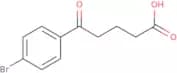
CAS:<p>Versatile small molecule scaffold</p>Formula:C7H12O6Purity:Min. 95%Molecular weight:192.17 g/mol5-(4-Bromophenyl)-5-oxovaleric acid
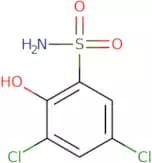
CAS:<p>5-(4-Bromophenyl)-5-oxovaleric acid is a molecule that has been synthesized to be used as a cancer drug. It is an amide derivative of the natural compound valproic acid and is being developed for the treatment of cancers, such as leukemia and melanoma. 5-(4-Bromophenyl)-5-oxovaleric acid has been shown to inhibit the function of integrin, which plays a role in cell adhesion and migration, with potential applications in wound healing. <br>The molecule has also been shown to have chemokine binding properties and may be useful in the treatment of diseases where chemokines are involved, such as HIV or AIDS. This compound also binds to CCR5 receptor and inhibits HIV entry into cells. The molecule has also been shown to antagonize survivin, an antiapoptotic protein that protects cells from undergoing apoptosis and prevents tumor suppression. The affinity of 5-(4-bromophenyl</p>Formula:C11H11BrO3Purity:Min. 95%Molecular weight:271.12 g/mol3,5-Dichloro-2-hydroxybenzene-1-sulfonamide
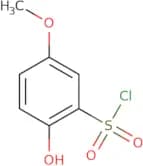
CAS:<p>3,5-Dichloro-2-hydroxybenzene-1-sulfonamide is a defoliant that was first developed in the 1950s. It is a desiccant that damages plants by blocking photosynthesis and causes leaf shedding. 3,5-Dichloro-2-hydroxybenzene-1-sulfonamide is used on cotton plants to control weeds and promote plant growth. This sulfonamide herbicide also has the ability to kill insects, such as potato beetles, which are harmful to crops.</p>Formula:C6H5Cl2NO3SPurity:Min. 95%Molecular weight:242.08 g/mol2-Hydroxy-5-methoxybenzene-1-sulfonyl chloride
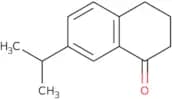
CAS:<p>Versatile small molecule scaffold</p>Formula:C7H7ClO4SPurity:Min. 95%Molecular weight:222.65 g/mol7-(Propan-2-yl)-1,2,3,4-tetrahydronaphthalen-1-one
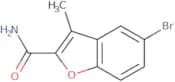
CAS:<p>Versatile small molecule scaffold</p>Formula:C13H16OPurity:Min. 95%Molecular weight:188.26 g/mol5-Bromo-3-methyl-1-benzofuran-2-carboxamide
CAS:<p>Versatile small molecule scaffold</p>Formula:C10H8BrNO2Purity:Min. 95%Molecular weight:254.08 g/mol5-(4-Bromophenyl)-1H-imidazol-2-amine
CAS:<p>Versatile small molecule scaffold</p>Formula:C9H8BrN3Purity:Min. 95%Molecular weight:238.08 g/mol4-(4-Nitrophenyl)-1H-imidazol-2-amine
CAS:<p>Versatile small molecule scaffold</p>Formula:C9H8N4O2Purity:Min. 95%Molecular weight:204.19 g/mol[2-(Methylsulfanyl)phenyl]hydrazine hydrochloride
CAS:<p>Versatile small molecule scaffold</p>Formula:C7H11ClN2SPurity:Min. 95%Molecular weight:190.69 g/mol(3-Ethyl-phenyl)-hydrazine hydrochloride
CAS:<p>Versatile small molecule scaffold</p>Formula:C8H13ClN2Purity:Min. 95%Molecular weight:172.66 g/mol

![N-[1-Chloro-3-(hydroxyimino)propan-2-ylidene]hydroxylamine](/_next/image/?url=https%3A%2Fstatic.cymitquimica.com%2Fproducts%2F3D%2Fthumb-webp%2FKBA32155.webp&w=3840&q=75)


![[2-(Methylsulfanyl)phenyl]hydrazine hydrochloride](/_next/image/?url=https%3A%2Fstatic.cymitquimica.com%2Fproducts%2F3D%2Fthumb-webp%2FKCA48133.webp&w=3840&q=75)
