Building Blocks
This section contains fundamental products for the synthesis of organic and biological compounds. Building blocks are the essential starting materials used to construct complex molecules through various chemical reactions. They play a critical role in drug discovery, material science, and chemical research. At CymitQuimica, we offer a diverse range of high-quality building blocks to support your innovative research and industrial projects, ensuring you have the essential components for successful synthesis.
Subcategories of "Building Blocks"
- Boronic Acids & Boronic Acid Derivatives(5,756 products)
- Chiral Building Blocks(1,242 products)
- Hydrocarbon Building Blocks(6,095 products)
- Organic Building Blocks(61,055 products)
Found 199650 products of "Building Blocks"
Sort by
Purity (%)
0
100
|
0
|
50
|
90
|
95
|
100
2-[(1-Bromo-2-naphthyl)oxy]acetic acid
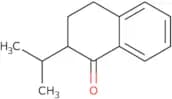
CAS:<p>2-[(1-Bromo-2-naphthyl)oxy]acetic acid is a fluorescent probe that is used in fluorescence data assays. It has a low molecular weight of 216.3 and fluoresces when excited with UV light. 2-[(1-Bromo-2-naphthyl)oxy]acetic acid has been shown to inhibit the production of oxidase enzymes in vitro, which are found in many bacteria and fungi. 2-[(1-Bromo-2-naphthyl)oxy]acetic acid is also a substrate for the enzyme assembly, which catalyzes the formation of peptide bonds between amino acids. The probe can be used as a marker for protein synthesis and has been shown to have anti-diabetic effects in vivo.</p>Formula:C12H9BrO3Purity:Min. 95%Molecular weight:281.11 g/mol2-(Propan-2-yl)-1,2,3,4-tetrahydronaphthalen-1-one
CAS:<p>Versatile small molecule scaffold</p>Formula:C13H16OPurity:Min. 95%Molecular weight:188.26 g/molN-(Piperidin-4-yl)cyclohexanecarboxamide hydrochloride
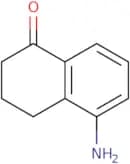
CAS:<p>Versatile small molecule scaffold</p>Formula:C12H23ClN2OPurity:Min. 95%Molecular weight:246.78 g/mol5-Amino-1,2,3,4-tetrahydronaphthalen-1-one
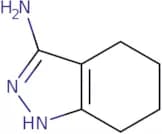
CAS:<p>5-Amino-1,2,3,4-tetrahydronaphthalen-1-one is an organic compound that belongs to the class of heterocyclic compounds. It has been shown to act as a superacid and has been used in the synthesis of multidrug resistant cancer cells. 5-Amino-1,2,3,4-tetrahydronaphthalen-1-one also binds to topoisomerase II and III and inhibits DNA replication. The drug can also inhibit the function of p-glycoprotein and other multidrug resistant transporters at the cellular level.</p>Formula:C10H11NOPurity:Min. 95%Molecular weight:161.2 g/mol4,5,6,7-Tetrahydro-2H-indazol-3-amine
CAS:<p>Versatile small molecule scaffold</p>Formula:C7H11N3Purity:Min. 95%Molecular weight:137.19 g/mol3-{[2-(Morpholin-4-yl)ethyl]amino}propanenitrile
CAS:3-{[2-(Morpholin-4-yl)ethyl]amino}propanenitrile is a prodrug that is metabolized to the active drug, 2-morpholinoethanol. It is used for the treatment of breast cancer and mastitis (inflammation of the breast). 3-{[2-(Morpholin-4-yl)ethyl]amino}propanenitrile has a high water solubility and high stability, which makes it an ideal candidate for injection as a sustained release drug. This drug can be injected into solid tumors that are difficult to treat with other drugs and may also be used in conjunction with chemotherapy. 3-{[2-(Morpholin-4-yl)ethyl]amino}propanenitrile inhibits the production of estrogen, which plays a role in the growth of some types of breast cancer cells.Formula:C9H17N3OPurity:Min. 95%Molecular weight:183.25 g/molMethyl 4-methyl-6-oxoheptanoate
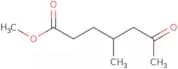
CAS:<p>Versatile small molecule scaffold</p>Formula:C9H16O3Purity:Min. 95%Molecular weight:172.22 g/mol2,6-Dimethyltetrahydro-2H-pyran-4-ol
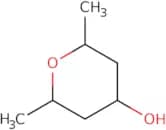
CAS:Versatile small molecule scaffoldFormula:C7H14O2Purity:Min. 95%Molecular weight:130.18 g/mol4-(Pyridin-2-yl)butan-2-ol
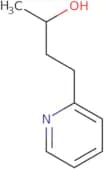
CAS:<p>Versatile small molecule scaffold</p>Formula:C9H13NOPurity:Min. 95%Molecular weight:151.21 g/mol4'-N-Piperidinophenyl acetylene
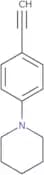
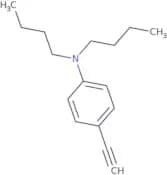
CAS:<p>Versatile small molecule scaffold</p>Formula:C13H15NPurity:Min. 95%Molecular weight:185.27 g/molN,N-Dibutyl-4-ethynylaniline
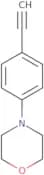
CAS:<p>Versatile small molecule scaffold</p>Formula:C16H23NPurity:Min. 95%Molecular weight:229.36 g/mol4-(4-Ethynylphenyl)morpholine
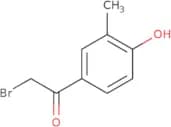
CAS:<p>Versatile small molecule scaffold</p>Formula:C12H13NOPurity:Min. 95%Molecular weight:187.24 g/mol2-Bromo-1-(4-hydroxy-3-methylphenyl)ethan-1-one
CAS:<p>Versatile small molecule scaffold</p>Formula:C9H9BrO2Purity:Min. 95%Molecular weight:229.07 g/mol6-Hydroxy-2-methylnicotinonitrile
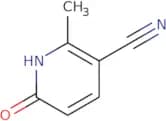
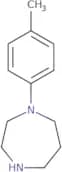
CAS:<p>6-Hydroxy-2-methylnicotinonitrile is a reagent that is used for the condensation of aldehydes and amines. It can also be used to form enamines from primary amines with carbonyl compounds. Dimethyl acetal, dimethyl, methyl methacrylate, cyclized, methacrylate, acetal are some of the products that are made using 6-Hydroxy-2-methylnicotinonitrile.</p>Formula:C7H6N2OPurity:Min. 95%Molecular weight:134.14 g/mol1-(4-Methylphenyl)-1,4-diazepane
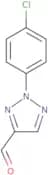
CAS:<p>Versatile small molecule scaffold</p>Formula:C12H18N2Purity:Min. 95%Molecular weight:190.28 g/mol2-(4-Chlorophenyl)-2H-1,2,3-triazole-4-carbaldehyde
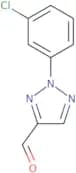
CAS:<p>Versatile small molecule scaffold</p>Formula:C9H6ClN3OPurity:Min. 95%Molecular weight:207.61 g/mol2-(3-Chlorophenyl)-2H-1,2,3-triazole-4-carbaldehyde
CAS:<p>Versatile small molecule scaffold</p>Formula:C9H6ClN3OPurity:Min. 95%Molecular weight:207.61 g/mol6-Methyl-2-oxopiperidine-3-carboxylic acids
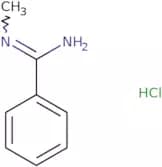
CAS:<p>Versatile small molecule scaffold</p>Formula:C7H11NO3Purity:Min. 95%Molecular weight:157.2 g/molN-Methylbenzenecarboximidamide hydrochloride
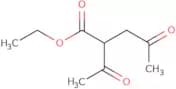
CAS:<p>N-Methylbenzenecarboximidamide hydrochloride is a chemical substance that belongs to the class of benzamidine. It is used as an intermediate in the synthesis of other chemicals and drugs, such as 3-methylcholanthrene, which is used for the treatment of cancer. N-Methylbenzenecarboximidamide hydrochloride is synthesized by solid-phase synthesis on a silica gel support using benzamidine as a starting material. The final product can be purified by chromatography with a solvent system consisting of hexane and ethyl acetate. This reaction mechanism involves oxidation of the methyl group to form an epoxide, followed by nucleophilic attack by water on the epoxide to form an enol. The enol undergoes reductive elimination to produce the desired product. The optimal reaction conditions are achieved at 60 degrees Celsius and a pH between 5 and 7.</p>Formula:C8H11ClN2Purity:Min. 95%Molecular weight:170.64 g/molEthyl 2-acetyl-4-oxopentanoate
CAS:<p>Ethyl 2-acetyl-4-oxopentanoate is a modification of the molecule pentanoic acid. It is a functional molecule that can be modified by substitutions and modifications. The pharmacokinetic properties of this compound have been studied in rats, which showed that it has a high absorption rate when administered orally. Pharmacokinetic studies also revealed that ethyl 2-acetyl-4-oxopentanoate is metabolized to carboxyethyl 2-acetyl-4-oxopentanoate and pyridazine ethyl 2-acetyl-4-oxopentanoate, which are both neuropathic pain drugs with similar pharmacodynamics. This drug has shown promise as a lead compound for the treatment of neuropathic pain due to its α2δ subunit binding activity.</p>Formula:C9H14O4Purity:Min. 95%Molecular weight:186.21 g/mol
![2-[(1-Bromo-2-naphthyl)oxy]acetic acid](/_next/image/?url=https%3A%2Fstatic.cymitquimica.com%2Fproducts%2F3D%2Fthumb-webp%2FRBA79159.webp&w=3840&q=75)


![3-{[2-(Morpholin-4-yl)ethyl]amino}propanenitrile](/_next/image/?url=https%3A%2Fstatic.cymitquimica.com%2Fproducts%2F3D%2Fthumb-webp%2FRBA83284.webp&w=3840&q=75)