Building Blocks
This section contains fundamental products for the synthesis of organic and biological compounds. Building blocks are the essential starting materials used to construct complex molecules through various chemical reactions. They play a critical role in drug discovery, material science, and chemical research. At CymitQuimica, we offer a diverse range of high-quality building blocks to support your innovative research and industrial projects, ensuring you have the essential components for successful synthesis.
Subcategories of "Building Blocks"
- Boronic Acids & Boronic Acid Derivatives(5,781 products)
- Chiral Building Blocks(1,242 products)
- Hydrocarbon Building Blocks(6,101 products)
- Organic Building Blocks(61,033 products)
Found 205320 products of "Building Blocks"
Sort by
Purity (%)
0
100
|
0
|
50
|
90
|
95
|
100
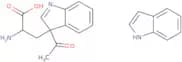
Indole-3-acetyl-DL-tryptophan
CAS:Please enquire for more information about Indole-3-acetyl-DL-tryptophan including the price, delivery time and more detailed product information at the technical inquiry form on this pageFormula:C21H19N3O3Purity:Min. 95%Color and Shape:PowderMolecular weight:361.4 g/mol2-Bromo-N-(2-chloro-6-methylphenyl)acetamide
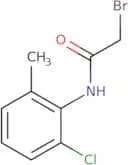
CAS:2-Bromo-N-(2-chloro-6-methylphenyl)acetamide is a fine chemical that can be used as a versatile building block for research and as a reaction component for the synthesis of complex compounds. This compound is also useful for the production of speciality chemicals and other high quality reagents.Formula:C9H9BrClNOPurity:Min. 95%Color and Shape:PowderMolecular weight:262.53 g/molMethyl 4-(2-chloroethyl)benzoate
CAS:Versatile small molecule scaffold
Formula:C10H11ClO2Purity:Min. 95%Molecular weight:198.65 g/mol1-[(2-Azidoethoxy)sulfonyl]-4-methylbenzene
CAS:1-[(2-Azidoethoxy)sulfonyl]-4-methylbenzene is a molecule that inhibits matrix metalloproteinase, a proteolytic enzyme that degrades extracellular matrix proteins. It has been shown to inhibit the growth of cancer cells in vitro and in vivo, which may be due to its ability to inhibit the production of epidermal growth factor (EGF).Formula:C9H11N3O3SPurity:Min. 95%Color and Shape:Clear LiquidMolecular weight:241.27 g/mol1-(5-Propylpyridin-2-yl)ethan-1-one
CAS:Versatile small molecule scaffoldFormula:C10H13NOPurity:Min. 95%Color and Shape:Clear LiquidMolecular weight:163.2 g/mol(Aminomethyl)dimethylphenylsilane
CAS:Aminomethyl)dimethylphenylsilane is a polarizer that has shown growth inhibitory activity against pancreatic carcinoma cells. It has also been found to have pharmacological properties, including anti-cancer and anti-inflammatory effects. Aminomethyl)dimethylphenylsilane is non-selective and non-steroidal, meaning it can inhibit the synthesis of prostaglandins and other eicosanoids. This drug has been shown to be toxic in humans, with side effects such as cardiovascular disorders, alzheimer 's disease, and cancer cell growth.Formula:C9H15NSiPurity:Min. 95%Molecular weight:165.31 g/mol3,4-Furandimethanol
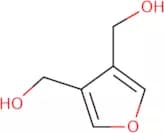
CAS:3,4-Furandimethanol is an antimicrobial agent that is used to treat skin and soft tissue infections. It belongs to the group of compounds called halogens and has a number of natural sources. The fluorescence properties make it a useful tool for biocatalysis, especially in Friedel-Crafts reactions. 3,4-Furandimethanol can be produced from hydrogen chloride, sulfuric acid, and diphenyl ether. This compound is also acetylated by acetic anhydride to produce 3,4-dihydroxymethylfuran (DHMF). 3,4-Furandimethanol has been shown to react with hydrogen sulfate in a polymerization reaction.Formula:C6H8O3Purity:Min. 95%Color and Shape:Clear LiquidMolecular weight:128.13 g/mol1-(Chloromethyl)-3,5-diiodobenzene
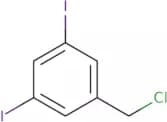
CAS:1-(Chloromethyl)-3,5-diiodobenzene is a versatile and high quality chemical building block that is useful for research purposes. It can be used as a reagent or speciality chemical in the synthesis of other compounds. This compound has been shown to be an intermediate for the synthesis of more complex compounds, such as pharmaceuticals, agrochemicals, and fine chemicals. 1-(Chloromethyl)-3,5-diiodobenzene has many uses in organic chemistry including as a reaction component or scaffold for the construction of complex molecules.Formula:C7H5ClI2Purity:Min. 95%Color and Shape:PowderMolecular weight:378.37 g/mol(3R)-3-Hydroxyoctanoic acid
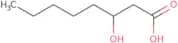
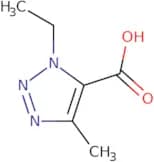
CAS:(3R)-3-Hydroxyoctanoic acid is a fatty acid that is produced in the cytoplasm from acetyl-CoA. This chemical can be synthesized by immobilizing acyl-CoA synthase on a surface, which has been shown to increase its activity and extend the duration of its action. This immobilization technique has been used for the production of monomers, which are then polymerized to form polyesters with high molecular weight. (3R)-3-Hydroxyoctanoic acid is also involved in the biosynthesis of phospholipids, glycerophospholipids, and sphingolipids. The biochemical properties of this molecule have been studied using in vitro assays.Formula:C8H16O3Purity:Min. 95%Color and Shape:PowderMolecular weight:160.21 g/mol1-Ethyl-4-methyl-1H-1,2,3-triazole-5-carboxylic acid
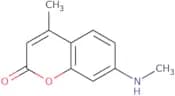
CAS:Versatile small molecule scaffoldFormula:C6H9N3O2Purity:Min. 95%Molecular weight:155.15 g/mol4-Methyl-7-(methylamino)-2H-chromen-2-one
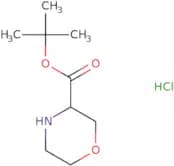
CAS:4-Methyl-7-(methylamino)-2H-chromen-2-one is a fine chemical that is used as a building block in the synthesis of other compounds. It has been used in research as a reagent and in the production of pharmaceuticals. 4-Methyl-7-(methylamino)-2H-chromen-2-one can be used to produce a variety of complex compounds, including those with versatile scaffolds. This compound has been shown to react with many different groups, such as alcohols, amines and thiols, which makes it an excellent intermediate for organic synthesis.Formula:C11H11NO2Purity:Min. 95%Color and Shape:PowderMolecular weight:189.21 g/moltert-Butyl morpholine-3-carboxylate hydrochloride
CAS:tert-Butyl morpholine-3-carboxylate hydrochloride is a high quality reagent that is a useful intermediate, fine chemical, and speciality chemical. It is also a versatile building block with a wide range of applications and can be used as a reaction component in the synthesis of complex compounds. This compound has been shown to have high reactivity in organic synthesis with good solubility and thermal stability.Formula:C9H18ClNO3Purity:Min. 95%Color and Shape:PowderMolecular weight:223.7 g/mol2,3-Dichloro-N-[2-({2-[(2,3-dichlorophenyl)amino]ethyl}amino)ethyl]aniline
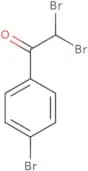
CAS:2,3-Dichloro-N-[2-({2-[(2,3-dichlorophenyl)amino]ethyl}amino)ethyl]aniline is a chemical compound that is used as a building block in the synthesis of other chemicals. It is also used as a reagent, speciality chemical and research chemical. This product has many uses in the field of organic chemistry, such as use as an intermediate in organic reactions or as a scaffold for complex compounds. 2,3-Dichloro-N-[2-({2-[(2,3-dichlorophenyl)amino]ethyl}amino)ethyl]aniline has high quality and can be used to synthesize many different products.Formula:C16H17Cl4N3Purity:Min. 95%Color and Shape:PowderMolecular weight:393.1 g/mol±,±,p-Tribromoacetophenone
CAS:Tribromoacetophenone is a brominated analog of acetophenone. It can be accessed by the reaction of an acid chloride with acetylacetone and then reacting the resulting bromide with hydrogen bromide. Tribromoacetophenone has been studied as an anti-cancer agent, but has shown little activity in animals. It is also used in the synthesis of other compounds, such as covid-19, which is being studied for its potential use as a pandemic vaccine against influenza type A H5N1.
Formula:C8H5OBr3Purity:Min. 95%Color and Shape:PowderMolecular weight:356.84 g/mol2-(1-Ethyl-1H-pyrazol-4-yl)acetic acid
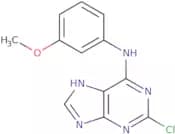
CAS:Versatile small molecule scaffoldFormula:C7H10N2O2Purity:Min. 95%Color and Shape:PowderMolecular weight:154.17 g/mol2-Chloro-N-(3-methoxyphenyl)-7H-purin-6-amine
CAS:2-Chloro-N-(3-methoxyphenyl)-7H-purin-6-amine is a plant growth regulator that inhibits the growth of plants by inhibiting the activity of enzymes involved in the synthesis of dinucleotide phosphates. This product has been shown to inhibit the development of leaf chlorophyll and photosynthetic pigments, as well as other physiological effects. 2-Chloro-N-(3-methoxyphenyl)-7H-purin-6-amine also inhibits the antioxidant system and can be used to study plant cell life cycles. The compound has been found to be effective on wheat leaves and triticum aestivum, but not on alfalfa or corn leaves.Formula:C12H10ClN5OPurity:Min. 95%Molecular weight:275.69 g/mol2-[2-(Morpholin-4-yl)ethoxy]ethan-1-amine
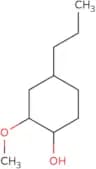
CAS:2-[2-(Morpholin-4-yl)ethoxy]ethan-1-amine is a research chemical that is used as a reagent, reaction component, or building block in the synthesis of more complex compounds. It can be used to synthesize fine chemicals such as pharmaceuticals and agrochemicals.Formula:C8H18N2O2Purity:Min. 95%Color and Shape:Clear LiquidMolecular weight:174.24 g/mol2-Methoxy-4-propylcyclohexan-1-ol
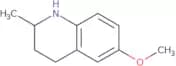
CAS:2-Methoxy-4-propylcyclohexan-1-ol is a versatile compound with various applications. It is commonly used as an anesthetic and can be found in research chemicals. This compound has been shown to have colloidal properties, making it suitable for use in the formulation of various products. Additionally, 2-Methoxy-4-propylcyclohexan-1-ol has been studied for its potential therapeutic effects on conditions such as casein-related disorders and fatty acid metabolism. Its unique structure allows it to interact with different biological pathways, including protein kinase signaling and carotenoid synthesis. Overall, this compound offers a wide range of possibilities for scientific research and product development.Formula:C10H20O2Purity:Min. 95%Color and Shape:Clear LiquidMolecular weight:172.26 g/mol6-Methoxy-2-methyl-1,2,3,4-tetrahydroquinoline
CAS:Versatile small molecule scaffold
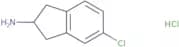
Formula:C11H15NOPurity:Min. 95%Color and Shape:PowderMolecular weight:177.24 g/mol5-Chloro-indan-2-ylamine hydrochloride
CAS:Controlled Product5-Chloro-indan-2-ylamine hydrochloride is a chemical that can be used as a building block in the synthesis of other chemicals. It is a reagent and useful scaffold in organic synthesis reactions, such as Friedel-Crafts reactions, and can be used to produce indenes. 5-Chloro-indan-2-ylamine hydrochloride is also an intermediate for the production of complex compounds, fine chemicals, and pharmaceuticals. The CAS number for this chemical is 73536-86-4.Formula:C9H10NCl·HClPurity:Min. 95%Color and Shape:PowderMolecular weight:204.09 g/mol


![1-[(2-Azidoethoxy)sulfonyl]-4-methylbenzene](/_next/image/?url=https%3A%2Fstatic.cymitquimica.com%2Fproducts%2F3D%2Fthumb-webp%2FNEA73822.webp&w=3840&q=75)


![2,3-Dichloro-N-[2-({2-[(2,3-dichlorophenyl)amino]ethyl}amino)ethyl]aniline](/_next/image/?url=https%3A%2Fstatic.cymitquimica.com%2Fproducts%2F3D%2Fthumb-webp%2FZGC85789.webp&w=3840&q=75)
![2-[2-(Morpholin-4-yl)ethoxy]ethan-1-amine](/_next/image/?url=https%3A%2Fstatic.cymitquimica.com%2Fproducts%2F3D%2Fthumb-webp%2FVAA20713.webp&w=3840&q=75)