Building Blocks
Subcategories of "Building Blocks"
- Boronic Acids & Boronic Acid Derivatives(5,781 products)
- Chiral Building Blocks(1,242 products)
- Hydrocarbon Building Blocks(6,101 products)
- Organic Building Blocks(61,033 products)
Found 205320 products of "Building Blocks"
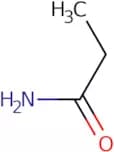
Propionamide
CAS:Propionamide is an amide that inhibits bacterial growth by binding to the DNA-dependent RNA polymerase and preventing transcription. It is used in treatment trials for bacterial infections. Propionamide has been shown to inhibit the growth of bacteria in vitro and in vivo, as well as to have an inhibitory effect on experimental solubility data. The chemical properties of propionamide are consistent with a potential use as a drug for treating metabolic disorders, such as diabetes mellitus and obesity.
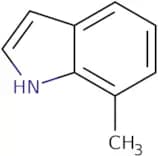
Formula:C3H7NOPurity:Min. 95%Color and Shape:White PowderMolecular weight:73.09 g/mol7-Methylindole
CAS:7-Methylindole is a biochemical substance that is synthesized in the body. It is produced in the liver, and it can be found in the brain, heart, and kidney. 7-Methylindole has been shown to have cancer-fighting properties. 7-Methylindole binds to DNA by methylating nucleic acid bases, which causes a change in the genetic code. This leads to tumor cells being more sensitive to treatment with other substances that inhibit DNA synthesis or repair, such as anthranilate and 5-methoxyindole.
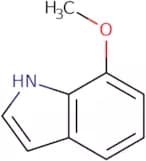
Formula:C9H9NPurity:Min 98%Color and Shape:PowderMolecular weight:131.17 g/mol7-Methoxy-1H-indole
CAS:7-Methoxy-1H-indole (7MI) is a synthetic compound that exhibits anti-inflammatory activity. It is an analog of the amino acid methionine found in proteins and its synthesis involves the condensation of a chlorinated alkyl acetate with an esterified hydrazide to form the corresponding amide. 7MI has been shown to inhibit both bacterial and mammalian protein synthesis, as well as to inhibit tumor cell growth. 7MI binds reversibly to the N7 atom of the adenine base in DNA, thereby inhibiting DNA replication through inhibition of DNA polymerase.Formula:C9H9NOPurity:Min. 95%Color and Shape:Clear LiquidMolecular weight:147.17 g/moltert-Butyl N-[2-(chlorosulfonyl)ethyl]carbamate
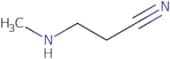
CAS:Versatile small molecule scaffoldFormula:C7H14ClNO4SPurity:Min. 95%Molecular weight:243.71 g/molN-Methyl-beta-alaninenitrile
CAS:Formamide is a colorless gas with a pungent, irritating odor. It is used as an antiseptic and an intermediate in the production of other organic compounds. Formamide has been shown to be effective against animal-derived pathogens such as Covid-19 and influenza A/H5N1, and it has been proposed as a potential treatment for pandemic influenza. Formamide reacts with chlorine to produce formate salt (formic acid), which can then be converted into amines or hexamethylphosphoramide. The reaction rate of formamide increases with increasing temperature, but decreases with increasing concentration of hydrogen.
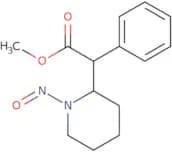
Formamide is also used as a solvent in microscopy to dissolve tissue samples for analysis by electron microscopy techniques.Formula:C4H8N2Purity:Min. 98 Area-%Color and Shape:Colorless Clear LiquidMolecular weight:84.12 g/molNitrosophenidylate
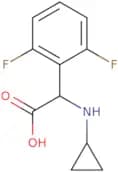
CAS:Versatile small molecule scaffoldFormula:C14H18N2O3Purity:95%MinColor and Shape:PowderMolecular weight:262.3 g/mol2-(Cyclopropylamino)-2-(2,6-difluorophenyl)acetic acid
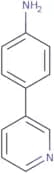
CAS:Versatile small molecule scaffoldFormula:C11H11F2NO2Purity:Min. 95%Color and Shape:PowderMolecular weight:227.21 g/mol4-(3-Pyridyl)aniline
CAS:4-(3-Pyridyl)aniline is a chemical compound that belongs to the group of inhibitors. It is structurally related to the pyridine and aniline rings. 4-(3-Pyridyl)aniline has been shown to inhibit protein kinases, such as casein kinase II and glycogen synthase kinase 3β, in the presence of ATP. The crystallography studies have shown that 4-(3-pyridyl)aniline binds tightly to the ATP binding site of these enzymes by occupying the same position as ATP and forming hydrogen bonds with residues at this site. Structural analysis has also demonstrated that 4-(3-pyridyl)aniline binds to other sites on these enzymes, including the ATP phosphate binding site, which may account for its inhibitory activity against both type 1 and type 2 protein kinases.Formula:C11H10N2Purity:Min. 95%Molecular weight:170.22 g/molGlycine anhydride
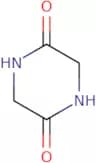
CAS:Glycine anhydride is a fine chemical that is used as a building block in the synthesis of many other compounds. It is also used as a reagent, and can be found in research chemicals, speciality chemicals, or high-quality products. Glycine anhydride is also used as a reaction component to make other molecules. It is versatile and can be used as a scaffold for complex compounds. Glycine anhydride has CAS No. 106-57-0 and can be found in the following chemical name: 3-(2-Aminoethyl)glycine anhydrideFormula:C4H6N2O2Molecular weight:114.1 g/molRef: 3D-G-4600
1kgTo inquire5kgTo inquire10kgTo inquire25kgTo inquire2500gTo inquire-Unit-kgkgTo inquire(2-Chlorophenyl)(4-chlorophenyl)methanol
CAS:2-Chlorophenyl)(4-chlorophenyl)methanol is a chemical intermediate that can be used for the synthesis of complex compounds. This material has been shown to be a useful scaffold for making new molecules and it is also a versatile building block for organic synthesis. It can be used as a reagent in organic reactions and it is also a speciality chemical with high quality. CAS No. 43171-49-9
Formula:C13H10Cl2OPurity:Min. 95%Color and Shape:PowderMolecular weight:253.12 g/mol3-azido-4,5-dihydro-1H-benzo[b]azepin-2(3H)-one
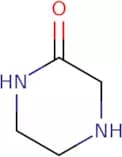
CAS:Versatile small molecule scaffoldFormula:C10H10N4OPurity:Min. 95%Color and Shape:PowderMolecular weight:202.21 g/molPiperazin-2-one
CAS:Building block in medicinal chemistryFormula:C4H8N2OPurity:Min. 95%Color and Shape:White PowderMolecular weight:100.12 g/molβ-Glycerophosphate, disodium salt pentahydrate, max. 2% α
CAS:Beta-Glycerophosphate, Disodium Salt Pentahydrate is a complex compound that is used as a reagent, useful intermediate, and fine chemical. It is also useful as a scaffold or building block for the synthesis of organic compounds. Beta-glycerophosphate has CAS No. 13408-09-8 and is classified as a speciality chemical. This compound can be used in research and development for versatile building blocks and reaction components to synthesize organic compounds.Formula:C3H17Na2O11PMolecular weight:306.12 g/molRef: 3D-G-4200
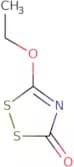
1kgTo inquire100gTo inquire250gTo inquire500gTo inquire2500gTo inquire-Unit-kgkgTo inquire3-Ethoxy-1,2,4-dithiazolidine-5-one
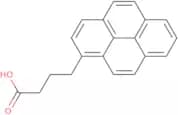
CAS:3-Ethoxy-1,2,4-dithiazolidine-5-one (3ED) is a small molecule that has been shown to have potent antitumor activity against multiple tumor types. It is a selective inhibitor of epidermal growth factor receptor (EGFR) that can be used in combination with chemotherapy or radiation therapy. 3ED has also been shown to inhibit the growth of bladder cancer cells and cervical cancer cells by affecting the EGFR pathway. In addition, 3ED inhibits the proliferation of human urothelial carcinoma cells through its inhibition of the EGFR pathway and can be used as an adjuvant treatment for patients with nonmetastatic bladder cancer and patients with locally advanced or metastatic urothelial carcinoma. 3ED also inhibits creatine kinase, which is an enzyme important in maintaining the health of the detrusor muscle in the urinary bladder and could potentially be used to treat overactive bladder disease.Formula:C4H5NO2S2Purity:Min. 97 Area-%Color and Shape:Yellow PowderMolecular weight:163.22 g/mol1-Pyrenebutyric acid
CAS:1-Pyrenebutyric acid is a sodium salt that belongs to the group of polymerase chain reaction (PCR) reagents. It is used in PCR as a fluorescent probe for detecting the presence of dinucleotide phosphate and covalent linkages. 1-Pyrenebutyric acid has been shown to be a potential biomarker for electrochemical impedance spectroscopy and can be used as an optical sensor for optimal concentration. This compound has also been used in biological studies to detect the presence of human immunoglobulin, which binds to it with high affinity. 1-Pyrenebutyric acid undergoes a phase transition at a temperature between -190 and -195 degrees Celsius, which makes it useful as a fluorescence dye.
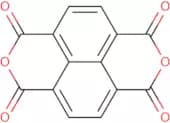
Formula:C20H16O2Purity:Min. 95%Color and Shape:Off-White PowderMolecular weight:288.34 g/molNaphthalene-1,4,5,8-tetracarboxylic dianhydride
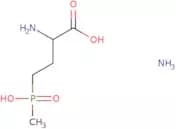
CAS:Naphthalene-1,4,5,8-tetracarboxylic dianhydride is a molecule that contains two carboxylic acid groups and one tetracarboxylic acid group. It is an adsorbent material that is used to remove water vapor from the atmosphere. Naphthalene-1,4,5,8-tetracarboxylic dianhydride is also used in wastewater treatment processes because it has high chemical stability and can be regenerated with anhydrous sodium. The transport properties of naphthalene-1,4,5,8-tetracarboxylic dianhydride are well suited for use as a model system for studying the kinetics of proton exchange membrane fuel cells (PEMFC). This compound has been studied using electrochemical impedance spectroscopy to determine its kinetic data.Formula:C14H4O6Purity:Min. 95 Area-%Color and Shape:Off-White PowderMolecular weight:268.18 g/molDL-Phosphinothricin ammonium salt
CAS:Non-proteinogenic amino acid; Inhibitor of glutamine synthetase
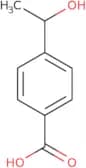
Formula:C5H15N2O4PPurity:Min. 95 Area-%Color and Shape:White PowderMolecular weight:198.16 g/mol4-(1-Hydroxy-ethyl)-benzoic acid
CAS:4-(1-Hydroxy-ethyl)-benzoic acid (4-HBA) is a hydrophobic compound that is an inhibitor of cytochrome P450, which is an enzyme system in the liver and other organs. The inhibitory activity of 4-HBA is due to its binding to the active site of cytochrome P450. This molecule has been shown to be effective against ferredoxin and putidaredoxin, which are enzymes that play a role in electron transfer reactions. 4-(1-Hydroxy-ethyl)-benzoic acid binds to the residue on these enzymes without any effect on their function.
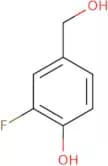
Formula:C9H10O3Purity:Min. 95%Molecular weight:166.17 g/mol2-Fluoro-4-(hydroxymethyl)phenol
CAS:2-Fluoro-4-(hydroxymethyl)phenol is a versatile building block, which can be used as a reagent to synthesize complex compounds. 2-Fluoro-4-(hydroxymethyl)phenol is also a useful building block for the synthesis of various pharmaceuticals, such as selective androgen receptor modulators (SARMs). It has been reported that 2-fluoro-4-(hydroxymethyl)phenol inhibits the activity of human liver cytochrome P450 enzymes. In addition, this compound has been used as an intermediate in the synthesis of some research chemicals. 2-Fluoro-4-(hydroxymethyl)phenol has CAS number 96740-93-1 and is a high quality chemical with many uses.Formula:C7H7FO2Purity:Min. 95%Color and Shape:PowderMolecular weight:142.13 g/molPoly epsilon L-lysine HCl approx MW 4500Da
CAS:Poly epsilon L-lysine HCl is a water soluble, biodegradable, cationic peptide that can be produced via fermentation by Streptomyces albulus. It shows a wide range of antimicrobial activity against microorganisms such as bacteria, yeasts and molds and is stable at high temperatures and under both acidic and alkaline conditions. This non-toxic poly-L-lysine is commonly used as a supplement or preservative in various food, beverage and cosmetics products. It can also be used for microscopy glass slides coating.Formula:(C6H12N2O•HCl)nPurity:Min. 95.0 Area-%Color and Shape:Off-White Yellow Powder

![tert-Butyl N-[2-(chlorosulfonyl)ethyl]carbamate](/_next/image/?url=https%3A%2Fstatic.cymitquimica.com%2Fproducts%2F3D%2Fthumb-webp%2FJFA01973.webp&w=3840&q=75)

![3-azido-4,5-dihydro-1H-benzo[b]azepin-2(3H)-one](/_next/image/?url=https%3A%2Fstatic.cymitquimica.com%2Fproducts%2F3D%2Fthumb-webp%2FLDA49924.webp&w=3840&q=75)