Building Blocks
This section contains fundamental products for the synthesis of organic and biological compounds. Building blocks are the essential starting materials used to construct complex molecules through various chemical reactions. They play a critical role in drug discovery, material science, and chemical research. At CymitQuimica, we offer a diverse range of high-quality building blocks to support your innovative research and industrial projects, ensuring you have the essential components for successful synthesis.
Subcategories of "Building Blocks"
- Boronic Acids & Boronic Acid Derivatives(5,778 products)
- Chiral Building Blocks(1,242 products)
- Hydrocarbon Building Blocks(6,098 products)
- Organic Building Blocks(61,084 products)
Found 198714 products of "Building Blocks"
Sort by
Purity (%)
0
100
|
0
|
50
|
90
|
95
|
100
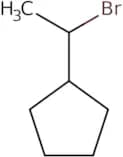
(1-Bromoethyl)cyclopentane
CAS:<p>Versatile small molecule scaffold</p>Formula:C7H13BrPurity:Min. 95%Molecular weight:177.08 g/mol4-Nitroisothiazole
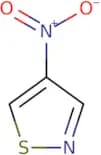
CAS:<p>4-Nitroisothiazole is a nitro derivative of isothiazole that has been shown to have inhibitory effects on bacterial growth. It has been shown to be active against the gram-positive bacterium, Staphylococcus aureus, and the gram-negative bacterium Escherichia coli. 4-Nitroisothiazole inhibits the growth of bacteria by binding to the cytoplasmic membrane, leading to an increase in the redox potential and preventing electron transport. 4-Nitroisothiazole also inhibits cellular respiration and protein synthesis, which leads to cell death.</p>Formula:C3H2N2O2SPurity:Min. 95%Molecular weight:130.13 g/mol2-Methylaminopyrimidine
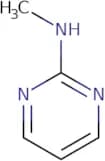
CAS:<p>2-Methylaminopyrimidine is a purine derivative that has been studied for its possible use in the treatment of chronic arthritis and bowel disease. In vitro studies have shown that this drug inhibits glycogen synthase kinase-3 (GSK-3), which is an enzyme involved in the inflammatory response. The drug may also be useful as a conditioning agent before radiation therapy. 2-Methylaminopyrimidine is also an amide, which means it can react with biological samples such as proteins, nucleic acids, and lipids. It has been used as a biochemical probe to study the eye disorder retinal degeneration. This drug is also used to study inflammatory diseases and to produce tautomers by reacting with oxygen molecules.</p>Formula:C5H7N3Purity:Min. 95%Molecular weight:109.13 g/mol2-Methoxypyrimidine
CAS:<p>2-Methoxypyrimidine is an organic compound that is a member of the heterocyclic class of compounds. It has been shown to have an inhibitory effect on serine proteases, which are enzymes that help regulate processes such as blood pressure and inflammation. 2-Methoxypyrimidine has also been investigated for use in cancer therapy, specifically targeting lymphatic vessels and caco-2 cells. The drug's potential use may be due to its ability to bind to the carbonyl group on cancer targets. 2-Methoxypyrimidine has two tautomers: enol and keto. It is currently unclear if these tautomers have different effects on the human body.</p>Formula:C5H6N2OPurity:Min. 95%Molecular weight:110.11 g/mol1-Bromo-1-methylcyclohexane
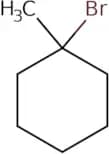
CAS:<p>1-Bromo-1-methylcyclohexane is a monomolecular gas that is used as an intermediate in organic synthesis. It reacts with halides to form cyclopentyl derivatives. This reaction has been shown to be faster than the corresponding reaction of 1-bromocyclohexane with chlorides or bromides. The rate of this reaction may be due to the polarizability and conformational changes of the molecule upon substitution by a methyl group. 1-Bromo-1-methylcyclohexane is also an ionizing reagent, which means it can cause electrophilic reactions to occur on other molecules. It has been found that the solvent effect on this product can affect its reactivity, with solvents such as water having more of an effect than solvents such as benzene. 1-Bromo-1-methylcyclohexane has been shown to interact with other compounds in both transfer and complex</p>Formula:C7H13BrPurity:Min. 95%Molecular weight:177.08 g/mol4-Ethyl-5-methyl-1,2-oxazol-3-ol
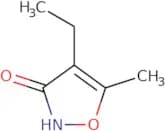
CAS:<p>Versatile small molecule scaffold</p>Formula:C6H9NO2Purity:Min. 95%Molecular weight:127.14 g/mol2-Acetyl-1-methylpyrrole
CAS:<p>2-Acetyl-1-methylpyrrole is a reactive compound that has been shown to react with palladium complexes. It also reacts with methyl ketones, forming acetate extract and quinoline derivatives. The reaction products of 2-acetyl-1-methylpyrrole have been studied by means of NMR spectroscopy and X-ray crystal structures. Kinetic studies show that hepg2 cells catalyze the reaction between 2-acetyl-1-methylpyrrole and hydrochloric acid.</p>Formula:C7H9NOPurity:Min. 95%Molecular weight:123.16 g/mol2-Chlorocyclohexane-1,3-dione
CAS:<p>Versatile small molecule scaffold</p>Formula:C6H7ClO2Purity:Min. 95%Molecular weight:146.57 g/mol2-Chloro-1-cyclopentylethan-1-one
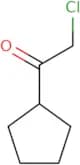
CAS:<p>2-Chloro-1-cyclopentylethan-1-one is an affinity agent that binds to the gastrin receptor, which is a G protein coupled receptor. It also has high affinity for cck-a and heterocyclic group. 2-Chloro-1-cyclopentylethan-1-one is used in the treatment of peptic ulcer disease, Zollinger Ellison syndrome, and dyspepsia. It is also used as an anxiolytic and a sedative drug. 2CPCEO has been shown to be a benzodiazepine with a hydrogen atom. This benzodiazepine has an alkoxycarbonyl group at the end of its structure.</p>Formula:C7H11ClOPurity:Min. 95%Molecular weight:146.61 g/mol2-Chloro-N-methylaniline
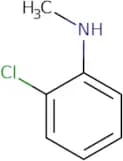
CAS:<p>2-Chloro-N-methylaniline (2CMA) is an amine that has two functional groups, the amino group and the chloro group. The amino group is a nucleophile and can form hydrogen bonds with other molecules. 2CMA has been shown to have a ring opening reaction with selenium compounds, which may be due to its electron withdrawing properties. This amine also has surface properties that make it useful for cleaning purposes. It has been shown to have a mitochondrial membrane potential, which may be due to its ability to bind with proteins in the mitochondrial membrane. 2CMA also binds with proteins on the outside of the mitochondria and can change the membrane potential by opening or closing pores.</p>Formula:C7H8ClNPurity:Min. 95%Molecular weight:141.6 g/mol3-(2-Chloroethyl)pyrrolidin-2-one
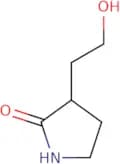
CAS:<p>Versatile small molecule scaffold</p>Formula:C6H10ClNOPurity:Min. 95%Molecular weight:147.6 g/mol3-(2-Hydroxyethyl)pyrrolidin-2-one
CAS:<p>3-(2-Hydroxyethyl)pyrrolidin-2-one is a lactone that is synthesized from vinyl ethers and cyclopentadiene. It has been used as an intermediate for the synthesis of lactams, cyclopentadiene, pyrrolidones, ethers, vinyl ether adducts, dienes and condensation products. 3-(2-Hydroxyethyl)pyrrolidin-2-one can also be used to produce caprolactam by the dimerization of hexachlorocyclopentadiene.</p>Formula:C6H11NO2Purity:Min. 95%Molecular weight:129.16 g/mol2,5-Dimethylcyclohexanone
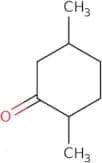
CAS:<p>2,5-Dimethylcyclohexanone is a reactive methyl ketone that can be used to synthesize organic molecules. It has been shown to react with alkyl lithium reagents such as organolithium and allyllithium. This reaction can be used to generate alcohols, amines, and other compounds. The product of the reaction depends on the type of R group on the 2,5-dimethylcyclohexanone molecule. For example, when R is an electron-withdrawing group such as a phenyl group or trans-stilbene, the product is an α-alkylated β-unsaturated ketone. When R is a hydrogen atom or methyl group, the product is an alkanol or amine respectively.<br>2,5-Dimethylcyclohexanone can also be used as an acceptor in conformational equilibration reactions because it has two methyl groups that are orthogonal to each other</p>Formula:C8H14OPurity:Min. 95%Molecular weight:126.2 g/mol2-Methylcycloheptan-1-one
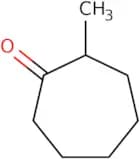
CAS:<p>2-Methylcycloheptan-1-one is a molecule that belongs to the group of unsaturated ketones. It has been synthesized by an alkylation reaction with trifluoroacetic acid, followed by imine formation and cyclization. The compound was identified as a stereoselective molecule with a molecular ion at m/z = 166. The mass spectrum also revealed the presence of isomeric forms of this molecule.</p>Formula:C8H14OPurity:Min. 95%Molecular weight:126.2 g/mol5-Isopropyl-2,4-dihydro-[1,2,4]triazol-3-one
CAS:Versatile small molecule scaffoldFormula:C5H9N3OPurity:Min. 95%Molecular weight:127.14 g/mol1-Nitrosoazepane
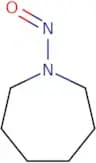
CAS:<p>1-Nitrosoazepane is a cytotoxic agent that is used in the treatment of severe forms of cancer. It has been shown to cause cervical and vaginal cancers in rats, but not in mice. 1-Nitrosoazepane is also known to be teratogenic, causing birth defects in rat fetuses and hamsters. This drug binds to DNA and activates the cellular enzyme hydroxylase, which converts it into a reactive form that causes DNA damage. The cytotoxic activity of 1-nitrosoazepane is due to its ability to react with DNA and other macromolecules. This reactive form can be further oxidized by radiation or hydrogen peroxide, leading to cell death by apoptosis.</p>Formula:C6H12N2OPurity:Min. 95%Molecular weight:128.17 g/mol(Bromoethynyl)benzene
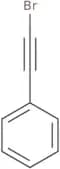
CAS:<p>Bromoethynylbenzene is a chemical compound that contains an amine group and a hydroxyl group. It is a nucleophilic reagent that can be used in cross-coupling reactions with sodium trifluoroacetate to produce 2,6-dihydroxypyridine from 2-aminoethanol. Bromoethynylbenzene has been shown to have therapeutic effects in degenerative diseases such as bowel disease. The mechanism of this drug's function is not well understood, but it has been shown to have anti-inflammatory effects and inhibit the production of inflammatory cytokines, which may lead to its therapeutic effects.</p>Formula:C8H5BrPurity:Min. 95%Molecular weight:181.03 g/mol5-(Methylsulfanyl)furan-2-carbaldehyde
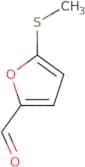
CAS:<p>Versatile small molecule scaffold</p>Formula:C6H6O2SPurity:Min. 95%Molecular weight:142.18 g/mol2-Cyclopentylacetamide
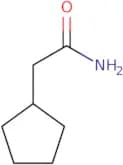
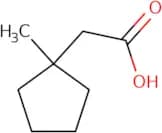
CAS:<p>2-Cyclopentylacetamide is a drug that has been used in the treatment of metabolic disorders and infectious diseases. It has been shown to be effective in treating hepatitis, degenerative diseases, and autoimmune diseases. 2-Cyclopentylacetamide is also used as a cancer chemotherapeutic agent. This drug inhibits cell proliferation by interacting with the glut1 receptor, which is an enzyme that catalyzes glucose uptake into cells. The inhibition of this enzyme prevents cells from taking up glucose to produce energy and leads to cell death. 2-Cyclopentylacetamide also inhibits the activity of hydrogen bond formation between two molecules of the same type. This drug binds to intramolecular hydrogen bonds and prevents them from forming between two different types of molecules.</p>Formula:C7H13NOPurity:Min. 95%Molecular weight:127.18 g/mol2-(1-Methylcyclopentyl)acetic acid
CAS:<p>Versatile small molecule scaffold</p>Formula:C8H14O2Purity:Min. 95%Molecular weight:142.2 g/mol





![5-Isopropyl-2,4-dihydro-[1,2,4]triazol-3-one](/_next/image/?url=https%3A%2Fstatic.cymitquimica.com%2Fproducts%2F3D%2Fthumb-webp%2FAAA93263.webp&w=3840&q=75)