Building Blocks
This section contains fundamental products for the synthesis of organic and biological compounds. Building blocks are the essential starting materials used to construct complex molecules through various chemical reactions. They play a critical role in drug discovery, material science, and chemical research. At CymitQuimica, we offer a diverse range of high-quality building blocks to support your innovative research and industrial projects, ensuring you have the essential components for successful synthesis.
Subcategories of "Building Blocks"
- Boronic Acids & Boronic Acid Derivatives(5,781 products)
- Chiral Building Blocks(1,242 products)
- Hydrocarbon Building Blocks(6,101 products)
- Organic Building Blocks(61,033 products)
Found 205320 products of "Building Blocks"
Sort by
Purity (%)
0
100
|
0
|
50
|
90
|
95
|
100
2-Aminomethyl-3-chloropyrazine
CAS:2-Aminomethyl-3-chloropyrazine is a potent inhibitor of the tyrosine kinase, which is an enzyme that controls the transmission of signals from outside the cell to inside. It inhibits collagen production by cells, thereby preventing cancer formation. 2-Aminomethyl-3-chloropyrazine has been shown to inhibit tumor growth in mice and rats. This drug also inhibits the activity of certain enzymes, including piperidine oxidase and xanthine oxidase, which are involved in the production of reactive oxygen species that can cause cancer. The drug's selectivity for tumor cells makes it a potential candidate for treating cancer.Formula:C5H5ClN3Purity:Min. 95%Molecular weight:143.58 g/mol2-Amino-3-fluorobenzoic acid methyl ester
CAS:2-Amino-3-fluorobenzoic acid methyl ester (2AFBME) is an antibacterial agent that inhibits bacterial protein synthesis by binding to ribosomes and inhibiting the release of amino acids during translation. 2AFBME has been shown to have antibacterial activity against aureus, streptococcus, and staphylococcus strains in laboratory tests. The clinical development of 2AFBME has not yet been completed.Formula:C8H8FNO2Purity:Min. 95%Color and Shape:Yellow PowderMolecular weight:169.15 g/mol3-Amino-3-(4-chlorophenyl)propionic Acid
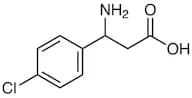
CAS:Formula:C9H10ClNO2Purity:>97.0%(T)(HPLC)Color and Shape:White to Almost white powder to crystalMolecular weight:199.632-Amino-6-(trifluoromethyl)pyridine
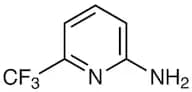
CAS:Formula:C6H5F3N2Purity:>98.0%(GC)(T)Color and Shape:Light yellow to Brown to Dark green powder to crystalMolecular weight:162.122-Azido-1,3-bis[(2,2-dimethyl-1,3-dioxan-5-yl)oxy]propane
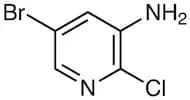
CAS:Formula:C15H27N3O6Purity:>95.0%(HPLC)Color and Shape:White or Colorless to Light orange to Yellow powder to lump to clear liquidMolecular weight:345.403-Amino-5-bromo-2-chloropyridine
CAS:Formula:C5H4BrClN2Purity:>98.0%(GC)Color and Shape:White to Orange to Green powder to crystalMolecular weight:207.463-Amino-N-(tert-butoxycarbonyl)benzylamine
CAS:Formula:C12H18N2O2Purity:>98.0%(GC)(T)Color and Shape:White to Light yellow powder to crystalMolecular weight:222.293-Amino-4-(isobutylamino)quinoline Hydrochloride
CAS:Formula:C13H17N3·HClPurity:>98.0%(T)(HPLC)Color and Shape:White to Amber to Dark green powder to crystalMolecular weight:251.76Bis(2,2,2-trifluoroethyl) Ether
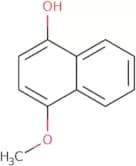
CAS:Formula:C4H4F6OPurity:>99.0%(GC)Color and Shape:Colorless to Almost colorless clear liquidMolecular weight:182.074-Methoxy-1-naphthol
CAS:Spectrophotometric substrate for peroxidase
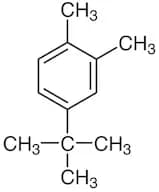
Formula:C11H10O2Purity:Min. 95%Color and Shape:Brown PowderMolecular weight:174.2 g/mol4-tert-Butyl-o-xylene
CAS:Formula:C12H18Purity:>98.0%(GC)Color and Shape:Colorless to Almost colorless clear liquidMolecular weight:162.284-Butoxyphthalonitrile
CAS:Formula:C12H12N2OPurity:>96.0%(GC)Color and Shape:White to Light yellow powder to crystalMolecular weight:200.242-Amino-6-methoxypurine
CAS:Intermediate in the synthesis of nelarabine
Formula:C6H7N5OPurity:Min. 95%Color and Shape:PowderMolecular weight:165.15 g/mol(R)-1-Benzyl-3-pyrrolidinol
CAS:Formula:C11H15NOPurity:>96.0%(GC)Color and Shape:Light yellow to Yellow to Orange clear liquid to slightly cloudy liquidMolecular weight:177.25Bicyclo[3.2.1]oct-2-ene
CAS:Formula:C8H12Purity:>98.0%(GC)Color and Shape:White or Colorless powder to lumpMolecular weight:108.183-Benzylthiazolium Bromide
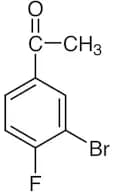
CAS:Formula:C10H10BrNSPurity:>98.0%(T)(HPLC)Color and Shape:White to Light yellow powder to crystalMolecular weight:256.163'-Bromo-4'-fluoroacetophenone
CAS:Formula:C8H6BrFOPurity:>96.0%(GC)Color and Shape:White to Orange to Green powder to crystalMolecular weight:217.041,1'-[Biphenyl-4,4'-diylbis(methylene)]bis(4,4'-bipyridinium) Bis(hexafluorophosphate)
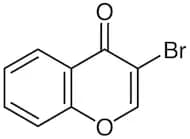
CAS:Formula:C34H28F12N4P2Purity:>98.0%(HPLC)Color and Shape:Light yellow to Yellow to Orange powder to crystalMolecular weight:782.553-Bromochromone
CAS:Formula:C9H5BrO2Purity:>98.0%(GC)Color and Shape:White to Orange to Green powder to crystalMolecular weight:225.042-Amino-3-bromopyrazine
CAS:2-Amino-3-bromopyrazine is a molecule that belongs to the class of pyrazoles. It has been synthesized and optimised for its diffraction properties. The active conformation of 2-amino-3-bromopyrazine has been determined by xanthate methylation and hydrobromide formation. This molecule has been synthesised using a variety of different methods, including an intramolecular hydrogen transfer reaction with methyl derivatives, as well as the use of xanthates. The physicochemical properties of this molecule have also been studied, yielding some interesting results.
Formula:C4H4BrN3Purity:Min. 95%Color and Shape:PowderMolecular weight:174.01 g/mol



![2-Azido-1,3-bis[(2,2-dimethyl-1,3-dioxan-5-yl)oxy]propane](/_next/image/?url=https%3A%2Fstatic.cymitquimica.com%2Fproducts%2F3B%2Fthumb-webp%2FA2474.webp&w=3840&q=75)





![Bicyclo[3.2.1]oct-2-ene](/_next/image/?url=https%3A%2Fstatic.cymitquimica.com%2Fproducts%2F3B%2Fthumb-webp%2FB1914.webp&w=3840&q=75)

![1,1'-[Biphenyl-4,4'-diylbis(methylene)]bis(4,4'-bipyridinium) Bis(hexafluorophosphate)](/_next/image/?url=https%3A%2Fstatic.cymitquimica.com%2Fproducts%2F3B%2Fthumb-webp%2FB2280.webp&w=3840&q=75)