Building Blocks
This section contains fundamental products for the synthesis of organic and biological compounds. Building blocks are the essential starting materials used to construct complex molecules through various chemical reactions. They play a critical role in drug discovery, material science, and chemical research. At CymitQuimica, we offer a diverse range of high-quality building blocks to support your innovative research and industrial projects, ensuring you have the essential components for successful synthesis.
Subcategories of "Building Blocks"
- Boronic Acids & Boronic Acid Derivatives(5,781 products)
- Chiral Building Blocks(1,242 products)
- Hydrocarbon Building Blocks(6,101 products)
- Organic Building Blocks(61,033 products)
Found 205320 products of "Building Blocks"
Sort by
Purity (%)
0
100
|
0
|
50
|
90
|
95
|
100
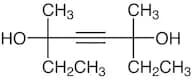
3,6-Dimethyl-4-octyne-3,6-diol
CAS:Formula:C10H18O2Purity:>98.0%(GC)Color and Shape:White to Almost white powder to crystalMolecular weight:170.252-Chloro-3-methoxyaniline
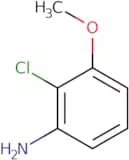
CAS:2-Chloro-3-methoxyaniline is a high quality chemical. It is an intermediate in the synthesis of other complex compounds and has been used as a reagent for organic synthesis. It is also useful as a building block for the preparation of speciality chemicals, research chemicals, and versatile building blocks. 2-Chloro-3-methoxyaniline reacts with other chemicals to form new compounds that are useful for pharmaceuticals and agrochemicals.Formula:C7H8ClNOPurity:Min. 95%Color and Shape:Brown PowderMolecular weight:157.6 g/mol2-Chloro-1,4-naphthoquinone
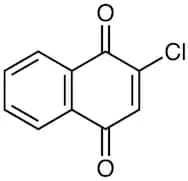
CAS:Formula:C10H5ClO2Purity:>98.0%(GC)Color and Shape:Light yellow to Yellow to Orange powder to crystalMolecular weight:192.601-(2-Cyanoethyl)piperidine
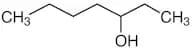
CAS:Formula:C8H14N2Purity:>98.0%(GC)Color and Shape:Colorless to Light yellow to Light orange clear liquidMolecular weight:138.213-Heptanol
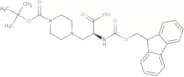
CAS:Formula:C7H16OPurity:>98.0%(GC)Color and Shape:Colorless to Almost colorless clear liquidMolecular weight:116.20(S)-3-(4-Boc-piperazin-1-yl)-2-(Fmoc-amino)propionic acid
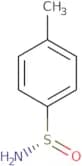
CAS:(S)-3-(4-Boc-piperazin-1-yl)-2-(Fmoc-amino)propionic acid is a high quality reagent which has been synthesized in our lab. It is used as a reaction component and can be used as a speciality chemical, versatile building block, or useful intermediate. This compound has been shown to have complex properties and can be used as a fine chemical.Formula:C27H33N3O6Purity:Min. 95%Color and Shape:White PowderMolecular weight:495.57 g/mol(S)-4-Methylbenzenesulfinamide
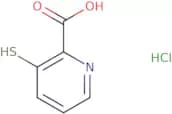
CAS:(S)-4-Methylbenzenesulfinamide is a synthetic β-amino acid that has been used for the synthesis of various heterocycles. It has been shown to be a selective inhibitor of the enzyme carboxypeptidase B (CPB) in vitro, which is involved in the degradation of β-amino acids. The stereoselective synthesis of (S)-4-methylbenzenesulfinamide has been achieved through the use of hydrophobic phenylphosphinate as a chiral ligand and an azetidine as a starting material. The reaction time was found to be 20 minutes at room temperature with ethyl phenylphosphinate.Formula:C7H9NOSPurity:Min. 95%Color and Shape:White PowderMolecular weight:155.22 g/mol3-Mercapto-2-pyridinecarboxylic acid hydrochloride
CAS:3-Mercapto-2-pyridinecarboxylic acid hydrochloride (3MP) is a small molecule that is a phosphoenolpyruvate carboxykinase inhibitor. The inhibition of this enzyme leads to an accumulation of 3-phosphoglyceric acid and inhibits the conversion of pyruvate to acetyl CoA, which results in the accumulation of reactive oxygen species. 3MP has been shown to inhibit the activity of mitochondrial phosphoenolpyruvate carboxykinase (PEPCK) in porcine hepatocytes, leading to decreased triglycerides and increased glucose uptake. It also inhibits PEPCK activity in vitro in cultured human cells, leading to increased HSP70 levels and exacerbated oxidative stress.
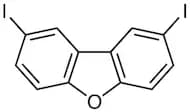
Formula:C6H5NO2S·HClPurity:Min. 95%Color and Shape:PowderMolecular weight:191.64 g/mol2,8-Diiododibenzofuran
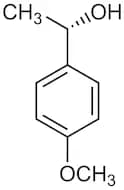
CAS:Formula:C12H6I2OPurity:>98.0%(GC)Color and Shape:White to Light yellow to Light orange powder to crystalMolecular weight:419.99(S)-1-(4-Methoxyphenyl)ethanol
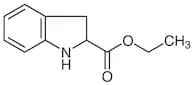
CAS:Formula:C9H12O2Purity:>95.0%(GC)Color and Shape:Colorless to Light yellow clear liquidMolecular weight:152.19Ethyl Indoline-2-carboxylate
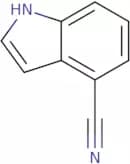
CAS:Formula:C11H13NO2Purity:>95.0%(GC)Color and Shape:White to Orange to Green powder to crystalMolecular weight:191.234-Cyanoindole
CAS:The 4-cyanoindole is a fluorescent molecule that binds to proteins and affects protein homeostasis. It has been shown to bind to the sodium salt form of proteins, which are typically found in human liver cells. The binding of 4-cyanoindole to these proteins leads to its reduction by borohydride and fluorescence resonance energy transfer (FRET) between the molecule and the protein. This binding can be detected using a fluorescence lifetime spectroscopy technique, which detects changes in the fluorescence's lifetime as well as intensity. The binding of 4-cyanoindole to proteins has been shown to have anti-cancer properties. It has also been used for detection of monoclonal antibodies against cancer cells or for fluorescent labeling of cancer cells for immunofluorescent microscopy.Formula:C9H6N2Color and Shape:White PowderMolecular weight:142.16 g/molFmoc-D-Asp(OtBu)-Opfp
CAS:Fmoc-D-Asp(OtBu)-Opfp is a high quality, complex compound that is used as a building block for the synthesis of various drugs and pharmaceuticals. It has been shown to be an excellent reaction component in the synthesis of various drugs and pharmaceuticals. The versatility of this chemical makes it a useful scaffold for generating complex molecules. It has been shown to be a useful intermediate for the synthesis of peptides, oligonucleotides, and small organic molecules. Fmoc-D-Asp(OtBu)-Opfp can also be used as a reagent in biochemical research. Fmoc-D-Asp(OtBu)-Opfp can be synthesized by reacting 2-(2'-aminoethoxy)propionic acid with N,N'-dimethylformamide dimethyl acetal in the presence of sodium hydride at 0°C. This reaction produces an amide bond between the N terminFormula:C29H24NO6F5Purity:Min. 95%Color and Shape:PowderMolecular weight:577.5 g/mol4-(Chloromethyl)styrene (stabilized with TBC + ONP + 2-Nitro-p-cresol)
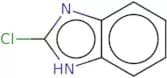
CAS:Formula:C9H9ClPurity:>90.0%(GC)Color and Shape:Light yellow to Yellow to Orange clear liquidMolecular weight:152.622-Chlorobenzimidazole
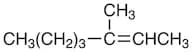
CAS:2-Chlorobenzimidazole is an analog of benzimidazole that has been synthesized by Langmuir adsorption isotherm. It is a white crystalline solid that can be dissolved in water and hydrochloric acid. 2-Chlorobenzimidazole inhibits the growth of herpes simplex virus by acting as a competitive inhibitor for the viral enzyme thymidine kinase, which catalyzes the conversion of thymine to thymidine. 2-Chlorobenzimidazole also binds to monoclonal antibodies, inhibiting their binding to their corresponding antigens. This activity may be due to its ability to bind covalently with amino groups on proteins and other molecules. Magnetic resonance spectroscopy has shown that 2-chlorobenzimidazole binds tightly with protonated (positively charged) phosphorous atoms within cells.Formula:C7H5ClN2Purity:Min. 95%Color and Shape:White PowderMolecular weight:152.58 g/mol3-Methyl-2-heptene (cis- and trans- mixture)
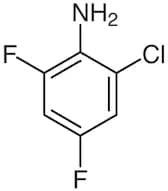
CAS:Formula:C8H16Purity:>95.0%(GC)Color and Shape:Colorless to Almost colorless clear liquidMolecular weight:112.222-Chloro-4,6-difluoroaniline
CAS:Formula:C6H4ClF2NPurity:>98.0%(GC)(T)Color and Shape:White to Brown to Dark purple powder to crystalMolecular weight:163.556-Bromopyrrolo[2,1-f][1,2,4]triazin-4(3H)-one
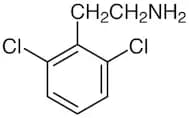
CAS:Kinase inhibitor mimicking quinazoline kinase inhibitor scaffoldFormula:C6H4BrN3OPurity:Min. 95%Color and Shape:Yellow PowderMolecular weight:214.02 g/mol2-(2,6-Dichlorophenyl)ethylamine
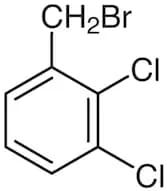
CAS:Formula:C8H9Cl2NPurity:>98.0%(GC)(T)Color and Shape:Colorless to Light orange to Yellow clear liquidMolecular weight:190.072,3-Dichlorobenzyl Bromide
CAS:Formula:C7H5BrCl2Purity:>98.0%(GC)(T)Color and Shape:White or Colorless to Light yellow powder to lump to clear liquidMolecular weight:239.92





![6-Bromopyrrolo[2,1-f][1,2,4]triazin-4(3H)-one](/_next/image/?url=https%3A%2Fstatic.cymitquimica.com%2Fproducts%2F3D%2Fthumb-webp%2FFB63187.webp&w=3840&q=75)