Building Blocks
Subcategories of "Building Blocks"
- Boronic Acids & Boronic Acid Derivatives(5,781 products)
- Chiral Building Blocks(1,242 products)
- Hydrocarbon Building Blocks(6,101 products)
- Organic Building Blocks(61,033 products)
Found 205320 products of "Building Blocks"
9-Bromo-10-[4-(2-naphthyl)phenyl]anthracene
CAS:Formula:C30H19BrPurity:>98.0%(HPLC)Color and Shape:Light orange to Yellow to Green powder to crystalMolecular weight:459.392,3-Dimethylnaphthalene
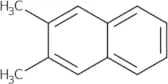
CAS:Dimethylnaphthalene is an aromatic hydrocarbon that absorbs UV radiation. The absorption of UV radiation can be used to measure the concentration of this compound in a sample. The solubility data for dimethylnaphthalene show that it is soluble in supercritical carbon dioxide, but insoluble in water. Dimethylnaphthalene is a chemical compound that can be used as a skin conditioner or in biological treatment. It has been shown to have antioxidant properties and may also have anti-inflammatory effects. Dimethylnaphthalene is synthesized from naphthalene by two different reactions: hydrogenation and oxidation. The reaction mechanism for these two reactions has not yet been determined, but both are believed to produce the same product.
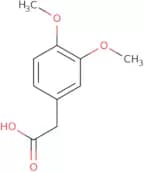
Formula:C12H12Purity:Min. 95%Color and Shape:White PowderMolecular weight:156.22 g/mol3,4-Dimethoxyphenylacetic acid
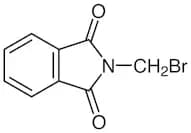
CAS:3,4-Dimethoxyphenylacetic acid is an aromatic acid that has antimicrobial properties. It is used as a food additive for the preservation of meat and poultry. The 3,4-dimethoxyphenyl group in this molecule is an intramolecular hydrogen acceptor. This property allows it to undergo transfer reactions with other molecules, such as protocatechuic acid and lignin. 3,4-Dimethoxyphenylacetic acid also inhibits cellular physiology and can be used in the treatment of bacteria in biological systems. The hydroxyl group can form an acidic compound by reacting with a proton donor, such as water or trifluoroacetic acid (TFA). This reaction may be catalyzed by the enzyme cytochrome P450 reductase.Formula:C10H12O4Purity:Min. 95%Color and Shape:White PowderMolecular weight:196.2 g/molN-(Bromomethyl)phthalimide
CAS:Formula:C9H6BrNO2Purity:>96.0%(T)Color and Shape:White to Almost white powder to crystalMolecular weight:240.06N-(3-Fluoro-4-piperidinyl)formamide
CAS:Please enquire for more information about N-(3-Fluoro-4-piperidinyl)formamide including the price, delivery time and more detailed product information at the technical inquiry form on this page
Formula:C6H11FN2OPurity:Min. 95%Molecular weight:146.16 g/mol4-Nitrophenylacetic acid
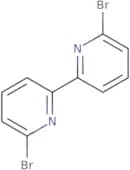
CAS:4-Nitrophenylacetic acid is a chemical compound that belongs to the class of organic compounds known as nitrophenols. It has been shown to inhibit malonic enzyme, also known as 3-hydroxyacyl-CoA dehydrogenase. This inhibition is thought to be due to the nitro group on the molecule, which reacts with the active site cysteine residue in the enzyme. 4-Nitrophenylacetic acid can be used in the synthesis of monoclonal antibodies. The structure of 4-nitrophenylacetic acid has one hydroxyl group and two nitro groups that are separated by a methylene bridge (a carbon atom with two hydrogen atoms). The reaction solution for this substance contains diazonium salt and hydrochloric acid.Formula:C8H7NO4Purity:Min. 98 Area-%Color and Shape:White PowderMolecular weight:181.15 g/mol6,6'-Dibromo-2,2'-bipyridine
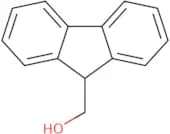
CAS:6,6'-Dibromo-2,2'-bipyridine is a synthetic molecule that is used to produce amines. It can be synthesized in a cross-coupling reaction involving the reaction of an amine with bromine and a palladium catalyst. 6,6'-Dibromo-2,2'-bipyridine reacts with formaldehyde to form 2,4-diaminobiphenyls. This reaction is catalyzed by acid or base. 6,6'-Dibromo-2,2'-bipyridine has been shown to be reactive and photoexcited. Its photophysical properties make it a useful synthetic intermediate for the production of amines.Formula:C10H6Br2N2Purity:Min. 95%Color and Shape:PowderMolecular weight:313.98 g/mol9-Fluorenemethanol
CAS:9-Fluorenemethanol is a chemical compound that is used as a reagent in analytical chemistry. It reacts with zirconium oxide to form 9-fluorenylmethyl zirconium chloride, which can be used to detect the presence of ethyl formate by fluorescence resonance spectroscopy. The reaction solution is heated at 100°C for about 4 hours and then cooled to room temperature. The isolated yield of 9-fluorenylmethyl zirconium chloride is determined by the detection time and thermodynamic parameters. This compound can also be used in acylation reactions.Formula:C14H12OPurity:Min. 95%Color and Shape:White PowderMolecular weight:196.24 g/molFmoc-L-Gln-OH
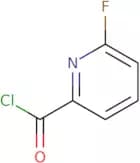
CAS:Fmoc-L-Gln-OH is a vasoactive intestinal peptide (VIP) analog that has been shown to be a potent pressor agent. It binds to and activates the VIP receptors in the vascular endothelium, causing vasoconstriction of blood vessels. Fmoc-L-Gln-OH also inhibits mitochondrial superoxide production and colorectal adenocarcinoma growth in vitro. This compound can be synthesized using solid phase chemistry, which is a technique where the building blocks are attached sequentially to an insoluble support material. This process can be activated by trifluoroacetic acid or other activating agents and eliminates the need for protecting groups. Fmoc-L-Gln-OH has been shown to inhibit the uptake of iron from transferrin into cells and to bind hippuric acid as well as many other organic compounds.Formula:C20H20N2O5Purity:Min. 95%Color and Shape:PowderMolecular weight:368.38 g/mol6-Fluoropyridine-2-carbonyl chloride
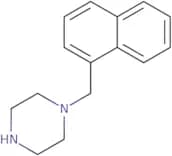
CAS:6-Fluoropyridine-2-carbonyl chloride (6FC) is a versatile building block that is used in the synthesis of complex compounds. It is also a reagent for organic chemistry, research chemicals, and speciality chemicals. 6FC has been shown to be useful as a building block for the preparation of high quality and useful intermediates. The compound reacts with nucleophiles in good yields to produce amines, nitriles, alcohols, and carboxylic acids. 6FC can also be used as a reaction component in organic reactions. It has been shown to be an excellent scaffold for the synthesis of bioactive molecules such as amino acid derivatives and natural products.Formula:C6H3ClFNOPurity:Min. 95%Color and Shape:White PowderMolecular weight:159.55 g/mol1-(1-Naphthylmethyl)piperazine
CAS:1-(1-Naphthylmethyl)piperazine (1-NMPP) is an antimicrobial agent that inhibits bacterial efflux pumps. It was shown to be active against Gram-positive bacteria, such as Erythromycin and tetracycline resistant mutants. 1-NMPP has been shown to inhibit the expression of efflux pump proteins in Gram-negative bacteria. One study showed that 1-NMPP can reverse the resistance of colistin and sulfa drugs in a multidrug resistant strain of Staphylococcus aureus. The mechanism of action for this drug is not yet known, but it may be due to its ability to prevent the synthesis of new efflux pump proteins by inhibiting translation or by decreasing mRNA stability.Formula:C15H18N2Purity:Min. 95%Color and Shape:Off-White PowderMolecular weight:226.32 g/mol2-Bromo-2',4'-dimethoxyacetophenone
CAS:Formula:C10H11BrO3Purity:>97.0%(GC)Color and Shape:White to Light yellow to Light orange powder to crystalMolecular weight:259.10N-Boc-2-methyl-L-proline
CAS:N-Boc-2-methyl-L-proline is a chemical compound that is used as a building block in the synthesis of other compounds. This substance is also an intermediate in the production of pharmaceuticals and pesticides. The compound has been shown to have high quality, versatility, and complexity. N-Boc-2-methyl-L-proline can be used as a reagent for research or as a speciality chemical. The CAS number for this substance is 103336-06-7.Formula:C11H19NO4Purity:Min. 95%Color and Shape:White To Off-White SolidMolecular weight:229.27 g/mol4-Benzoylpyridine
CAS:4-Benzoylpyridine is a reactive molecule that can undergo electron reduction and protonation. The protonated form of 4-benzoylpyridine has been shown to inhibit the enzyme methionine aminopeptidase, which is involved in the degradation of amino acids. The crystallographic structure of 4-benzoylpyridine was determined by X-ray diffraction and was found to contain nitrogen atoms at the center of its ring. The electron density map showed that there are no hydrogen bonds or lone pairs in 4-benzoylpyridine. This molecule is an inhibitor of the transfer reactions in mitochondria, which are required for ATP synthesis. It has been shown to be cytotoxic to mammalian cells in culture and may have photochemical properties.
Formula:C12H9NOPurity:Min. 95%Color and Shape:White PowderMolecular weight:183.21 g/mol2-[(Phenylsulfonyl)amino]benzoic acid
CAS:2-[(Phenylsulfonyl)amino]benzoic acid is a white crystalline solid that is soluble in water and ethanol. It has a melting point of 176°C and a boiling point of 280°C. 2-[(Phenylsulfonyl)amino]benzoic acid binds to DNA by an intercalative mechanism, forming covalent bonds with the bases on the DNA. This binding prevents the DNA from unwinding during replication and transcription, thus inhibiting the synthesis of RNA and protein. The dimers form between two molecules of 2-[(Phenylsulfonyl)amino]benzoic acid, due to hydrogen bonding between the carboxylic acid groups. The crystal structure has been determined for this compound as centrosymmetric with space group P2 1 /c. A benzene ring is found in the molecule, which can form a pyridine ring when exposed to heat orFormula:C13H11NO4SPurity:Min. 95%Color and Shape:White PowderMolecular weight:277.3 g/mol5-Propyl-1,3-benzenediol
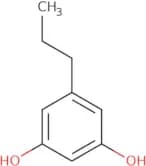
CAS:5-Propyl-1,3-benzenediol is a chemical compound that is found in cannabis. It has been shown to have anti-inflammatory and neuroprotective effects in vitro. 5-Propyl-1,3-benzenediol also inhibits the growth of cancer cells in vivo by inducing apoptosis.
5-Propyl-1,3-benzenediol can be synthesized from cannabidiol with high yield and selectivity by a one-pot reaction. This product has not been studied for toxicity or other side effects on humans.Formula:C9H12O2Purity:Min. 95%Color and Shape:PowderMolecular weight:152.19 g/molBenzophenone ethylendiamine acrylate
CAS:Please enquire for more information about Benzophenone ethylendiamine acrylate including the price, delivery time and more detailed product information at the technical inquiry form on this pageFormula:C19H18N2O3Purity:Min. 95 Area-%Molecular weight:322.36 g/mol4-Phenyl-2-butanol
CAS:4-Phenyl-2-butanol is a monoclonal antibody that is used in the treatment of human immunodeficiency virus (HIV). It is an aromatic hydrocarbon that binds to amines and reacts with malonic acid, which has monophenolase activity. The resulting product, dimethyl malonate, reacts with unsaturated ketones to form diphenols. The reaction solution also contains chloride yields, which are generated by the conversion of amines to their corresponding chlorides. 4-Phenyl-2-butanol has been shown to have enantiopure properties for the synthesis of fatty acids and other compounds containing unsaturated ketones.Formula:C10H14OPurity:Min. 95%Color and Shape:Clear Colourless LiquidMolecular weight:150.22 g/mol3-Methylnonane-2,4-dione
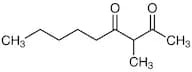
CAS:Formula:C10H18O2Purity:>97.0%(GC)Color and Shape:Colorless to Yellow to Green clear liquidMolecular weight:170.252-Nitrobiphenyl
CAS:Formula:C12H9NO2Purity:>98.0%(GC)Color and Shape:White or Colorless to Yellow powder to lump to clear liquidMolecular weight:199.21
![9-Bromo-10-[4-(2-naphthyl)phenyl]anthracene](/_next/image/?url=https%3A%2Fstatic.cymitquimica.com%2Fproducts%2F3B%2Fthumb-webp%2FB4571.webp&w=3840&q=75)






![2-[(Phenylsulfonyl)amino]benzoic acid](/_next/image/?url=https%3A%2Fstatic.cymitquimica.com%2Fproducts%2F3D%2Fthumb-webp%2FFP136709.webp&w=3840&q=75)