Building Blocks
Subcategories of "Building Blocks"
- Boronic Acids & Boronic Acid Derivatives(5,781 products)
- Chiral Building Blocks(1,242 products)
- Hydrocarbon Building Blocks(6,101 products)
- Organic Building Blocks(61,038 products)
Found 205338 products of "Building Blocks"
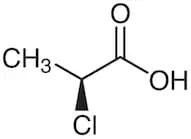
(S)-(-)-2-Chloropropionic Acid
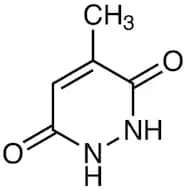
CAS:Formula:C3H5ClO2Purity:>98.0%(GC)(T)Color and Shape:Colorless to Light yellow clear liquidMolecular weight:108.52Methylmaleic Hydrazide
CAS:Formula:C5H6N2O2Purity:>98.0%(GC)Color and Shape:White to Light yellow powder to crystalMolecular weight:126.121,2-Ethanediol ditosylate
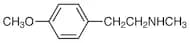
CAS:1,2-Ethanediol ditosylate is a coumarin derivative that is used as a contrast agent in the diagnosis of prostate cancer. It has been shown to be effective against prostate cancer cells in vitro and in vivo. 1,2-Ethanediol ditosylate is injected into the excretory organ (e.g., urinary bladder) and then excreted from the body by the kidneys. The compound accumulates in the prostate gland, where it binds to fatty acids on the cell membrane and induces a positron emission that can be detected with positron emission tomography (PET). This compound also inhibits tumor growth by blocking epidermal growth factor receptor signaling through its ability to bind to carbonic anhydrase II (CAII) receptors on tumor cells.Formula:C16H18O6S2Purity:Min. 95%Color and Shape:White PowderMolecular weight:370.44 g/molN-Methyl-2-(4-methoxyphenyl)ethylamine
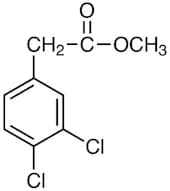
CAS:Formula:C10H15NOPurity:>95.0%(GC)(T)Color and Shape:Light orange to Yellow to Green clear liquidMolecular weight:165.24Methyl 3,4-Dichlorophenylacetate
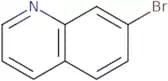
CAS:Formula:C9H8Cl2O2Purity:>98.0%(GC)Color and Shape:Colorless to Light orange to Yellow clear liquidMolecular weight:219.067-Bromoquinoline
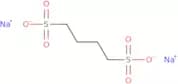
CAS:7-Bromoquinoline is a synthetic molecule that was first synthesized in the early 1980s. It is an analog of 7-bromoquinoline, which has been shown to have cytotoxic properties against cancer cells. The synthesis of 7-bromoquinoline involves a cross-coupling reaction with chloroacetonitrile and N-methylformamide. The nmr spectra for this compound are very similar to those for 7-bromoquinoine, but it lacks the secondary amine peak at δ 10.7 ppm. Primary culture cells were used to test the bioactivity of 7-bromoquinoline, and these cells were disrupted by adding trypsin after incubation with various concentrations of 7-bromoquinoline. This study showed that the quinoline derivatives had cytotoxic effects on cultured cells at low concentrations, suggesting that they may be useful as anticancer agents. Molecular modeling studies show thatFormula:C9H6BrNPurity:Min. 95%Color and Shape:PowderMolecular weight:208.05 g/mol1,4-Butanedisulfonic acid disodium salt
CAS:1,4-Butanedisulfonic acid disodium salt is a calcium chelator that is used in the treatment of hypercalcemia and chronic renal failure. It binds to the calcium ion and prevents it from binding to bone, thus lowering the level of calcium in the blood. This drug has been shown to be effective against hepatitis when given orally and also has been shown to be safe for people with liver diseases. 1,4-Butanedisulfonic acid disodium salt also has transport properties and can be administered orally or intravenously.Formula:C4H10Na2O6S2Purity:Min. 95%Color and Shape:PowderMolecular weight:264.23 g/molN-Butanesulfonyl-O-[4-(4-pyridinyl)-butyl]-(S)-tyrosine
CAS:N-Butanesulfonyl-O-[4-(4-pyridinyl)-butyl]-(S)-tyrosine is a synthetic amino acid. It is soluble in water and forms hydrates. The yield of this reaction is 60%. The molecular weight of this compound is 233.3 g/mol. This compound has been shown to have proteolytic activity, which may be due to its ability to cleave peptide bonds in proteins. N-Butanesulfonyl-O-[4-(4-pyridinyl)-butyl]-(S)-tyrosine may also be used as an intermediate for the synthesis of other compounds, such as aminoglycosides and antibiotics. This chemical can be synthesized by reacting L-tyrosine with butanesulfonyl chloride in the presence of sodium hydroxide and an organic base, such as pyridine. The solvents used in this process are chloroform, dichFormula:C22H30N2O5SPurity:Min. 95%Color and Shape:PowderMolecular weight:434.55 g/mol12-(t-Boc-amino)-1-dodecanol
CAS:12-(t-Boc-amino)-1-dodecanol is a versatile building block that is used in the synthesis of complex compounds. It can be used by itself or as a reagent or speciality chemical. This compound is useful for the synthesis of high quality research chemicals and useful scaffolds. 12-(t-Boc-amino)-1-dodecanol has CAS No. 67341-03-1 and is a fine chemical that has been widely used in the synthesis of pharmaceuticals, agrochemicals, and other organic compounds.
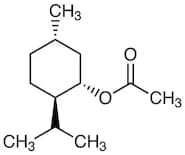
Formula:C17H35NO3Purity:Min. 95%Color and Shape:PowderMolecular weight:301.46 g/mol(+)-Menthyl Acetate
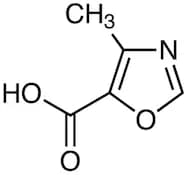
CAS:Formula:C12H22O2Purity:>98.0%(GC)Color and Shape:Colorless to Almost colorless clear liquidMolecular weight:198.314-Methyloxazole-5-carboxylic Acid
CAS:Formula:C5H5NO3Purity:>98.0%(T)Color and Shape:White to Gray to Brown powder to crystalMolecular weight:127.103-(2-Methoxyphenyl)propionic Acid
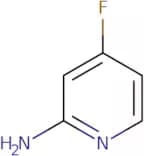
CAS:Formula:C10H12O3Purity:>98.0%(GC)(T)Color and Shape:White to Almost white powder to crystalMolecular weight:180.202-Amino-4-fluoropyridine
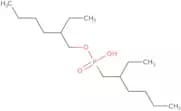
CAS:2-Amino-4-fluoropyridine is an acylation reaction product of 2-amino-4-chloropyridine and a fatty acid. The diaminopyridine moiety is responsible for the inhibition of copper enzymes. In addition, fluorine substitution provides a higher operational stability. The synthesis of this compound is accomplished through the use of thionyl chloride in an operational procedure that includes heating at 180 °C for 4 hours. 2-Amino-4-fluoropyridine has been shown to be effective against some bacteria such as Mycobacterium tuberculosis and Legionella pneumophila, which are resistant to other agents. This drug also has antiplasmodial properties and can be used to treat malaria. The structure based design of this molecule was optimized by replacing chlorine with fluorine as well as introducing a n oxide group to provide a sterically more favorable conformation.Formula:C5H5FN2Purity:Min. 95%Color and Shape:White To Yellow SolidMolecular weight:112.11 g/mol2-Ethylhexylphosphonic acid mono-2-ethylhexyl ester
CAS:Sodium carbonate is a chemical compound that is used as an alkaline substance in the laboratory. It is also used in the manufacture of detergents, glass, and textiles. Sodium carbonate has been shown to be an extractant for 2-ethylhexylphosphonic acid mono-2-ethylhexyl ester. It has been shown to react with acidic sodium salts to form a copper complex and adsorb onto the surface of hydrochloric acid at high concentrations. The Langmuir adsorption isotherm shows that 2-ethylhexylphosphonic acid mono-2-ethylhexyl ester has an optimum concentration at around 3 milliliters per gram, with a kinetic data of 4.74 x 10^4 mL/g/sec. The kinetic data also indicates that this reaction proceeds via a Langmuir adsorption mechanism.
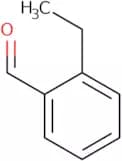
Formula:C16H35O3PPurity:Min. 95%Color and Shape:Clear LiquidMolecular weight:306.42 g/mol2-Ethylbenzaldehyde
CAS:2-Ethylbenzaldehyde is a colorless volatile liquid that has an odor similar to that of cloves. 2-Ethylbenzaldehyde can be found in the essential oil of nutmeg and other spices, such as cinnamon. It is used in the chemical industry as a control agent for analytical methods, such as the spectrometric determination of ether linkages. 2-Ethylbenzaldehyde has been shown to inhibit fatty acid production by bacteria and to inhibit lipid peroxidation. It also exhibits anti-inflammatory effects when exposed to cells in vitro. Exposure to 2-ethylbenzaldehyde may cause irritation of the eyes, skin, and respiratory tract, dizziness, headache, nausea and vomiting. 2-Ethylbenzaldehyde is generally considered safe for human consumption at low levels; however it may cause adverse health effects if ingested in large quantities or if heated over 400° F (204° Celsius).Formula:C9H10OPurity:Min. 95%Color and Shape:PowderMolecular weight:134.18 g/molEthyl 2-aminothiophene-3-carboxylate
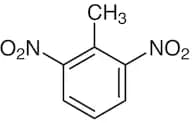
CAS:Ethyl 2-aminothiophene-3-carboxylate is a triazole derivative with anticancer activity. It has been shown to inhibit the adenosine A1 receptor and show anticancer activity in vitro. The drug has also been shown to have potent cytotoxic effects against cancer cells, which may be due to its ability to activate apoptosis in tumor cells through structural modifications that lead to the inhibition of DNA synthesis. This compound has also been shown to be less toxic than other chemotherapeutic drugs, such as thiosemicarbazide and ethylene diamine, and it does not cause red blood cell lysis or hemolysis.Formula:C7H9NO2SPurity:Min. 95%Color and Shape:Slightly Yellow PowderMolecular weight:171.22 g/mol2,6-Dinitrotoluene
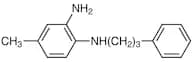
CAS:Formula:C7H6N2O4Purity:>99.0%(GC)Color and Shape:White to Orange to Green powder to crystalMolecular weight:182.144-Methyl-N1-(3-phenylpropyl)-1,2-phenylenediamine
CAS:Formula:C16H20N2Purity:>98.0%(GC)Color and Shape:White to Light yellow to Light orange powder to crystalMolecular weight:240.351-Ethyl-1,2-dihydro-2,2,4-trimethyl-7-quinolinol hydrochloride
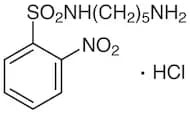
CAS:Please enquire for more information about 1-Ethyl-1,2-dihydro-2,2,4-trimethyl-7-quinolinol hydrochloride including the price, delivery time and more detailed product information at the technical inquiry form on this pageFormula:C14H19NO•HClPurity:Min. 95%Color and Shape:PowderMolecular weight:253.77 g/molN-(5-Aminopentyl)-2-nitrobenzenesulfonamide Hydrochloride
CAS:Formula:C11H17N3O4S·HClPurity:>98.0%(T)Color and Shape:Light orange to Yellow to Green powder to crystalMolecular weight:323.79



![N-Butanesulfonyl-O-[4-(4-pyridinyl)-butyl]-(S)-tyrosine](/_next/image/?url=https%3A%2Fstatic.cymitquimica.com%2Fproducts%2F3D%2Fthumb-webp%2FFB19373.webp&w=3840&q=75)