Building Blocks
Subcategories of "Building Blocks"
- Boronic Acids & Boronic Acid Derivatives(5,783 products)
- Chiral Building Blocks(1,242 products)
- Hydrocarbon Building Blocks(6,105 products)
- Organic Building Blocks(61,055 products)
Found 205383 products of "Building Blocks"
4-Chloro-7-(p-toluenesulfonyl)-7H-pyrrolo[2,3-d]pyrimidine
CAS:Formula:C13H10ClN3O2SPurity:>96.0%(HPLC)(N)Color and Shape:White to Orange to Green powder to crystalMolecular weight:307.75Methyl Pentafluorophenyl Carbonate
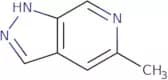
CAS:Formula:C8H3F5O3Purity:>98.0%(GC)Color and Shape:White to Almost white powder to lumpMolecular weight:242.106-Aza-5-methyl-1H-indazole
CAS:6-Aza-5-methyl-1H-indazole is a chemical compound that acts as a building block for the synthesis of pharmaceuticals and other compounds. It is used in research for the development of new drugs, such as antihypertensive agents, antibiotics, and immunosuppressants. 6-Aza-5-methyl-1H-indazole has been shown to be an effective intermediate in the synthesis of many complex compounds, including cephalosporins, penicillins, carbapenems, and aminoglycosides. This versatile reagent can be used to synthesize a wide variety of organic compounds.
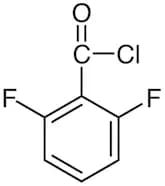
Formula:C7H7N3Purity:Min. 95%Color and Shape:White To Beige SolidMolecular weight:133.15 g/mol2,6-Difluorobenzoyl Chloride
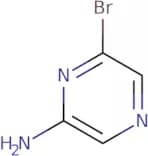
CAS:Formula:C7H3ClF2OPurity:>97.0%(GC)(T)Color and Shape:Colorless to Light orange to Yellow clear liquidMolecular weight:176.552-Amino-6-bromopyrazine
CAS:2-Amino-6-bromopyrazine is a versatile building block that can be used in the synthesis of complex compounds. It is also used as a reagent, speciality chemical and useful scaffold for the synthesis of pharmaceuticals and other chemicals. 2-Amino-6-bromopyrazine is available from Sigma Aldrich with CAS No. 54237-53-5.
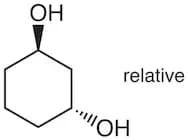
Formula:C4H4BrN3Purity:Min. 95%Color and Shape:White PowderMolecular weight:174 g/moltrans-1,3-Cyclohexanediol
CAS:Formula:C6H12O2Purity:>98.0%(GC)Color and Shape:White to Almost white powder to crystalMolecular weight:116.162-(2-Bromo-1,1,2,2-tetrafluoroethoxy)-1,1,1,2,3,3-hexafluoro-3-(pentafluoroethoxy)propane
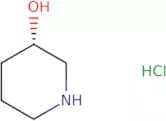
CAS:Formula:C7BrF15O2Purity:>98.0%(GC)Color and Shape:Colorless to Almost colorless clear liquidMolecular weight:480.96(S)-3-Hydroxypiperidine hydrochloride
CAS:3-Hydroxypiperidine hydrochloride is an industrial chemical that is used in the synthesis of medicines. It is a nucleophile, and will react with electrophiles in a nucleophilic substitution reaction. 3-Hydroxypiperidine hydrochloride can be used for the synthesis of sulfinates, which are often used as medicine reagents. 3-Hydroxypiperidine hydrochloride has also been shown to be useful in the synthesis of five-membered heterocycles, such as diazepinones, from 2-aminoethanethiols.Formula:C5H12ClNOPurity:Min. 95%Color and Shape:White PowderMolecular weight:137.61 g/mol2-Amino-3-bromopyrazine
CAS:2-Amino-3-bromopyrazine is a molecule that belongs to the class of pyrazoles. It has been synthesized and optimised for its diffraction properties. The active conformation of 2-amino-3-bromopyrazine has been determined by xanthate methylation and hydrobromide formation. This molecule has been synthesised using a variety of different methods, including an intramolecular hydrogen transfer reaction with methyl derivatives, as well as the use of xanthates. The physicochemical properties of this molecule have also been studied, yielding some interesting results.
Formula:C4H4BrN3Purity:Min. 95%Color and Shape:PowderMolecular weight:174.01 g/mol2-Aminomethyl-3-chloropyrazine
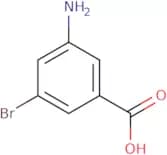
CAS:2-Aminomethyl-3-chloropyrazine is a potent inhibitor of the tyrosine kinase, which is an enzyme that controls the transmission of signals from outside the cell to inside. It inhibits collagen production by cells, thereby preventing cancer formation. 2-Aminomethyl-3-chloropyrazine has been shown to inhibit tumor growth in mice and rats. This drug also inhibits the activity of certain enzymes, including piperidine oxidase and xanthine oxidase, which are involved in the production of reactive oxygen species that can cause cancer. The drug's selectivity for tumor cells makes it a potential candidate for treating cancer.Formula:C5H5ClN3Purity:Min. 95%Molecular weight:143.58 g/mol3-Amino-5-bromobenzoic acid
CAS:3-Amino-5-bromobenzoic acid is a synthetic, water soluble anti-inflammatory agent. It is cytotoxic to macrophages in vitro and has significant efficacy in vivo. Its mechanism of action is to inhibit the synthesis of nucleotides in the cell. 3-Amino-5-bromobenzoic acid also inhibits inflammation by inhibiting prostaglandin synthesis and has been shown to be effective against seborrheic dermatitis. This drug has pharmacokinetic properties that are favourable for oral administration and is rapidly absorbed from the gastrointestinal tract with a half life of 2 hours. The drug is eliminated through the kidneys, with an elimination half life of 6 hours.Formula:C7H6BrNO2Purity:Min. 95%Color and Shape:PowderMolecular weight:216.03 g/mol1-Hexadecanol
CAS:1-Hexadecanol is a monohydroxy alcohol that is used as a surfactant in analytical chemistry. It can be found naturally in the secretions of some glands and has an optimum concentration of 0.2% to 1%. 1-Hexadecanol has been shown to inhibit bacterial growth by reducing the mitochondrial membrane potential, which leads to cell death. 1-Hexadecanol also reacts with benzalkonium chloride to form ester hydrochloride, which is a reagent for the detection of bacteria. The reaction mechanism for this process is not yet fully understood, but it may involve a metastable form of 1-hexadecanol reacting with benzalkonium chloride.Formula:C16H34OPurity:Min. 95%Color and Shape:PowderMolecular weight:242.44 g/mol4-Bromo-m-xylene
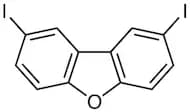
CAS:Formula:C8H9BrPurity:>97.0%(GC)Color and Shape:Colorless to Light orange to Yellow clear liquidMolecular weight:185.062,8-Diiododibenzofuran
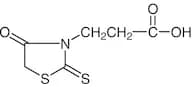
CAS:Formula:C12H6I2OPurity:>98.0%(GC)Color and Shape:White to Light yellow to Light orange powder to crystalMolecular weight:419.99Rhodanine-3-propionic Acid
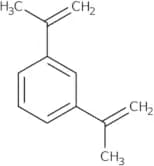
CAS:Formula:C6H7NO3S2Purity:>98.0%(GC)(T)Color and Shape:Light yellow to Brown powder to crystalMolecular weight:205.251,3-Diisopropenylbenzene - stabilized with TBC
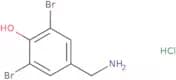
CAS:1,3-Diisopropenylbenzene is a hydrocarbon solvent with thermal expansion properties. It has been shown to be an effective cross-linking agent for cationic polymerization and is used as a surfactant for the production of polyurethanes. 1,3-Diisopropenylbenzene is also used as a chemical intermediate in the production of higher molecular weight polymers and plastics. The ester linkages in 1,3-diisopropenylbenzene are susceptible to hydrolysis and oxidation, which can lead to degradation. 1,3-diisopropenylbenzene is stabilized with TBC by forming an ether linkage with the terminal hydroxyl group on TBC.Formula:C12H14Purity:Min. 95%Color and Shape:Colorless PowderMolecular weight:158.24 g/mol3,5-Dibromo-4-hydroxybenzylamine hydrochloride
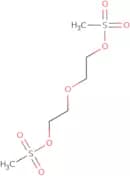
CAS:3,5-Dibromo-4-hydroxybenzylamine hydrochloride is a high quality reagent that can be used as an intermediate in the production of fine chemicals and speciality chemicals. It is also a versatile building block for the synthesis of complex compounds. 3,5-Dibromo-4-hydroxybenzylamine hydrochloride has been shown to be useful in research due to its ability to react with other compounds in a variety of ways. The CAS number for this compound is 1134950-89-2.Formula:C7H8Br2ClNOPurity:Min. 95%Color and Shape:PowderMolecular weight:317.41 g/molDiethylene glycol dimethanesulfonate
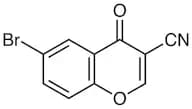
CAS:Diethylene glycol dimethanesulfonate is a functional group that is used in the synthesis of organic compounds. It is a white crystalline solid with a melting point of about 130°C. Diethylene glycol dimethanesulfonate reacts slowly with water and hydrochloric acid to produce diethyl ether and hydrogen chloride gas. The reaction time for this process can be affected by the concentration of reactants, temperature, and pH. Diethylene glycol dimethanesulfonate undergoes acidic hydrolysis in the presence of hydrochloric acid or sodium hydroxide. This reaction produces sodium chloride and ethylene glycol. Busulfan, an anti-cancer drug, is produced by the dehydration of diethylene glycol dimethanesulfonate with copper chloride or chlorine gas. Intramolecular hydrogen bonds are formed during this process to give grandis as an intermediate product. Grandis can be converted into busulfan byFormula:C6H14O7S2Purity:Min. 95%Color and Shape:PowderMolecular weight:262.3 g/mol6-Bromochromone-3-carbonitrile
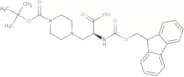
CAS:Formula:C10H4BrNO2Purity:>98.0%(GC)Color and Shape:White to Yellow to Green powder to crystalMolecular weight:250.05(S)-3-(4-Boc-piperazin-1-yl)-2-(Fmoc-amino)propionic acid
CAS:(S)-3-(4-Boc-piperazin-1-yl)-2-(Fmoc-amino)propionic acid is a high quality reagent which has been synthesized in our lab. It is used as a reaction component and can be used as a speciality chemical, versatile building block, or useful intermediate. This compound has been shown to have complex properties and can be used as a fine chemical.Formula:C27H33N3O6Purity:Min. 95%Color and Shape:White PowderMolecular weight:495.57 g/mol
![4-Chloro-7-(p-toluenesulfonyl)-7H-pyrrolo[2,3-d]pyrimidine](/_next/image/?url=https%3A%2Fstatic.cymitquimica.com%2Fproducts%2F3B%2Fthumb-webp%2FC3036.webp&w=3840&q=75)