Building Blocks
Subcategories of "Building Blocks"
- Boronic Acids & Boronic Acid Derivatives(5,783 products)
- Chiral Building Blocks(1,242 products)
- Hydrocarbon Building Blocks(6,105 products)
- Organic Building Blocks(61,055 products)
Found 205383 products of "Building Blocks"
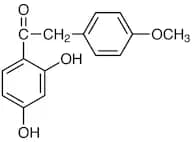
2',4'-Dihydroxy-2-(4-methoxyphenyl)acetophenone
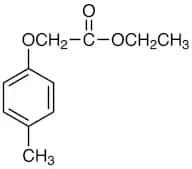
CAS:Formula:C15H14O4Purity:>98.0%(T)Color and Shape:White to Light yellow to Dark green powder to crystalMolecular weight:258.27Ethyl (4-Methylphenoxy)acetate
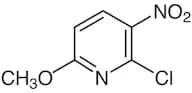
CAS:Formula:C11H14O3Purity:>97.0%(GC)Color and Shape:Colorless to Light yellow clear liquidMolecular weight:194.232-Chloro-6-methoxy-3-nitropyridine
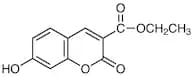
CAS:Formula:C6H5ClN2O3Purity:>98.0%(GC)Color and Shape:Light yellow to Yellow to Green powder to crystalMolecular weight:188.57Ethyl 7-Hydroxycoumarin-3-carboxylate
CAS:Formula:C12H10O5Purity:>98.0%(GC)Color and Shape:White to Light yellow to Light orange powder to crystalMolecular weight:234.212,6-Diacetylpyridine
CAS:2,6-Diacetylpyridine is a chelate ligand that has significant cytotoxicity. It binds to nitrogen atoms and can form stable complexes with metals. The compound also has genotoxic activity that is shown through the formation of high values in plasma mass spectrometry. 2,6-Diacetylpyridine has been used as an antimicrobial agent, where it inhibits bacterial growth by binding to DNA and RNA. This compound also binds to the enzyme thymidylate synthase and inhibits its activity, which may be due to its coordination geometry. 2,6-Diacetylpyridine has been shown to have biological properties such as being able to inhibit cell proliferation and induce apoptosis in cell cultures.
Formula:C9H9NO2Purity:Min. 98 Area-%Color and Shape:White PowderMolecular weight:163.17 g/mol1,3-Diisopropenylbenzene - stabilized with TBC
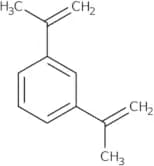
CAS:1,3-Diisopropenylbenzene is a hydrocarbon solvent with thermal expansion properties. It has been shown to be an effective cross-linking agent for cationic polymerization and is used as a surfactant for the production of polyurethanes. 1,3-Diisopropenylbenzene is also used as a chemical intermediate in the production of higher molecular weight polymers and plastics. The ester linkages in 1,3-diisopropenylbenzene are susceptible to hydrolysis and oxidation, which can lead to degradation. 1,3-diisopropenylbenzene is stabilized with TBC by forming an ether linkage with the terminal hydroxyl group on TBC.Formula:C12H14Purity:Min. 95%Color and Shape:Colorless PowderMolecular weight:158.24 g/mol2-Bromo-2',4'-difluoroacetophenone
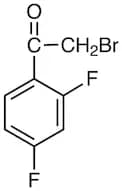
CAS:Formula:C8H5BrF2OPurity:>98.0%(GC)Color and Shape:White or Colorless to Light yellow to Light orange powder to lump to clear liquidMolecular weight:235.036-Chloropyridine-3-sulfonyl chloride
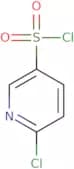
CAS:6-Chloropyridine-3-sulfonyl chloride is a synthetic compound that has been shown to be an inhibitor of the enzyme anhydrase, which is involved in the production of carbonic acid. This inhibition leads to a decrease in the pH of tissues and may inhibit the proliferation of malignant cancer cells. 6-Chloropyridine-3-sulfonyl chloride has also been shown to have anticancer activity against eukaryotes.Formula:C5H3Cl2NO2SPurity:Min. 95%Color and Shape:PowderMolecular weight:212.05 g/molDL-Leucine
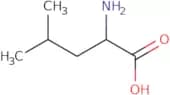
CAS:DL-Leucine is an amino acid that is needed for the formation of proteins. It is also able to inhibit the activity of enzymes by hydrolyzing them. DL-Leucine has been shown to be a potent inhibitor of lysine hydrolases and can be used as an additive in the manufacture of animal feed. DL-Leucine has been shown to be stable in many environments, including those containing chlorine, hydrochloric acid, n-dimethyl formamide, and x-ray crystallography. The enantiomers of DL-leucine have different chemical stability; one form is more stable than the other in acidic environments.
Formula:C6H13NO2Purity:Min. 95%Color and Shape:PowderMolecular weight:131.17 g/mol1,2-Dibromo-2,4-dicyanobutane
CAS:1,2-Dibromo-2,4-dicyanobutane is a chemical substance with antimicrobial properties. It is used as an ingredient in the production of health care products and preservatives for food. 1,2-Dibromo-2,4-dicyanobutane inhibits bacterial growth by preventing the synthesis of fatty acids and proteins. This compound has been shown to have synergistic effects when combined with benzalkonium chloride or potassium dichromate. 1,2-Dibromo-2,4-dicyanobutane has not been found to be carcinogenic in animal studies and does not cause allergic reactions.Formula:C6H6Br2N2Purity:Min. 95%Color and Shape:White PowderMolecular weight:265.93 g/mol2,2-Difluoroethanol
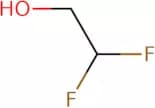
CAS:2,2-Difluoroethanol is a chemical compound with the molecular formula C2H4F2O. It is a colorless liquid that has a distinctive odor and is highly flammable. 2,2-Difluoroethanol reacts in an electrophilic substitution reaction to replace chlorine atoms with hydrogen atoms from the ethyl formate molecule. This reaction can be described by the following equation:Formula:C2H4OF2Purity:Min. 95%Color and Shape:PowderMolecular weight:82.05 g/mol(R)-(-)-2-Phenylglycinol
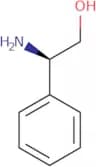
CAS:(R)-(-)-2-Phenylglycinol is an enantiopure chiral compound that has been used in the synthesis of polymers. This polymerase chain reaction (PCR) inhibitor binds to the α subunit of DNA polymerase, preventing replication and transcription. The binding site for this inhibitor is located at the active site of the enzyme and is a hydroxyl group. The (S)-enantiomer of 2-phenylglycinol does not bind to the α subunit, so it can be used as a control in experiments. 2-Phenylglycinol is also known to have antiviral properties against HIV infection.
Formula:C8H11NOPurity:Min. 97.5 Area-%Color and Shape:White PowderMolecular weight:137.18 g/mol3,5-Dimethyl-4-hydroxyphenylacetic acid
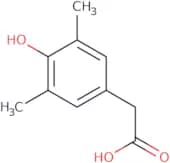
CAS:3,5-Dimethyl-4-hydroxyphenylacetic acid (DHPA) is a fine chemical that can be used as a building block in the production of other chemicals. It is a useful intermediate in organic synthesis and has been used to produce pharmaceuticals, fragrances, and dyes. DHPA is also an important reagent for research purposes and can be used to synthesize other compounds.Formula:C10H12O3Purity:Min. 95%Color and Shape:Off-White PowderMolecular weight:180.2 g/mol4-Methoxybenzenesulfonyl chloride
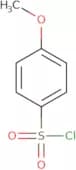
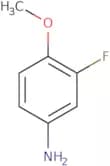
CAS:4-Methoxybenzenesulfonyl chloride is a water-soluble and colorless solid that is used in the treatment of wastewater. It binds to hydroxyl groups and copper complexes, which are present in high concentrations in wastewater. 4-Methoxybenzenesulfonyl chloride can be used as an analytical reagent for determining binding constants, as well as for the separation of amyloid proteins. This compound has been shown to have anti-inflammatory properties by inhibiting the production of pro-inflammatory cytokines such as tumor necrosis factor (TNF) and interleukin (IL)-1β. 4-Methoxybenzenesulfonyl chloride also has activity against certain cancers such as L1210 leukemia cells in mice and diphenyl ethers.Formula:C7H7ClO3SPurity:Min. 97 Area-%Color and Shape:Brown Off-White PowderMolecular weight:206.65 g/mol3-Fluoro-4-methoxyaniline
CAS:3-Fluoro-4-methoxyaniline is a chemical intermediate. It is an aminopyridine that is used in the synthesis of bosutinib, an anticancer drug. 3-Fluoro-4-methoxyaniline binds to the ATP binding site of the cell's mitochondria and prevents the release of cytochrome c from the mitochondria, which leads to apoptosis. 3-Fluoro-4-methoxyaniline also has antimitotic effects and can inhibit the growth of tumor cells. 3-Fluoro-4-methoxyaniline has been shown to have poor cellular uptake, which may be due to its interaction with positron emission tomography (PET) agents such as cyanuric acid or glycopeptide. This chemical has also been shown to be a good surrogate for chloride ions in studies on transfected tumor cells.Formula:C7H8FNOPurity:Min. 98.5%Color and Shape:Off-White PowderMolecular weight:141.14 g/mol2',5'-Dimethoxypropiophenone
CAS:Formula:C11H14O3Purity:>98.0%(GC)Color and Shape:Light orange to Yellow to Green clear liquidMolecular weight:194.233-Pyridyl trifluoromethanesulfonate
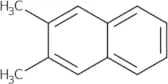
CAS:3-Pyridyl trifluoromethanesulfonate is a synthetic chemical compound. It is used in the cross-coupling reaction with an alkyl halide to form a substituted enolate and can be used to synthesize chloroformates, nitro compounds, and other organic compounds. 3-Pyridyl trifluoromethanesulfonate reacts with hydroxyl groups to form trisubstituted ethers. This chemical is also used for the irradiation of activated alkene in order to convert it into an epoxide.Formula:C6H4F3NO3SPurity:Min. 95%Color and Shape:PowderMolecular weight:227.16 g/mol2,3-Dimethylnaphthalene
CAS:Dimethylnaphthalene is an aromatic hydrocarbon that absorbs UV radiation. The absorption of UV radiation can be used to measure the concentration of this compound in a sample. The solubility data for dimethylnaphthalene show that it is soluble in supercritical carbon dioxide, but insoluble in water. Dimethylnaphthalene is a chemical compound that can be used as a skin conditioner or in biological treatment. It has been shown to have antioxidant properties and may also have anti-inflammatory effects. Dimethylnaphthalene is synthesized from naphthalene by two different reactions: hydrogenation and oxidation. The reaction mechanism for these two reactions has not yet been determined, but both are believed to produce the same product.
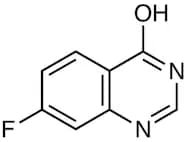
Formula:C12H12Purity:Min. 95%Color and Shape:White PowderMolecular weight:156.22 g/mol7-Fluoro-4-hydroxyquinazoline
CAS:Formula:C8H5FN2OPurity:>98.0%(GC)(T)Color and Shape:White to Gray to Red powder to crystalMolecular weight:164.14L-gamma-glutamyl-L-threonine
CAS:L-gamma-glutamyl-L-threonine is a compound in the sphingolipid metabolism pathway. It has been shown to be a regulator of acidic phospholipids and fatty acids. L-gamma-glutamyl-L-threonine is found in human urine at high concentrations and has demonstrated antibacterial activity against gram negative bacteria. The analog, L-threo-gamma-glutamyltyrosine, was shown to have anticancer activity against leukemia cells in vitro.Formula:C9H16N2O6Purity:Min. 95%Color and Shape:PowderMolecular weight:248.23 g/mol