Building Blocks
Subcategories of "Building Blocks"
- Boronic Acids & Boronic Acid Derivatives(5,784 products)
- Chiral Building Blocks(1,243 products)
- Hydrocarbon Building Blocks(6,105 products)
- Organic Building Blocks(61,066 products)
Found 205426 products of "Building Blocks"
4-Bromoisatin
CAS:4-Bromoisatin is a synthetic compound that reversibly inhibits the activity of telomerase and has been shown to be effective against a broad range of bacterial species. It binds to the catalytic site on telomerase and prevents the synthesis of ribonucleotides, which are necessary for DNA replication. 4-Bromoisatin is synthesized by humans, but can also be found in plants such as coffee beans and black tea leaves. The antibacterial properties of 4-bromoisatin may be due to its ability to inhibit the biosynthesis of purine, an essential component in bacterial DNA synthesis.Formula:C8H4BrNO2Purity:Min. 95%Color and Shape:Orange PowderMolecular weight:226.03 g/mol(1S,2S)-(-)-1,2-Diaminocyclohexane-N,N'-bis(2-diphenylphosphino-1-naphthoyl)
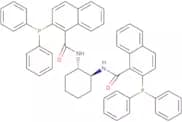
CAS:(1S,2S)-(-)-1,2-Diaminocyclohexane-N,N'-bis(2-diphenylphosphino-1-naphthoyl) is an alkoxyallene that is synthesized from the reaction of allene and ethylene oxide. It has been shown to inhibit abnormal cell growth in vitro. (1S,2S)-(-)-1,2-Diaminocyclohexane-N,N'-bis(2-diphenylphosphino-1-naphthoyl) also inhibits cancer cell proliferation in vivo and shows a high degree of stereoselectivity and enantioselectivity. This compound can be used as an anticancer agent due to its ability to selectively kill cancer cells while leaving normal cells unharmed.Formula:C52H44N2O2P2Purity:Min. 94.5 Area-%Color and Shape:PowderMolecular weight:790.87 g/mol(Dimethylamino)acetonitrile
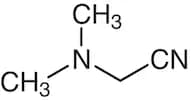
CAS:Formula:C4H8N2Purity:>96.0%(GC)(T)Color and Shape:Colorless to Light yellow to Light orange clear liquidMolecular weight:84.122,2-Dimethylvaleric acid
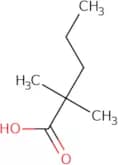
CAS:2,2-Dimethylvaleric acid is a fatty acid that can be synthesized from 2,2-dimethylolpropane. It has been shown to reduce blood pressure in mice by inhibiting the synthesis of certain fatty acids. The mechanism of action may be due to the inhibition of messenger RNA (mRNA) and protein synthesis in the central nervous system. 2,2-Dimethylvaleric acid has also been shown to have neurotrophic effects on cultured cells and is an effective antioxidant. This compound has been used as a control for diode experiments in optical systems.Formula:C7H14O2Purity:Min. 95%Color and Shape:Colorless Clear LiquidMolecular weight:130.18 g/mol1,3-Diisopropenylbenzene - stabilized with TBC
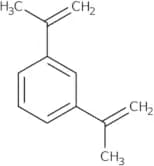
CAS:1,3-Diisopropenylbenzene is a hydrocarbon solvent with thermal expansion properties. It has been shown to be an effective cross-linking agent for cationic polymerization and is used as a surfactant for the production of polyurethanes. 1,3-Diisopropenylbenzene is also used as a chemical intermediate in the production of higher molecular weight polymers and plastics. The ester linkages in 1,3-diisopropenylbenzene are susceptible to hydrolysis and oxidation, which can lead to degradation. 1,3-diisopropenylbenzene is stabilized with TBC by forming an ether linkage with the terminal hydroxyl group on TBC.Formula:C12H14Purity:Min. 95%Color and Shape:Colorless PowderMolecular weight:158.24 g/molNeu5Ac[1Me,4789Ac]α(2-6)Gal[24Bz,3Bn]-β-MP
CAS:Formula:C54H59NO21Purity:>95.0%(HPLC)Color and Shape:White to Almost white powder to crystalMolecular weight:1,058.052-Cyano-1,5-dimethylpyrrole
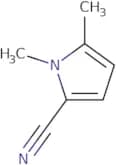
CAS:2-Cyano-1,5-dimethylpyrrole is a quinone antibiotic. It has been shown to have antibacterial activity against organisms such as Staphylococcus, Streptococcus, and Pyogenes. This chemical has been shown to be active in the gaseous phase and against test organisms in alcohol extracts. 2-Cyano-1,5-dimethylpyrrole also exhibits flavonoid and saponin properties that may contribute to its antimicrobial activity.
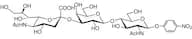
Formula:C7H8N2Purity:Min. 95%Color and Shape:PowderMolecular weight:120.15 g/molNeu5Acα(2-3)Galβ(1-4)GlcNAc-β-pNP
CAS:Formula:C31H45N3O21Purity:>95.0%(HPLC)Color and Shape:White to Almost white powder to crystalMolecular weight:795.70Neu5Acα(2-6)Galβ(1-3)GlcNAc-β-pNP
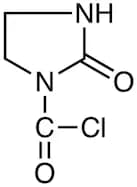
Formula:C31H45N3O21Purity:>97.0%(HPLC)Color and Shape:White to Light yellow to Green powder to crystalMolecular weight:795.702-Oxo-1-imidazolidinecarbonyl Chloride
CAS:Formula:C4H5ClN2O2Purity:>97.0%(T)Color and Shape:White to Almost white powder to crystalMolecular weight:148.552-Chloro-3-methoxyaniline
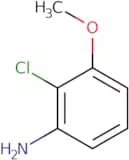
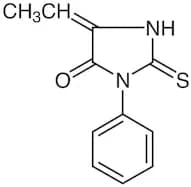
CAS:2-Chloro-3-methoxyaniline is a high quality chemical. It is an intermediate in the synthesis of other complex compounds and has been used as a reagent for organic synthesis. It is also useful as a building block for the preparation of speciality chemicals, research chemicals, and versatile building blocks. 2-Chloro-3-methoxyaniline reacts with other chemicals to form new compounds that are useful for pharmaceuticals and agrochemicals.Formula:C7H8ClNOPurity:Min. 95%Color and Shape:Brown PowderMolecular weight:157.6 g/molPhenylthiohydantoin-Δ-threonine
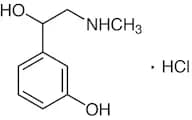
CAS:Formula:C11H10N2OSPurity:>90.0%(HPLC)Color and Shape:White to Light yellow to Light orange powder to crystalMolecular weight:218.27DL-Phenylephrine Hydrochloride
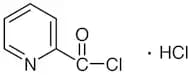
CAS:Formula:C9H13NO2·HClPurity:>98.0%(T)(HPLC)Color and Shape:White to Almost white powder to crystalMolecular weight:203.67Pyridine-2-carbonyl Chloride Hydrochloride
CAS:Formula:C6H4ClNO·HClPurity:>93.0%(T)Color and Shape:White to Gray to Red powder to crystalMolecular weight:178.013-Aminoquinuclidine dihydrochloride
CAS:3-Aminoquinuclidine dihydrochloride (3-AQDH) is a chiral quinuclidine derivative that is an acetylcholine receptor agonist. It has been shown to bind to the α7 nicotinic acetylcholine receptor with high affinity and selectivity. 3-AQDH has also been shown to crosslink the cholinergic receptor, which may lead to increased sensitivity of the receptor. The binding constants between 3-AQDH and the α7 nicotinic acetylcholine receptors are very high and it has been shown to be enantiopure in its synthesis. 3-AQDH also has a hydrophilic interaction chromatography profile, which separates it from other compounds. This agent may have potential use as a drug for treating Alzheimer's disease and Parkinson's disease due to its ability to inhibit acetylcholinesterase activity.
Purity:Min. 95%Color and Shape:PowderMolecular weight:199.12 g/mol6-Bromo-7-azaindole
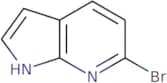
CAS:6-Bromo-7-azaindole is a homologous molecule. It is an electron deficient compound with a piperidine moiety at the 6 position and a nitrogen atom at the 7 position. The nitrogen atom substitutes for an oxygen atom, making this molecule reactive. The electron deficient nature of this molecule makes it suitable for use in transistors and other physicochemical devices. 6-Bromo-7-azaindole has been shown to be effective against carcinoma cells in vitro, as well as to inhibit tumor growth in vivo. This drug also causes homologous recombination by interacting with DNA in mammalian cells. 6-Bromo-7-azaindole binds to DNA, forming a covalent bond with the guanine base of DNA through the nitrogen atom, which is electron deficient.
Formula:C7H5BrN2Purity:Min. 95%Color and Shape:Off-White To Beige To Yellow SolidMolecular weight:197.03 g/molBoc-N-Ethylglycine
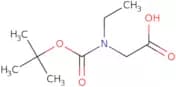
CAS:Building blockFormula:C9H17NO4Purity:Min. 95%Color and Shape:White PowderMolecular weight:203.24 g/mol(R)-(+)-β-Methylphenethylamine
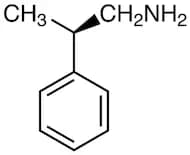
CAS:Formula:C9H13NPurity:>98.0%(GC)(T)Color and Shape:Colorless to Almost colorless clear liquidMolecular weight:135.219-Fluorenemethanol
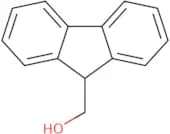
CAS:9-Fluorenemethanol is a chemical compound that is used as a reagent in analytical chemistry. It reacts with zirconium oxide to form 9-fluorenylmethyl zirconium chloride, which can be used to detect the presence of ethyl formate by fluorescence resonance spectroscopy. The reaction solution is heated at 100°C for about 4 hours and then cooled to room temperature. The isolated yield of 9-fluorenylmethyl zirconium chloride is determined by the detection time and thermodynamic parameters. This compound can also be used in acylation reactions.Formula:C14H12OPurity:Min. 95%Color and Shape:White PowderMolecular weight:196.24 g/molN-Carbobenzoxy-L-phenylalaninol
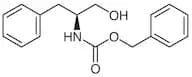
CAS:Formula:C17H19NO3Purity:>98.0%(HPLC)Color and Shape:White to Almost white powder to crystalMolecular weight:285.34



![Neu5Ac[1Me,4789Ac]α(2-6)Gal[24Bz,3Bn]-β-MP](/_next/image/?url=https%3A%2Fstatic.cymitquimica.com%2Fproducts%2F3B%2Fthumb-webp%2FM1761.webp&w=3840&q=75)