Building Blocks
This section contains fundamental products for the synthesis of organic and biological compounds. Building blocks are the essential starting materials used to construct complex molecules through various chemical reactions. They play a critical role in drug discovery, material science, and chemical research. At CymitQuimica, we offer a diverse range of high-quality building blocks to support your innovative research and industrial projects, ensuring you have the essential components for successful synthesis.
Subcategories of "Building Blocks"
- Boronic Acids & Boronic Acid Derivatives(5,778 products)
- Chiral Building Blocks(1,242 products)
- Hydrocarbon Building Blocks(6,098 products)
- Organic Building Blocks(61,063 products)
Found 197855 products of "Building Blocks"
Sort by
Purity (%)
0
100
|
0
|
50
|
90
|
95
|
100
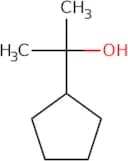
a,a-Dimethyl-cyclopentanemethanol
CAS:<p>Versatile small molecule scaffold</p>Formula:C8H16OPurity:Min. 95%Molecular weight:128.21 g/molDiethyl 2-ethylidenemalonate
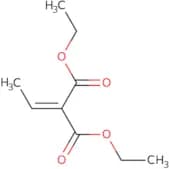
CAS:<p>Diethyl 2-ethylidenemalonate (DEEM) is a synthetic chemical that is used as an intermediate in the production of pharmaceuticals. It is a white solid and has a melting point of about 143°C. DEEM has been shown to be carcinogenic in rats, although it does not produce lung tumors. It also acts as an alkylating agent, which can lead to DNA mutations.</p>Formula:C9H14O4Purity:Min. 95%Molecular weight:186.21 g/mol1-Cyclohexylbutan-1-one
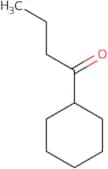
CAS:<p>1-Cyclohexylbutan-1-one is a white crystalline solid with a benzyl, methoxy, and oxime group. It is used in the production of pharmaceuticals and other chemical products. The chemical has been shown to be an alkylene, methylthio, nitro, and alicyclic compound that can undergo oxidation or reduction reactions. 1-Cyclohexylbutan-1-one also contains a polyunsaturated ring that can react with chloroacetanilides to produce phenylethyl and phenyl rings.</p>Formula:C10H18OPurity:Min. 95%Molecular weight:154.25 g/mol1-Bromo-2-(chloromethoxy)ethane
CAS:<p>Versatile small molecule scaffold</p>Formula:C3H6BrClOPurity:Min. 95%Molecular weight:173.43 g/mol2-(Dodecylsulfanyl)ethan-1-ol
CAS:<p>Versatile small molecule scaffold</p>Formula:C14H30OSPurity:Min. 95%Molecular weight:246.45 g/molethyl 3-(tert-butylamino)propanoate
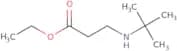
CAS:Ethyl 3-(tert-butylamino)propanoate is an analyte that can be switched between two different states. It is a solvent that has been used in the field of microextraction to maximize and optimize the efficiency of gas chromatography. This compound has also been shown to be influential on parameters such as inorganic solvents, large-scale preconcentration, and fields.Formula:C9H19NO2Purity:Min. 95%Molecular weight:173.3 g/mol1-(4-Bromophenyl)-2-methylpropan-2-amine hydrochloride
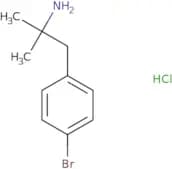
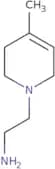
CAS:Controlled Product<p>Versatile small molecule scaffold</p>Formula:C10H15BrClNPurity:Min. 95%Molecular weight:264.59 g/mol2-(4-Methyl-1,2,3,6-tetrahydropyridin-1-yl)ethan-1-amine
CAS:<p>Versatile small molecule scaffold</p>Formula:C8H16N2Purity:Min. 95%Molecular weight:140.23 g/mol2-[4-(Benzyloxy)-1H-indol-3-yl]acetic acid
CAS:Versatile small molecule scaffoldFormula:C17H15NO3Purity:Min. 95%Molecular weight:281.3 g/molN-(Prop-2-yn-1-yl)benzamide
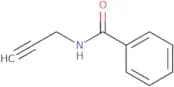
CAS:<p>N-(Prop-2-yn-1-yl)benzamide is a potential drug for the treatment of Parkinson's disease. It has been shown to be an effective inhibitor of the enzyme tyrosine hydroxylase and is able to reduce dopamine levels in animals. N-(Prop-2-yn-1-yl)benzamide has also been shown to have antiinflammatory properties, which may be due to its ability to inhibit cyclooxygenase activity. This drug can be synthesized by a stepwise process starting with propargylamine and benzoyl chloride. The x-ray crystallography studies conducted on this compound show that it is a mononuclear arene with a crystallographic symmetry of C2v. The oxidized form of this molecule shows high reactivity towards electron rich aromatic compounds, such as ferrocene, which may explain its ability to catalyze the oxidation reactions of electron poor arenes such as isoindolines.</p>Formula:C10H9NOPurity:Min. 95%Molecular weight:159.18 g/mol3-(Chloromethyl)-4-methylpyridine hydrochloride
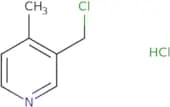
CAS:Versatile small molecule scaffoldFormula:C7H9Cl2NPurity:Min. 95%Molecular weight:178.06 g/mol6-Methylbenzo[b]thiophene-2-carboxylic acid
CAS:Mebendazole is a benzimidazole anthelmintic drug that inhibits the growth of worms by binding to the benzimidazole-sensitive sites on the worm's nervous system. Mebendazole has been shown to be a potent and selective antagonist at the benzimidazole-sensitive site of the GABA receptor. This activity has been confirmed in vitro and in animal models, where it blocked convulsions induced by pentylenetetrazol. Mebendazole is also orally active, but modifications are needed to optimize its oral bioavailability and dosing. Mebendazole has been shown to have significant activity against some human parasites, including Entamoeba histolytica, Trichuris trichiura, and Giardia lamblia. In vivo studies have shown that mebendazole is well tolerated in humans when taken orally.Formula:C10H8O2SPurity:Min. 95%Molecular weight:192.24 g/mol6-(Carbamoylamino)hexanoic acid
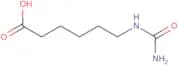
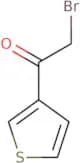
CAS:<p>6-(Carbamoylamino)hexanoic acid (6ACA) is a synlett that has been shown to be a potent and selective inhibitor of Hsp70. It is functional as a modulator through the interaction with the zinc-binding site, which inhibits ATPase activity. This molecule also acts as a lead molecule for the development of therapeutic agents against various diseases such as cancer, diabetes, and neurodegenerative disorders. The compound has been shown to have catalytic activity in acidic conditions and shows high stereoselectivity in multicomponent reactions.</p>Formula:C7H14N2O3Purity:Min. 95%Molecular weight:174.2 g/mol3-(Bromoacetyl)thiophene
CAS:<p>3-(Bromoacetyl)thiophene is a chromophore that can be used as an antibacterial agent. It has potent inhibitory effects on bacteria, which are caused by the ring-opening of the thiophene ring in the presence of irradiation. 3-(Bromoacetyl)thiophene can also be used in electrochemical polymerization and cyclic voltammetry. In addition, it has been shown to have an inhibitory effect on dehydrogenase enzymes, which are important for energy production in cells. This compound is fluorescent and can be detected using electrochemical impedance spectroscopy (EIS).</p>Formula:C6H5BrOSPurity:Min. 95%Molecular weight:205.07 g/mol5,6-Dihydrobenzo[b]thiophen-7(4H)-one
CAS:<p>5,6-Dihydrobenzo[b]thiophen-7(4H)-one is a sulfur-containing heterocycle that has been shown in studies to have cytotoxic activity. This compound has been found to induce apoptosis (programmed cell death) in cancer cells by binding to the protein kinase B (PKB/Akt), which is involved in the regulation of cell proliferation and survival. 5,6-Dihydrobenzo[b]thiophen-7(4H)-one also binds to DNA, preventing transcription and translation of proteins. The cytotoxic effects of this compound make it useful for treatment of ophthalmic conditions such as cataracts and glaucoma. This compound is being studied for use in the treatment of ovarian cancer and other types of cancer. It was recently shown that 5,6-dihydrobenzo[b]thiophen-7(4H)-one</p>Formula:C8H8OSPurity:Min. 95%Molecular weight:152.21 g/mol6-Chloro-2-thiatricyclo[9.4.0.0,3,8]pentadeca-1(15),3,5,7,11,13-hexaen-9-one
CAS:<p>Versatile small molecule scaffold</p>Formula:C14H9ClOSPurity:Min. 95%Molecular weight:260.7 g/molBicyclo[4.2.0]octa-1(6),2,4-triene-7-carbonyl chloride
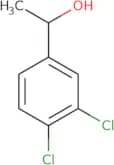
CAS:<p>Versatile small molecule scaffold</p>Formula:C9H7ClOPurity:Min. 95%Molecular weight:166.6 g/mol1-(3,4-Dichlorophenyl)ethanol
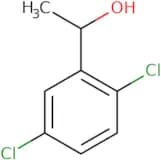
CAS:<p>1-(3,4-Dichlorophenyl)ethanol is a metabotropic glutamate receptor antagonist that has been shown to have strong affinity for the mGlu2 receptor. It is a potent antagonist of the mGlu2 receptor and displays high affinity for this receptor. The discovery of 1-(3,4-Dichlorophenyl)ethanol led to the discovery of other compounds with similar pharmacological profiles. This drug has been shown to be an agonist of the metabotropic glutamate receptors. 1-(3,4-Dichlorophenyl)ethanol has been used in studies investigating its use as a treatment for schizophrenia, obsessive compulsive disorder and depression.</p>Formula:C8H8Cl2OPurity:Min. 95%Molecular weight:191.05 g/mol1-(2,5-Dichlorophenyl)ethanol
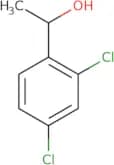
CAS:<p>Versatile small molecule scaffold</p>Formula:C8H8Cl2OPurity:Min. 95%Molecular weight:191.06 g/mol2,4-Dichloro-±-methylbenzyl Alcohol
CAS:<p>2,4-Dichloro-±-methylbenzyl Alcohol is a metabolite of 2,4-dichlorobenzyl alcohol (2,4-DCBA) and is used as an antifungal drug. It has been shown to inhibit the growth of fungi by blocking octanoyl and pentyl groups in the synthesis of fatty acids. The metabolites are formed from 2,4-DCBA when it is activated by cytochrome P450 enzymes or monooxygenase. This compound also has a B1 chiral center that can exist in two forms: erythro and threo. The enantiomers have different effects on certain organisms.<br>2,4-Dichloro-±-methylbenzyl Alcohol is one of the metabolites formed from 2,4-dichlorobenzyl alcohol (2,4-DCBA). It has been shown to inhibit the growth of fungi by blocking octanoy</p>Formula:C8H8Cl2OPurity:Min. 95%Molecular weight:191.05 g/mol



![2-[4-(Benzyloxy)-1H-indol-3-yl]acetic acid](/_next/image/?url=https%3A%2Fstatic.cymitquimica.com%2Fproducts%2F3D%2Fthumb-webp%2FBAA46412.webp&w=3840&q=75)
![6-Methylbenzo[b]thiophene-2-carboxylic acid](/_next/image/?url=https%3A%2Fstatic.cymitquimica.com%2Fproducts%2F3D%2Fthumb-webp%2FBAA46786.webp&w=3840&q=75)
![5,6-Dihydrobenzo[b]thiophen-7(4H)-one](/_next/image/?url=https%3A%2Fstatic.cymitquimica.com%2Fproducts%2F3D%2Fthumb-webp%2FBAA46884.webp&w=3840&q=75)
![6-Chloro-2-thiatricyclo[9.4.0.0,3,8]pentadeca-1(15),3,5,7,11,13-hexaen-9-one](/_next/image/?url=https%3A%2Fstatic.cymitquimica.com%2Fproducts%2F3D%2Fthumb-webp%2FBAA46928.webp&w=3840&q=75)
![Bicyclo[4.2.0]octa-1(6),2,4-triene-7-carbonyl chloride](/_next/image/?url=https%3A%2Fstatic.cymitquimica.com%2Fproducts%2F3D%2Fthumb-webp%2FBAA47347.webp&w=3840&q=75)