


Building Blocks
This section contains fundamental products for the synthesis of organic and biological compounds. Building blocks are the essential starting materials used to construct complex molecules through various chemical reactions. They play a critical role in drug discovery, material science, and chemical research. At CymitQuimica, we offer a diverse range of high-quality building blocks to support your innovative research and industrial projects, ensuring you have the essential components for successful synthesis.
Subcategories of "Building Blocks"
- Boronic Acids & Boronic Acid Derivatives(5,778 products)
- Chiral Building Blocks(1,242 products)
- Hydrocarbon Building Blocks(6,098 products)
- Organic Building Blocks(61,084 products)
Found 198714 products of "Building Blocks"
Sort by
Purity (%)
0
100
|
0
|
50
|
90
|
95
|
100
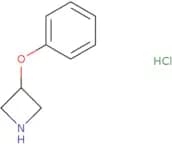
3-Azetidinyl phenyl ether hydrochloride
CAS:<p>Versatile small molecule scaffold</p>Formula:C9H12ClNOPurity:Min. 95%Molecular weight:185.66 g/molDFPM
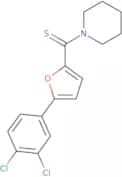
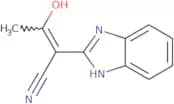
CAS:<p>DFPM is an organic compound with the chemical formula C8H6F3N. It has been shown to have a weak effect on the production of cytosolic Ca2+ in plant cells. DFPM also binds to and inhibits the activity of an unknown protein that is involved in regulating Ca2+ levels. The binding site for DFPM is located at the active site of this protein, which is located in the cytosol. The binding site for DFPM has not been identified.</p>Formula:C16H15Cl2NOSPurity:Min. 95%Molecular weight:340.27 g/mol2-(2,3-Dihydro-1H-1,3-benzodiazol-2-ylidene)-3-oxobutanenitrile
CAS:Versatile small molecule scaffoldFormula:C11H9N3OPurity:Min. 95%Molecular weight:199.21 g/molEthyl [(2-methyl-5-nitrophenyl)carbamoyl]formate
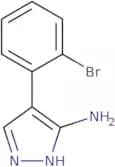
CAS:<p>Versatile small molecule scaffold</p>Formula:C11H12N2O5Purity:Min. 95%Molecular weight:252.22 g/mol4-(2-bromophenyl)-1H-pyrazol-5-amine
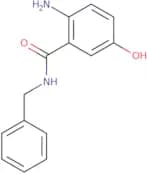
CAS:Versatile small molecule scaffoldFormula:C9H8BrN3Purity:Min. 95%Molecular weight:238.1 g/mol2-Amino-N-benzyl-5-hydroxybenzamide
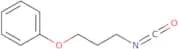
CAS:Versatile small molecule scaffoldFormula:C14H14N2O2Purity:Min. 95%Molecular weight:242.27 g/mol(3-Isocyanatopropoxy)benzene
CAS:<p>Versatile small molecule scaffold</p>Formula:C10H11NO2Purity:Min. 95%Molecular weight:177.2 g/mol({[3-(4-Bromophenyl)-1-phenyl-1H-pyrazol-4-yl]methyl}sulfanyl)methanimidamide hydrochloride
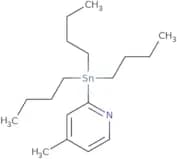
CAS:Versatile small molecule scaffoldFormula:C17H16BrClN4SPurity:Min. 95%Molecular weight:423.8 g/mol4-Methyl-2-(tributylstannyl)pyridine
CAS:Controlled Product<p>Versatile small molecule scaffold</p>Formula:C18H33NSnPurity:Min. 95%Molecular weight:382.18 g/molethyl 3-(cyanomethyl)pyridine-2-carboxylate
CAS:Versatile small molecule scaffoldFormula:C10H10N2O2Purity:Min. 95%Molecular weight:190.2 g/molN-(1H-benzo[d]imidazol-2-yl)-3-nitrobenzamide
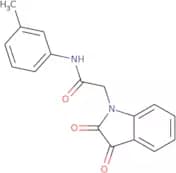
CAS:N-(1H-benzo[d]imidazol-2-yl)-3-nitrobenzamide is a nonsteroidal compound that inhibits the activity of certain kinases involved in the inflammatory response. It has been shown to reduce inflammation and modulate immune responses, as well as regulate immune cells. N-(1H-benzo[d]imidazol-2-yl)-3-nitrobenzamide also has a regulatory effect on nitrogen metabolism and participates in the regulation of cell proliferation. This drug may be useful for treating diseases related to immunology, such as chronic obstructive pulmonary disease or arthritis.Formula:C14H10N4O3Purity:Min. 95%Molecular weight:282.25 g/mol2-(2,3-Dioxo-2,3-dihydro-1H-indol-1-yl)-N-(3-methylphenyl)acetamide
CAS:Versatile small molecule scaffoldFormula:C17H14N2O3Purity:Min. 95%Molecular weight:294.3 g/mol3-(2-Aminoethyl)-5-[(4-fluorophenyl)methylidene]-1,3-thiazolidine-2,4-dione hydrochloride
CAS:Versatile small molecule scaffoldFormula:C12H12ClFN2O2SPurity:Min. 95%Molecular weight:302.75 g/mol4-[(4-Chlorophenyl)thio]-3,5-dimethyl-1H-pyrazole
CAS:<p>Versatile small molecule scaffold</p>Formula:C11H11ClN2SPurity:Min. 95%Molecular weight:238.74 g/mol4-(Imidazo[1,2-a]pyridin-2-ylmethoxy)benzoic acid
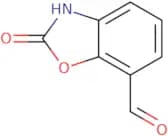
CAS:<p>4-(Imidazo[1,2-a]pyridin-2-ylmethoxy)benzoic acid is a white crystalline compound. It is an impurity in the drug product, 4-(Imidazo[1,2-a]pyridin-2-ylmethoxy)benzoic acid hydrochloride. This impurity has been shown to be a natural component of the API. It has also been synthesized for research and development purposes. The CAS number for this compound is 301860-84-4.</p>Formula:C15H12N2O3Purity:Min. 95%Molecular weight:268.27 g/mol2-Oxo-2,3-dihydro-1,3-benzoxazole-7-carbaldehyde
CAS:<p>Versatile small molecule scaffold</p>Formula:C8H5NO3Purity:Min. 95%Molecular weight:163.13 g/mol6-Bromo-3-methylthieno[3,2-b]thiophene-2-carboxylic acid
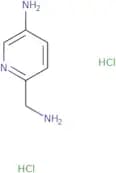
CAS:6-Bromo-3-methylthieno[3,2-b]thiophene-2-carboxylic acid (MTTC) is a synthetic drug that is used to treat gastrointestinal inflammation and metabolic disorders. MTTC has been shown to interact with other drugs, such as the potential interaction of MTTC with omeprazole or the interaction of MTTC with an oral contraceptive. The effects of MTTC on patients with autoimmune diseases are not well understood. There have been reports of liver damage and bowel disease in some patients. Patients should be monitored for any signs of bowel disease, lipid levels, and liver function during treatment with this drug. br>br> In vivo studies have found that MTTC stimulates the production of prostaglandins and leukotrienes in colonic epithelial cells by inhibiting cyclooxygenase enzymes COX1 and COX2. This action can lead to oxidative stress, which may contribute toFormula:C8H5BrO2S2Purity:Min. 95%Molecular weight:277.2 g/mol6-(aminomethyl)pyridin-3-amine dihydrochloride
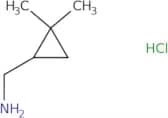
CAS:Versatile small molecule scaffoldFormula:C6H11Cl2N3Purity:Min. 95%Molecular weight:196.08 g/mol(2,2-Dimethylcyclopropyl)methanamine hydrochloride
CAS:<p>Versatile small molecule scaffold</p>Formula:C6H14ClNPurity:Min. 95%Molecular weight:135.63 g/mol[3-Chloro-4-(difluoromethoxy)-5-methoxyphenyl]methanol
CAS:<p>Versatile small molecule scaffold</p>Formula:C9H9ClF2O3Purity:Min. 95%Molecular weight:238.61 g/mol

![Ethyl [(2-methyl-5-nitrophenyl)carbamoyl]formate](/_next/image/?url=https%3A%2Fstatic.cymitquimica.com%2Fproducts%2F3D%2Fthumb-webp%2FBMA34450.webp&w=3840&q=75)
![({[3-(4-Bromophenyl)-1-phenyl-1H-pyrazol-4-yl]methyl}sulfanyl)methanimidamide hydrochloride](/_next/image/?url=https%3A%2Fstatic.cymitquimica.com%2Fproducts%2F3D%2Fthumb-webp%2FBMA65103.webp&w=3840&q=75)

![N-(1H-benzo[d]imidazol-2-yl)-3-nitrobenzamide](/_next/image/?url=https%3A%2Fstatic.cymitquimica.com%2Fproducts%2F3D%2Fthumb-webp%2FBMA67524.webp&w=3840&q=75)
![3-(2-Aminoethyl)-5-[(4-fluorophenyl)methylidene]-1,3-thiazolidine-2,4-dione hydrochloride](/_next/image/?url=https%3A%2Fstatic.cymitquimica.com%2Fproducts%2F3D%2Fthumb-webp%2FBMA84289.webp&w=3840&q=75)
![4-[(4-Chlorophenyl)thio]-3,5-dimethyl-1H-pyrazole](/_next/image/?url=https%3A%2Fstatic.cymitquimica.com%2Fproducts%2F3D%2Fthumb-webp%2FBMA85886.webp&w=3840&q=75)
![4-(Imidazo[1,2-a]pyridin-2-ylmethoxy)benzoic acid](/_next/image/?url=https%3A%2Fstatic.cymitquimica.com%2Fproducts%2F3D%2Fthumb-webp%2FBMA86084.webp&w=3840&q=75)
![6-Bromo-3-methylthieno[3,2-b]thiophene-2-carboxylic acid](/_next/image/?url=https%3A%2Fstatic.cymitquimica.com%2Fproducts%2F3D%2Fthumb-webp%2FBMB01153.webp&w=3840&q=75)
![[3-Chloro-4-(difluoromethoxy)-5-methoxyphenyl]methanol](/_next/image/?url=https%3A%2Fstatic.cymitquimica.com%2Fproducts%2F3D%2Fthumb-webp%2FBMB18397.webp&w=3840&q=75)