Building Blocks
This section contains fundamental products for the synthesis of organic and biological compounds. Building blocks are the essential starting materials used to construct complex molecules through various chemical reactions. They play a critical role in drug discovery, material science, and chemical research. At CymitQuimica, we offer a diverse range of high-quality building blocks to support your innovative research and industrial projects, ensuring you have the essential components for successful synthesis.
Subcategories of "Building Blocks"
- Boronic Acids & Boronic Acid Derivatives(5,778 products)
- Chiral Building Blocks(1,242 products)
- Hydrocarbon Building Blocks(6,098 products)
- Organic Building Blocks(61,034 products)
Found 199601 products of "Building Blocks"
Sort by
Purity (%)
0
100
|
0
|
50
|
90
|
95
|
100
2-[(1,3-Thiazol-4-ylmethyl)sulfanyl]acetic acid hydrochloride
CAS:<p>Versatile small molecule scaffold</p>Formula:C6H8ClNO2S2Purity:Min. 95%Molecular weight:225.7 g/mol2-Amino-4,6-dichloropyrimidine
CAS:<p>2-Amino-4,6-dichloropyrimidine is a chemical compound that has been used as a building block in the synthesis of other compounds. It has been shown to be useful for the preparation of 2-aminopyridine derivatives, which are used as an intermediate for research chemicals and pharmaceuticals. The compound has high purity and is available in bulk quantities.</p>Formula:C4H3Cl2N3Purity:Min. 95.0 Area-%Molecular weight:164.00 g/molRef: 3D-A-5370
1kgTo inquire5kgTo inquire10kgTo inquire500gTo inquire2500gTo inquire-Unit-kgkgTo inquirePargyline
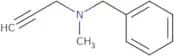
CAS:Controlled Product<p>Pargyline is a drug that belongs to the class of tricyclic antidepressants. It has inhibitory properties and acts as a monoamine oxidase inhibitor (MAOI). Pargyline inhibits the production of 5-hydroxytryptamine (5-HT) by inhibiting the activity of the enzyme, monoamine oxidase A. This inhibition leads to an increase in 5-HT concentrations in the brain, improving mood and alleviating depression. Pargyline also acts as an antagonist at 5-ht2 receptors and can be used for treating Parkinson's disease, which is caused by a decrease in dopamine levels. Pargyline has been shown to have low potency and does not inhibit the binding of compounds such as epidermal growth factor or interleukin 1β to their respective receptors.</p>Formula:C11H13NPurity:Min. 95%Molecular weight:159.23 g/mol(4-Nitrophenyl)urea
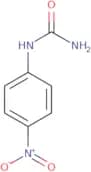
CAS:<p>4-Nitrophenyl Urea (4NPU) is a compound that has antimalarial activity. It is an intramolecular hydrogen transfer agent that forms a reactive intermediate and interacts with anions, such as hydroxide ions, to form covalent bonds. 4NPU inhibits growth factor-mediated cell toxicity and has been shown to have the ability to select for mutant cells in vitro and in vivo. Crystals of 4NPU belong to the monoclinic system with space group P2 1/c. Hydrogen bonding occurs between the nitrogen atom on the urea moiety and water molecules in the crystal lattice, which stabilizes the molecule's structure.</p>Formula:C7H7N3O3Purity:Min. 95%Molecular weight:181.15 g/mol4-(Methylamino)benzaldehyde
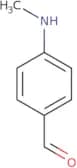
CAS:<p>4-(Methylamino)benzaldehyde (4-MABA) is a positron-emitting substance that has been used in positron emission tomography (PET) imaging. 4-MABA is synthesized by hydrolysis of copper(II) complexes with 4-aminobenzaldehyde. It can also be synthesized by reacting copper(II) salts with 4-methylaniline. This substance is stable in aqueous solution, but hydrolyzes readily in the presence of water to form copper(I). The most likely electron acceptor for this reaction is oxygen, which leads to the formation of a stable complex. For diagnostic purposes, radiolabeled 4-MABA can be used as an indicator for positron emission from various tissues and organs.</p>Formula:C8H9NOPurity:Min. 95%Molecular weight:135.16 g/mol[(Carbamoylamino)carbonyl]urea
CAS:<p>[(Carbamoylamino)carbonyl]urea (Urea) is a reactive compound that can be found in urine, saliva, and sweat. Urea is used as an active methylene group in the synthesis of polyurethane. It can be synthesized by reacting hydrochloric acid with calcium carbonate and carbonyl oxygens. The chemical formula for urea is NH2CONH2. The molecular weight of urea is 60.06 g/mol. Hydrolysis of urea produces ammonia and carbon dioxide, which are both gases at room temperature. Reaction products include ammonia, carbon dioxide, water, and hydrogen cyanide. The pH of urea ranges from 6 to 9 when in solution or solid form, depending on the concentration of the compound. Urea has been shown to produce fatty acids when heated above 300 degrees Celsius.</p>Formula:C3H6N4O3Purity:Min. 95%Molecular weight:146.11 g/mol1-Monotetranoin
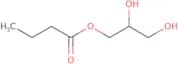
CAS:<p>1-Monotetranoin is a fatty ester that is involved in the process of lipolysis, which is the breakdown of fat cells. Lipolysis occurs when an enzyme called lipase hydrolyzes triglycerides into glycerol and three fatty acids. 1-Monotetranoin has been shown to be a potent stimulator of growth factor production and cell proliferation in vivo models. It has also been shown to be effective at inhibiting angiogenic processes in vitro, including the release of growth factors from fat cells. The neutral pH optimum for 1-monotetranoin is between 7 and 8, which may be due to its hydrophobic nature.</p>Formula:C7H14O4Purity:Min. 95%Molecular weight:162.18 g/mol2,2-Dimethylcyclohexane-1,3-dione
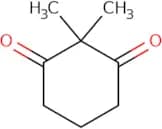
CAS:<p>2,2-Dimethylcyclohexane-1,3-dione is a compound that has been shown to be an intermediate in the taxol synthesis. It is an ester that can be alkylated and has been shown to have intramolecular or intermolecular alkylation through its ring system. The crystal structure analysis of this compound was done by x-ray diffraction and it was found to have key structural features for the synthesis of taxanes. 2,2-Dimethylcyclohexane-1,3-dione is used as an intermediate in the synthesis of taxol. It also shows enzymatic activity because it is a substrate for alcohol dehydrogenase. This molecule has been synthesized from different types of alcohols including methanol and ethanol via nitro reduction.</p>Formula:C8H12O2Purity:Min. 95%Molecular weight:140.18 g/mol2-Bromopropionyl bromide
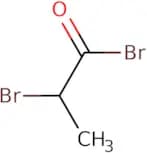
CAS:<p>2-Bromopropionyl Bromide is a brominating agent that can be used as a chemical intermediate for the synthesis of polymeric materials. The bromine atom on the propionic acid group reacts with hydroxyl groups to form esters, amides, and phenols. It has minimal toxicity in cell culture and is not cytotoxic at concentrations up to 10%. 2-Bromopropionyl Bromide is an effective macroinitiator for cationic polymerization reactions. The acylation reaction with 3-chloroperoxybenzoic acid yields a diazonium salt which reacts further with tetronic acid or other cross-linking agents to form a polymer film. This product can be used for fluorescence techniques because it emits light when excited by ultraviolet radiation.</p>Formula:C3H4Br2OPurity:Min. 95%Color and Shape:Clear LiquidMolecular weight:215.87 g/mol2,2-Dimethylpentan-3-one
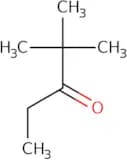
CAS:<p>2,2-Dimethylpentan-3-one is an enolate that is used as a synthetic intermediate in the synthesis of aldehydes. The optical and stereoselective properties of 2,2-dimethylpentan-3-one are due to its chiral center, which can be either R or S depending on the substituent effects. In this compound, the substituents are chloride and methoxy groups. These substituents have opposite effects on the reactivity in the molecule's enolate form. When chloride is present, it occupies an axial position with respect to the carbonyl group and therefore has a stabilizing effect on the molecule; this leads to lower reactivity. Methoxy groups occupy equatorial positions and have a destabilizing effect on the molecule by withdrawing electron density from its carbonyl group; this leads to higher reactivity.</p>Formula:C7H14OPurity:Min. 95%Molecular weight:114.19 g/mol4-(4-Fluorophenyl)-4-methylpentan-2-one
CAS:<p>Versatile small molecule scaffold</p>Formula:C12H15FOPurity:Min. 95%Molecular weight:194.24 g/mol1-Acetylisatin
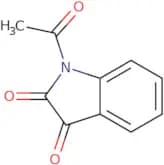
CAS:<p>1-Acetylisatin is an amine that has been shown to have antiinflammatory activity. The hydroxyl group on the 1-position reacts with malonic acid, yielding a diazonium salt. This reaction releases nitrogen gas and gives a carbostyril bound form. The carbostyril binds to inhibitor molecules, such as fatty acids, ethylene diamine and nitrogen atoms, which prevents them from reacting with each other.</p>Formula:C10H7NO3Purity:Min. 95%Molecular weight:189.17 g/mol1-Fluoronaphthalene-2-carboxylic acid
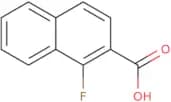
CAS:<p>1-Fluoronaphthalene-2-carboxylic acid is an organic compound with the formula CHFO. It is a white solid that is soluble in organic solvents. The methoxy group makes this compound reactive, meaning it can react with other compounds to form new compounds. 1-Fluoronaphthalene-2-carboxylic acid can be synthesized by reacting 2 equivalents of Grignard reagents with naphthalene, followed by hydrolysis of the ester group. This reaction yields a carboxylic acid with a fluorine atom attached to a carbon adjacent to the carboxyl group. 1-Fluoronaphthalene-2-carboxylic acid has been used as both an imidoester and nucleophilic reagent in organic chemistry.</p>Formula:C11H7FO2Purity:Min. 95%Molecular weight:190.17 g/mol3-Fluoronaphthalene-1-carboxylic acid
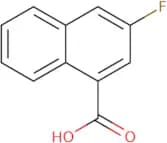
CAS:<p>Versatile small molecule scaffold</p>Formula:C11H7FO2Purity:Min. 95%Molecular weight:190.17 g/molN-Butyl-4-chloro-2-hydroxybenzamide
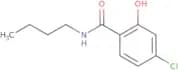
CAS:<p>N-Butyl-4-chloro-2-hydroxybenzamide is a hydroxyl analog of the drug clobetasol. It has been used to treat bowel disease, and as an implanting agent in biological studies. It also has anti-inflammatory properties, which may be due to its inhibition of prostaglandin synthesis. N-Butyl-4-chloro-2-hydroxybenzamide can be used for the treatment of microbial infections such as infectious diseases caused by Mycobacterium tuberculosis or Escherichia coli. The drug has also been shown to have antiocclusive effects on the intestines and to reduce intestinal secretions. N-Butyl-4-chloro-2 hydroxybenzamide is taken orally and it is metabolized in the liver by CYP3A4 enzymes.</p>Formula:C11H14ClNO2Purity:Min. 95%Molecular weight:227.69 g/mol2,4,6-Trichlorophenoxyacetic acid
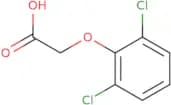
CAS:<p>2,4,6-Trichlorophenoxyacetic acid (2,4,6-T) is an alkanoic acid that has been shown to have allelopathic activity. It inhibits the transport of substances across cell membranes and also disrupts the function of lipid bilayers. 2,4,6-T has been shown to be toxic to animals in large quantities and can cause death after oral ingestion. This chemical undergoes biotransformation through a number of metabolic reactions including decarboxylation, glucuronidation conjugation with glucuronic acid or sulfate conjugation with sulfuric acid and amino acids. These metabolites are excreted through urine, bile or feces. 2,4,6-T also binds to proteins in the liver and kidneys where it may interfere with protein synthesis in these tissues.</p>Formula:C8H5Cl3O3Purity:Min. 95%Molecular weight:255.48 g/mol2-(2,6-dichlorophenoxy)acetic Acid
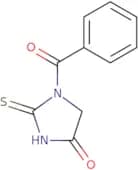
CAS:<p>2-(2,6-Dichlorophenoxy)acetic Acid is a hydrogen peroxide generating compound that is used to synthesize acetone. This drug is also used in medicine as an antiarrythmic agent. 2-(2,6-Dichlorophenoxy)acetic Acid is synthesized by the reaction of chloroacetate with hydroxylated acetone. The drug has been shown to be effective against refluxed esophagitis and peptic ulcers, as well as in the treatment of cardiac arrhythmias. It is also used for the synthesis of a number of drugs including aminopyrine, acetaminophen and phenacetin.</p>Formula:C8H6O3Cl2Purity:Min. 95%Molecular weight:221.03 g/mol1-Benzoyl-2-sulfanylideneimidazolidin-4-one
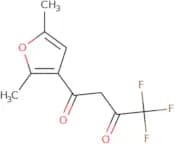
CAS:<p>1-Benzoyl-2-sulfanylideneimidazolidin-4-one is a chemical.</p>Formula:C10H8N2O2SPurity:Min. 95%Molecular weight:220.25 g/mol1-(2,5-Dimethylfuran-3-yl)-4,4,4-trifluorobutane-1,3-dione
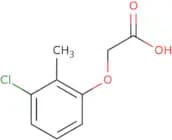
CAS:<p>Versatile small molecule scaffold</p>Formula:C10H9F3O3Purity:Min. 95%Molecular weight:234.17 g/mol2-(3-Chloro-2-methylphenoxy)acetic acid
CAS:<p>2-(3-Chloro-2-methylphenoxy)acetic acid is an alkali metal salt that is soluble in water. It has a centrosymmetric, symmetric and ligand environment. Its coordination number is 2. The crystallographic environment is anion, polymeric and dimeric. The crystal structure of 2-(3-chloro-2-methylphenoxy)acetic acid is a hydrated hydrogen bond polyhedra.</p>Formula:C9H9ClO3Purity:Min. 95%Molecular weight:200.62 g/mol
![2-[(1,3-Thiazol-4-ylmethyl)sulfanyl]acetic acid hydrochloride](/_next/image/?url=https%3A%2Fstatic.cymitquimica.com%2Fproducts%2F3D%2Fthumb-webp%2FYGC03433.webp&w=3840&q=75)


![[(Carbamoylamino)carbonyl]urea](/_next/image/?url=https%3A%2Fstatic.cymitquimica.com%2Fproducts%2F3D%2Fthumb-webp%2FAAA55699.webp&w=3840&q=75)