Building Blocks
This section contains fundamental products for the synthesis of organic and biological compounds. Building blocks are the essential starting materials used to construct complex molecules through various chemical reactions. They play a critical role in drug discovery, material science, and chemical research. At CymitQuimica, we offer a diverse range of high-quality building blocks to support your innovative research and industrial projects, ensuring you have the essential components for successful synthesis.
Subcategories of "Building Blocks"
- Boronic Acids & Boronic Acid Derivatives(5,756 products)
- Chiral Building Blocks(1,242 products)
- Hydrocarbon Building Blocks(6,095 products)
- Organic Building Blocks(61,038 products)
Found 196817 products of "Building Blocks"
Sort by
Purity (%)
0
100
|
0
|
50
|
90
|
95
|
100
3-Hydrazino-2-nitropyridine
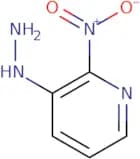
CAS:<p>3-Hydrazino-2-nitropyridine is a hormone that regulates the production of gonadotropins and sex hormones. It has been shown to have an inhibitory effect on the production of gonadotropins, which are involved in the regulation of reproduction. 3-Hydrazino-2-nitropyridine is a diffusible molecule that can be contacted with a variety of metal ions, such as zinc and copper. It also binds to alkaline surfaces and has been used to prepare low yield preparations. It has been found to have receptor antagonist activity against pyridynes and nondiffusible properties.</p>Formula:C5H6N4O2Purity:Min. 95%Molecular weight:154.13 g/mol3-Oxo-2-(pyridin-2-yl)butanenitrile
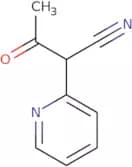
CAS:<p>3-Oxo-2-(pyridin-2-yl)butanenitrile is a chemical compound that can be found in the natural environment. The molecule contains a nitrogen atom, and has an electron donating substituent on the side chain of the ring. 3-Oxo-2-(pyridin-2-yl)butanenitrile has been shown to have a chemical shift of 11.6 ppm and can be seen as an acceptor in proton NMR spectra. The molecule is tautomeric, meaning it exists in two forms: one where the nitrile group is attached to the oxygen atom of the pyridine ring and another where it is attached to the nitrogen atom. This molecule can also be classified as a heterocyclic compound because it has at least one heteroatom with at least two different atoms within its ring system.</p>Formula:C9H8N2OPurity:Min. 95%Molecular weight:160.17 g/mol1-(4-Chlorophenyl)-3-(prop-2-yn-1-yl)urea
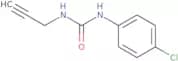
CAS:<p>Versatile small molecule scaffold</p>Formula:C10H9ClN2OPurity:Min. 95%Molecular weight:208.64 g/molNauclefine
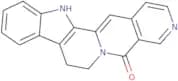
CAS:<p>Nauclefine is an analog of nifedipine that has been shown to have anticancer properties. It works by binding to a protein found in urine and blocking the activity of kinases, which are enzymes that play a role in cancer cell growth and survival. Nauclefine has been studied extensively in Chinese medicine for its ability to induce apoptosis, or programmed cell death, in tumor cells. It is also being investigated as a potential inhibitor of human kinases involved in cancer progression. Nauclefine has shown promising results as an anticancer agent and may prove to be a valuable tool in the fight against cancer.</p>Formula:C18H13N3OPurity:Min. 95%Molecular weight:287.3 g/mol3,6-Diiodo-9H-carbazole
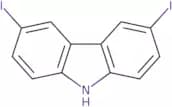
CAS:<p>3,6-Diiodo-9H-carbazole is an activated carbazole that can be used to prepare polyvinyl chloride. It reacts with iodide ions in a reaction that produces 3,6-diiodo-9H-carbazole iodide. This compound has been shown to have good transport properties and can be used as a fluorescent probe for the detection of amines. 3,6-Diiodo-9H-carbazole also has been found to react with amines at room temperature and above, forming diazo compounds and other products. 3,6-Diiodo-9H-carbazole has been shown to have an adverse effect on marine ecosystems as it binds to chlorides and forms insoluble compounds.</p>Formula:C12H7I2NPurity:Min. 95%Molecular weight:418.99 g/mol9-Ethyl-9H-carbazole-3-carbonitrile
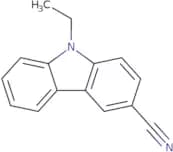
CAS:<p>Versatile small molecule scaffold</p>Formula:C15H12N2Purity:Min. 95%Molecular weight:220.27 g/mol2-[5-(2-Hydroxyethanesulfonyl)pentanesulfonyl]ethan-1-ol
CAS:<p>Versatile small molecule scaffold</p>Formula:C9H20O6S2Purity:Min. 95%Molecular weight:288.4 g/molBicyclo[2.2.1]heptane-2-carboximidamide hydrochloride
CAS:<p>Versatile small molecule scaffold</p>Formula:C8H15ClN2Purity:Min. 95%Molecular weight:174.67 g/mol[(3-Chlorophenyl)methyl][2-(dimethylamino)ethyl]amine
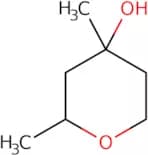
CAS:<p>Versatile small molecule scaffold</p>Formula:C11H17ClN2Purity:Min. 95%Molecular weight:212.72 g/mol2,4-Dimethyloxan-4-ol
CAS:<p>Versatile small molecule scaffold</p>Formula:C7H14O2Purity:Min. 95%Molecular weight:130.18 g/mol5-(Ethylsulfanyl)pent-1-yne
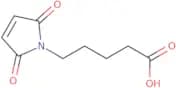
CAS:<p>Versatile small molecule scaffold</p>Formula:C7H12SPurity:Min. 95%Molecular weight:128.2 g/mol5-(2,5-Dioxo-2,5-dihydro-1H-pyrrol-1-yl)pentanoic acid
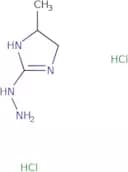
CAS:<p>Versatile small molecule scaffold</p>Formula:C9H11NO4Purity:Min. 95%Molecular weight:197.19 g/mol2-Hydrazinyl-4-methyl-4,5-dihydro-1H-imidazole dihydrochloride
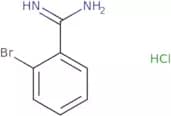
CAS:<p>Versatile small molecule scaffold</p>Formula:C4H12Cl2N4Purity:Min. 95%Molecular weight:187.07 g/mol2-Bromobenzenecarboximidamide hydrochloride
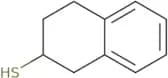
CAS:<p>Versatile small molecule scaffold</p>Formula:C7H7BrN2·HClPurity:Min. 95%Molecular weight:235.51 g/mol1,2,3,4-Tetrahydronaphthalene-2-thiol
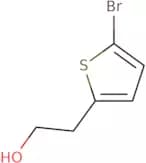
CAS:<p>Versatile small molecule scaffold</p>Formula:C10H12SPurity:Min. 95%Molecular weight:164.27 g/mol2-(5-Bromothiophen-2-yl)ethan-1-ol
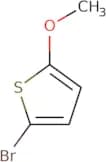
CAS:<p>Versatile small molecule scaffold</p>Formula:C6H7BrOSPurity:Min. 95%Molecular weight:207.09 g/mol2-Bromo-5-methoxythiophene
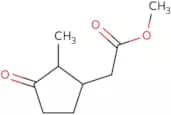
CAS:<p>2-Bromo-5-methoxythiophene is a fluorophore used to study the photochemical reactions of organic molecules. It has been shown to exhibit an intramolecular reaction with methanol, which can be used for detection and identification of this compound. The synthesis of 2-bromo-5-methoxythiophene is achieved by reacting bromine and methoxybenzene in the presence of potassium carbonate. It can be detected using fluorescence spectroscopy or chemiluminescence measurements. This compound exhibits solvatochromism, which means that its emission wavelength changes depending on the solvent used. In addition, it has been shown to have a low toxicity and good stability in water and air.</p>Formula:C5H5OSBrPurity:Min. 95%Molecular weight:193.06 g/molMethyl 2-(2-methyl-3-oxocyclopentyl)acetate
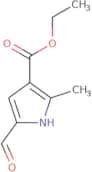
CAS:<p>Versatile small molecule scaffold</p>Formula:C9H14O3Purity:Min. 95%Molecular weight:170.21 g/molEthyl 5-formyl-2-methyl-1H-pyrrole-3-carboxylate
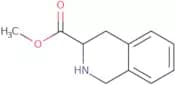
CAS:<p>Versatile small molecule scaffold</p>Formula:C9H11NO3Purity:Min. 95%Molecular weight:181.19 g/molMethyl 1,2,3,4-tetrahydroisoquinoline-3-carboxylate
CAS:<p>Versatile small molecule scaffold</p>Formula:C11H13NO2Purity:Min. 95%Molecular weight:191.23 g/mol

![2-[5-(2-Hydroxyethanesulfonyl)pentanesulfonyl]ethan-1-ol](/_next/image/?url=https%3A%2Fstatic.cymitquimica.com%2Fproducts%2F3D%2Fthumb-webp%2FHCA10056.webp&w=3840&q=75)
![Bicyclo[2.2.1]heptane-2-carboximidamide hydrochloride](/_next/image/?url=https%3A%2Fstatic.cymitquimica.com%2Fproducts%2F3D%2Fthumb-webp%2FHCA09770.webp&w=3840&q=75)
![[(3-Chlorophenyl)methyl][2-(dimethylamino)ethyl]amine](/_next/image/?url=https%3A%2Fstatic.cymitquimica.com%2Fproducts%2F3D%2Fthumb-webp%2FHCA09508.webp&w=3840&q=75)