Building Blocks
This section contains fundamental products for the synthesis of organic and biological compounds. Building blocks are the essential starting materials used to construct complex molecules through various chemical reactions. They play a critical role in drug discovery, material science, and chemical research. At CymitQuimica, we offer a diverse range of high-quality building blocks to support your innovative research and industrial projects, ensuring you have the essential components for successful synthesis.
Subcategories of "Building Blocks"
- Boronic Acids & Boronic Acid Derivatives(5,778 products)
- Chiral Building Blocks(1,242 products)
- Hydrocarbon Building Blocks(6,098 products)
- Organic Building Blocks(61,092 products)
Found 199296 products of "Building Blocks"
Sort by
Purity (%)
0
100
|
0
|
50
|
90
|
95
|
100
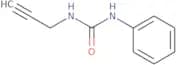
1-Phenyl-3-(prop-2-yn-1-yl)urea
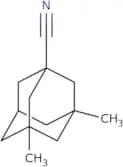
CAS:<p>Versatile small molecule scaffold</p>Formula:C10H10N2OPurity:Min. 95%Molecular weight:174.2 g/mol3,5-Dimethyladamantane-1-carbonitrile
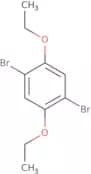
CAS:Versatile small molecule scaffoldFormula:C13H19NPurity:Min. 95%Molecular weight:189.3 g/mol1,4-Dibromo-2,5-diethoxybenzene
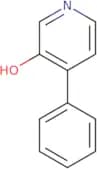
CAS:<p>Versatile small molecule scaffold</p>Formula:C10H12Br2O2Purity:Min. 95%Molecular weight:324.01 g/mol4-Phenylpyridin-3-ol
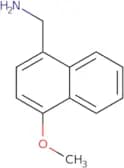
CAS:<p>Versatile small molecule scaffold</p>Formula:C11H9NOPurity:Min. 95%Molecular weight:171.19 g/mol4-Methoxynaphthalen-1-ylmethylamine
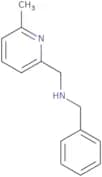
CAS:Versatile small molecule scaffoldFormula:C12H13NOPurity:Min. 95%Molecular weight:187.24 g/molBenzyl-(6-methyl-pyridin-2-ylmethyl)-amine
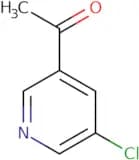
CAS:Versatile small molecule scaffoldFormula:C14H16N2Purity:Min. 95%Molecular weight:212.3 g/mol1-(5-Chloropyridin-3-yl)ethanone
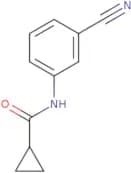
CAS:<p>Versatile small molecule scaffold</p>Formula:C7H6NOClPurity:Min. 95%Molecular weight:155.58 g/molN-(3-Cyanophenyl)cyclopropanecarboxamide
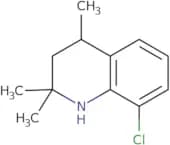
CAS:Versatile small molecule scaffoldFormula:C11H10N2OPurity:Min. 95%Molecular weight:186.21 g/mol8-Chloro-2,2,4-trimethyl-1,2,3,4-tetrahydroquinoline
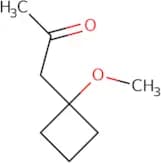
CAS:Versatile small molecule scaffoldFormula:C12H16ClNPurity:Min. 95%Molecular weight:209.71 g/mol1-(1-Methoxycyclobutyl)propan-2-one
CAS:<p>Versatile small molecule scaffold</p>Formula:C8H14O2Purity:Min. 95%Molecular weight:142.2 g/mol1-[4-(Difluoromethoxy)-3-methoxyphenyl]ethan-1-one
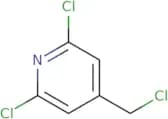
CAS:<p>Versatile small molecule scaffold</p>Formula:C10H10F2O3Purity:Min. 95%Molecular weight:216.18 g/mol2,6-Dichloro-4-(chloromethyl)pyridine
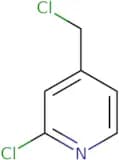
CAS:<p>Versatile small molecule scaffold</p>Formula:C6H4Cl3NPurity:Min. 95%Molecular weight:196.46 g/mol2-Chloro-4-(chloromethyl)pyridine
CAS:<p>2-Chloro-4-(chloromethyl)pyridine is an inhibitor of lipoxygenase, which is an enzyme that catalyzes the conversion of polyunsaturated fatty acids to hydroperoxides. 2-Chloro-4-(chloromethyl)pyridine inhibits the activation of these fatty acids by blocking the reaction with hydrogen chloride and nitrite, thereby reducing inflammation and pain. 2-Chloro-4-(chloromethyl)pyridine also has a neutralizing effect on inorganic bases such as ammonia.</p>Formula:C6H5Cl2NPurity:Min. 95%Molecular weight:162.02 g/mol2-Amino-1-cyclohexylpropan-1-ol
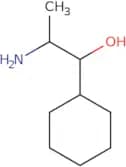
CAS:<p>2-Amino-1-cyclohexylpropan-1-ol is an organic compound that belongs to the group of aromatic amino acids. It is a precursor to other chemicals, such as ethylene glycol and phenylglycine. 2-Amino-1-cyclohexylpropan-1-ol can be used as a catalyst for the reduction of ethylmalonic acid. Catalytic reduction of ethylmalonic acid produces acetaldehyde, which can be used in the production of acrylic acid and polymers. 2-Amino-1-cyclohexylpropan-1h has been shown to yield higher yields than catalytic reduction with rhodium or platinum metals.</p>Formula:C9H19NOPurity:Min. 95%Molecular weight:157.25 g/mol5-Amino-N-(2-chlorophenyl)-2-methoxybenzene-1-sulfonamide
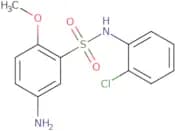
CAS:Controlled Product5-Amino-N-(2-chlorophenyl)-2-methoxybenzene-1-sulfonamide is a reagent for the study of protein interactions and ion channels. It can be used as a research tool for cell biology, pharmacology, and receptor research. 5-Amino-N-(2-chlorophenyl)-2-methoxybenzene-1-sulfonamide has been shown to bind to an antibody. This compound is a ligand or activator that binds to receptors. The chemical name of this compound is (5R*,6R*)-N-[(5S*,6S*)-6-[(5R*,6R*)-5-(aminomethyl)-2,4,6-trimethylphenyl]-3,3'-dimethylbicyclo[3.1.0]hexan]-6'-carboxamide hydrochloride monohydrate. ItFormula:C13H13ClN2O3SPurity:Min. 95%Molecular weight:312.77 g/mol2-Chloro-N-(pentan-2-yl)acetamide
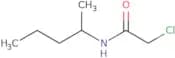
CAS:<p>Versatile small molecule scaffold</p>Formula:C7H14ClNOPurity:Min. 95%Molecular weight:163.64 g/mol2-Chloro-N-[4-(4-propylphenyl)-1,3-thiazol-2-yl]acetamide
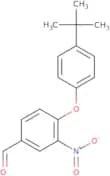
CAS:Versatile small molecule scaffoldFormula:C14H15ClN2OSPurity:Min. 95%Molecular weight:294.8 g/mol4-(4-tert-Butylphenoxy)-3-nitrobenzaldehyde
CAS:Versatile small molecule scaffoldFormula:C17H17NO4Purity:Min. 95%Molecular weight:299.32 g/mol1-[4-(Morpholine-4-sulfonyl)-2-nitrophenyl]piperidine-4-carboxylic acid
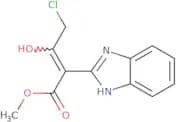
CAS:Controlled Product1-[4-(Morpholine-4-sulfonyl)-2-nitrophenyl]piperidine-4-carboxylic acid is a research tool that has been used to study the mechanism of ion channels and ligand binding. It also has been shown to be an antagonist for the nicotinic acetylcholine receptor, which may be due to its ability to bind competitively to the receptor site and prevent acetylcholine from binding. This compound has not been observed to have any effects on protein synthesis or cell proliferation.Formula:C16H21N3O7SPurity:Min. 95%Molecular weight:399.4 g/molMethyl 4-chloro-2-(2,3-dihydro-1H-1,3-benzodiazol-2-ylidene)-3-oxobutanoate
CAS:Versatile small molecule scaffoldFormula:C12H11ClN2O3Purity:Min. 95%Molecular weight:266.68 g/mol

![1-[4-(Difluoromethoxy)-3-methoxyphenyl]ethan-1-one](/_next/image/?url=https%3A%2Fstatic.cymitquimica.com%2Fproducts%2F3D%2Fthumb-webp%2FBEA97520.webp&w=3840&q=75)
![2-Chloro-N-[4-(4-propylphenyl)-1,3-thiazol-2-yl]acetamide](/_next/image/?url=https%3A%2Fstatic.cymitquimica.com%2Fproducts%2F3D%2Fthumb-webp%2FBEB15139.webp&w=3840&q=75)
![1-[4-(Morpholine-4-sulfonyl)-2-nitrophenyl]piperidine-4-carboxylic acid](/_next/image/?url=https%3A%2Fstatic.cymitquimica.com%2Fproducts%2F3D%2Fthumb-webp%2FBEB15151.webp&w=3840&q=75)