


Building Blocks
This section contains fundamental products for the synthesis of organic and biological compounds. Building blocks are the essential starting materials used to construct complex molecules through various chemical reactions. They play a critical role in drug discovery, material science, and chemical research. At CymitQuimica, we offer a diverse range of high-quality building blocks to support your innovative research and industrial projects, ensuring you have the essential components for successful synthesis.
Subcategories of "Building Blocks"
- Boronic Acids & Boronic Acid Derivatives(5,778 products)
- Chiral Building Blocks(1,242 products)
- Hydrocarbon Building Blocks(6,098 products)
- Organic Building Blocks(61,084 products)
Found 198714 products of "Building Blocks"
Sort by
Purity (%)
0
100
|
0
|
50
|
90
|
95
|
100
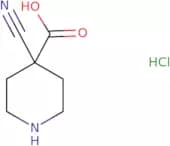
4-Cyanopiperidine-4-carboxylic acid hydrochloride
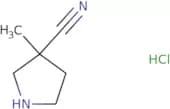
CAS:<p>Versatile small molecule scaffold</p>Formula:C7H11ClN2O2Purity:Min. 95%Molecular weight:190.63 g/mol3-methylpyrrolidine-3-carbonitrile hydrochloride
CAS:<p>Versatile small molecule scaffold</p>Formula:C6H11ClN2Purity:Min. 95%Molecular weight:146.62 g/mol4-[(tert-Butoxy)carbonyl]-2,3,4,5-tetrahydro-1,4-benzoxazepine-8-carboxylic acid
CAS:<p>Versatile small molecule scaffold</p>Formula:C15H19NO5Purity:Min. 95%Molecular weight:293.31 g/molMethyl 2-methylmorpholine-2-carboxylate hydrochloride
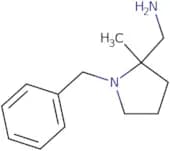
CAS:Versatile small molecule scaffoldFormula:C7H14ClNO3Purity:Min. 95%Molecular weight:195.64 g/mol(1-Benzyl-2-methylpyrrolidin-2-yl)methanamine
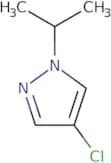
CAS:<p>Versatile small molecule scaffold</p>Formula:C13H20N2Purity:Min. 95%Molecular weight:204.31 g/mol4-Chloro-1-isopropyl-1H-pyrazole
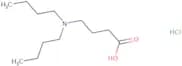
CAS:<p>4-Chloro-1-isopropyl-1H-pyrazole is a hydrochloric acid derivative that can be obtained through the hydrolysis of 4-chloro-1,2,3,4-tetrahydroisoquinoline. It has been shown to be efficient in the cleavage of bonds with a C=C bond and a C=N bond. This compound is reactive and can react with aziridines to produce N-substituted aziridines in high yield. 4-Chloro-1-isopropylpyrazole reacts efficiently with acetonitrile and tetrahydrofuran.</p>Formula:C6H9ClN2Purity:Min. 95%Molecular weight:144.6 g/mol4-(Dibutylamino)butanoic acid hydrochloride
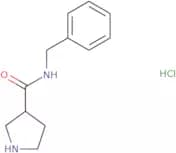
CAS:<p>Versatile small molecule scaffold</p>Formula:C12H26ClNO2Purity:Min. 95%Molecular weight:251.79 g/molN-Benzylpyrrolidine-3-carboxamide hydrochloride
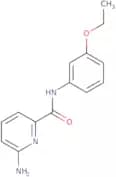
CAS:Versatile small molecule scaffoldFormula:C12H17ClN2OPurity:Min. 95%Molecular weight:240.73 g/mol6-Amino-N-(3-ethoxyphenyl)pyridine-2-carboxamide hydrochloride
CAS:Versatile small molecule scaffoldFormula:C14H15N3O2Purity:Min. 95%Molecular weight:257.29 g/molZofenoprilat-d5
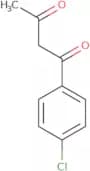
CAS:Controlled ProductPlease enquire for more information about Zofenoprilat-d5 including the price, delivery time and more detailed product information at the technical inquiry form on this pageFormula:C15H14D5NO3S2Purity:Min. 95%Molecular weight:330.48 g/mol1-(4-Chlorophenyl)butane-1,3-dione
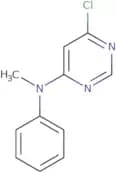
CAS:<p>Trichloroacetic acid is an organic compound that is used in the evaluation of chloride. The compound has a functional theory and can be used to determine if a molecule contains chloride. Trichloroacetic acid is also used for the validation of chloride as a tracer element. Trichloroacetic acid can be used in the detection of impurities in a molecule by reacting with them, which will result in the formation of new molecules. It has been shown that trichloroacetic acid can interact with transition metal ions and hydrogen bond with water molecules, which may lead to vibrational and intramolecular hydrogen changes. Trichloroacetic acid has been deuterated to aid in its thermodynamic properties.</p>Formula:C10H9ClO2Purity:Min. 95%Molecular weight:196.63 g/mol6-Chloro-N-methyl-N-phenylpyrimidin-4-amine
CAS:<p>Versatile small molecule scaffold</p>Formula:C11H10ClN3Purity:Min. 95%Molecular weight:219.67 g/molBicyclo[2.2.2]octan-2-ylmethanamine hydrochloride
CAS:<p>Versatile small molecule scaffold</p>Formula:C9H18ClNPurity:Min. 95%Molecular weight:175.7 g/molEthyl[2-(pyridin-2-yl)ethyl]amine
CAS:<p>Versatile small molecule scaffold</p>Formula:C9H14N2Purity:Min. 95%Molecular weight:150.22 g/mol{[(2,2-Dimethoxyethyl)sulfanyl]methyl}benzene
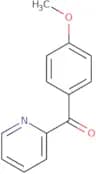
CAS:<p>Versatile small molecule scaffold</p>Formula:C11H16O2SPurity:Min. 95%Molecular weight:212.31 g/mol2-(4-Methoxybenzoyl)pyridine
CAS:<p>2-(4-Methoxybenzoyl)pyridine (MBP) is an arylation agent that is used in organic chemistry to introduce a 4-methoxybenzoyl group onto an aromatic ring. MBP has been shown to react with imines and amides to form the corresponding pyridinium salt, which can be converted into substituted pyridine derivatives.</p>Formula:C13H11NO2Purity:Min. 95%Molecular weight:213.23 g/mol±-Amino-³-butyrolactone hydrobromide
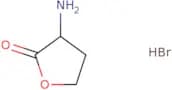
CAS:<p>±-Amino-³-butyrolactone hydrobromide (±-ABL) is a chemical compound that can be found in chloroform. It is a synthetic activator of mutant strains of the bacterium Escherichia coli. ±-ABL emits light when mixed with chloroform, and this emission can be detected using a spectrophotometer. The emission spectrum of ±-ABL has been shown to have peaks at 510 nm and 530 nm, which correspond to the λmax values for ECL luminescence. This chemical also has the ability to activate mutant strains of E. coli when dissolved in liquid chromatography, and it can be extracted from plates exposed to light.</p>Formula:C4H7NO2·HBrPurity:Min. 95%Molecular weight:182.02 g/mol1,3-Diethyl 2-(cyclohex-2-en-1-yl)propanedioate
CAS:Versatile small molecule scaffoldFormula:C13H20O4Purity:Min. 95%Molecular weight:240.29 g/mol4-Sulfamoylbenzamide
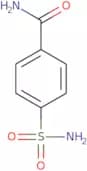
CAS:<p>4-Sulfamoylbenzamide is a sulfonamide that has been modified to improve its selectivity and potency. The modification of 4-sulfamoylbenzamide has been studied with anhydrase, which is an enzyme found in the eye that can cause glaucoma. The modifications allow this drug to selectively target the cytosolic isoforms of anhydrase. This drug also has anti-proliferative activity and can be used for the treatment of certain types of cancer, including breast, lung, prostate, and colon cancer. 4-Sulfamoylbenzamide was first synthesized in 1964 and was approved by the FDA in 1968 for use as an ophthalmic agent.</p>Formula:C7H8N2O3SPurity:Min. 95%Molecular weight:200.22 g/mol4-[(Aminocarbonyl)amino]benzoic acid
CAS:<p>4-[(Aminocarbonyl)amino]benzoic acid is an antibacterial fatty acid that is structurally related to the antimicrobial agents known as cyanates. It has a reactive center that can undergo a halogenation reaction with halides and a substitution reaction with carboxylic acids to form reactive compounds. 4-[(Aminocarbonyl)amino]benzoic acid has shown tuberculostatic activity against the bacteria Typhimurium and subtilis, and is effective against antifungal strains of yeast such as Candida albicans, Candida krusei, and Candida tropicalis. 4-[(Aminocarbonyl)amino]benzoic acid also has a molecule that can be used in the synthesis of diisocyanates.</p>Formula:C8H8N2O3Purity:Min. 95%Molecular weight:180.16 g/mol

![4-[(tert-Butoxy)carbonyl]-2,3,4,5-tetrahydro-1,4-benzoxazepine-8-carboxylic acid](/_next/image/?url=https%3A%2Fstatic.cymitquimica.com%2Fproducts%2F3D%2Fthumb-webp%2FFYB75069.webp&w=3840&q=75)
![Bicyclo[2.2.2]octan-2-ylmethanamine hydrochloride](/_next/image/?url=https%3A%2Fstatic.cymitquimica.com%2Fproducts%2F3D%2Fthumb-webp%2FGAA30364.webp&w=3840&q=75)
![Ethyl[2-(pyridin-2-yl)ethyl]amine](/_next/image/?url=https%3A%2Fstatic.cymitquimica.com%2Fproducts%2F3D%2Fthumb-webp%2FGAA30426.webp&w=3840&q=75)
![{[(2,2-Dimethoxyethyl)sulfanyl]methyl}benzene](/_next/image/?url=https%3A%2Fstatic.cymitquimica.com%2Fproducts%2F3D%2Fthumb-webp%2FGAA30494.webp&w=3840&q=75)

![4-[(Aminocarbonyl)amino]benzoic acid](/_next/image/?url=https%3A%2Fstatic.cymitquimica.com%2Fproducts%2F3D%2Fthumb-webp%2FGAA30625.webp&w=3840&q=75)