Building Blocks
This section contains fundamental products for the synthesis of organic and biological compounds. Building blocks are the essential starting materials used to construct complex molecules through various chemical reactions. They play a critical role in drug discovery, material science, and chemical research. At CymitQuimica, we offer a diverse range of high-quality building blocks to support your innovative research and industrial projects, ensuring you have the essential components for successful synthesis.
Subcategories of "Building Blocks"
- Boronic Acids & Boronic Acid Derivatives(5,778 products)
- Chiral Building Blocks(1,243 products)
- Hydrocarbon Building Blocks(6,098 products)
- Organic Building Blocks(61,057 products)
Found 200716 products of "Building Blocks"
Sort by
Purity (%)
0
100
|
0
|
50
|
90
|
95
|
100
Methyl 4-(ethylamino)butanoate hydrochloride
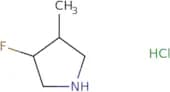
CAS:Versatile small molecule scaffoldFormula:C7H16ClNO2Purity:Min. 95%Molecular weight:181.66 g/molrac-(3R,4R)-3-Fluoro-4-methylpyrrolidine hydrochloride
CAS:Versatile small molecule scaffoldFormula:C5H11ClFNPurity:Min. 95%Molecular weight:139.6 g/mol5-Bromo-2-(chloromethyl)-3-methylpyridine hydrochloride
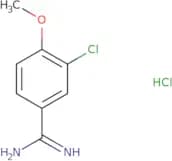
CAS:<p>Versatile small molecule scaffold</p>Formula:C7H8BrCl2NPurity:Min. 95%Molecular weight:256.95 g/mol3-Chloro-4-methoxybenzene-1-carboximidamide hydrochloride
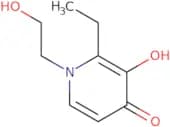
CAS:Versatile small molecule scaffoldFormula:C8H10Cl2N2OPurity:Min. 95%Molecular weight:221.08 g/mol2-Ethyl-3-hydroxy-1-(2-hydroxyethyl)-1,4-dihydropyridin-4-one
CAS:<p>2-Ethyl-3-hydroxy-1-(2-hydroxyethyl)-1,4-dihydropyridin-4-one (MAH) is a monoclonal antibody that is used to detect IgG and IgA in human serum. MAH binds to the Fc region of human immunoglobulin G (IgG) antibodies, which are found in the blood of humans and other mammals. The Fc region is an important part of the antibody molecule because it contains an antigen binding site that recognizes specific antigens. MAH has been shown to bind to a variety of animal tissues, including liver, kidney, spleen, brain, heart, muscle, and bone marrow cells. MAH also binds to crystalline cellulose and Pichia pastoris cells. This compound has minimal toxicity when administered orally and was shown to be effective against Coccidioides glabrata in mice. The structure of this compound</p>Formula:C9H13NO3Purity:Min. 95%Molecular weight:183.2 g/moltert-Butyl 3-(bromomethyl)benzoate
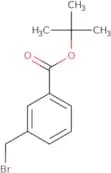
CAS:<p>Versatile small molecule scaffold</p>Formula:C12H15BrO2Purity:Min. 95%Molecular weight:271.15 g/mol1-(2,4-Dichlorophenyl)-5-methyl-1H-pyrazole-3-carboxylic acid
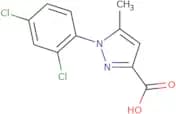
CAS:Versatile small molecule scaffoldFormula:C11H8Cl2N2O2Purity:Min. 95%Molecular weight:271.1 g/mol5,6,7,8-Tetrahydro-3,5,5,8,8-pentamethyl-2-naphthoic acid
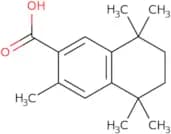
CAS:Versatile small molecule scaffoldFormula:C16H22O2Purity:Min. 95%Molecular weight:246.34 g/mol3-Methyl-5-(tributylstannyl)isoxazole
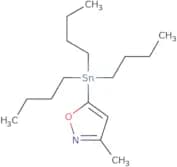
CAS:Controlled Product<p>3-Methyl-5-(tributylstannyl)isoxazole is a palladium-catalyzed, three-component reaction that yields nitrile and 1,3-dipolar cycloaddition products. It is an example of a cycloaddition reaction involving the coupling of two unsaturated functional groups. The 1,3-dipolar cycloaddition product can be converted to a corresponding oxides in the presence of copper(I) chloride. This process has been used to convert nitriles into oxides with a variety of functional groups.</p>Formula:C16H31NOSnPurity:Min. 95%Molecular weight:372.13 g/mol5-Iodo-3-methyl-isoxazole
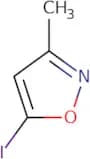
CAS:5-Iodo-3-methyl-isoxazole is a synthetic compound that has been found to have high antioxidant properties. It can be used as an additive in a variety of industries, including the production of synthetic antioxidants and catalytic converters for vehicles. The compound is synthesized by the palladium-catalyzed cross-coupling reaction between 5-iodo-3,4-dimethoxybenzene and 3,5-dimethylisoxazole. This process yields a mixture of diastereomers. 5-Iodo-3-methylisoxazole has also been shown to be an effective chelator when it reacts with metal ions such as copper and zinc.Formula:C4H4INOPurity:Min. 95%Molecular weight:208.99 g/mol3-Bromo-N-(propan-2-yl)aniline
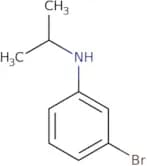
CAS:<p>Versatile small molecule scaffold</p>Formula:C9H12BrNPurity:Min. 95%Molecular weight:214.1 g/mol5H,6H,7H,8H,9H,10H-Cyclohepta[b]indol-2-amine
CAS:Versatile small molecule scaffoldFormula:C13H16N2Purity:Min. 95%Molecular weight:200.28 g/mol4-Propyl-5-sulfanyl-8-thia-4,6-diazatricyclo[7.4.0.0,2,7]trideca-1(9),2(7),5-trien-3-one
CAS:Versatile small molecule scaffoldFormula:C13H16N2OS2Purity:Min. 95%Molecular weight:280.4 g/mol3-(4-Chlorophenyl)-5,6-dimethyl-2-sulfanyl-3H,4H-thieno[2,3-d]pyrimidin-4-one
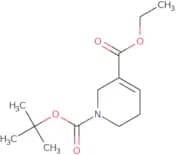
CAS:Versatile small molecule scaffoldFormula:C14H11ClN2OS2Purity:Min. 95%Molecular weight:322.8 g/mol1-tert-Butyl 3-ethyl 1,2,5,6-tetrahydropyridine-1,3-dicarboxylate
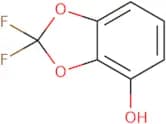
CAS:Versatile small molecule scaffoldFormula:C13H21NO4Purity:Min. 95%Molecular weight:255.31 g/mol2,2-Difluoro-1,3-benzodioxol-4-ol
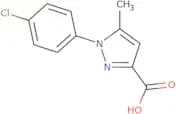
CAS:<p>Versatile small molecule scaffold</p>Formula:C7H4F2O3Purity:Min. 95%Molecular weight:174.1 g/mol1-(4-Chlorophenyl)-5-methyl-1H-pyrazole-3-carboxylic acid
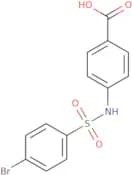
CAS:Versatile small molecule scaffoldFormula:C11H9ClN2O2Purity:Min. 95%Molecular weight:236.65 g/mol4-(4-Bromobenzenesulfonamido)benzoic acid
CAS:<p>4-(4-Bromobenzenesulfonamido)benzoic acid is a chemical compound that belongs to the class of benzene sulfonamides. It has been shown to stabilize benzene dimers, which are formed when benzene molecules are next to each other in space. The carboxylic acid group on this molecule is substituted by a 4-bromobenzenesulfonamide group, and 4-(4-bromobenzenesulfonamido)benzoic acid can be found in crystal form with hydrogen bonds between the molecules. This chemical compound has a carboxylic acid substituent and is also classified as a carboxyl group. It has been shown to have an inhibitory effect on bacterial growth and is used for the treatment of infections caused by erythromycin-resistant Mycobacterium tuberculosis and Mycobacterium avium complex.</p>Formula:C13H10BrNO4SPurity:Min. 95%Molecular weight:356.19 g/mol2-Propyldodecan-1-ol
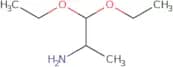
CAS:<p>Versatile small molecule scaffold</p>Formula:C15H32OPurity:Min. 95%Molecular weight:228.41 g/mol(S)-1,1-Diethoxy-2-propanamine
CAS:Versatile small molecule scaffoldFormula:C7H17NO2Purity:Min. 95%Molecular weight:147.22 g/mol



![5H,6H,7H,8H,9H,10H-Cyclohepta[b]indol-2-amine](/_next/image/?url=https%3A%2Fstatic.cymitquimica.com%2Fproducts%2F3D%2Fthumb-webp%2FBFA08749.webp&w=3840&q=75)
![4-Propyl-5-sulfanyl-8-thia-4,6-diazatricyclo[7.4.0.0,2,7]trideca-1(9),2(7),5-trien-3-one](/_next/image/?url=https%3A%2Fstatic.cymitquimica.com%2Fproducts%2F3D%2Fthumb-webp%2FBFA10595.webp&w=3840&q=75)
![3-(4-Chlorophenyl)-5,6-dimethyl-2-sulfanyl-3H,4H-thieno[2,3-d]pyrimidin-4-one](/_next/image/?url=https%3A%2Fstatic.cymitquimica.com%2Fproducts%2F3D%2Fthumb-webp%2FBFA10597.webp&w=3840&q=75)