Building Blocks
This section contains fundamental products for the synthesis of organic and biological compounds. Building blocks are the essential starting materials used to construct complex molecules through various chemical reactions. They play a critical role in drug discovery, material science, and chemical research. At CymitQuimica, we offer a diverse range of high-quality building blocks to support your innovative research and industrial projects, ensuring you have the essential components for successful synthesis.
Subcategories of "Building Blocks"
- Boronic Acids & Boronic Acid Derivatives(5,778 products)
- Chiral Building Blocks(1,242 products)
- Hydrocarbon Building Blocks(6,098 products)
- Organic Building Blocks(61,084 products)
Found 198714 products of "Building Blocks"
Sort by
Purity (%)
0
100
|
0
|
50
|
90
|
95
|
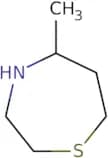
100
5-Methyl-1,4-thiazepane
CAS:<p>Versatile small molecule scaffold</p>Formula:C6H13NSPurity:Min. 95%Molecular weight:131.24 g/molEthyl 2-(2-acetamidophenyl)-2-oxoacetate
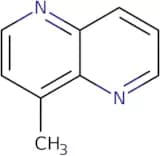
CAS:Versatile small molecule scaffoldFormula:C12H13NO4Purity:Min. 95%Molecular weight:235.24 g/mol4-Methyl-1,5-naphthyridine
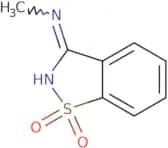
CAS:<p>4-Methyl-1,5-naphthyridine is an antitumor agent that inhibits the activity of an efflux pump in tumor cells. The drug was shown to inhibit the proliferation of a tumor cell line in vitro and inhibited tumor growth in vivo. 4-Methyl-1,5-naphthyridine also has potent synergistic effects with carbon disulfide, which is used as a chemotherapeutic agent for cancer treatment. This compound also inhibits the production of endocannabinoids and has been shown to have antidepressant and antinociceptive properties in animal models.</p>Formula:C9H8N2Purity:Min. 95%Molecular weight:144.17 g/mol3-(Methylamino)-1,2-benzothiazole-1,1-dione
CAS:Versatile small molecule scaffoldFormula:C8H8N2O2SPurity:Min. 95%Molecular weight:196.23 g/molSpiro[1,3-dioxaindane-2,4'-piperidine]
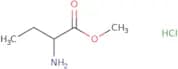
CAS:Controlled Product<p>Versatile small molecule scaffold</p>Formula:C11H13NO2Purity:Min. 95%Molecular weight:191.23 g/moldl-2-Aminobutyric acid methyl ester hydrochloride
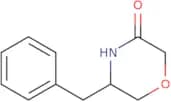
CAS:<p>Versatile small molecule scaffold</p>Formula:C5H12ClNO2Purity:Min. 95%Molecular weight:153.61 g/mol5-benzylmorpholin-3-one
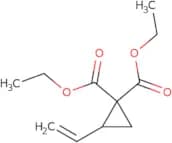
CAS:<p>Versatile small molecule scaffold</p>Formula:C11H13NO2Purity:Min. 95%Molecular weight:191.23 g/mol2-Vinylcyclopropane-1,1-dicarboxylic acid diethyl ester
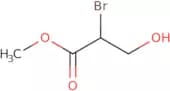
CAS:2-Vinylcyclopropane-1,1-dicarboxylic acid diethyl ester (VCPD) is a molecule that is synthesized by the nucleophilic attack of an alcohol on the double bond of a cyclopropane ring. VCPD is used in the production of polymers and copolymers. VCPD can be copolymerized with other monomers such as styrene, chloromethylstyrene, acrylonitrile, vinyl acetate, vinyl chloride and butadiene to produce various types of polymers. The polymerization process involves three steps: initiation, propagation and termination. Initiation takes place when persulfate is added to VCPD and water at high temperature. The polymerization process ends when there are no more VCPD molecules available for reaction or when all the monomers have been consumed during the reaction.Formula:C11H16O4Purity:Min. 95%Molecular weight:212.24 g/molMethyl 2-bromo-3-hydroxypropanoate
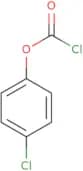
CAS:<p>Methyl 2-bromo-3-hydroxypropanoate is a linear molecule that can be used to produce polymers and copolymers. This compound is polymerized with other monomers to form poly(methyl 2-bromo-3-hydroxypropanoate) (PMBH). It can also be used as a crosslinker in the production of polyurethane. Methyl 2-bromo-3-hydroxypropanoate can be made by reacting sodium carbonate, chloride, and trifluoride with methyl 3-methoxypropanoate. The reaction produces an intermediate that is then reacted with bromine gas to yield methyl 2-bromo-3-hydroxypropanoate.<br>Methyl 2-bromo-3-hydroxypropanoate is biodegradable and has been shown to have low toxicity. It has been used in a number of biomedical applications such as</p>Formula:C4H7BrO3Purity:Min. 95%Molecular weight:183 g/mol4-Chlorophenyl Chloroformate
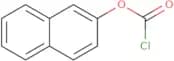
CAS:<p>4-Chlorophenyl Chloroformate is a chlorinating agent that has been shown to increase intracellular levels of carbon sources. It also has been shown to selectively act on the phenyl group of histidine and amines. 4-Chlorophenyl Chloroformate can be used as a synthetic intermediate in the synthesis of other compounds, including antidiabetic agents.</p>Formula:C7H4Cl2O2Purity:Min. 95%Molecular weight:191.01 g/mol2-Naphthyl Chloroformate
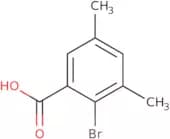
CAS:<p>2-Naphthyl chloroformate is a chemical reagent that is used to derivatize amines for chromatography. The compound reacts with the amine and forms an ester, which can be used as a chromatographic stationary phase. It has been shown that 2-naphthyl chloroformate can be used to detect serotonin in urine samples by fluorescence detection. This compound is also used in the production of ethylene diamine and citric acid. 2-Naphthyl chloroformate is not toxic and does not appear to cause any adverse effects on human health at levels up to 1,000 ppm.</p>Formula:C11H7ClO2Purity:Min. 95%Molecular weight:206.63 g/mol2-Bromo-3,5-dimethylbenzoic acid
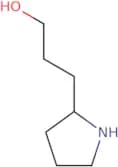
CAS:<p>Versatile small molecule scaffold</p>Formula:C9H9BrO2Purity:Min. 95%Molecular weight:229.07 g/mol3-(Pyrrolidin-2-yl)propan-1-ol
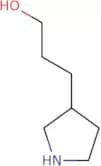
CAS:<p>Versatile small molecule scaffold</p>Formula:C7H15NOPurity:Min. 95%Molecular weight:129.2 g/mol3-(Pyrrolidin-3-yl)propan-1-ol
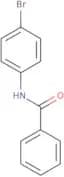
CAS:Versatile small molecule scaffoldFormula:C7H15NOPurity:Min. 95%Molecular weight:129.2 g/molN-(4-Bromophenyl)benzamide
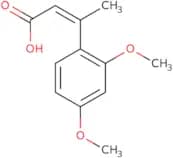
CAS:<p>Versatile small molecule scaffold</p>Formula:C13H10BrNOPurity:Min. 95%Molecular weight:276.13 g/mol2,4-Dimethoxy-²-methylcinnamic Acid
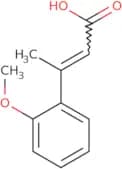
CAS:<p>2,4-Dimethoxy-²-methylcinnamic Acid is a phthalic acid derivative that is synthesized by the reaction of cinnamic acid with dimethylsulfate. It can be found in nature as well as being produced anthropogenically. This compound is used in the synthesis of medications and medicines. The chemical properties of 2,4-dimethoxy-²-methylcinnamic Acid are similar to those of related quinones and phenols, which makes it an effective agent for the treatment of hepatitis B and C. The chloride ion binds to the hydroxyl group on 2,4-dimethoxy-²-methylcinnamic Acid, forming hydrochloric acid (HCl) and water.</p>Formula:C12H14O4Purity:Min. 95%Molecular weight:222.24 g/mol3-(2-Methoxyphenyl)but-2-enoic acid
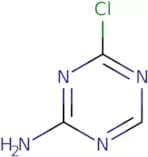
CAS:Versatile small molecule scaffoldFormula:C11H12O3Purity:Min. 95%Molecular weight:192.21 g/mol4-Amino-2-chloro-1,3,5-triazine
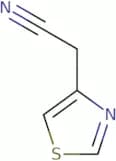
CAS:<p>4-Amino-2-chloro-1,3,5-triazine is a potent soil microorganism that utilizes reactive amines and naphthalene as its sole carbon source. It is a polymorphic species that can form four different types of crystals, which are typically found in untreated soil samples. 4-Amino-2-chloro-1,3,5-triazine can be used for the biotransformation of chaperones and detoxification of xenobiotics. It is also capable of deaminating hydrophobic compounds.</p>Formula:C3H3ClN4Purity:Min. 95%Molecular weight:130.54 g/mol2-(1,3-Thiazol-4-yl)acetonitrile
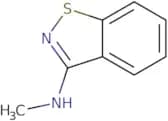
CAS:<p>Versatile small molecule scaffold</p>Formula:C5H4N2SPurity:Min. 95%Molecular weight:124.17 g/molN-Methyl-1,2-benzothiazol-3-amine
CAS:<p>Versatile small molecule scaffold</p>Formula:C8H8N2SPurity:Min. 95%Molecular weight:164.23 g/mol


![Spiro[1,3-dioxaindane-2,4'-piperidine]](/_next/image/?url=https%3A%2Fstatic.cymitquimica.com%2Fproducts%2F3D%2Fthumb-webp%2FHAA67796.webp&w=3840&q=75)