Building Blocks
Subcategories of "Building Blocks"
- Boronic Acids & Boronic Acid Derivatives(5,781 products)
- Chiral Building Blocks(1,242 products)
- Hydrocarbon Building Blocks(6,101 products)
- Organic Building Blocks(61,033 products)
Found 205320 products of "Building Blocks"
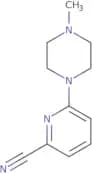
6-(4-Methylpiperazin-1-yl)pyridine-2-carbonitrile
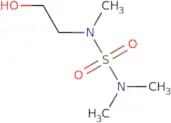
CAS:Versatile small molecule scaffoldFormula:C11H14N4Purity:Min. 95%Molecular weight:202.26 g/mol(Dimethylsulfamoyl)(2-hydroxyethyl)methylamine
CAS:Versatile small molecule scaffold
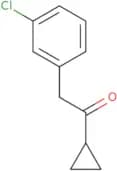
Formula:C5H14N2O3SPurity:Min. 95%Molecular weight:182.24 g/mol2-(3-Chlorophenyl)-1-cyclopropylethan-1-one
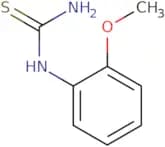
CAS:Versatile small molecule scaffoldFormula:C11H11ClOPurity:Min. 95%Molecular weight:194.66 g/mol1-(2-Methoxyphenyl)-2-thiourea
CAS:1-(2-Methoxyphenyl)-2-thiourea is an organic compound. It is a white crystalline solid that is soluble in water and methanol. This molecule has a centrosymmetric structure, so it has no plane of symmetry. It has two hydrogen bonds, one intramolecular and one intermolecular. 1-(2-Methoxyphenyl)-2-thiourea can be extracted with organic solvents such as dichloromethane or chloroform. The molecules of this substance have hydrogen bonding interactions with other molecules, including benzene, dihedral angles of 60°, and orthorhombic crystals with space group Pbca.Formula:CH3OC6H4NHCSNH2Purity:Min. 95%Molecular weight:182.24 g/mol(1R)-1-(4-Methoxyphenyl)ethan-1-ol
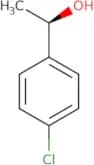
CAS:(1R)-1-(4-Methoxyphenyl)ethan-1-ol (1R,2S)-(+)-N-methylbenzeneethanamine is a stereoselective and selective reagent for the conversion of l-phenylalanine to (2S,3S)-(+)-N-methylbenzeneethanamine. It is commonly used in the synthesis of the enantiopure amino acid l-amino acid derivatives. This compound has been shown to be an effective inhibitor of bacterial growth at high concentrations. The reaction rate increases with increasing temperature and substrate concentration. The cell membrane permeability is higher than that of styrene, which makes this compound useful for the preparation of immobilized enzymes for carbonyl reduction reactions.Formula:C9H12O2Purity:Min. 95%Molecular weight:152.19 g/mol3-(Diethylcarbamoyl)propanoic acid
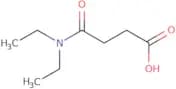
CAS:3-(Diethylcarbamoyl)propanoic acid is a prodrug that is hydrolyzed in vivo to the active form, 3-diethylamino-2-propanol. This compound has analgesic and antiinflammatory properties due to its ability to inhibit prostaglandin synthesis. 3-(Diethylcarbamoyl)propanoic acid has been shown to be effective against ureaplasmas, mycoplasmas, chlamydia and some viruses. It also inhibits the replication of prions and parasites such as worms and flukes.Formula:C8H15NO3Purity:Min. 95%Molecular weight:173.21 g/mol[2-(Phenylsulfanyl)phenyl]methanol
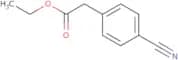
CAS:Versatile small molecule scaffoldFormula:C13H12OSPurity:Min. 95%Molecular weight:216.3 g/molEthyl 4-cyanophenylacetate
CAS:Versatile small molecule scaffoldFormula:C11H11NO2Purity:Min. 95%Molecular weight:189.21 g/molEthyl 2-(4-acetylphenyl)acetate
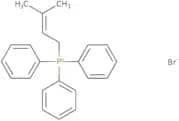
CAS:Ethyl 2-(4-acetylphenyl)acetate is an oxime that has analgesic activities. It also inhibits the cyclooxygenase enzyme, which is involved in the biosynthesis of prostaglandins and thromboxanes. The inhibitory effects of this compound are reduced by rofecoxib, a cox-2 inhibitor, and nordihydroguaiaretic acid, a cox-1 inhibitor.Formula:C12H14O3Purity:Min. 95%Molecular weight:206.24 g/mol(3-Methyl-2-butenyl)triphenyl-phosphonium Bromide
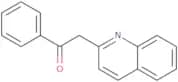
CAS:Versatile small molecule scaffoldFormula:C23H24BrPPurity:Min. 95%Molecular weight:411.31 g/mol1-Phenyl-2-(quinolin-2-yl)ethan-1-one
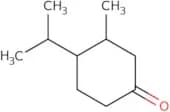
CAS:1-Phenyl-2-(quinolin-2-yl)ethan-1-one is an enolate that has the ability to form a zwitterion. It is soluble in nonpolar solvents and reacts with calcium carbonate, forming a white precipitate. This compound is reactive and can be used as an intermediate for the synthesis of many other organic compounds. 1-Phenyl-2-(quinolin-2-yl)ethan-1-one has been shown to interact with methyl derivatives and piperidine. The enolate anion can be activated by radiation or by adding a base such as piperidine.Formula:C17H13NOPurity:Min. 95%Molecular weight:247.29 g/mol3-Methyl-4-(propan-2-yl)cyclohexan-1-one
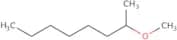
CAS:Versatile small molecule scaffoldFormula:C10H18OPurity:Min. 95%Molecular weight:154.25 g/mol2-Methoxyoctane
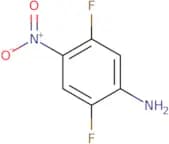
CAS:2-Methoxyoctane is a chemical compound that belongs to the group of organic compounds called primary alcohols. It can be synthesized by the oxidative demethylation of 2-methylpentane. The reaction is catalyzed by an acid and proceeds with high yield. 2-Methoxyoctane can be used as a solvent for other reactants and in photochemistry experiments. It has a viscosity, which is higher than most other solvents, but lower than water. This product also has functional groups that allow it to react with nucleophiles and polarities that make it capable of forming hydrogen bonds.Formula:C9H20OPurity:Min. 95%Molecular weight:144.25 g/mol2,5-Difluoro-4-nitroaniline
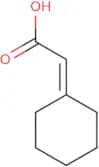
CAS:Versatile small molecule scaffoldFormula:C6H4F2N2O2Purity:Min. 95%Molecular weight:174.1 g/mol2-Cyclohexylideneacetic acid
CAS:2-Cyclohexylideneacetic acid is a pseudomonic acid that is synthesized by an asymmetric synthesis. The compound has been shown to be active against cerebral tumors in mice and can inhibit the growth of cells in culture. 2-Cyclohexylideneacetic acid is also the precursor for gabapentin, which is used as a treatment for seizures, mood disorders and pain. Gabapentin inhibits the activity of voltage-gated sodium channels, which are required for the propagation of action potentials in neurons. This drug can also be used as a solvent in pharmaceutical formulations. 2-Cyclohexylideneacetic acid binds to cell membranes and may inhibit bacterial growth through its effects on cell membrane permeability and integrity. It has been shown to have chiral properties, with one enantiomer being more active than the other. 2-Cyclohexylideneacetic acid has been shown to inhibit the growth
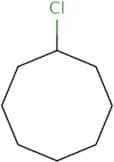
Formula:C8H12O2Purity:Min. 95%Molecular weight:140.18 g/molChlorocyclooctane
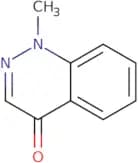
CAS:Chlorocyclooctane is an organic solvent used in the production of polyurethanes and other polymers. It is a colorless liquid that has a pleasant odor. Chlorocyclooctane can also be used as a reactive diluent, a conditioning agent, or a polymerization initiator. This chemical is an isomeric mixture of two compounds: chloromethylcyclohexane and cyclohexanone. Chlorocyclooctane reacts with proton to form the amide which is then reacted with inorganic acid to yield uv absorption. The reaction intermediates are hydrogen chloride and nucleophilic, which react with inorganic reagents to form synthetic products such as polymersFormula:C8H15ClPurity:Min. 95%Molecular weight:146.66 g/mol1-Methyl-1,4-dihydrocinnolin-4-one
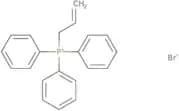
CAS:Versatile small molecule scaffoldFormula:C9H8N2OPurity:Min. 95%Molecular weight:160.17 g/molAllyltriphenylphosphonium Bromide
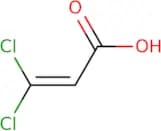
CAS:Allyltriphenylphosphonium Bromide is a white crystalline salt that is soluble in water and alcohol. It has antimicrobial properties that are related to its asymmetric synthesis, which can be achieved by mixing mixtures of hydrogen fluoride, hydrochloric acid, and cyclosporine. Allyltriphenylphosphonium Bromide has been used as a model system to study the interactions between biological molecules with organometallic compounds. This salt has been shown to inhibit the production of fatty acids and hydrogen bonds in biological systems. Allyltriphenylphosphonium Bromide can also be used as an analytical reagent for structural analysis by gas-liquid chromatography.Formula:C21H20BrPPurity:Min. 95%Molecular weight:383.27 g/mol3,3-Dichloroprop-2-enoic acid
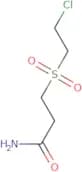
CAS:Versatile small molecule scaffoldFormula:C3H2Cl2O2Purity:Min. 95%Molecular weight:140.95 g/mol3-(2-Chloroethanesulfonyl)propanamide
CAS:3-(2-Chloroethanesulfonyl)propanamide is a molecule that has been shown to activate cells in the muscle. Activated cells are able to divide and grow. The mechanism of activation is not known, but it may be due to the functional groups on the molecule or its benzoic acid moiety. 3-(2-Chloroethanesulfonyl)propanamide is more active in muscle than in other tissues, and it stimulates muscle growth by increasing protein synthesis. This drug is also found to have anti-inflammatory properties, which may be due to its ability to inhibit prostaglandin synthesis.END>Formula:C5H10ClNO3SPurity:Min. 95%Molecular weight:199.66 g/mol

![[2-(Phenylsulfanyl)phenyl]methanol](/_next/image/?url=https%3A%2Fstatic.cymitquimica.com%2Fproducts%2F3D%2Fthumb-webp%2FBAA52714.webp&w=3840&q=75)