Building Blocks
This section contains fundamental products for the synthesis of organic and biological compounds. Building blocks are the essential starting materials used to construct complex molecules through various chemical reactions. They play a critical role in drug discovery, material science, and chemical research. At CymitQuimica, we offer a diverse range of high-quality building blocks to support your innovative research and industrial projects, ensuring you have the essential components for successful synthesis.
Subcategories of "Building Blocks"
- Boronic Acids & Boronic Acid Derivatives(5,778 products)
- Chiral Building Blocks(1,242 products)
- Hydrocarbon Building Blocks(6,098 products)
- Organic Building Blocks(61,084 products)
Found 198714 products of "Building Blocks"
Sort by
Purity (%)
0
100
|
0
|
50
|
90
|
95
|
100
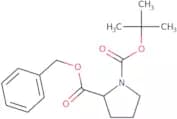
2-Benzyl 1-tert-butyl pyrrolidine-1,2-dicarboxylate
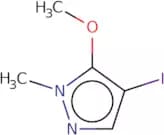
CAS:<p>Versatile small molecule scaffold</p>Formula:C17H23NO4Purity:Min. 95%Molecular weight:305.4 g/mol4-Iodo-5-methoxy-1-methyl-1H-pyrazole
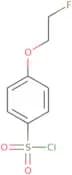
CAS:<p>Versatile small molecule scaffold</p>Formula:C5H7IN2OPurity:Min. 95%Molecular weight:238 g/mol4-(2-Fluoroethoxy)benzene-1-sulfonyl chloride
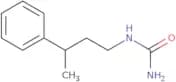
CAS:Versatile small molecule scaffoldFormula:C8H8ClFO3SPurity:Min. 95%Molecular weight:238.66 g/mol(3-Phenylbutyl)urea
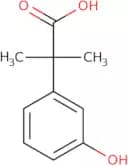
CAS:<p>Versatile small molecule scaffold</p>Formula:C11H16N2OPurity:Min. 95%Molecular weight:192.26 g/mol2-(3-Hydroxyphenyl)-2-methylpropanoic acid
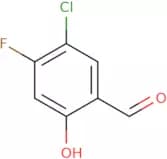
CAS:<p>Versatile small molecule scaffold</p>Formula:C10H12O3Purity:Min. 95%Molecular weight:180.2 g/mol5-Chloro-4-fluoro-2-hydroxybenzaldehyde
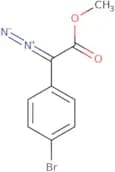
CAS:<p>Versatile small molecule scaffold</p>Formula:C7H4ClFO2Purity:Min. 95%Molecular weight:174.55 g/molMethyl 2-(4-bromophenyl)-2-diazoacetate
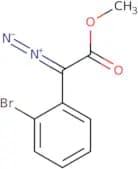
CAS:<p>Methyl 2-(4-bromophenyl)-2-diazoacetate is a diazo compound that can be used for the synthesis of chiral, enantiomerically pure α-amino acids. The catalytic asymmetric synthesis of this compound has been achieved by using a chiral diazo precursor, methyl 2-phenyl-2-diazoacetate and achiral borane as the catalyst. The reaction was carried out in two steps: first, the formation of an iminium ion with the nucleophilic attack on the carbonyl group, followed by elimination of hydrogen chloride (HCl). This transformation is stereoselective and produces the desired product in high yield. The mechanistic study showed that this process is stepwise and proceeds through an enantioselective arylation.</p>Formula:C9H7BrN2O2Purity:Min. 95%Molecular weight:255.07 g/molMethyl 2-(2-bromophenyl)-2-diazoacetate
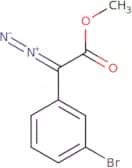
CAS:<p>Versatile small molecule scaffold</p>Formula:C9H7BrN2O2Purity:Min. 95%Molecular weight:255.07 g/molMethyl 2-(3-bromophenyl)-2-diazoacetate
CAS:<p>Versatile small molecule scaffold</p>Formula:C9H7BrN2O2Purity:Min. 95%Molecular weight:255.07 g/mol[2-(Methoxymethyl)oxan-2-yl]methanol
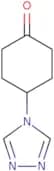
CAS:Versatile small molecule scaffoldFormula:C8H16O3Purity:Min. 95%Molecular weight:160.21 g/mol4-(4H-1,2,4-Triazol-4-yl)cyclohexan-1-one
CAS:<p>Versatile small molecule scaffold</p>Formula:C8H11N3OPurity:Min. 95%Molecular weight:165.19 g/molN-[1-(4-Methoxyphenyl)ethyl]hydroxylamine
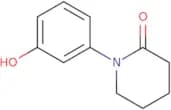
CAS:<p>Versatile small molecule scaffold</p>Formula:C9H13NO2Purity:Min. 95%Molecular weight:167.2 g/mol1-(3-Hydroxyphenyl)piperidin-2-one
CAS:<p>Versatile small molecule scaffold</p>Formula:C11H13NO2Purity:Min. 95%Molecular weight:191.23 g/moltert-Butyl 1H-spiro[isoquinoline-4,4'-piperidine]-2(3H)-carboxylate hydrochloride
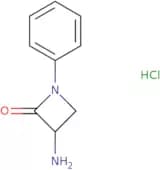
CAS:<p>Versatile small molecule scaffold</p>Formula:C18H27ClN2O2Purity:Min. 95%Molecular weight:338.88 g/mol3-Amino-1-phenylazetidin-2-one hydrochloride
CAS:Versatile small molecule scaffoldFormula:C9H11ClN2OPurity:Min. 95%Molecular weight:198.65 g/mol3-Amino-4,5-dihydro-1H-benzo[b]azepin-2(3H)-one hydrochloride
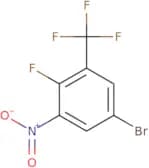
CAS:<p>Versatile small molecule scaffold</p>Formula:C10H12N2O·HClPurity:Min. 95%Molecular weight:212.68 g/mol5-Bromo-2-fluoro-1-nitro-3-(trifluoromethyl)benzene
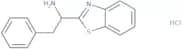
CAS:<p>Versatile small molecule scaffold</p>Formula:C7H2BrF4NO2Purity:Min. 95%Molecular weight:287.99 g/mol1-(1,3-Benzothiazol-2-yl)-2-phenylethan-1-amine hydrochloride
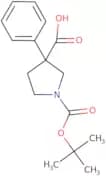
CAS:<p>Versatile small molecule scaffold</p>Formula:C15H15ClN2SPurity:Min. 95%Molecular weight:290.8 g/mol1-(tert-Butoxycarbonyl)-3-phenylpyrrolidine-3-carboxylic acid
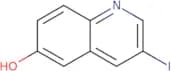
CAS:<p>Versatile small molecule scaffold</p>Formula:C16H21NO4Purity:Min. 95%Molecular weight:291.34 g/mol3-Iodoquinolin-6-ol
CAS:<p>3-Iodoquinolin-6-ol is a drug that can be used for the treatment of high fat diet (HFD)-induced obesity and type 2 diabetes. It belongs to the class of PPAR-α agonists, which are drugs that increase the activity of a protein called peroxisome proliferator activated receptor alpha (PPARα). PPARα increases the body's sensitivity to insulin, which leads to decreased blood sugar levels in people with diabetes. 3-Iodoquinolin-6-ol has been shown to lower triglycerides and LDL cholesterol levels in mice on HFD by reducing lipid synthesis and increasing lipolysis. This drug also increases expression of genes involved in adipose tissue differentiation, including nfκb, pparα, and adiponectin.</p>Formula:C9H6INOPurity:Min. 95%Molecular weight:271.05 g/mol

![[2-(Methoxymethyl)oxan-2-yl]methanol](/_next/image/?url=https%3A%2Fstatic.cymitquimica.com%2Fproducts%2F3D%2Fthumb-webp%2FPKA89116.webp&w=3840&q=75)
![N-[1-(4-Methoxyphenyl)ethyl]hydroxylamine](/_next/image/?url=https%3A%2Fstatic.cymitquimica.com%2Fproducts%2F3D%2Fthumb-webp%2FPKB12835.webp&w=3840&q=75)
![tert-Butyl 1H-spiro[isoquinoline-4,4'-piperidine]-2(3H)-carboxylate hydrochloride](/_next/image/?url=https%3A%2Fstatic.cymitquimica.com%2Fproducts%2F3D%2Fthumb-webp%2FPKB13952.webp&w=3840&q=75)
![3-Amino-4,5-dihydro-1H-benzo[b]azepin-2(3H)-one hydrochloride](/_next/image/?url=https%3A%2Fstatic.cymitquimica.com%2Fproducts%2F3D%2Fthumb-webp%2FPKB21487.webp&w=3840&q=75)