


Building Blocks
Subcategories of "Building Blocks"
- Boronic Acids & Boronic Acid Derivatives(5,783 products)
- Chiral Building Blocks(1,242 products)
- Hydrocarbon Building Blocks(6,105 products)
- Organic Building Blocks(61,055 products)
Found 205383 products of "Building Blocks"
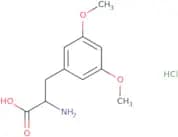
2-Amino-3-(3,5-dimethoxyphenyl)propanoic acid hydrochloride
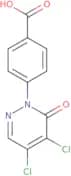
CAS:Versatile small molecule scaffoldFormula:C11H16ClNO4Purity:Min. 95%Molecular weight:261.7 g/mol4-(4,5-Dichloro-6-oxo-1,6-dihydropyridazin-1-yl)benzoic acid
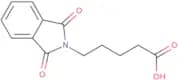
CAS:Versatile small molecule scaffoldFormula:C11H6Cl2N2O3Purity:Min. 95%Molecular weight:285.08 g/mol5-(1,3-Dioxo-2,3-dihydro-1H-isoindol-2-yl)pentanoic acid
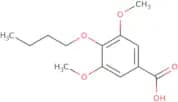
CAS:5-(1,3-Dioxo-2,3-dihydro-1H-isoindol-2-yl)pentanoic acid is a synthetic compound that belongs to the class of enzyme inhibitors. It inhibits the catalytic activity of various enzymes and is used as a research tool for studying enzyme function. 5-(1,3-Dioxo-2,3-dihydro-1H-isoindol-2-yl)pentanoic acid is synthesized by introducing an amide bond between an aldehyde and a carboxylic acid. This compound has been found to focus on peptidyl and phosphonamidate bonds in proteins.Formula:C13H13NO4Purity:Min. 95%Molecular weight:247.25 g/mol4-Butoxy-3,5-dimethoxybenzoic acid
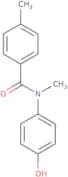
CAS:Versatile small molecule scaffoldFormula:C13H18O5Purity:Min. 95%Molecular weight:254.28 g/molN-(4-Hydroxyphenyl)-N,4-dimethylbenzamide
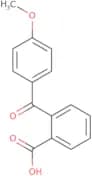
CAS:Versatile small molecule scaffoldFormula:C15H15NO2Purity:Min. 95%Molecular weight:241.28 g/mol2-(4-Methoxybenzoyl)benzenecarboxylic acid
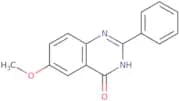
CAS:2-(4-Methoxybenzoyl)benzenecarboxylic acid is a sweetener that is found in the class of benzophenones. It has a taste that is similar to benzoic acid, which is also considered to be a sweetener. 2-(4-Methoxybenzoyl)benzenecarboxylic acid has been shown to be an effective sweetener and can replace sugar in some applications. This compound has been found to have antimicrobial properties, but it is not yet known how these activities compare with those of other compounds in the same class.Formula:C15H12O4Purity:Min. 95%Molecular weight:256.26 g/mol6-Methoxy-2-phenylquinazolin-4(3H)-one
CAS:Versatile small molecule scaffold
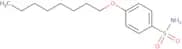
Formula:C15H12N2O2Purity:Min. 95%Molecular weight:252.27 g/mol4-(Octyloxy)benzene-1-sulfonamide
CAS:Versatile small molecule scaffold
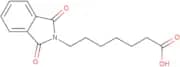
Formula:C14H23NO3SPurity:Min. 95%Molecular weight:285.4 g/mol7-(1,3-Dioxo-2,3-dihydro-1H-isoindol-2-yl)heptanoic acid
CAS:7-(1,3-Dioxo-2,3-dihydro-1H-isoindol-2-yl)heptanoic acid is an intramolecularly acting phthalimide that has been shown to inhibit the production of prostaglandin E2. This compound is a macrocyclic indole derivative and has been shown to be effective in the treatment of inflammatory conditions such as Crohn's disease. 7-(1,3-Dioxo-2,3-dihydro-1H-isoindol-2-yl)heptanoic acid inhibits the enzyme cyclooxygenase II (COXII), which reduces inflammation by blocking the production of prostaglandins.
Formula:C15H17NO4Purity:Min. 95%Molecular weight:275.3 g/mol3-[4-(Dimethylao)phenyl]-1-(4-nitrophenyl)prop-2-en-1-one
CAS:Versatile small molecule scaffold
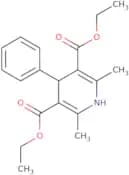
Formula:C17H16N2O3Purity:Min. 95%Molecular weight:296.32 g/molDiethyl 2,6-dimethyl-4-phenyl-1,4-dihydropyridine-3,5-dicarboxylate
CAS:Diethyl 2,6-dimethyl-4-phenyl-1,4-dihydropyridine-3,5-dicarboxylate is a conformationally restricted derivative of acetoacetate. It has been shown to scavenge free radicals and inhibit peroxidation in the presence of other antioxidants. The FTIR spectra show that the compound has a phenyl ring with an acetoacetate substituent at C2 and C3. This compound also contains an ethyl acetoacetate substituent at C2 and C3 as well as a hydrogen bond network between the carbonyl groups and the amide groups. Diethyl 2,6-dimethyl-4-phenyl-1,4-dihydropyridine-3,5-dicarboxylate is an antioxidative agent that can be found in food products such as wine and olive oil.Formula:C19H23NO4Purity:Min. 95%Molecular weight:329.4 g/molRaptinal
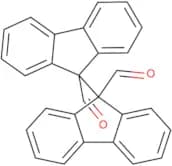
CAS:Raptinal is a molecule that induces apoptotic cell death by interacting with hepg2 cells. It has been shown to induce the release of pro-inflammatory cytokines, such as IL-1β and IL-8, from the cells. Raptinal activates the apoptosis pathway by inducing caspase-3, which then cleaves poly(ADP-ribose) polymerase (PARP), leading to DNA fragmentation and cell death. The mechanism of action for Raptinal is similar to imidazotetrazine, an anti-cancer drug that also induces apoptosis in cancer cells. Raptinal has also been shown to inhibit tumor growth in vivo in animal models of meningioma. Raptinal has antioxidant properties and can protect cells from oxidative damage caused by free radicals. This activity may be due to its ability to scavenge reactive oxygen species or inhibit lipid peroxidation pathways.Formula:C28H18O2Purity:Min. 95%Molecular weight:386.44 g/mol5-Chloro-3-methylpentan-2-one
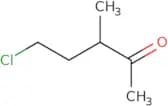
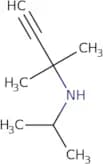
CAS:5-Chloro-3-methylpentan-2-one (5CMP) is an alkaloid that can be found in plants. It has been shown to have bioactive properties, such as being anti-inflammatory and anti-cancer. 5CMP is a precursor to the natural products physovenine and indoline. These compounds are used as targets for drug discovery because of their biological activity. In addition, 5CMP is an intermediate in the synthesis of other biologically active molecules, such as aldehydes and hydrazines. 5CMP is synthesized by dehydration of 2-isopropenyl acetate, which undergoes iminium ion formation and subsequent rearrangement to form the desired product. The reaction yields hydrogen chloride gas, which can be removed by passing through a solution of potassium hydroxide or sodium bicarbonate prior to isolation.Formula:C6H11ClOPurity:Min. 95%Molecular weight:134.6 g/mol(2-Methylbut-3-yn-2-yl)(propan-2-yl)amine
CAS:Versatile small molecule scaffoldFormula:C8H15NPurity:Min. 95%Molecular weight:125.2 g/mol1,4-Butanedithiol
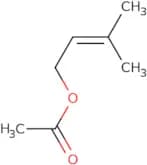
CAS:1,4-Butanedithiol is a molecule with the chemical formula C4H9S. It is classified as an alcohol and has many uses in industry and academia. 1,4-Butanedithiol is soluble in water, methanol, and ethanol. The uptake of 1,4-butanedithiol in cells can be detected by uv absorption spectroscopy or enzymatic assay. 1,4-Butanedithiol also reacts with nucleophilic reagents such as hydrochloric acid or hydrogen fluoride to form ester linkages. The ester linkage between 1,4-butanedithiol and hydrochloric acid is reversible and has been shown to be pH dependent. In vitro assays have shown that 1,4-butanedithiol induces apoptotic effects on cells treated with hydrogen fluoride.Formula:C4H10S2Purity:Min. 95%Molecular weight:122.24 g/molPrenyl acetate
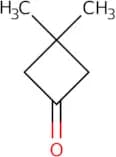
CAS:Prenyl acetate is a prenylated polyhydric alcohol with the chemical formula C10H22O4. It is a colorless liquid with a pleasant smell. Prenyl acetate can be used as an additive to make polymers such as polyesters or polyurethanes more flexible, or in the synthesis of cationic polymerization initiators, which are used in the production of films and coatings. Prenyl acetate has been shown to have physiological effects on animals by acting as an anti-inflammatory agent. Prenyl acetate may also act as a nucleophile that reacts with carboxylic acids to form esters, such as isopropyl palmitate.Formula:C7H12O2Purity:Min. 95%Molecular weight:128.17 g/mol3,3-Dimethylcyclobutan-1-one
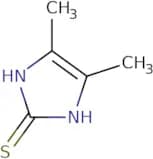
CAS:3,3-Dimethylcyclobutan-1-one is a molecule that has been shown to be a sensitizer of ethylene in the presence of activated oxygen. The kinetics of this reaction were studied by determining the rate constant for the formation of 3,3-dimethylcyclobutan-1-one at various temperatures. This compound is an analog to cyclobutanone and can be synthesized by photolytic or reductive elimination. The nature of the substituents on the ring affects the bond cleavage and product yields during these reactions. 3,3-Dimethylcyclobutan-1-one has been used as a radiation sensitizer for polymers, although this application is limited because it reacts with oxygen. In addition, 3,3-dimethylcyclobutan-1-one can be used to produce isobutene by coupling with acetylene.Formula:C6H10OPurity:Min. 95%Molecular weight:98.14 g/mol4,5-Dimethyl-1H-imidazole-2-thiol
CAS:4,5-Dimethyl-1H-imidazole-2-thiol is a potential drug candidate for cancer therapy. It is an insulin-like growth factor (IGF) inhibitor that can be used to treat cancer. 4,5-Dimethyl-1H-imidazole-2-thiol has the ability to inhibit IGF receptors and reduce cell proliferation in tumor cells. This compound also has the ability to inhibit tyrosine kinase activity and disrupt IGF receptor autophosphorylation. The isoquinolinedione derivative of 4,5-dimethyl 1H imidazole 2 thiol has been shown to have increased potency as an inhibitor of IGF receptors and tyrosine kinase activity in vitro.
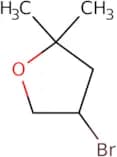
Formula:C5H8N2SPurity:Min. 95%Molecular weight:128.19 g/mol4-Bromo-2,2-dimethyloxolane
CAS:Versatile small molecule scaffoldFormula:C6H11BrOPurity:Min. 95%Molecular weight:179.05 g/mol6-Azaspiro[3.4]octan-5-one
CAS:Versatile small molecule scaffold
Formula:C7H11NOPurity:Min. 95%Molecular weight:125.17 g/mol

![3-[4-(Dimethylao)phenyl]-1-(4-nitrophenyl)prop-2-en-1-one](/_next/image/?url=https%3A%2Fstatic.cymitquimica.com%2Fproducts%2F3D%2Fthumb-webp%2FBAA16123.webp&w=3840&q=75)

![6-Azaspiro[3.4]octan-5-one](/_next/image/?url=https%3A%2Fstatic.cymitquimica.com%2Fproducts%2F3D%2Fthumb-webp%2FBAA19330.webp&w=3840&q=75)