Building Blocks
This section contains fundamental products for the synthesis of organic and biological compounds. Building blocks are the essential starting materials used to construct complex molecules through various chemical reactions. They play a critical role in drug discovery, material science, and chemical research. At CymitQuimica, we offer a diverse range of high-quality building blocks to support your innovative research and industrial projects, ensuring you have the essential components for successful synthesis.
Subcategories of "Building Blocks"
- Boronic Acids & Boronic Acid Derivatives(5,778 products)
- Chiral Building Blocks(1,242 products)
- Hydrocarbon Building Blocks(6,098 products)
- Organic Building Blocks(61,069 products)
Found 197521 products of "Building Blocks"
Sort by
Purity (%)
0
100
|
0
|
50
|
90
|
95
|
100
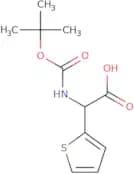
Boc-DL-(2-thienyl)glycine
CAS:<p>Versatile small molecule scaffold</p>Formula:C11H15NO4SPurity:Min. 95%Molecular weight:257.31 g/mol2-{[(tert-Butoxy)carbonyl]amino}-2-(4-methylphenyl)acetic acid
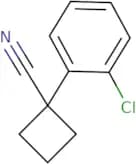
CAS:<p>Versatile small molecule scaffold</p>Formula:C14H19NO4Purity:Min. 95%Molecular weight:265.3 g/mol1-(2-Chlorophenyl)cyclobutanecarbonitrile
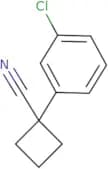
CAS:Versatile small molecule scaffoldFormula:C11H10ClNPurity:Min. 95%Molecular weight:191.66 g/mol1-(3-chlorophenyl)cyclobutane-1-carbonitrile
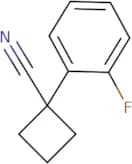
CAS:<p>Versatile small molecule scaffold</p>Formula:C11H10ClNPurity:Min. 95%Molecular weight:191.66 g/mol1-(2-Fluorophenyl)cyclobutane-1-carbonitrile
CAS:Versatile small molecule scaffoldFormula:C11H10FNPurity:Min. 95%Molecular weight:175.2 g/molMethyl 5,6-dimethoxy-1H-indole-2-carboxylate
CAS:<p>Methyl 5,6-dimethoxy-1H-indole-2-carboxylate is a hydroxy oxindole compound. It is used in a model system to study the functional theory of density and planarity. In this system, it is bimetallic, with an indole derivative as the ligand. The structural theory of methyl 5,6-dimethoxy-1H-indole-2-carboxylate involves hydrogen bonds between the indole ring and the metal complex. Methyl 5,6-dimethoxy-1H-indole-2-carboxylate has been shown to have spectroscopic properties that are different than those of other oxindoles.</p>Formula:C12H13NO4Purity:Min. 95%Molecular weight:235.24 g/moltert-Butyl N-[(3S,4S)-rel-3-(hydroxymethyl)-4-piperidyl]carbamate
CAS:Versatile small molecule scaffoldFormula:C11H22N2O3Purity:Min. 95%Molecular weight:230.31 g/molrac-Methyl 2-[(1R,2R)-2-{[(tert-butoxy)carbonyl]amino}cyclohexyl]acetate
CAS:<p>Versatile small molecule scaffold</p>Formula:C14H25NO4Purity:Min. 95%Molecular weight:271.4 g/molrac-(3aR,6aS)-Hexahydro-1H-5λ6-thieno[3,4-b]pyrrole-2,5,5-trione
CAS:Versatile small molecule scaffoldFormula:C6H9NO3SPurity:Min. 95%Molecular weight:175.2 g/mol1-Oxo-1,2-dihydroisoquinoline-4-carbonitrile
CAS:Versatile small molecule scaffoldFormula:C10H6N2OPurity:Min. 95%Molecular weight:170.17 g/mol3-(3-Methylbutyl)cyclopentan-1-one
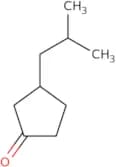
CAS:<p>Versatile small molecule scaffold</p>Formula:C10H18OPurity:Min. 95%Molecular weight:154.25 g/mol3-(2-Methylpropyl)cyclopentan-1-one
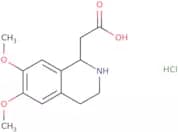
CAS:<p>Versatile small molecule scaffold</p>Formula:C9H16OPurity:Min. 95%Molecular weight:140.22 g/mol2-(6,7-Dimethoxy-1,2,3,4-tetrahydroisoquinolin-1-yl)acetic acid hydrochloride
CAS:Versatile small molecule scaffoldFormula:C13H18ClNO4Purity:Min. 95%Molecular weight:287.74 g/mol3-(Bromomethyl)-1,2,5-thiadiazole
CAS:<p>Versatile small molecule scaffold</p>Formula:C3H3BrN2SPurity:Min. 95%Molecular weight:179.04 g/molMethyl 2-formyl-4,5-dimethoxybenzoate
CAS:Versatile small molecule scaffoldFormula:C11H12O5Purity:Min. 95%Molecular weight:224.21 g/mol2-(1,2,3,4-Tetrahydroisoquinolin-1-yl)acetic acid hydrochloride
CAS:Versatile small molecule scaffoldFormula:C11H14ClNO2Purity:Min. 95%Molecular weight:227.69 g/mol(3-Methylcyclohexyl)methanol
CAS:<p>Methylcyclohexanol is an esterification product that can be used in the production of isophthalate and hydrogenated products. It is produced through the reaction of methanol with isophthalic acid, which is a monomer in the production of polyester. The esterification reaction produces methylcyclohexyl methanoate, which reacts with hydrogen gas to form methylcyclohexylmethanol. This process also produces water as a by-product.</p>Formula:C8H16OPurity:Min. 95%Molecular weight:128.21 g/molMethyl 2-(chloromethyl)furan-3-carboxylate
CAS:<p>Methyl 2-(chloromethyl)furan-3-carboxylate is a heterocyclic compound that can be synthesized by cyclization of methyl 2-chlorobenzoylacetate with nitroethane and formaldehyde. It is a heterocyclic system with a six-membered ring containing two double bonds.</p>Formula:C7H7ClO3Purity:Min. 95%Molecular weight:174.58 g/molMethyl 2-(bromomethyl)-3-furoate
CAS:<p>Methyl 2-(bromomethyl)-3-furoate is a muscarinic acetylcholine receptor agonist. It has been shown to bind to the M1 and M3 subtypes of the muscarinic acetylcholine receptors, but is not active against the M2 subtype. This drug has been shown to be an allosteric modulator of the acetylcholine receptors and will decrease the rate at which they are desensitized after binding to acetylcholine. Methyl 2-(bromomethyl)-3-furoate binds to a different site on the receptor than other agonists, such as carbachol and bethanechol, and offers advantages in terms of selectivity and optimization for both chemotypes and profiles.</p>Formula:C7H7BrO3Purity:Min. 95%Molecular weight:219.03 g/molEthyl 2-(chloromethyl)furan-3-carboxylate
CAS:Versatile small molecule scaffoldFormula:C8H9ClO3Purity:Min. 95%Molecular weight:188.61 g/mol

![2-{[(tert-Butoxy)carbonyl]amino}-2-(4-methylphenyl)acetic acid](/_next/image/?url=https%3A%2Fstatic.cymitquimica.com%2Fproducts%2F3D%2Fthumb-webp%2FDBA04477.webp&w=3840&q=75)

![tert-Butyl N-[(3S,4S)-rel-3-(hydroxymethyl)-4-piperidyl]carbamate](/_next/image/?url=https%3A%2Fstatic.cymitquimica.com%2Fproducts%2F3D%2Fthumb-webp%2FDBD84004.webp&w=3840&q=75)
![rac-Methyl 2-[(1R,2R)-2-{[(tert-butoxy)carbonyl]amino}cyclohexyl]acetate](/_next/image/?url=https%3A%2Fstatic.cymitquimica.com%2Fproducts%2F3D%2Fthumb-webp%2FDBD85721.webp&w=3840&q=75)
![rac-(3aR,6aS)-Hexahydro-1H-5λ6-thieno[3,4-b]pyrrole-2,5,5-trione](/_next/image/?url=https%3A%2Fstatic.cymitquimica.com%2Fproducts%2F3D%2Fthumb-webp%2FDBD87285.webp&w=3840&q=75)