Building Blocks
This section contains fundamental products for the synthesis of organic and biological compounds. Building blocks are the essential starting materials used to construct complex molecules through various chemical reactions. They play a critical role in drug discovery, material science, and chemical research. At CymitQuimica, we offer a diverse range of high-quality building blocks to support your innovative research and industrial projects, ensuring you have the essential components for successful synthesis.
Subcategories of "Building Blocks"
- Boronic Acids & Boronic Acid Derivatives(5,778 products)
- Chiral Building Blocks(1,242 products)
- Hydrocarbon Building Blocks(6,098 products)
- Organic Building Blocks(61,084 products)
Found 198714 products of "Building Blocks"
Sort by
Purity (%)
0
100
|
0
|
50
|
90
|
95
|
100
(4-Hydroxy-3,5-dimethoxyphenyl)methanaminium chloride
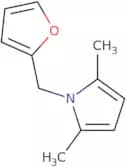
CAS:Versatile small molecule scaffoldFormula:C9H14ClNO3Purity:Min. 95%Molecular weight:219.66 g/mol1-(Furan-2-ylmethyl)-2,5-dimethyl-1H-pyrrole
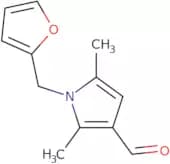
CAS:<p>Versatile small molecule scaffold</p>Formula:C11H13NOPurity:Min. 95%Molecular weight:175.23 g/mol1-(Furan-2-ylmethyl)-2,5-dimethyl-1H-pyrrole-3-carbaldehyde
CAS:Versatile small molecule scaffoldFormula:C12H13NO2Purity:Min. 95%Molecular weight:203.24 g/mol1-oxa-3,8-diazaspiro[4.5]decan-2-one hydrochloride
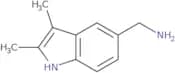
CAS:Versatile small molecule scaffoldFormula:C7H12N2O2·HClPurity:Min. 95%Molecular weight:192.64 g/molC-(2,3-Dimethyl-1H-indol-5-yl)-methylamine
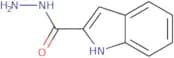
CAS:<p>Versatile small molecule scaffold</p>Formula:C11H14N2Purity:Min. 95%Molecular weight:174.25 g/mol1H-Indole-2-carbohydrazide
CAS:<p>1H-Indole-2-carbohydrazide is a pyrazole ring that has a fatty acid chain. It is a precursor to the synthesis of 1,4-dihydropyridazine and its derivatives. 1H-Indole-2-carbohydrazide has been shown to inhibit the growth of hepatitis virus in cell culture by inducing apoptotic cell death. This compound also inhibits the replication of several DNA viruses, including herpes simplex virus type I and human immunodeficiency virus type 1 (HIV). The compound may function as a chloride ion probe, which can be used for biological functions such as measuring intracellular chloride levels in living cells.<br>1H-Indole-2-carbohydrazide has been shown to inhibit the growth of hepatitis virus in cell culture by inducing apoptotic cell death. This compound also inhibits the replication of several DNA viruses, including herpes simplex virus type I and human immunodeficiency virus type 1</p>Formula:C9H9N3OPurity:Min. 95%Molecular weight:175.19 g/mol1-Cyclohexyl-2-thiourea
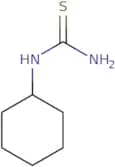
CAS:<p>Cyclohexyl-2-thiourea (CHT) is an organic compound that belongs to the group of p2 compounds. It can be used as a polymerization inhibitor in the production of polycarbonates and other plastics, as well as an antimicrobial agent. CHT inhibits the activity of the ns3 protease, which is involved in the synthesis of inflammatory proteins. It also reduces the production of inflammatory cytokines and proteins, such as tumor necrosis factor-α and interleukin-6. Cyclohexyl-2-thiourea has been shown to inhibit cancer cell growth by binding to DNA. The bound form of CHT is more stable than its free form and has a longer half life. This drug also has anti-inflammatory properties, which may be due to its inhibition of acylurea formation or nitrosylation reactions.</p>Formula:C7H14N2SPurity:Min. 95%Molecular weight:158.26 g/mol4-(2-Chlorophenoxy)butanoic acid
CAS:Controlled Product<p>Versatile small molecule scaffold</p>Formula:C10H11ClO3Purity:Min. 95%Molecular weight:214.64 g/mol(+/-)-Trans-1,2-cyclopentanediol
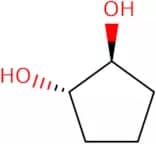
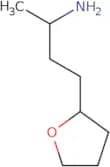
CAS:(+/-)-Trans-1,2-cyclopentanediol is a hydrogen-bonded molecule that contains ester linkages. The covid-19 pandemic has been shown to cause an increase in the levels of (+/-)-trans-1,2-cyclopentanediol in the blood of patients. The chemical ionization technique was used to measure the amount of this metabolite in patients with influenza A. The kinetic and hydrated properties of (+/-)-trans-1,2-cyclopentanediol have been measured using a spectrometer and mass spectrometry respectively. In addition, proton nuclear magnetic resonance (nmr) spectra were collected for triple-quadrupole mass spectrometry to identify the molecular structure of (+/-)-trans-1,2-cyclopentanediol. Lastly, kinetic energy calculations were carried out on the exothermic reaction between (+/-)-trans-1,2-cyclopentanediol and carbon dioxide.Formula:C5H10O2Purity:Min. 95%Molecular weight:102.13 g/mol4-(Oxolan-2-yl)butan-2-amine
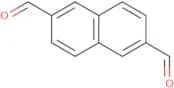
CAS:<p>Versatile small molecule scaffold</p>Formula:C8H17NOPurity:Min. 95%Molecular weight:143.23 g/molNaphthalene-2,6-dicarbaldehyde
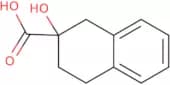
CAS:<p>Versatile small molecule scaffold</p>Formula:C12H8O2Purity:Min. 95%Molecular weight:184.19 g/mol2-Hydroxy-1,2,3,4-tetrahydronaphthalene-2-carboxylic acid
CAS:2-Hydroxy-1,2,3,4-tetrahydronaphthalene-2-carboxylic acid is a synthetic anthracycline that has been used as an experimental cancer drug. It is a naphthoic acid and an aglycone of the naphthoic acid ester. 2-Hydroxy-1,2,3,4-tetrahydronaphthalene-2-carboxylic acid is hydrolyzed by alkaline or acidic esterases and reacts with halogens. This reaction product undergoes carcinostatic reactions with DNA in the cell nucleus.Formula:C11H12O3Purity:Min. 95%Molecular weight:192.21 g/mol3-Iodoazepan-2-one
CAS:<p>Versatile small molecule scaffold</p>Formula:C6H10INOPurity:Min. 95%Molecular weight:239.1 g/mol[(1-aminocyclohexyl)methyl]amine
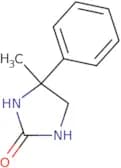
CAS:<p>[(1-aminocyclohexyl)methyl]amine is a white crystalline solid that is soluble in water, alcohol, and ether. It has a pKb of 2.5 and decomposes at 240°C. [(1-aminocyclohexyl)methyl]amine is an unsymmetrical molecule with two phenyl groups. This compound has been shown to catalyze the reaction between cyclohexanone and hydrophilic inorganic compounds, such as hydrochloric acid or potassium hydroxide, to form alkali metal cyclohexanones. [(1-aminocyclohexyl)methyl]amine also has antitumor activity by causing DNA damage and inhibiting protein synthesis in cancer cells.<br>[[File:<a href="https://upload.wikimedia.org/wikipedia/commons/thumb/2/2a/Chemical_Structures_of_Quinolones-5D4A8F87E" target="_blank" rel="noreferrer noopener">https://upload.wikimedia.org/wikipedia/commons/thumb/2/2a/Chemical_Structures_of_Quinolones-5D4A8F87E</a></p>Formula:C7H16N2Purity:Min. 95%Molecular weight:128.22 g/mol4-Methyl-4-phenylimidazolidin-2-one
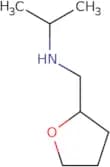
CAS:<p>Versatile small molecule scaffold</p>Formula:C10H12N2OPurity:Min. 95%Molecular weight:176.21 g/mol(Oxolan-2-ylmethyl)(propan-2-yl)amine
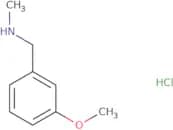
CAS:<p>Versatile small molecule scaffold</p>Formula:C8H17NOPurity:Min. 95%Molecular weight:143.23 g/mol(3-Methoxybenzyl)methylamine hydrochloride
CAS:<p>Versatile small molecule scaffold</p>Formula:C9H14ClNOPurity:Min. 95%Molecular weight:187.66 g/mol1-[1-(4-Fluorophenyl)-5-methyl-1H-pyrazol-4-yl]ethan-1-one
CAS:<p>Versatile small molecule scaffold</p>Formula:C12H11FN2OPurity:Min. 95%Molecular weight:218.23 g/mol1-[5-Methyl-1-(pyridin-2-yl)-1H-pyrazol-4-yl]ethan-1-one
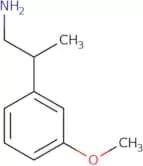
CAS:<p>Versatile small molecule scaffold</p>Formula:C11H11N3OPurity:Min. 95%Molecular weight:201.22 g/mol(+)-3-Methoxy-β-methyl-benzeneethanamine
CAS:Controlled ProductVersatile small molecule scaffoldFormula:C10H15NOPurity:Min. 95%Molecular weight:165.23 g/mol


![1-oxa-3,8-diazaspiro[4.5]decan-2-one hydrochloride](/_next/image/?url=https%3A%2Fstatic.cymitquimica.com%2Fproducts%2F3D%2Fthumb-webp%2FFAA05296.webp&w=3840&q=75)
![[(1-aminocyclohexyl)methyl]amine](/_next/image/?url=https%3A%2Fstatic.cymitquimica.com%2Fproducts%2F3D%2Fthumb-webp%2FFAA06267.webp&w=3840&q=75)
![1-[1-(4-Fluorophenyl)-5-methyl-1H-pyrazol-4-yl]ethan-1-one](/_next/image/?url=https%3A%2Fstatic.cymitquimica.com%2Fproducts%2F3D%2Fthumb-webp%2FFAA07858.webp&w=3840&q=75)
![1-[5-Methyl-1-(pyridin-2-yl)-1H-pyrazol-4-yl]ethan-1-one](/_next/image/?url=https%3A%2Fstatic.cymitquimica.com%2Fproducts%2F3D%2Fthumb-webp%2FFAA07864.webp&w=3840&q=75)