


Building Blocks
This section contains fundamental products for the synthesis of organic and biological compounds. Building blocks are the essential starting materials used to construct complex molecules through various chemical reactions. They play a critical role in drug discovery, material science, and chemical research. At CymitQuimica, we offer a diverse range of high-quality building blocks to support your innovative research and industrial projects, ensuring you have the essential components for successful synthesis.
Subcategories of "Building Blocks"
- Boronic Acids & Boronic Acid Derivatives(5,778 products)
- Chiral Building Blocks(1,242 products)
- Hydrocarbon Building Blocks(6,098 products)
- Organic Building Blocks(61,069 products)
Found 197521 products of "Building Blocks"
Sort by
Purity (%)
0
100
|
0
|
50
|
90
|
95
|
100
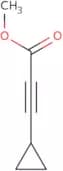
Methyl 3-Cyclopropylpropiolate
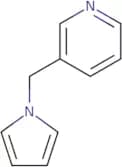
CAS:<p>Versatile small molecule scaffold</p>Formula:C7H8O2Purity:Min. 95%Molecular weight:124.14 g/mol3-(1-Pyrrolylmethyl)pyridine
CAS:3-(1-Pyrrolylmethyl)pyridine (3PMP) is a pyrrole that can be used as an electrocatalyst in polymerization reactions. The catalytic activity of 3PMP has been studied by electrochemical impedance spectroscopy and voltammetry. 3PMP is also a good electron donor because of its ability to form a stable radical cation at the electrode. This redox potential may be due to the presence of pyridine nitrogen, which is able to form strong hydrogen bonds with other molecules. 3PMP has also been shown to have good transport properties and can be used for copolymerization with other monomers, such as tetraphenylporphine, leading to an exponential increase in the number of polymer chains formed.Formula:C10H10N2Purity:Min. 95%Molecular weight:158.2 g/mol2-[(2,3-Dihydro-1H-inden-2-yl)amino]acetic acid
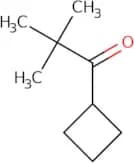
CAS:2-[(2,3-Dihydro-1H-inden-2-yl)amino]acetic acid is a non-peptide neurotransmitter that is synthesized by the LNTN cells in the rat brain. It has high concentrations in the central nervous system and it has been found to be an agonist at the NOP receptor. The drug is metabolized by hydrolytic enzymes, such as esterases and glucuronidases, which are present in high concentrations in the body. This compound may be used for diagnostic purposes with its profile of pressor activity and hypotensive effects.Formula:C11H13NO2Purity:Min. 95%Molecular weight:191.23 g/mol1-Cyclobutyl-2,2-dimethylpropan-1-one
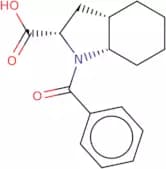
CAS:<p>Versatile small molecule scaffold</p>Formula:C9H16OPurity:Min. 95%Molecular weight:140.22 g/mol(2S,3aS,7aS)-1-Benzoyl-octahydro-1H-indole-2-carboxylic acid
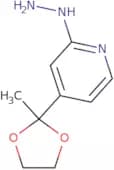
CAS:Versatile small molecule scaffoldFormula:C16H19NO3Purity:Min. 95%Molecular weight:273.3 g/mol2-Hydrazinyl-4-(2-methyl-1,3-dioxolan-2-yl)pyridine
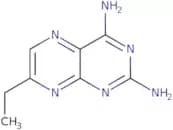
CAS:<p>Versatile small molecule scaffold</p>Formula:C9H13N3O2Purity:Min. 95%Molecular weight:195.22 g/mol7-Ethylpteridine-2,4-diamine
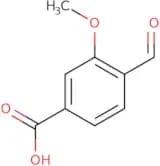
CAS:<p>Versatile small molecule scaffold</p>Formula:C8H10N6Purity:Min. 95%Molecular weight:190.21 g/mol4-Formyl-3-methoxybenzoic acid
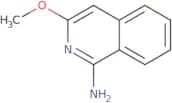
CAS:<p>4-Formyl-3-methoxybenzoic acid is a sulfamic acid derivative that has been used in the treatment of asthma. It is a prodrug that converts to its active form, methanesulfonic acid, by enzymatic transfer. The target product of this reaction is zafirlukast, which competitively blocks leukotrienes at the cysteinyl leukotriene receptor. Methanesulfonic acid acts as an inhibitor of hydrogen transfer and may also act as a proton ionophore in the lungs. 4-Formyl-3-methoxybenzoic acid can be synthesized on a large scale with chemical products that are readily available. This agent reacts with proline and protonates it.</p>Formula:C9H8O4Purity:Min. 95%Molecular weight:180.16 g/mol3-Methoxyisoquinolin-1-amine
CAS:<p>Versatile small molecule scaffold</p>Formula:C10H10N2OPurity:Min. 95%Molecular weight:174.2 g/mol2-{[(2-Methoxybenzyl)oxy]methyl}oxirane
CAS:<p>2-{[(2-Methoxybenzyl)oxy]methyl}oxirane is a monoclonal antibody that binds to the follicle-stimulating hormone receptor (FSHR) and blocks its activity. It has been shown to be effective in autotransplantation, which is a treatment for infertility in women. The antibody can be used as an anti-apoptotic agent and may have potential use as a cancer therapy. 2-{[(2-Methoxybenzyl)oxy]methyl}oxirane has shown promising results in vivo in mouse models of skin cancer, leukocytes, and murine melanoma. This drug also has the ability to inhibit the proliferation of tumor cells by inducing apoptosis through binding to annexin V.</p>Formula:C11H14O3Purity:Min. 95%Molecular weight:194.23 g/mol2-{[(4-Methoxyphenyl)methoxy]methyl}oxirane
CAS:<p>Versatile small molecule scaffold</p>Formula:C11H14O3Purity:Min. 95%Molecular weight:194.23 g/mol2-[(1,2,3,4-Tetrahydronaphthalen-1-yloxy)methyl]oxirane
CAS:<p>Versatile small molecule scaffold</p>Formula:C13H16O2Purity:Min. 95%Molecular weight:204.26 g/mol2-Chloro-N-[2-(2-methoxyethoxy)-5-(trifluoromethyl)phenyl]acetamide
CAS:Versatile small molecule scaffoldFormula:C12H13ClF3NO3Purity:Min. 95%Molecular weight:311.68 g/mol[4-(4-Methylbenzenesulfonyl)phenyl]hydrazine
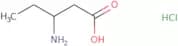
CAS:<p>Versatile small molecule scaffold</p>Formula:C13H14N2O2SPurity:Min. 95%Molecular weight:262.33 g/mol3-Amino-pentanoic acid hydrochloride
CAS:3-Amino-pentanoic acid hydrochloride is a glycine analog, which blocks the glycine receptor of the NMDA type and inhibits glutamate binding. 3-Amino-pentanoic acid hydrochloride has been shown to have synergistic interaction with aminooxyacetic acid, an inhibitor of the glycine transporter. This increases the concentration of glycine in the synapse and leads to an anticonvulsant effect. 3-Amino-pentanoic acid hydrochloride also interacts with γ-aminobutyric acid (GABA) receptors and taurine receptors, which may be due to its structural similarity to these compounds.Formula:C5H12ClNO2Purity:Min. 95%Molecular weight:153.61 g/mol3-Amino-4-methylpentanoic acid hydrochloride
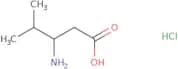
CAS:<p>Versatile small molecule scaffold</p>Formula:C6H14ClNO2Purity:Min. 95%Molecular weight:167.63 g/mol3-[(Pyrrolidin-1-yl)carbonyl]phenol
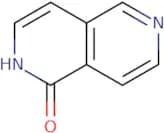
CAS:<p>Versatile small molecule scaffold</p>Formula:C11H13NO2Purity:Min. 95%Molecular weight:191.23 g/mol2,6-Naphthyridin-1(2H)-one
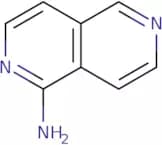
CAS:<p>2,6-Naphthyridin-1(2H)-one is a potent and selective inhibitor of the chemokine receptor CXCR4. It is a novel and innovative compound that has been shown to have neuropathic pain activity in animal models. This agent has also been shown to inhibit the growth of cancer cells in vitro. The substitution pattern on this molecule may be responsible for its binding affinity to CXCR4 receptors as well as its selectivity over other chemokine receptors. 2,6-Naphthyridin-1(2H)-one has been shown to be an antagonist of the chemokine receptor CXCR4, which may be beneficial for treatment of chronic inflammatory diseases or cancer.</p>Formula:C8H6N2OPurity:Min. 95%Molecular weight:146.15 g/mol2,6-Naphthyridin-1-amine
CAS:<p>Versatile small molecule scaffold</p>Formula:C8H7N3Purity:Min. 95%Molecular weight:145.16 g/molN-[3-(Hydroxymethyl)phenyl]benzamide
CAS:<p>Versatile small molecule scaffold</p>Formula:C14H13NO2Purity:Min. 95%Molecular weight:227.26 g/mol

![2-[(2,3-Dihydro-1H-inden-2-yl)amino]acetic acid](/_next/image/?url=https%3A%2Fstatic.cymitquimica.com%2Fproducts%2F3D%2Fthumb-webp%2FFDA87170.webp&w=3840&q=75)
![2-{[(2-Methoxybenzyl)oxy]methyl}oxirane](/_next/image/?url=https%3A%2Fstatic.cymitquimica.com%2Fproducts%2F3D%2Fthumb-webp%2FFDA90999.webp&w=3840&q=75)
![2-{[(4-Methoxyphenyl)methoxy]methyl}oxirane](/_next/image/?url=https%3A%2Fstatic.cymitquimica.com%2Fproducts%2F3D%2Fthumb-webp%2FFDA91001.webp&w=3840&q=75)
![2-[(1,2,3,4-Tetrahydronaphthalen-1-yloxy)methyl]oxirane](/_next/image/?url=https%3A%2Fstatic.cymitquimica.com%2Fproducts%2F3D%2Fthumb-webp%2FFDA91010.webp&w=3840&q=75)
![2-Chloro-N-[2-(2-methoxyethoxy)-5-(trifluoromethyl)phenyl]acetamide](/_next/image/?url=https%3A%2Fstatic.cymitquimica.com%2Fproducts%2F3D%2Fthumb-webp%2FFDA91070.webp&w=3840&q=75)
![[4-(4-Methylbenzenesulfonyl)phenyl]hydrazine](/_next/image/?url=https%3A%2Fstatic.cymitquimica.com%2Fproducts%2F3D%2Fthumb-webp%2FFDA91228.webp&w=3840&q=75)
![3-[(Pyrrolidin-1-yl)carbonyl]phenol](/_next/image/?url=https%3A%2Fstatic.cymitquimica.com%2Fproducts%2F3D%2Fthumb-webp%2FFDA91739.webp&w=3840&q=75)
![N-[3-(Hydroxymethyl)phenyl]benzamide](/_next/image/?url=https%3A%2Fstatic.cymitquimica.com%2Fproducts%2F3D%2Fthumb-webp%2FFDA93665.webp&w=3840&q=75)