


Building Blocks
This section contains fundamental products for the synthesis of organic and biological compounds. Building blocks are the essential starting materials used to construct complex molecules through various chemical reactions. They play a critical role in drug discovery, material science, and chemical research. At CymitQuimica, we offer a diverse range of high-quality building blocks to support your innovative research and industrial projects, ensuring you have the essential components for successful synthesis.
Subcategories of "Building Blocks"
- Boronic Acids & Boronic Acid Derivatives(5,778 products)
- Chiral Building Blocks(1,242 products)
- Hydrocarbon Building Blocks(6,098 products)
- Organic Building Blocks(61,084 products)
Found 198714 products of "Building Blocks"
Sort by
Purity (%)
0
100
|
0
|
50
|
90
|
95
|
100
2-{[(tert-Butoxy)carbonyl]amino}-3-(pyridin-3-yl)propanoic acid
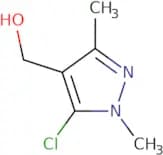
CAS:<p>Versatile small molecule scaffold</p>Formula:C13H18N2O4Purity:Min. 95%Molecular weight:266.3 g/mol(5-chloro-1,3-dimethyl-1H-pyrazol-4-yl)methanol
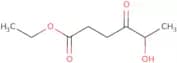
CAS:<p>Versatile small molecule scaffold</p>Formula:C6H9ClN2OPurity:Min. 95%Molecular weight:160.6 g/molEthyl 5-hydroxy-4-oxohexanoate
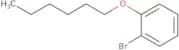
CAS:<p>Ethyl 5-hydroxy-4-oxohexanoate (EHOH) is a stereoisomer of the amino acid glutamic acid. It has been synthesized in a multidimensional, stereochemical, and biomimetic manner. EHOH is an important precursor for the production of various food flavors such as cheese, bread, milk, and soy sauce. The synthesis of EHOH is catalyzed by decarboxylase and lactonization using cerevisiae as the catalyst. The synthesis of EHOH starts with the conversion of acetaldehyde to ethyl alcohol by yeast cells. This conversion is followed by the addition of l-glutamic acid to produce glutamate and then deamination to form pyruvic acid. Pyruvic acid is then converted to lactic acid by lactonization with yeast cells or bacteria such as Lactobacillus. The final step in the synthesis of EHOH is decarboxylation to produce eth</p>Formula:C8H14O4Purity:Min. 95%Molecular weight:174.19 g/mol1-Bromo-2-(hexyloxy)benzene
CAS:<p>1-Bromo-2-(hexyloxy)benzene is an aromatic halide that can be synthesized from pyrazinecarboxamide. It undergoes aminocarbonylation with carbon monoxide and a halide, yielding a primary amide. This reaction is carried out in the presence of a base, such as triethylamine or potassium tert-butoxide. 1-Bromo-2-(hexyloxy)benzene has been shown to produce high yields and functionalized products, which are useful for pharmaceuticals and dyes.</p>Formula:C12H17BrOPurity:Min. 95%Molecular weight:257.17 g/mol[(4-Chlorophenyl)methyl][2-(pyrrolidin-1-yl)ethyl]amine
CAS:<p>Versatile small molecule scaffold</p>Formula:C13H19ClN2Purity:Min. 95%Molecular weight:238.75 g/molBenzyl[2-(pyrrolidin-1-yl)ethyl]amine dihydrochloride
CAS:<p>Versatile small molecule scaffold</p>Formula:C13H22Cl2N2Purity:Min. 95%Molecular weight:277.23 g/mol[(4-Chlorophenyl)methyl][2-(pyrrolidin-1-yl)ethyl]amine dihydrochloride
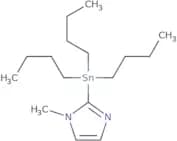
CAS:<p>Versatile small molecule scaffold</p>Formula:C13H21Cl3N2Purity:Min. 95%Molecular weight:311.7 g/mol1-methyl-2-(tributylstannyl)-1H-imidazole
CAS:Controlled Product<p>Versatile small molecule scaffold</p>Formula:C16H32N2SnPurity:Min. 95%Molecular weight:371.1 g/mol1,2,5,6,7,8-Hexahydroazocin-2-one
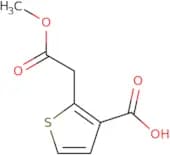
CAS:<p>Versatile small molecule scaffold</p>Formula:C7H11NOPurity:Min. 95%Molecular weight:125.17 g/mol2-(2-Methoxy-2-oxoethyl)thiophene-3-carboxylic acid
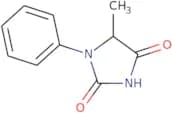
CAS:Versatile small molecule scaffoldFormula:C8H8O4SPurity:Min. 95%Molecular weight:200.21 g/mol5-Methyl-1-phenylimidazolidine-2,4-dione
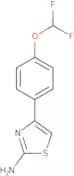
CAS:<p>Versatile small molecule scaffold</p>Formula:C10H10N2O2Purity:Min. 95%Molecular weight:190.2 g/mol4-(4-Difluoromethoxy-phenyl)-thiazol-2-ylamine
CAS:<p>Versatile small molecule scaffold</p>Formula:C10H8F2N2OSPurity:Min. 95%Molecular weight:242.24 g/mol4-[4-(Benzyloxy)phenyl]-1,3-thiazol-2-amine
CAS:<p>Versatile small molecule scaffold</p>Formula:C16H14N2OSPurity:Min. 95%Molecular weight:282.4 g/mol4-(4-Methoxy-phenyl)-5-methyl-thiazol-2-ylamine
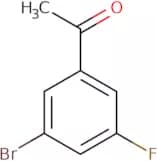
CAS:<p>Versatile small molecule scaffold</p>Formula:C11H12N2OSPurity:Min. 95%Molecular weight:220.3 g/mol1-(3-Bromo-5-fluorophenyl)ethanone
CAS:<p>Versatile small molecule scaffold</p>Formula:C8H6BrFOPurity:Min. 95%Molecular weight:217.04 g/mol3-(4-Bromophenyl)-2-propen-1-ol
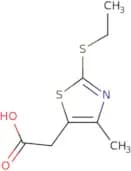
CAS:<p>3-(4-Bromophenyl)-2-propen-1-ol is a biomolecule that is a stereoisomer of epoxypropane. It can be synthesized by the epoxidation of 3-bromobenzaldehyde with sodium hydroxide and tetrahydrofuran in the presence of catalysts such as FeCl3. This compound has been shown to have affinity for rat brain tissue and to inhibit the reuptake of noradrenaline, which is a neurotransmitter. The stereogenic center, which is located at the C3 position, can be substituted with other groups such as alcohols or cinnamyl. The bromohydrins formed during this reaction are nucleophiles that can also react with electrophilic compounds.</p>Formula:C9H9BrOPurity:Min. 95%Molecular weight:213.08 g/mol2-(2-(Ethylthio)-4-methylthiazol-5-yl)acetic acid
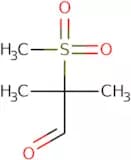
CAS:<p>Versatile small molecule scaffold</p>Formula:C8H11NO2S2Purity:Min. 95%Molecular weight:217.3 g/mol2-Methanesulfonyl-2-methylpropanal
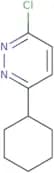
CAS:<p>Versatile small molecule scaffold</p>Formula:C5H10O3SPurity:Min. 95%Molecular weight:150.2 g/mol3-Chloro-6-cyclohexylpyridazine
CAS:<p>Versatile small molecule scaffold</p>Formula:C10H13ClN2Purity:Min. 95%Molecular weight:196.67 g/mol1,3-Diiodobicyclo[1.1.1]pentane
CAS:<p>1,3-Diiodobicyclo[1.1.1]pentane is a derivatized molecule that can be used in a number of different ways. It has been used to study the conformation and strain of this molecule, as well as its reactivity with other molecules. 1,3-Diiodobicyclo[1.1.1]pentane has been shown to have an increased susceptibility to nucleophilic attack by amines, which may be due to the presence of the sulfoxide group on the ring system. This mechanistic study provides insight into how this molecule can be functionalized for different purposes.</p>Formula:C5H6I2Purity:Min. 95%Molecular weight:319.91 g/mol
![2-{[(tert-Butoxy)carbonyl]amino}-3-(pyridin-3-yl)propanoic acid](/_next/image/?url=https%3A%2Fstatic.cymitquimica.com%2Fproducts%2F3D%2Fthumb-webp%2FFEA45425.webp&w=3840&q=75)

![[(4-Chlorophenyl)methyl][2-(pyrrolidin-1-yl)ethyl]amine](/_next/image/?url=https%3A%2Fstatic.cymitquimica.com%2Fproducts%2F3D%2Fthumb-webp%2FFEA47908.webp&w=3840&q=75)
![Benzyl[2-(pyrrolidin-1-yl)ethyl]amine dihydrochloride](/_next/image/?url=https%3A%2Fstatic.cymitquimica.com%2Fproducts%2F3D%2Fthumb-webp%2FFEA47910.webp&w=3840&q=75)
![[(4-Chlorophenyl)methyl][2-(pyrrolidin-1-yl)ethyl]amine dihydrochloride](/_next/image/?url=https%3A%2Fstatic.cymitquimica.com%2Fproducts%2F3D%2Fthumb-webp%2FFEA47911.webp&w=3840&q=75)

![4-[4-(Benzyloxy)phenyl]-1,3-thiazol-2-amine](/_next/image/?url=https%3A%2Fstatic.cymitquimica.com%2Fproducts%2F3D%2Fthumb-webp%2FFEA51283.webp&w=3840&q=75)


![1,3-Diiodobicyclo[1.1.1]pentane](/_next/image/?url=https%3A%2Fstatic.cymitquimica.com%2Fproducts%2F3D%2Fthumb-webp%2FFEA54298.webp&w=3840&q=75)