Building Blocks
This section contains fundamental products for the synthesis of organic and biological compounds. Building blocks are the essential starting materials used to construct complex molecules through various chemical reactions. They play a critical role in drug discovery, material science, and chemical research. At CymitQuimica, we offer a diverse range of high-quality building blocks to support your innovative research and industrial projects, ensuring you have the essential components for successful synthesis.
Subcategories of "Building Blocks"
- Boronic Acids & Boronic Acid Derivatives(5,778 products)
- Chiral Building Blocks(1,242 products)
- Hydrocarbon Building Blocks(6,098 products)
- Organic Building Blocks(61,084 products)
Found 198714 products of "Building Blocks"
Sort by
Purity (%)
0
100
|
0
|
50
|
90
|
95
|
100
Furo[2,3-b]pyridine-2-carbaldehyde
CAS:<p>Versatile small molecule scaffold</p>Formula:C8H5NO2Purity:Min. 95%Molecular weight:147.13 g/mol2,2-Dimethyl-1-phenylcyclopropan-1-amine
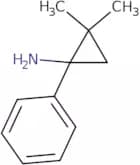
CAS:<p>Versatile small molecule scaffold</p>Formula:C11H15NPurity:Min. 95%Molecular weight:161.24 g/mol2-(3-Phenoxyphenyl)acetaldehyde
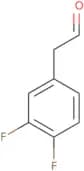
CAS:<p>Versatile small molecule scaffold</p>Formula:C14H12O2Purity:Min. 95%Molecular weight:212.2 g/mol2-(3,4-Difluorophenyl)acetaldehyde
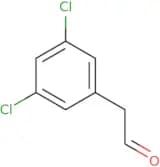
CAS:<p>Versatile small molecule scaffold</p>Formula:C8H6F2OPurity:Min. 95%Molecular weight:156.13 g/mol2-(3,5-Dichlorophenyl)acetaldehyde
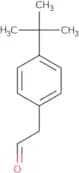
CAS:<p>Versatile small molecule scaffold</p>Formula:C8H6Cl2OPurity:Min. 95%Molecular weight:189.04 g/mol2-(4-tert-Butylphenyl)acetaldehyde
CAS:<p>Versatile small molecule scaffold</p>Formula:C12H16OPurity:Min. 95%Molecular weight:176.25 g/mol(R)-Terazosin
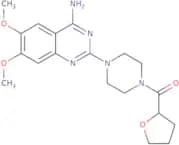
CAS:<p>Terazosin is an alpha-adrenergic receptor antagonist that is used to treat benign prostatic hyperplasia, prostate cancer, and urinary incontinence. It is not a prodrug and does not have any active metabolites. Terazosin inhibits the binding of n-methyl-d-aspartic acid (NMDA) to its receptors in the central nervous system and may act as an NMDA antagonist. Terazosin also binds to soluble guanylate cyclase, which regulates nitric oxide production, leading to relaxation of smooth muscle cells in blood vessels. The drug has been shown to be effective in treating prostate cancer cells in vitro by inhibiting the growth of these cells at concentrations between 10 µM and 1 mM. Terazosin may inhibit the activity of long-term treatment with caco-2 cells at concentrations between 0.1 µM and 100 µM. Terazosin has been shown to bind ferrite at concentrations greater than 100</p>Formula:C19H25N5O4Purity:Min. 95%Molecular weight:387.4 g/mol2,4,4-Trimethylpentane-1,3-diol
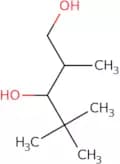
CAS:<p>Versatile small molecule scaffold</p>Formula:C8H18O2Purity:Min. 95%Molecular weight:146.23 g/mol3-(2-Aminoethyl)-5-[(4-methoxyphenyl)methylidene]-1,3-thiazolidine-2,4-dione hydrochloride
CAS:<p>Versatile small molecule scaffold</p>Formula:C13H15ClN2O3SPurity:Min. 95%Molecular weight:314.79 g/mol6,7,8,9-Tetrahydro-2'H,5'H-spiro[benzo[7]annulene-5,4'-imidazolidine]-2',5'-dione
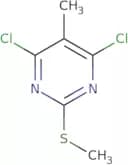
CAS:<p>Versatile small molecule scaffold</p>Formula:C13H14N2O2Purity:Min. 95%Molecular weight:230.26 g/mol4,6-Dichloro-5-methyl-2-(methylthio)pyrimidine
CAS:<p>Versatile small molecule scaffold</p>Formula:C6H6Cl2N2SPurity:Min. 95%Molecular weight:209.1 g/mol1-Bromo-2-(2-methoxyethoxy)benzene
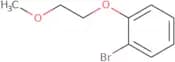
CAS:<p>1-Bromo-2-(2-methoxyethoxy)benzene is a glycol ether used as a solvent for nitrocellulose, cellulose acetate and other plastics. It has a boiling point of about 175 °C and a vapor pressure of about 0.7 mmHg at 25 °C. The molecular weight is 184.1 g/mol, the density is 1.06 g/cm3 and it has an octanol/water partition coefficient of 3.4.</p>Formula:C9H11O2BrPurity:Min. 95%Molecular weight:231.08 g/mol5-(Chloromethyl)-2-methoxybenzonitrile
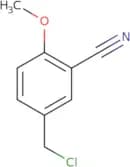
CAS:Versatile small molecule scaffoldFormula:C9H8ClNOPurity:Min. 95%Molecular weight:181.62 g/mol3-(Cyclohexyloxy)aniline
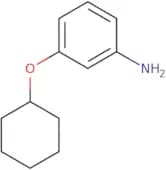
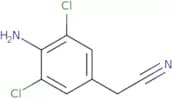
CAS:<p>Versatile small molecule scaffold</p>Formula:C12H17NOPurity:Min. 95%Molecular weight:191.27 g/mol2-(4-Amino-3,5-dichlorophenyl)acetonitrile
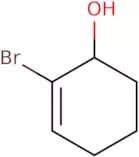
CAS:<p>Versatile small molecule scaffold</p>Formula:C8H6Cl2N2Purity:Min. 95%Molecular weight:201.05 g/mol(1R)-2-Bromocyclohex-2-en-1-ol
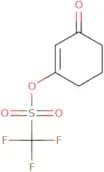
CAS:<p>Versatile small molecule scaffold</p>Formula:C6H9BrOPurity:Min. 95%Molecular weight:177.04 g/mol3-Oxocyclohex-1-en-1-yl trifluoromethanesulfonate
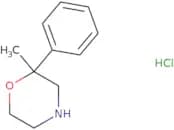
CAS:<p>Versatile small molecule scaffold</p>Formula:C7H7F3O4SPurity:Min. 95%Molecular weight:244.19 g/mol2-Methyl-2-phenylmorpholine hydrochloride
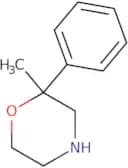
CAS:<p>Versatile small molecule scaffold</p>Formula:C11H16ClNOPurity:Min. 95%Molecular weight:213.7 g/mol2-Methyl-2-phenylmorpholine
CAS:<p>2-Methyl-2-phenylmorpholine is an industrial chemical that has a c1-c4 alkyl group. It can be used in the production of antidepressants, such as Tofranil, and other drugs. 2-Methyl-2-phenylmorpholine is also used in the industrial production of polymers.</p>Formula:C11H15NOPurity:Min. 95%Molecular weight:177.24 g/mol2-Amino-4-nitrobenzaldehyde
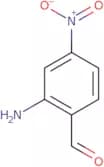
CAS:<p>2-Amino-4-nitrobenzaldehyde is a fluorescent compound that has been used as a stationary phase for high performance liquid chromatography (HPLC). The molecule is stable in the presence of salt, and its fluorescence is constant over a wide range of wavelength. This compound can be used to analyze nitrate in water samples. Spectroscopic analysis shows that 2-amino-4-nitrobenzaldehyde has a singlet excited state with an emission maximum at about 450 nm. Mechanistic studies have shown that this compound reacts with molecular oxygen to produce nitrite and nitrate.</p>Formula:C7H6N2O3Purity:Min. 95%Molecular weight:166.14 g/mol
![Furo[2,3-b]pyridine-2-carbaldehyde](/_next/image/?url=https%3A%2Fstatic.cymitquimica.com%2Fproducts%2F3D%2Fthumb-webp%2FJEA27492.webp&w=3840&q=75)

![3-(2-Aminoethyl)-5-[(4-methoxyphenyl)methylidene]-1,3-thiazolidine-2,4-dione hydrochloride](/_next/image/?url=https%3A%2Fstatic.cymitquimica.com%2Fproducts%2F3D%2Fthumb-webp%2FJEA40152.webp&w=3840&q=75)
![6,7,8,9-Tetrahydro-2'H,5'H-spiro[benzo[7]annulene-5,4'-imidazolidine]-2',5'-dione](/_next/image/?url=https%3A%2Fstatic.cymitquimica.com%2Fproducts%2F3D%2Fthumb-webp%2FJEA40217.webp&w=3840&q=75)