Building Blocks
This section contains fundamental products for the synthesis of organic and biological compounds. Building blocks are the essential starting materials used to construct complex molecules through various chemical reactions. They play a critical role in drug discovery, material science, and chemical research. At CymitQuimica, we offer a diverse range of high-quality building blocks to support your innovative research and industrial projects, ensuring you have the essential components for successful synthesis.
Subcategories of "Building Blocks"
- Boronic Acids & Boronic Acid Derivatives(5,778 products)
- Chiral Building Blocks(1,242 products)
- Hydrocarbon Building Blocks(6,098 products)
- Organic Building Blocks(61,092 products)
Found 199296 products of "Building Blocks"
Sort by
Purity (%)
0
100
|
0
|
50
|
90
|
95
|
100
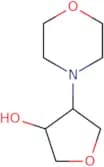
rac-(3R,4S)-4-(Morpholin-4-yl)oxolan-3-ol
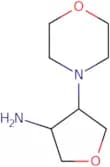
CAS:<p>Versatile small molecule scaffold</p>Formula:C8H15NO3Purity:Min. 95%Molecular weight:173.2 g/molrac-(3R,4R)-4-(Morpholin-4-yl)oxolan-3-amine
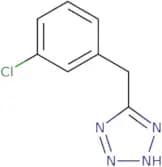
CAS:Versatile small molecule scaffoldFormula:C8H16N2O2Purity:Min. 95%Molecular weight:172.22 g/mol5-(3-Chloro-benzyl)-2H-tetrazole
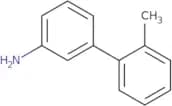
CAS:<p>Versatile small molecule scaffold</p>Formula:C8H7ClN4Purity:Min. 95%Molecular weight:194.62 g/mol3-(o-Tolyl)aniline
CAS:<p>Versatile small molecule scaffold</p>Formula:C13H13NPurity:Min. 95%Molecular weight:183.25 g/molMethyl (2S,3S)-3-hydroxy-2-[(triphenylmethyl)amino]butanoate
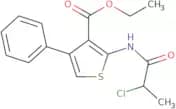
CAS:<p>Versatile small molecule scaffold</p>Formula:C24H25NO3Purity:Min. 95%Molecular weight:375.5 g/molEthyl 2-(2-chloropropanamido)-4-phenylthiophene-3-carboxylate
CAS:<p>Versatile small molecule scaffold</p>Formula:C16H16ClNO3SPurity:Min. 95%Molecular weight:337.8 g/mol{4-[4-(Propan-2-yl)benzenesulfonyl]phenyl}hydrazine
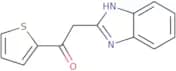
CAS:<p>Versatile small molecule scaffold</p>Formula:C15H18N2O2SPurity:Min. 95%Molecular weight:290.4 g/mol2-(1H-1,3-Benzodiazol-2-yl)-1-(thiophen-2-yl)ethan-1-one
CAS:Versatile small molecule scaffoldFormula:C13H10N2OSPurity:Min. 95%Molecular weight:242.3 g/mol2-(7-Methyl-4-oxo-3,4,5,6,7,8-hexahydrobenzo[4,5]thieno[2,3-d]pyrimidin-2-yl)acetonitrile
CAS:Versatile small molecule scaffoldFormula:C13H13N3OSPurity:Min. 95%Molecular weight:259.33 g/mol5-(Chloromethyl)-11-methyl-8-thia-4,6-diazatricyclo[7.4.0.0
CAS:<p>Versatile small molecule scaffold</p>Formula:C12H13ClN2OSPurity:Min. 95%Molecular weight:268.76 g/mol3-({[(9H-Fluoren-9-yl)methoxy]carbonyl}amino)-3-[4-(trifluoromethyl)phenyl]propanoic acid
CAS:Versatile small molecule scaffoldFormula:C25H20F3NO4Purity:Min. 95%Molecular weight:455.4 g/molN-[3-(Dimethylamino)-2,2-dimethylpropyl]piperidine-4-carboxamide
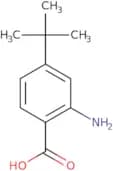
CAS:Versatile small molecule scaffoldFormula:C13H27N3OPurity:Min. 95%Molecular weight:241.37 g/mol2-Amino-4-tert-butylbenzoic acid
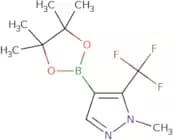
CAS:<p>Versatile small molecule scaffold</p>Formula:C11H15NO2Purity:Min. 95%Molecular weight:193.25 g/mol1-Methyl-4-(tetramethyl-1,3,2-dioxaborolan-2-yl)-5-(trifluoromethyl)-1H-pyrazole
CAS:Versatile small molecule scaffoldFormula:C11H16BF3N2O2Purity:Min. 95%Molecular weight:276.07 g/molBenzyl (3S)-morpholine-3-carboxylate hydrochloride
CAS:Versatile small molecule scaffoldFormula:C12H16ClNO3Purity:Min. 95%Molecular weight:257.7 g/molDBCO-acid
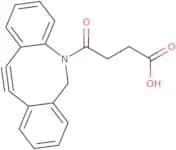
CAS:<p>DBCO-acid serves as a bioconjugation linker for azide-containing molecules. As it acts as a heterobifunctional linker, the acid end can also react with amine-containing molecules to form a stable amide bond, while the DBCO end can react with azide-containing molecules via click chemistry in a copper-free reaction called strain-promoted alkyne-azide cycloaddition (SPAAC). It is cleavable under very specific conditions (mostly acidic).</p>Formula:C19H15NO3Purity:Min. 95%Molecular weight:305.33 g/molMethyl 4-bromo-1,3-thiazole-5-carboxylate
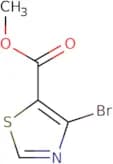
CAS:Versatile small molecule scaffoldFormula:C5H4BrNO2SPurity:Min. 95%Molecular weight:222.06 g/molMethyl 5-bromo-4-methoxythiophene-3-carboxylate
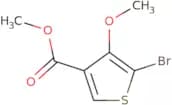
CAS:Versatile small molecule scaffoldFormula:C7H7BrO3SPurity:Min. 95%Molecular weight:251.1 g/mol5-Amino-1,3-thiazole-4-carboxylic acid
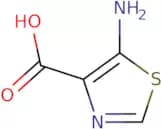
CAS:<p>5-Amino-1,3-thiazole-4-carboxylic acid is a nonstandard amino acid that is found in some prokaryotes. It is synthesized from 5-aminoimidazole ribotide (5AI) and thiazole carboxylic acid in the ribosomes of prokaryotes. The genetic code for this amino acid can be found in the section of the genetic code called the appendix. 5-Amino-1,3-thiazole-4-carboxylic acid has been shown to have a number of bioactivities, including inhibition of protein synthesis, inhibition of RNA synthesis, and inhibition of DNA replication.</p>Formula:C4H4N2O2SPurity:Min. 95%Molecular weight:144.15 g/mol5-Fluoro-N-methylpyrimidin-4-amine
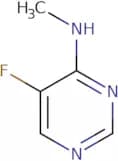
CAS:<p>Versatile small molecule scaffold</p>Formula:C5H6FN3Purity:Min. 95%Molecular weight:127.12 g/mol

![Methyl (2S,3S)-3-hydroxy-2-[(triphenylmethyl)amino]butanoate](/_next/image/?url=https%3A%2Fstatic.cymitquimica.com%2Fproducts%2F3D%2Fthumb-webp%2FDEB87798.webp&w=3840&q=75)
![{4-[4-(Propan-2-yl)benzenesulfonyl]phenyl}hydrazine](/_next/image/?url=https%3A%2Fstatic.cymitquimica.com%2Fproducts%2F3D%2Fthumb-webp%2FDEB89940.webp&w=3840&q=75)
![2-(7-Methyl-4-oxo-3,4,5,6,7,8-hexahydrobenzo[4,5]thieno[2,3-d]pyrimidin-2-yl)acetonitrile](/_next/image/?url=https%3A%2Fstatic.cymitquimica.com%2Fproducts%2F3D%2Fthumb-webp%2FDEB90800.webp&w=3840&q=75)
![3-({[(9H-Fluoren-9-yl)methoxy]carbonyl}amino)-3-[4-(trifluoromethyl)phenyl]propanoic acid](/_next/image/?url=https%3A%2Fstatic.cymitquimica.com%2Fproducts%2F3D%2Fthumb-webp%2FDEB91994.webp&w=3840&q=75)
![N-[3-(Dimethylamino)-2,2-dimethylpropyl]piperidine-4-carboxamide](/_next/image/?url=https%3A%2Fstatic.cymitquimica.com%2Fproducts%2F3D%2Fthumb-webp%2FDEB93241.webp&w=3840&q=75)